
Discover the Secrets of Spring Vegetables: Why You Must Try Grandma Kim’s Spring Vegetable Feast!
Daniel Kim Views
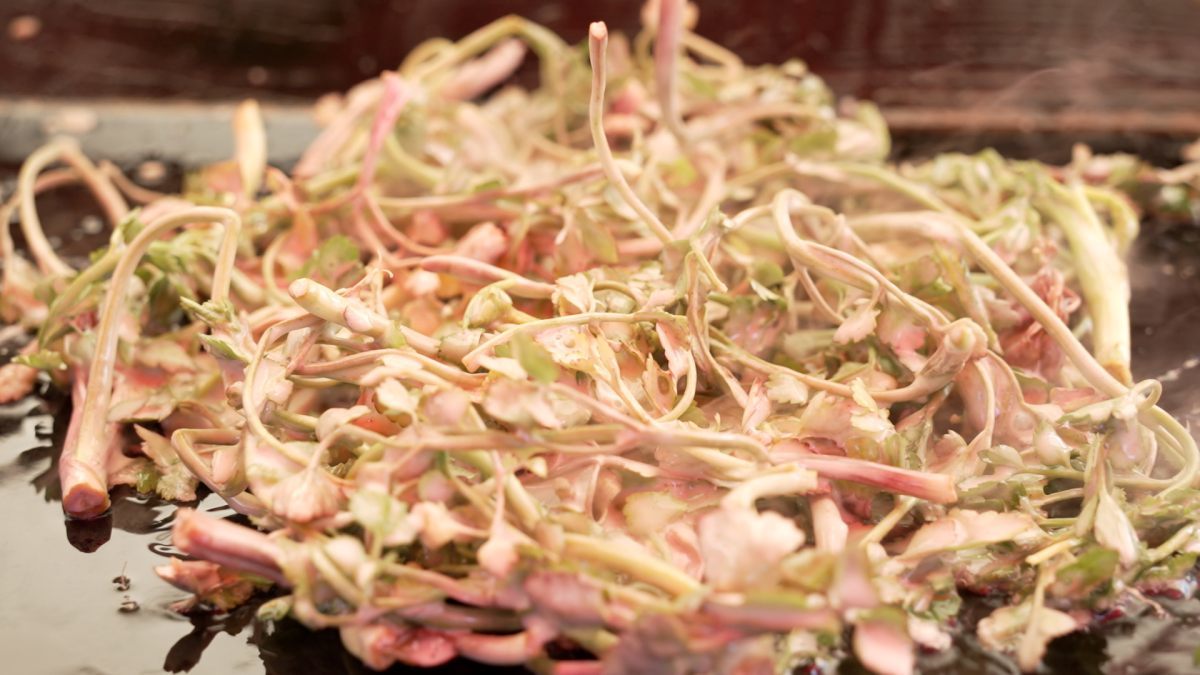
Episode 5 of EBS1’s Korean Journey, “If Not Now, You’ll Miss It,” spotlights Grandma Kim Nam‑soon’s spring vegetable pancakes — a seasonal favorite that pulls crowds every spring at the traditional five‑day market in Yangpyeong, Gyeonggi Province.
The segment celebrates fresh spring greens like dallae, dureup, naengi, and chwinamul, along with Grandma’s light buckwheat batter and her signature wild‑chive soy dipping sauce. It also shares the care, history, and stories that go into each pancake.
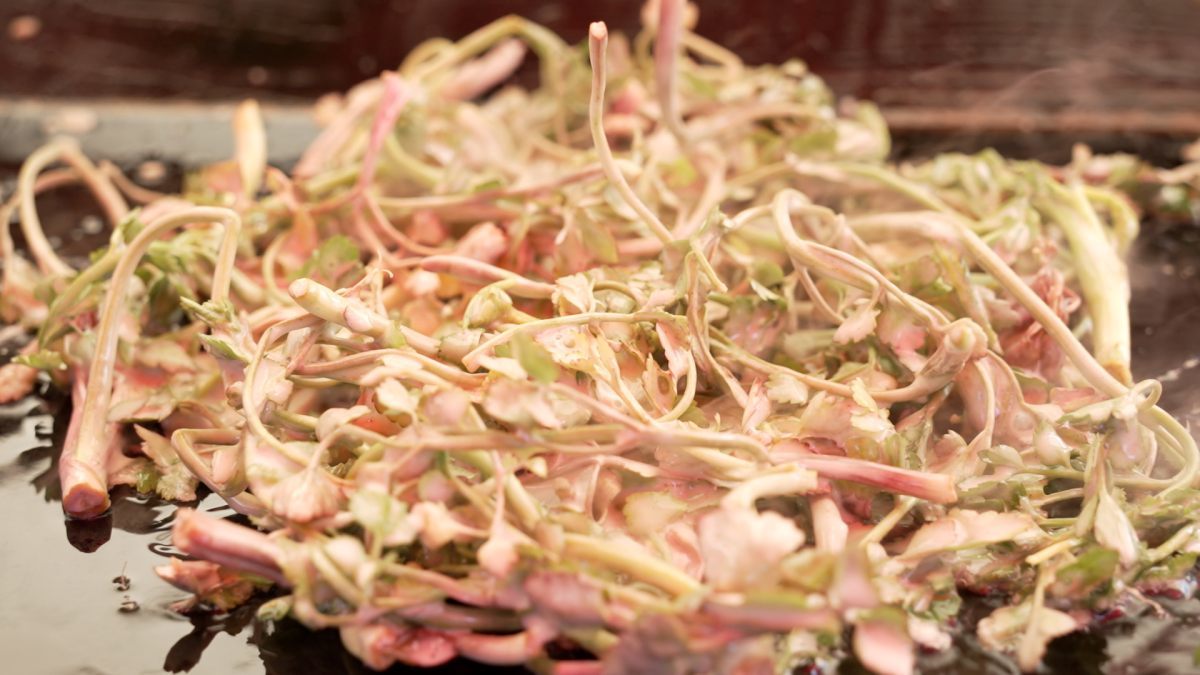
◈ EBS1 Korean Journey — If Not Now, You’ll Miss It, Episode 5: Grandma’s Spring Vegetable Pancakes
At Yangpyeong’s five‑day market, the smell of sizzling pancakes pulls people in. The standout is Grandma Kim Nam‑soon’s spring vegetable pancake. When the wild greens arrive, folks will line up just to get a bite of her famous recipe.
The pancakes are built on a mix of seasonal greens — dallae (wild chives), dureup (young tree shoots), naengi (wild mustard‑like greens), and chwinamul (a mountain herb). Instead of wheat flour, Grandma opts for a delicate buckwheat batter. Her dipping sauce is notable too: a soy sauce generously mixed with fresh dallae. Those seasonal flavors keep her stall packed every year.
Kim Nam‑soon’s life has been defined by hard work. She did everything from selling vegetables to restaurant jobs. When her husband fell ill, she became the family’s breadwinner and raised four children. Now well into her seventies, she keeps running her stall despite her children’s concerns. The day before market, she spends endless hours harvesting, trimming, and washing greens — often with little sleep.
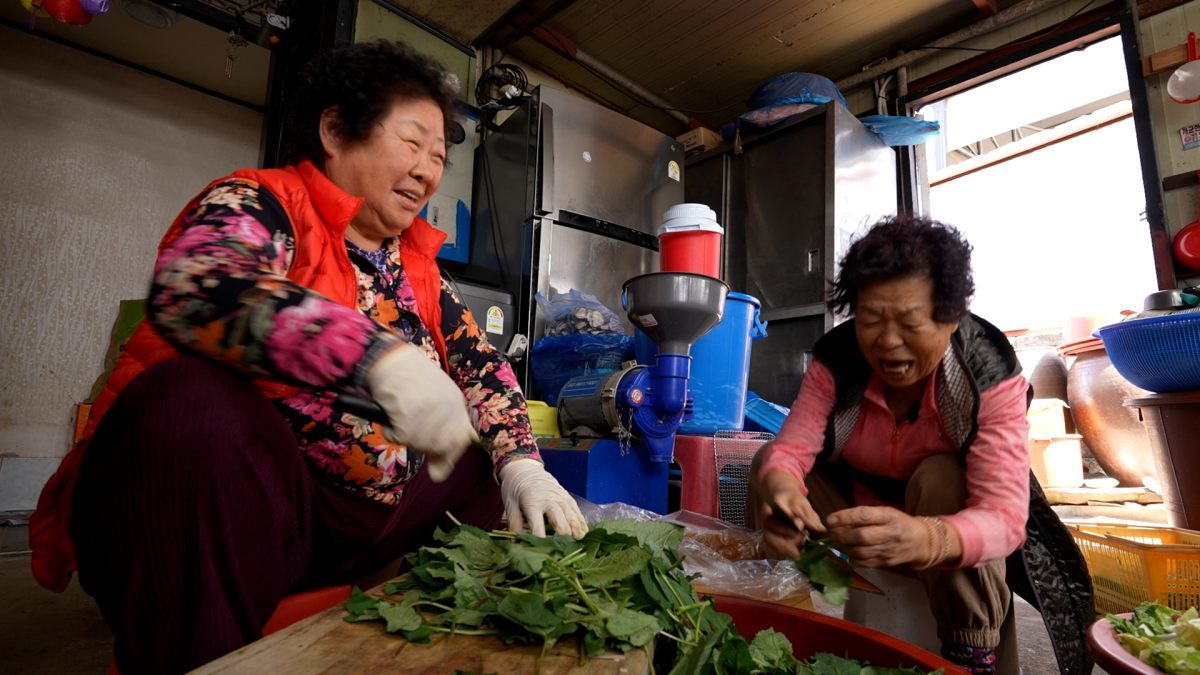
Even amid that grind, she finds joy in her work. Her spring vegetable pancake is more than food; it’s a vessel of experience and affection. That’s why people keep coming back. Dishes made with this level of care — handed down across generations — tend to stay in people’s memories.
Dallae, Dureup, Naengi, Chwinamul: What Sets These Spring Greens Apart
When spring arrives, tables fill with fresh greens that were scarce all winter. Dallae, dureup, naengi, and chwinamul are among the season’s most-loved wild greens. They all shine in spring, but each has a distinct aroma, texture, edible parts, and way to cook.
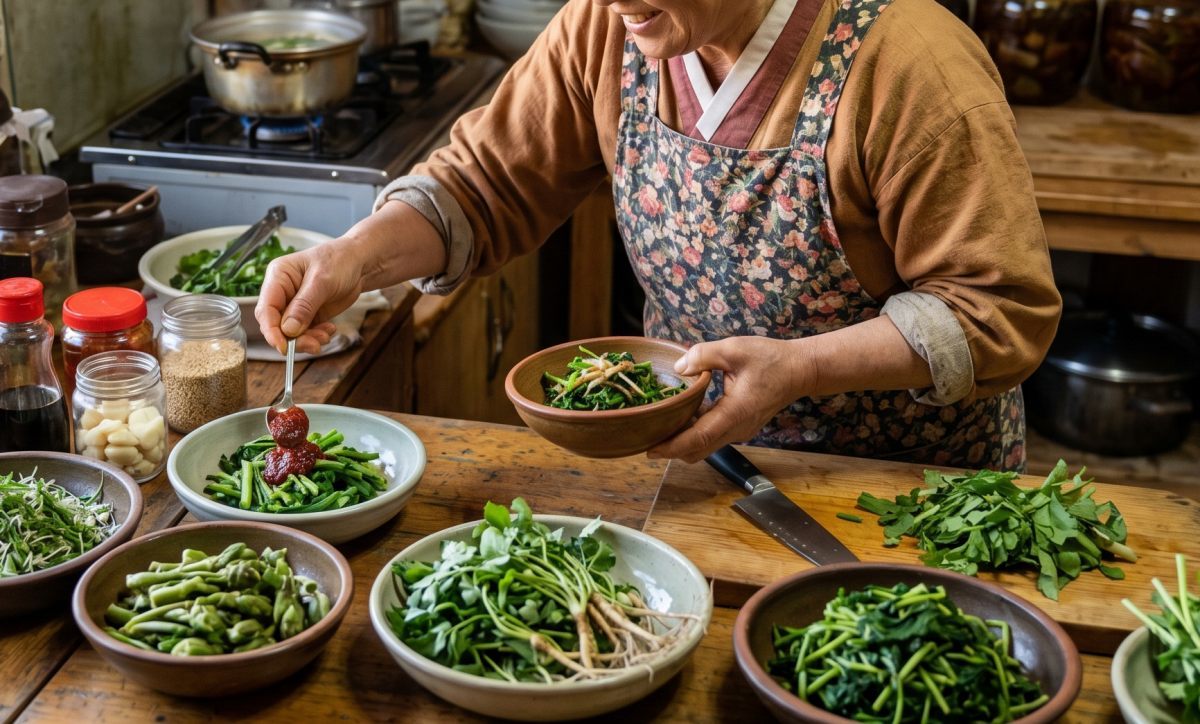
dallae has a sharp, pungent aroma. People often eat both its leaves and little bulbs, either raw in salads or mixed into seasonings. Common uses include dallae soy sauce, salads, and dallae doenjang (soybean paste) soup. Its tender texture means it’s usually cooked briefly or served raw.
dureup are young tree shoots enjoyed as a mountain vegetable. They have a firmer, chewier bite and a stronger aroma than many other spring greens. Typically, cooks blanch them briefly, then dip them in cho‑gochujang, season them, or prepare them as tempura or pancakes. Shoots that haven’t opened wide are best.
naengi is eaten for both its leaves and roots. Its distinctive root aroma makes it a popular addition to doenjang soup and stews. It’s also seasoned as a side dish. Because dirt can cling between the roots, rinse it several times under running water and remove small roots and debris before cooking.
chwinamul is a classic mountain green. In spring, people blanch and season it or stir‑fry it; dried chwinamul is soaked and used in mixed rice or side dishes. Unlike dallae’s sharp bite, chwinamul offers a softer mountain‑herb aroma and tender leaves.
Though these four greens all appear in spring, their roles differ. Dallae adds aroma to seasonings. Dureup is prized for its young‑shoot texture. Naengi often flavors broths. Chwinamul works well in salads, stir‑fries, and mixed rice.
Prep methods vary by green. Remove dirt from dallae bulbs. Trim dureup’s tough ends before blanching. Clean naengi roots carefully. Pick out tough stems from chwinamul. If you forage wild greens yourself, be certain of identification — many plants look similar, and mistakes can be dangerous.
Dallae, dureup, naengi, and chwinamul bring a clear sense of season to spring tables. Knowing their aromas, textures, and best uses helps you enjoy spring produce more fully.
Stories of Nature and People on EBS1’s Korean Journey
EBS1’s Korean Journey premiered in August 2009 and has aired steadily since. The long‑running documentary visits sites across the country to capture landscapes, local culture, and everyday life. Over time, it has become one of EBS’s signature educational programs.
The series follows seasonal shifts in scenery and routines. Each week centers on a single theme across five episodes, with each episode running about 30 minutes. The show takes a calm, observational approach to portraying how people live and feel in different regions.
The program’s strength is showing scenes as they are. Rather than relying on sensational images or staged moments, it records people living in real places. A restrained narration complements the footage, delivering honest stories about nature, people, and place.
The series covers a wide range of settings — mountain villages, fishing towns, farming communities, islands, and urban alleys and workplaces. It introduces landscapes and daily lives viewers rarely see and highlights each region’s unique culture and customs.
Korean Journey currently airs regularly on EBS 1TV. Each week the show documents new places and the lives of people who call them home.
Korean Journey airs Monday through Friday at 9:35 PM. Broadcast details are available on the EBS1 Korean Journey website’s preview page.











Most Commented