
Translation result
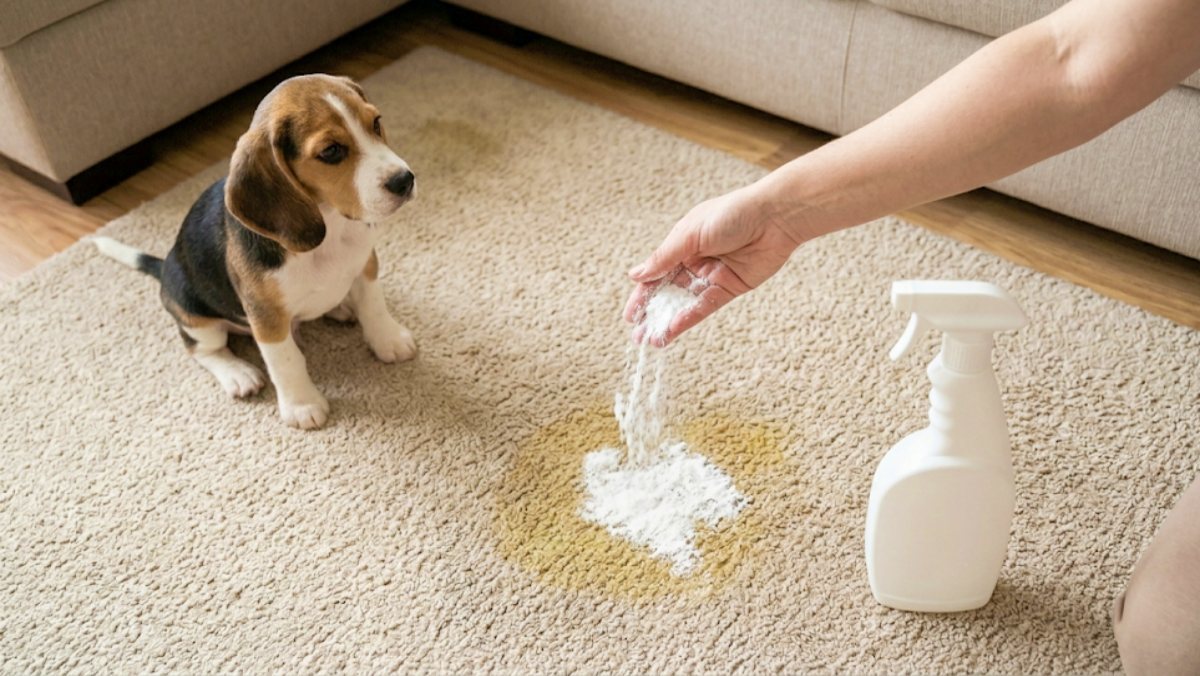
If you live with pets, urine odor can feel impossible to banish. You might think you’ve cleaned it up, but on a humid day the smell returns, and fabrics like carpets and sofas can hold onto odors for a long time. This is a common headache for homes with dogs, cats, rabbits, or other furry roommates.
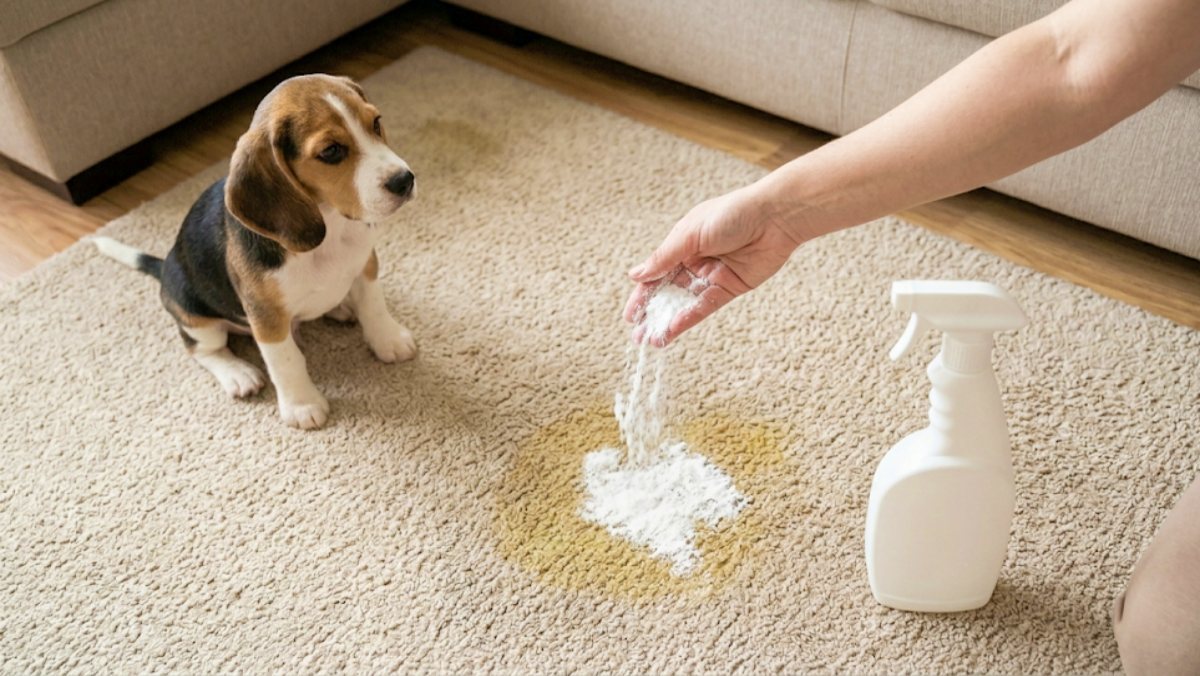
Spraying a powerful air freshener or slathering on a harsh detergent might hide the smell for a bit, but it won’t tackle the root cause. And because pets walk on and lick floors, you need to be picky about what you use. Everyday pantry items like baking soda, vinegar, and citric acid, used thoughtfully, can make deodorizing much more manageable.
Blot—don’t rub
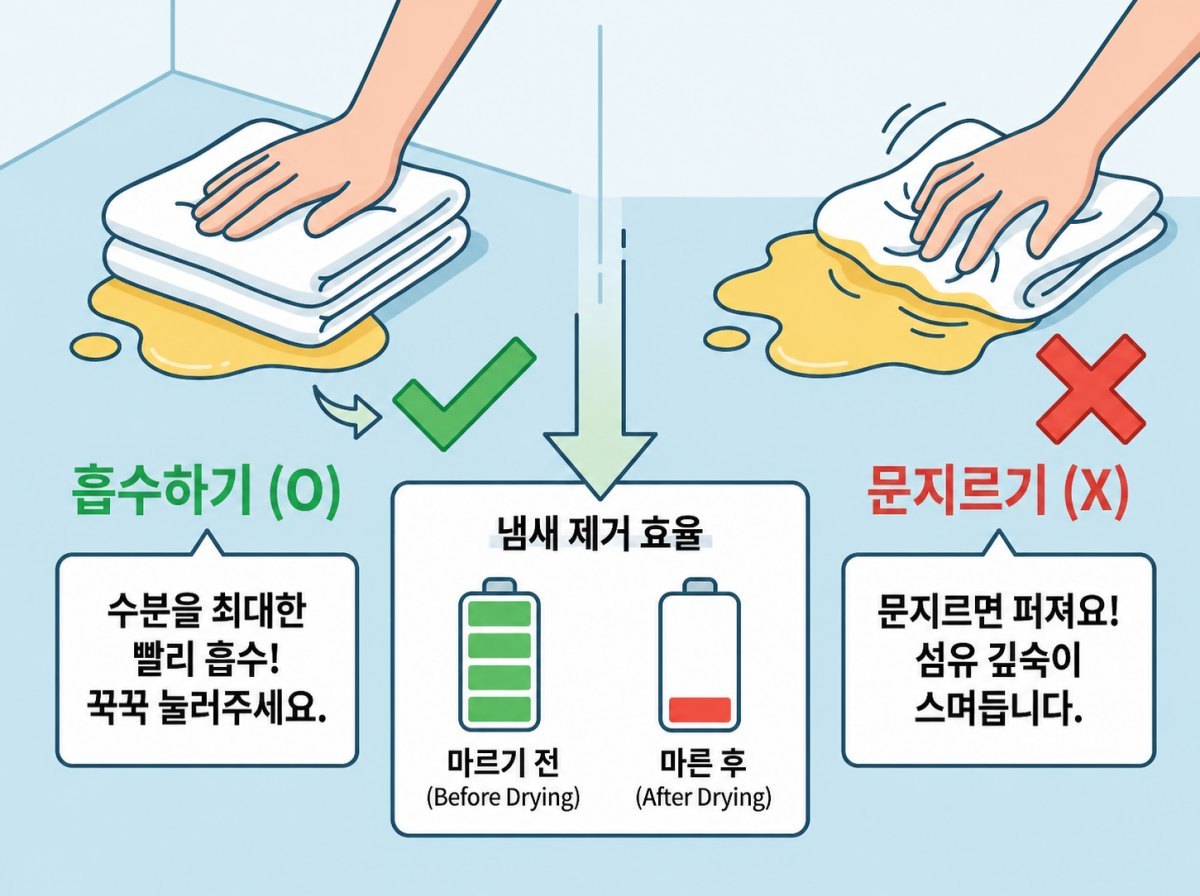
When you spot a fresh accident, your first priority is to absorb as much liquid as you can. If the urine is still wet, stack kitchen paper towels or a dry cloth and press down firmly to lift the liquid. Rubbing spreads urine deeper into fibers or pushes it into gaps between boards, making the problem worse.
Quick action is especially important on absorbent surfaces like rugs, carpets, and fabric sofas. Wiping only the visible moisture won’t cut it—urine trapped inside fibers will stink later. Keep pressing with a dry towel until it no longer comes away damp.
Even for dried stains, don’t grab a bottle of cleaner and spray right away. First check where the stain actually reaches—urine can spread farther than it looks. Clean a bit beyond the smelly area to cut down the chance that the odor returns from the same spot.
Baking soda is great for odor and moisture
Once you’ve absorbed as much liquid as possible, reach for baking soda. It helps soak up odors and lingering moisture, making it ideal for places that are hard to wet-clean, like carpets, rugs, and fabric sofas.
Blot up excess moisture, then sprinkle a generous, even layer of baking soda over the affected area—enough to lightly cover the surface. Let it sit for 30 minutes to an hour; for stronger odors, leave it for several hours before vacuuming. The powder helps draw out what’s left and freshen the spot.
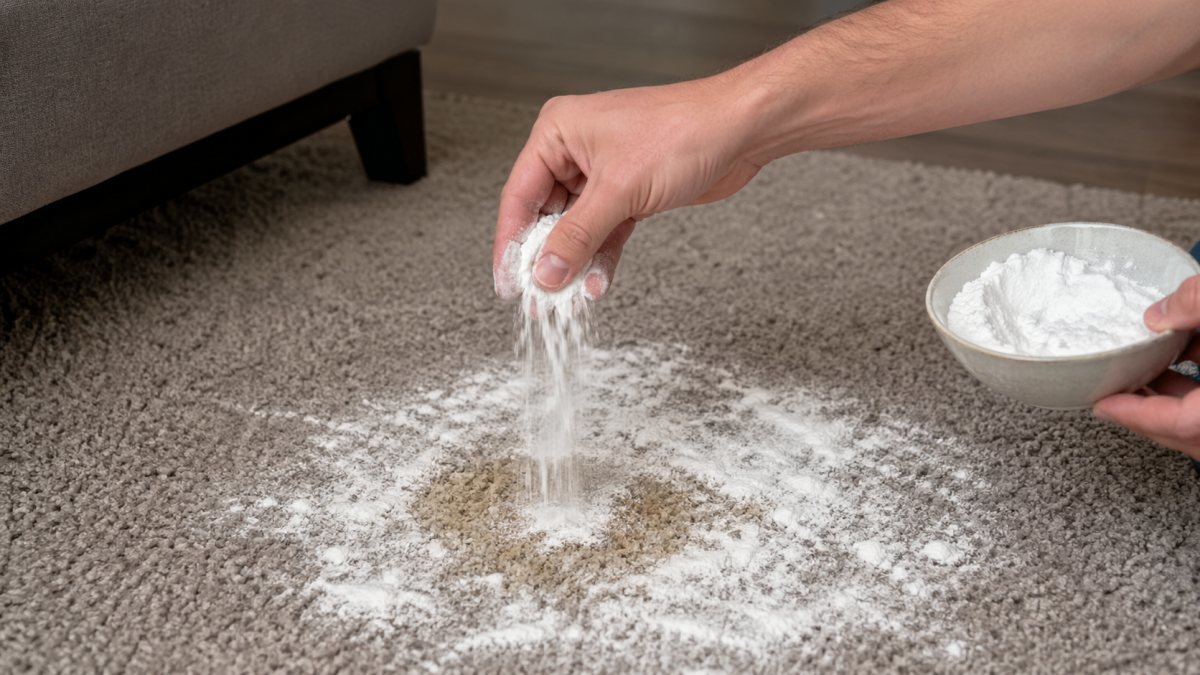
Keep pets away from areas you’ve powdered. Small contact with baking soda usually isn’t harmful, but if animals lick or ingest a lot it can upset their stomachs. Close doors or use a gate while cleaning, and vacuum thoroughly to remove all residue.
Baking soda helps, but it won’t fully break down the compounds behind old, set-in urine stains. If your pet keeps returning to the same spot or the smell persists, try other approaches.
Vinegar and citric acid help neutralize ammonia smells
For strong urine odors, vinegar or citric acid can be a real game-changer. Urine often has ammonia‑like compounds, and acidic cleaners such as vinegar or citric acid help neutralize those scents. Cat urine, in particular, can be so pungent that baking soda alone isn’t enough.
Mix equal parts water and vinegar in a spray bottle. Lightly mist the area, let it sit for 5–10 minutes, then blot with a dry towel. If the vinegar smell bothers you, dissolve citric acid powder in water instead—about 5–10 g of citric acid in 200 mL of water works well.
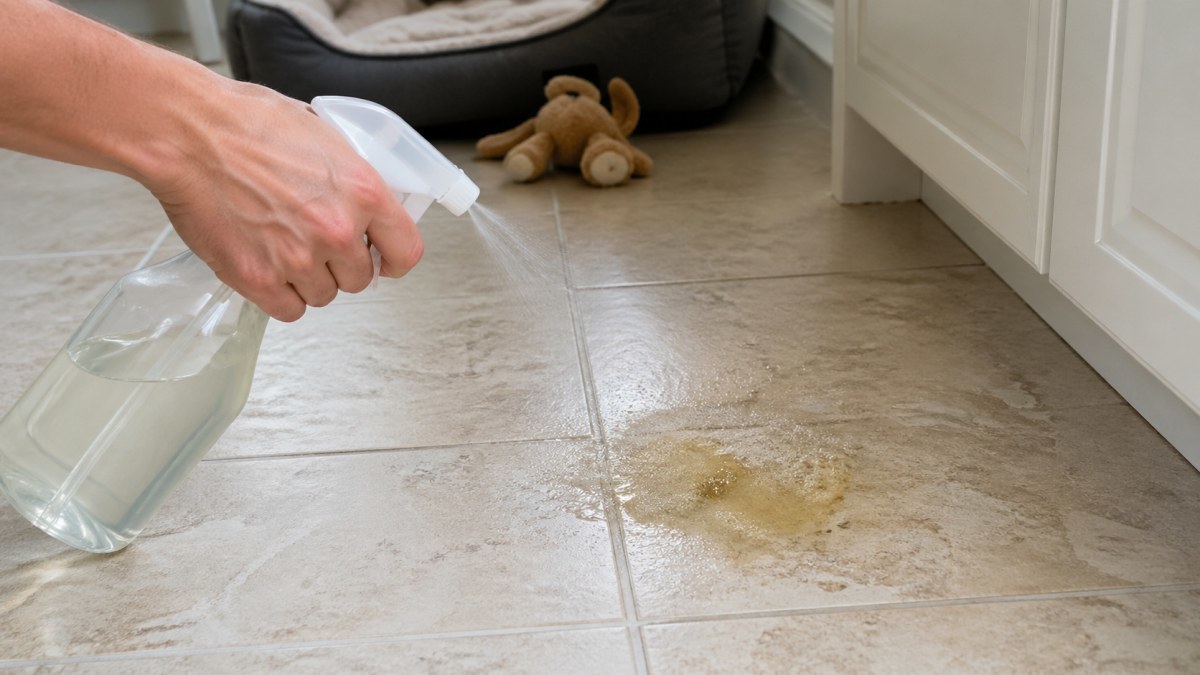
Be careful: vinegar and citric acid can damage marble, natural stone, and some wood floors. Test on a hidden spot before widespread use. Also, never mix bleach or chlorine-based cleaners with vinegar or citric acid—doing so can create toxic gases.
After using vinegar or citric acid, wipe away any residue and dry the surface thoroughly. If moisture lingers, odors can return and mold can develop.
Use hydrogen peroxide on upholstery and carpets with caution
If urine has soaked deep into fabrics you can’t easily wash—carpets, upholstery, or comforters—3% hydrogen peroxide from the pharmacy can help. It can reduce some odor-causing organic matter and lighten stains.
Apply a small amount of 3% hydrogen peroxide to the spot and blot with a dry towel. For heavy stains, a tiny bit of neutral detergent can be added. Always test an unseen area first: peroxide can bleach fabrics.
Be extra cautious on colored carpets and sofas. Applying peroxide over a big area can leave noticeable bleaching marks. After treatment, blot with a damp towel several times to remove residue, then dry in a well-ventilated area.
Keep pets away until the surface is completely dry and residue-free.
Adjust your method by flooring type
The same urine stain calls for different tactics depending on your flooring. Engineered or solid wood floors don’t like moisture—if urine or cleaning solutions seep into cracks, they can trap odors or even lift the boards. On wood, remove moisture fast and wipe cleaners on with a cloth rather than pouring solutions on.
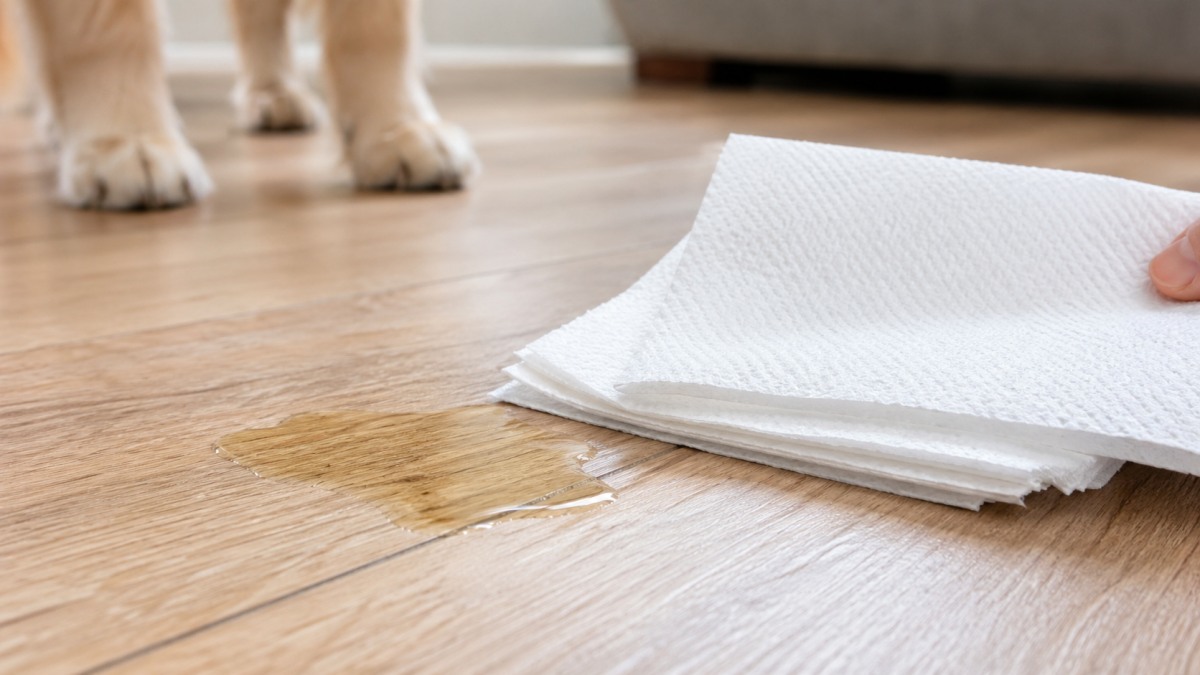
With sheet vinyl, check seams and edges where it meets walls. If urine slips underneath, surface cleaning won’t fix the smell. Absorb as much as you can with dry towels and ventilate thoroughly; severe saturation may call for partial replacement.
Tiled floors are easy to clean, but grout can trap urine compounds and hold odors. Make a paste of baking soda and water, scrub grout with a toothbrush, rinse, and dry completely.
Leather sofas don’t take well to vinegar, citric acid, or baking soda. Acids and bases can damage or discolor leather. Use a leather-specific cleaner or a very weak, neutral detergent solution and wipe minimally. After cleaning, dry with a towel and apply a leather conditioner.
Use alcohol sparingly
Lingering urine smells often come from moisture and bacterial activity. If surfaces don’t dry properly, odors can come back. Rubbing alcohol (ethanol) can be used sparingly—it evaporates fast and helps dry surfaces while reducing some bacteria.
But alcohol isn’t safe for every material. It can discolor wood, leather, coated furniture, and certain plastics. Test first on a small area. When using near pet bowls or toys, wait until the surface is completely dry before letting pets back in.
The smell of alcohol can be irritating to animals. Ventilate by opening windows after spraying. Some people suggest using soju, but alcoholic beverages can contain flavorings or sugars that leave a sticky residue—stick to rubbing alcohol applied lightly where needed.
Avoid bleach and ammonia cleaners
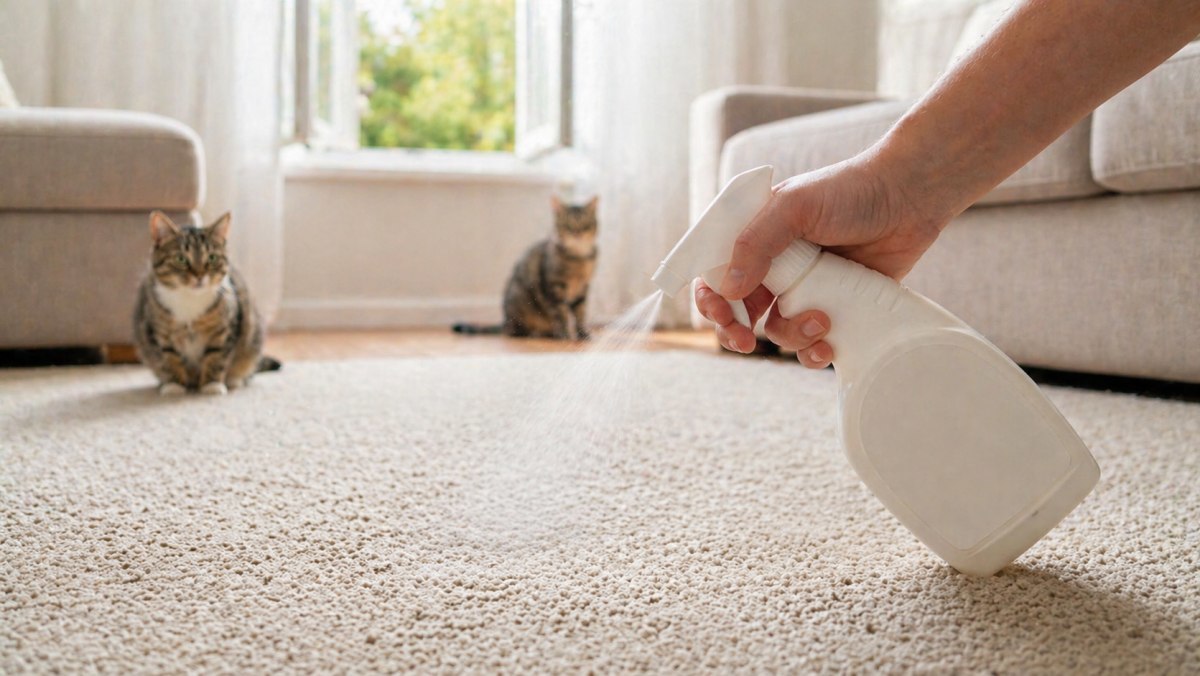
It might be tempting to reach for bleach or other strong cleaners, but use caution in pet spaces. Harsh fumes can irritate breathing, and residues can be rough on paws and skin.
Steer clear of products with ammonia—because its smell resembles urine, it can actually encourage pets to re-mark the same spot. And never mix bleach with acidic cleaners—bleach plus vinegar or citric acid can release dangerous gases.
Use one product at a time, rinse thoroughly, and let surfaces dry fully before the next step. Since pets step on and sniff floors, managing residues and ventilating well usually matters more than brute cleaning power.
Prevent odors by managing litter boxes and bathroom habits
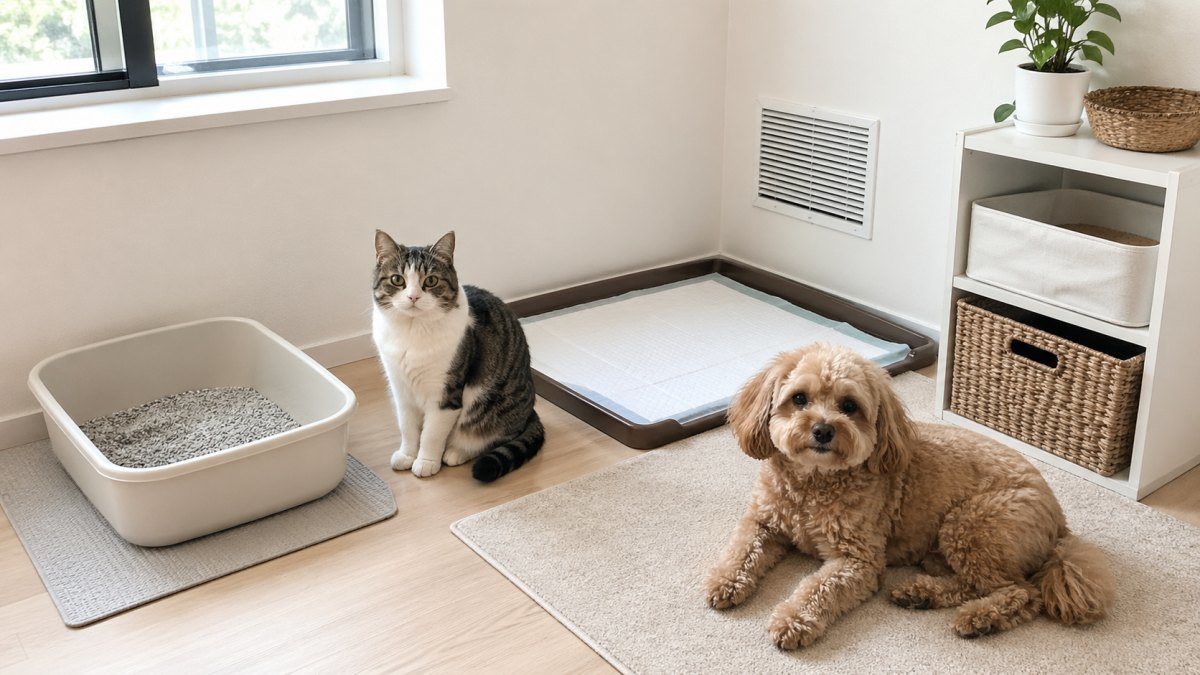
Prevention is as important as cleanup. If a litter box or toileting area is dirty or hard to access, pets may choose another spot. Change pads or litter often and clean around the box. Cats are especially picky about box cleanliness and may look elsewhere if the litter isn’t fresh.
Think about the box’s location too. Avoid noisy, heavily trafficked areas or spots too close to food. Put the box where your pet can get to it easily and where there’s good airflow.
If accidents keep happening in the same spot after you’ve cleaned it, consider behavior or health reasons. Young pets still learning house training, stressed animals, or seniors with incontinence may need more than cleaning. Change the environment and consult your vet if necessary.
Urine odor can be a health signal
If your pet’s urine suddenly smells stronger, it might not be just a cleaning issue. Darker or reddish urine, frequent urination, or discomfort while peeing can signal bladder infections, stones, or kidney problems. Cats can deteriorate quickly with urinary issues, so pay close attention.
If urine smells sweet or your pet drinks way more water than usual, metabolic problems like diabetes could be involved. Spotting changes is more important than simply masking the smell.
Pet urine odor isn’t always something you can fix with baking soda or vinegar alone. Determine whether the smell is new, whether the behavior repeats, and whether it might be health-related. Cleaning and careful observation together keep your home pleasant and your pet healthy.
Quick absorption, the right cleaners, and thorough drying are key. Blot wet spots—don’t rub—use baking soda to pull out moisture and odors, and apply vinegar or citric acid when appropriate. Adjust your method by material and keep pets away while you clean.












Most Commented