
Translation result.
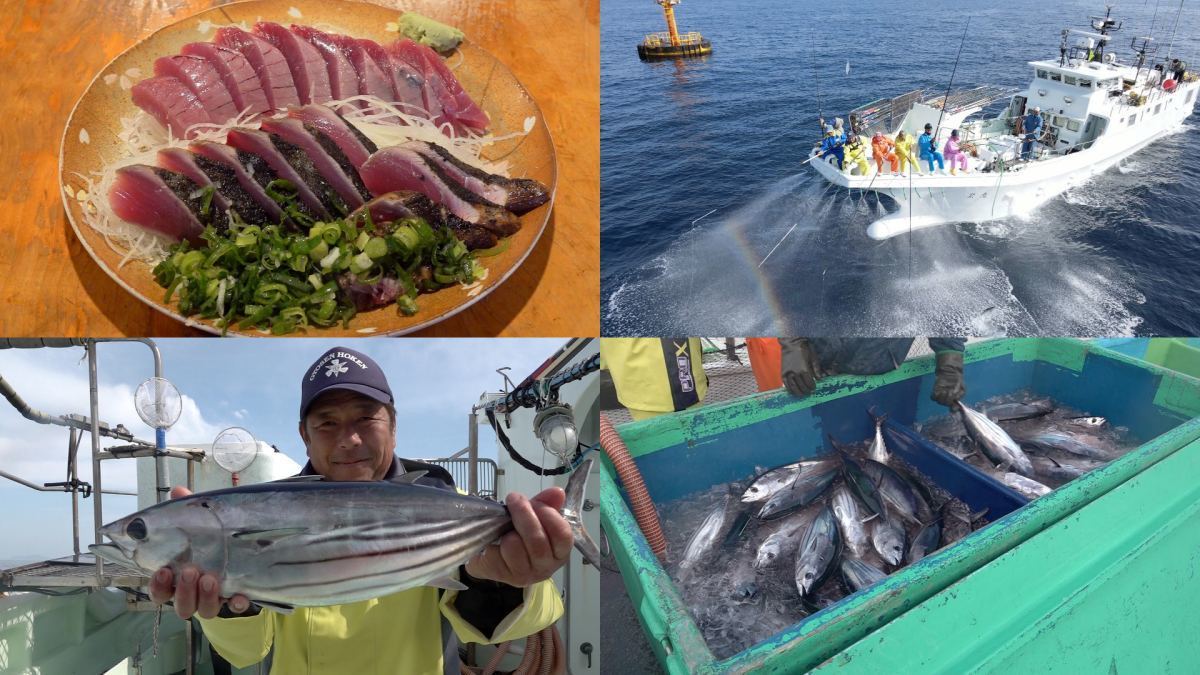
In episode 906 of EBS1’s Extreme Jobs, airing April 25, the series turns its lens to the seasonal world of skipjack tuna in Japan — an island nation surrounded on all sides by the sea.
Japan, celebrated for its abundant seafood, holds skipjack tuna in especially high regard for its deep, clean flavor. The episode follows fishermen who brave rough waves and head out daily with single-line rods, and it profiles craftsmen who have made premium katsuobushi — the backbone of Japanese umami — for three generations. Viewers get a close-up on seasonal tuna fishing and the intense, traditional craft of katsuobushi production.
EBS1’s Extreme Jobs documents people who endure near-extreme working conditions, both physically and mentally. The series highlights jobs with frequent overnight shifts, roles that flip day and night routines, and workplaces that demand long stretches of focused concentration. It presents a wide range of occupations, showing the real challenges, responsibilities, and passion that drive these workers.
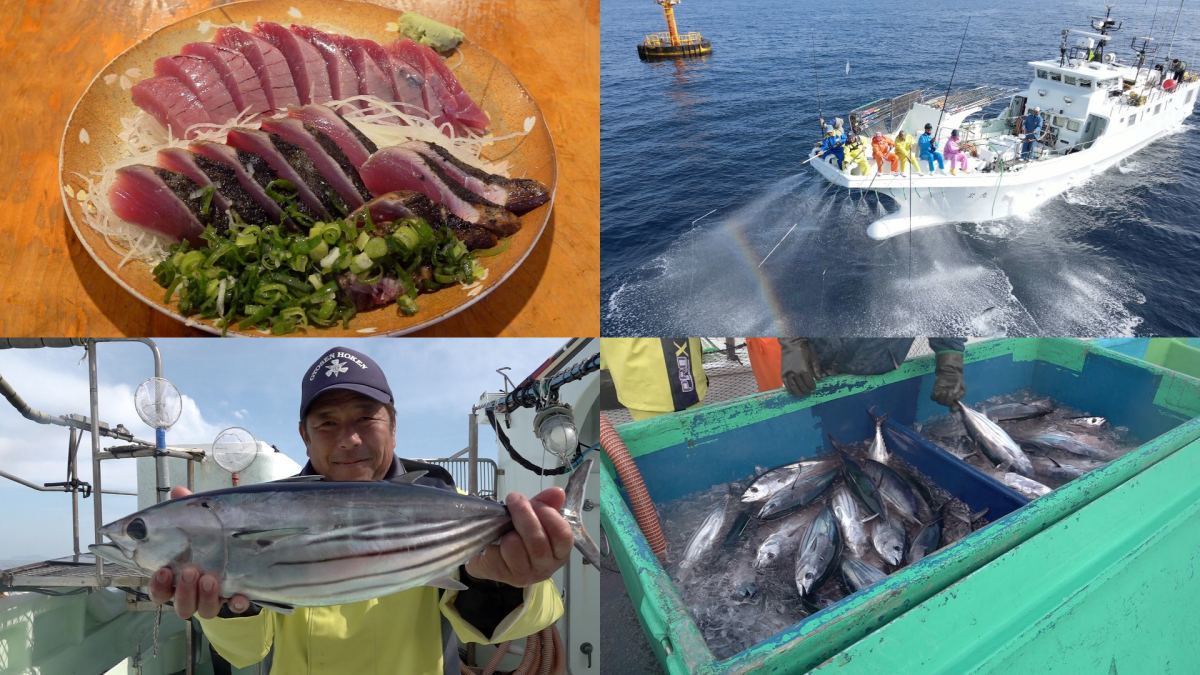
Skipjack is more than just a fish in Japan — it’s a cornerstone of the country’s culinary culture. More popular than some tunas, skipjack shows up on the table as katsuobushi, sashimi, and simmered dishes. Its journey often starts on the dark Pacific waters at night.
Tuna falling from the sky: single-line skipjack fishing
At 9 p.m. in Kochi Prefecture on Shikoku Island, a fishing boat heads roughly 110 km (about 68 miles) out to the skipjack grounds. After an eight-hour run, the crew reach their spot and bring out single-line rods instead of nets. This fishing method, passed down for around 400 years, uses scattered sardines to lure skipjack in and catch them one by one.
When a fish bites, a crewmember lifts the rod; the tuna arcs into the air and then drops back into the boat. The steady stream of fish boarding the vessel can look like rain pouring from the sky. The secret is the hook design: unlike conventional hooks, these have no barbs at the tip so the fish can slip off naturally while airborne. The technique demands skill and experience, so only seasoned crew members take on the task.
To catch roughly 200–300 fish per person on a single trip, each fisherman must hoist the rod 200–300 times without rest, all while facing the constant risk of being swept overboard. In peak seasons — spring and fall — people even fly in from other regions to taste the delicacy: lightly seared over straw for a clean yet intensely flavored sashimi that’s considered a true treat.
Powering Japanese cuisine: three generations and 80 years of premium katsuobushi
The transformation from skipjack to top-grade side dish happens in Ibusuki City, Kagoshima Prefecture. This region produces roughly 70% of Japan’s finest katsuobushi, and at its heart is a factory that has preserved traditional methods for 80 years across three generations. Every morning at 7 a.m., the plant begins work, thawing and preparing 3 t of skipjack brought in from the Pacific.
Skilled workers remove heads and bones, then cut the flesh into four precise portions — a vital step because the final product’s shape can change the price two- or threefold. Only craftsmen with years of training can perform this delicate work. Finding and removing hidden bones in the cooked flesh requires a finely tuned touch developed over decades.
After deboning, holes and broken tail sections are filled with a paste made from leftover meat and smoothed carefully. The pieces then undergo drying and smoking, are inoculated with koji mold, and finally sun-dried in sequence. Only after these steps does premium katsuobushi emerge. Finished katsuobushi appears in nearly every Japanese dish — from takoyaki and okonomiyaki to simmered dishes and broths — and plays a central role at the Japanese table.
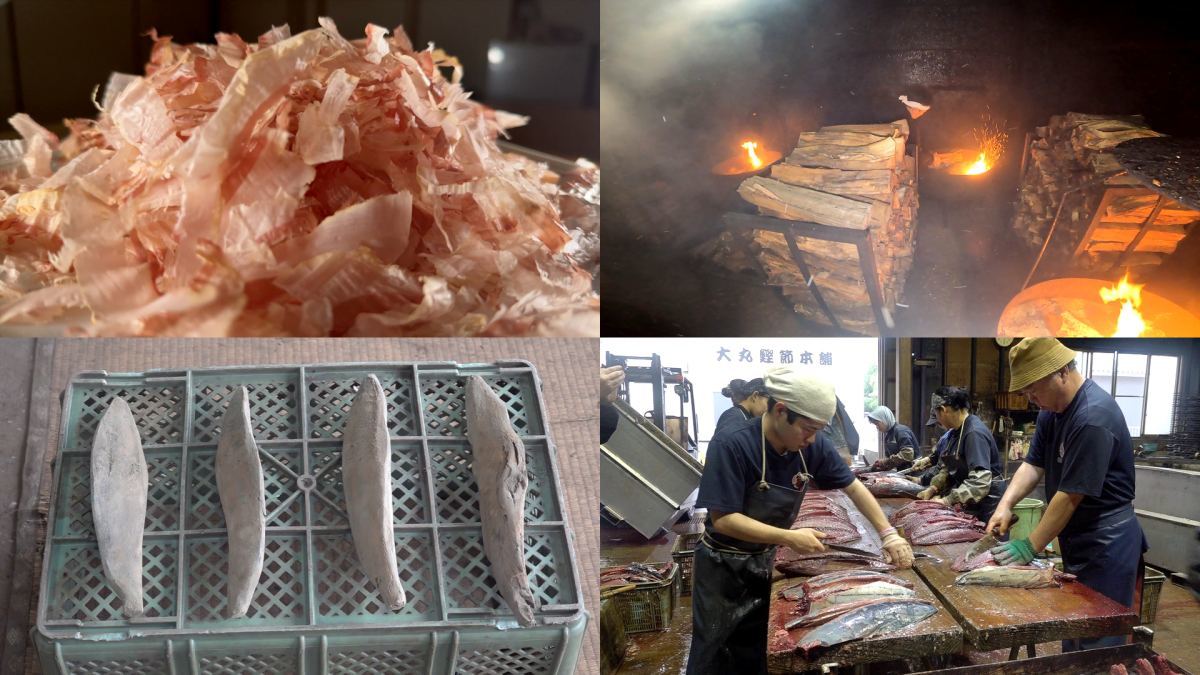
The grit of fishermen hauling skipjack from the Pacific’s rough waves and the devotion of artisans who, over 80 years and three generations, craft premium katsuobushi — together these two worlds create the deep flavors and atmosphere of Japanese cuisine. It’s a tradition worth preserving as a cultural treasure that sustains Japan’s culinary identity.
Speed across the sea, value on the table: everything about skipjack tuna
Skipjack tuna is an oceanic species in the mackerel family and one member of the tuna group. It’s the only species in its genus and inhabits tropical and subtropical waters worldwide, often near the surface of major oceans like the Atlantic, Pacific, and Indian.
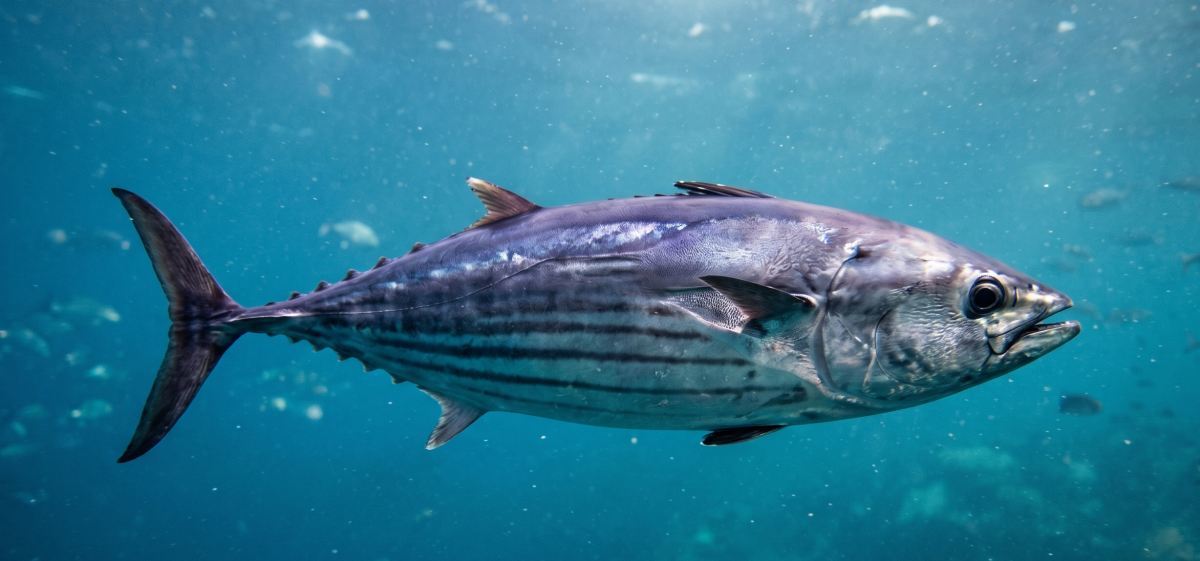
The body is long and streamlined for speed. The back is dark blue, the belly silvery white, and 4–6 distinct dark horizontal stripes appear on the abdomen — key features that help distinguish skipjack from other tunas. It moves quickly and forms large schools that can number from thousands to tens of thousands of fish.
Skipjack generally prefers waters above 15°C (59°F) and feeds on small fish like anchovies, as well as squid and crustaceans. It serves as a mid-level predator in the marine food chain. Spawning usually happens year-round in warm waters, and a single female can release hundreds of thousands of eggs in one event. Fast growth and high reproductive rates help sustain populations.
Adults typically measure 60–80 cm (24–31 in) and weigh about 3–10 kg (6.6–22 lb), though some reach near 1 m (3.3 ft). Lifespan is roughly 10 years.
Globally, skipjack is one of the most important species in fisheries. It accounts for a large share of tuna catches and is a primary source for canned tuna. Large-scale purse-seine fleets drive much of the catch, and stable stock levels have made skipjack a staple raw material in the global food industry.
Culinarily, skipjack is versatile. Chefs serve it fresh as sashimi or grilled; processors also freeze, dry, or smoke it. In Japan, known as katsuo, it becomes katsuobushi — boiled, smoked, and dried — which is essential for making dashi stock.
In flavor, skipjack is on the cleaner side. It has less fat than bluefin or bigeye tuna, so the taste is lighter and more straightforward. The flesh is firm and springy, with a distinct savory note typical of red meat. Heat deepens its flavor, making it ideal for grilling, simmering, and broths. Smoking and drying concentrate proteins and enhance umami, which is why it’s prized for stocks.
Nutritionally, skipjack is high in protein and contains omega-3 fatty acids (EPA, DHA). However, some individuals may contain mercury, so experts advise against excessive consumption.
Documenting hard work: EBS1’s Extreme Jobs
EBS1’s Extreme Jobs follows demanding workplaces to reveal the daily realities of those who do tough, often unseen labor. The documentary focuses on physically exhausting and mentally stressful jobs and captures the environments and processes workers face with realism.
The series covers night-shift operations, hazardous worksites, and industries heavily affected by weather and seasons. It visits fishing, farming, manufacturing, and service sectors to detail each job’s methods and daily flow.
By following workers who must maintain long periods of concentration or sustain intense physical effort, the show conveys the true nature of each occupation. Viewers gain rare insight into these workplaces and can reconsider the meaning and value of labor.
Extreme Jobs airs every Saturday on EBS1 at 9 p.m. Each episode focuses on a single occupation or industry and builds its story around on-site footage of work processes and conditions. For broadcast details, check the EBS1 Extreme Jobs preview and schedule information.










Most Commented