
Translation result.
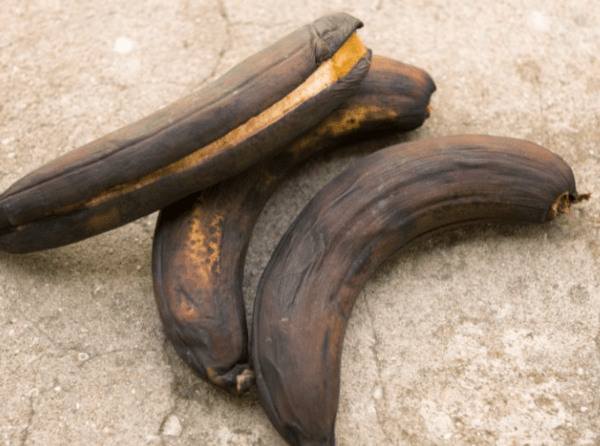
Bananas that seem to turn black overnight? One simple storage trick can keep them looking—and tasting—fresh for much longer.
Bananas often go dark and get mushy just a few days after you bring them home. They ripen faster than you expect when you leave a whole bunch hanging or toss them in a basket. That means they frequently go bad before you get to eat them all.
But it’s not just the passage of time—it’s the way bananas ripen. Change how you store them and you can slow that process a lot. The key is managing the gas bananas give off.
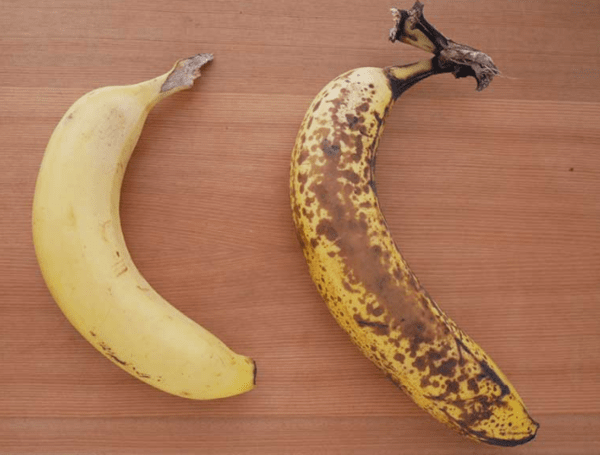
Bananas actually speed up their own ripening.
As they ripen, bananas release a gas called ethylene. This gas triggers ripening, and the catch is that bananas affect each other. When they’re stuck together in a bunch, the ethylene builds up and accelerates the whole process.
That’s why a bunch can look fine one minute and suddenly all turn dark at once. The ripening is self-accelerating, not just the result of time passing.
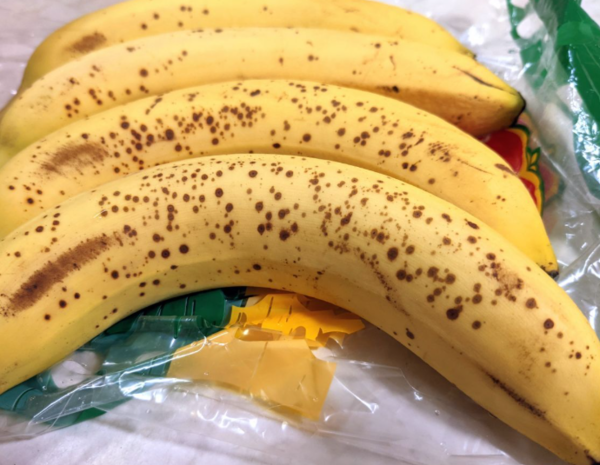
Separate them so the gas can disperse and the ripening slows down.
Don’t leave bananas in the bunch—break them apart so ethylene doesn’t pool in one spot. When each banana is by itself, they influence each other less and ripen more slowly.
Under the same conditions, separated bananas keep their color and texture much longer. The trick is simple, but the difference is obvious.
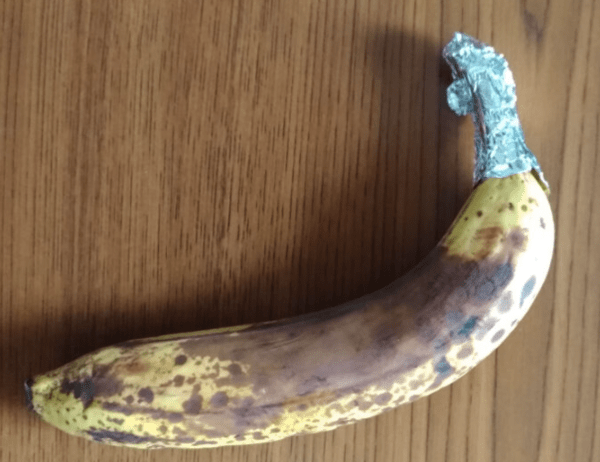
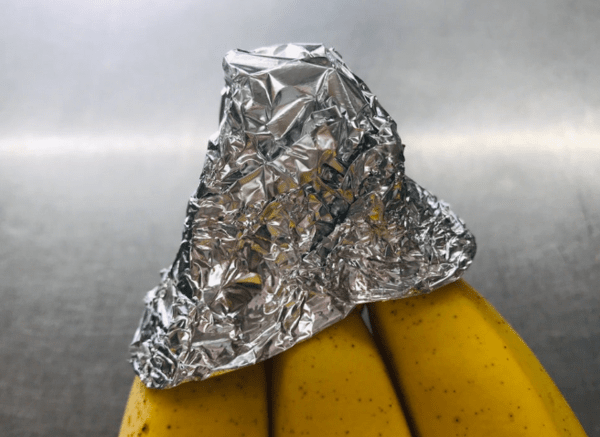
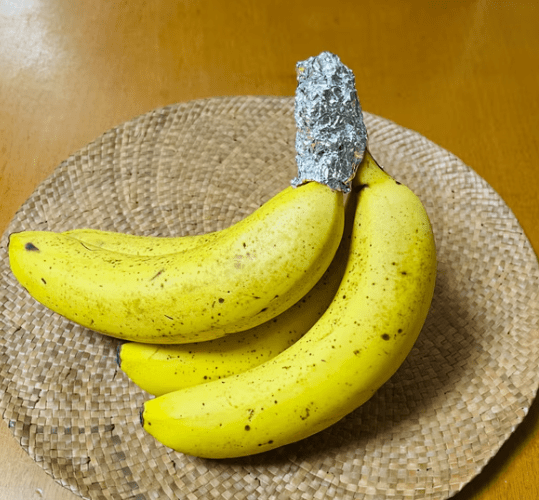
Wrapping the stem in aluminum foil is the most important tip.
The stem is where most ethylene escapes. Wrap that area in aluminum foil to slow the gas from spreading out. That also cuts down on exposure to air, which helps delay oxidation.
It’s not just covering the fruit—you’re blocking the starting point of ripening. Add this one extra step and you can push back the blackening by days.
For best results, pay attention to where you store them too.
Room temperature is ideal for bananas, but temperature and placement matter a lot. Direct sunlight or a hot spot will speed up ripening, while a shaded, well-ventilated area keeps them fresher longer.
Avoid dumping them straight into the fridge—the peel can darken quickly. The storage method and the environment need to work together to really make a difference.
Small habits cut food waste—and your grocery bills—too.
Bananas aren’t pricey, but they do spoil easily and often get tossed. Simply separating them and wrapping the stems can extend their life by several days or more.
It costs nothing and you can do it immediately, which makes it super practical. In the end, it’s not how long you keep them but how you store them. Tiny changes make a big difference in freshness.










Most Commented