
Translation result
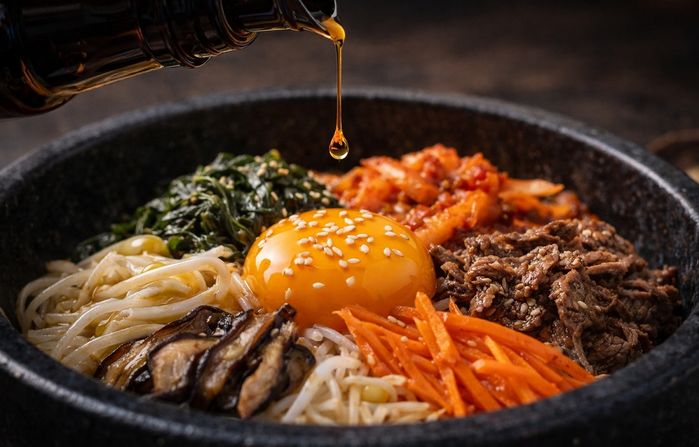
This image was generated by AI to help illustrate the article
We often think of sesame oil as the closer that rescues bland food—or even a plain bibimbap. Toss a handful of forgotten namul from the back of the fridge into gochujang, and that final drizzle of sesame oil can transform the whole bowl. But what’s the science behind sesame oil’s almost magical pull on our brains?
1. An aromatic attack: how pyrazines trigger appetite
Sesame oil’s signature is its toasty, nutty aroma. Pyrazine compounds formed when sesame seeds are roasted rank among the strongest appetite triggers for humans. These scent molecules hit the olfactory system and send signals straight to the limbic system—the brain’s emotion-and-memory hub—flipping the switch to pleasure mode long before you take a bite.
2. Fat‑soluble vitamins and vegetables’ chemical hookup
The vegetables in bibimbap—carrots, spinach, squash, and the like—are rich in fat‑soluble vitamins such as A, E, and K. The unsaturated fats in sesame oil help dissolve those nutrients, boosting absorption by as much as 5–10 times. From an evolutionary perspective, our brains register nutrient‑dense, energy‑efficient foods as desirable. In short, sesame oil helps deliver the veggies’ nutrients in a form the brain can readily recognize and reward.
3. A coating effect on taste: taming bitterness, trapping umami
The oil forms a thin film over the tongue’s taste receptors, softening raw or bitter notes from vegetables. At the same time, oil droplets lock in the heat of gochujang and the savory umami of the namul, letting those flavors linger. This flavor persistence makes bibimbap taste deeper and last longer on the palate.
4. Fat’s pull on the brain’s reward system
The brain is wired to seek out high‑calorie energy sources like fat. When sesame oil is evenly mixed into bibimbap, the hypothalamus responds by releasing dopamine. The moment quality fat meets simple carbs and fiber, the brain perceives a complete, satisfying meal and delivers a strong sense of reward.
Bottom line: that drizzle of sesame oil in bibimbap isn’t just a finishing touch. It acts as a chemical bridge between ingredients, balancing the nutrients and aromas our brains crave—essentially a tiny triumph of molecular gastronomy that turns a bowl into something irresistible.













Most Commented