
Translation result
Dureup (aralia shoots), spring’s signature wild green, wakes the appetite with its pleasantly bitter aroma and flavor. The easiest—and most satisfying—way to enjoy that deep taste is in dureup doenjang-muchim, aralia shoots dressed simply with savory soybean paste.
Dureup is a short-season green, harvested around April; cooks use the tender young shoots that sprout from tree branches. At that time the shoots are soft and intensely fragrant, so they shine with minimal cooking. Paired with doenjang (soybean paste), their toasty nuttiness and brisk bitterness create a classic spring side dish. Because it highlights the ingredient’s natural flavor without fuss, it’s a favorite in home kitchens.
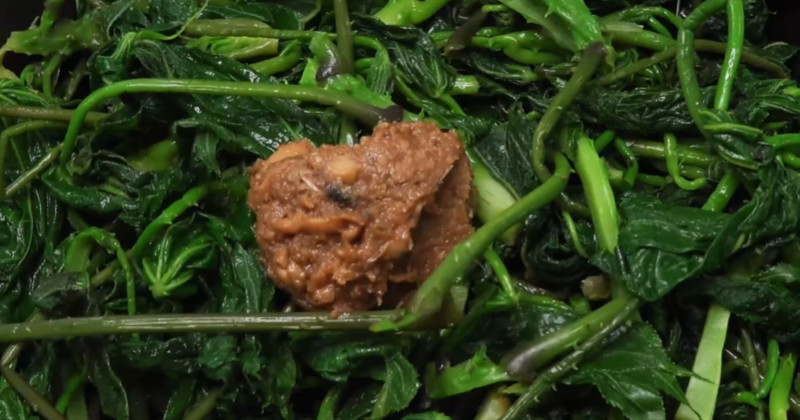
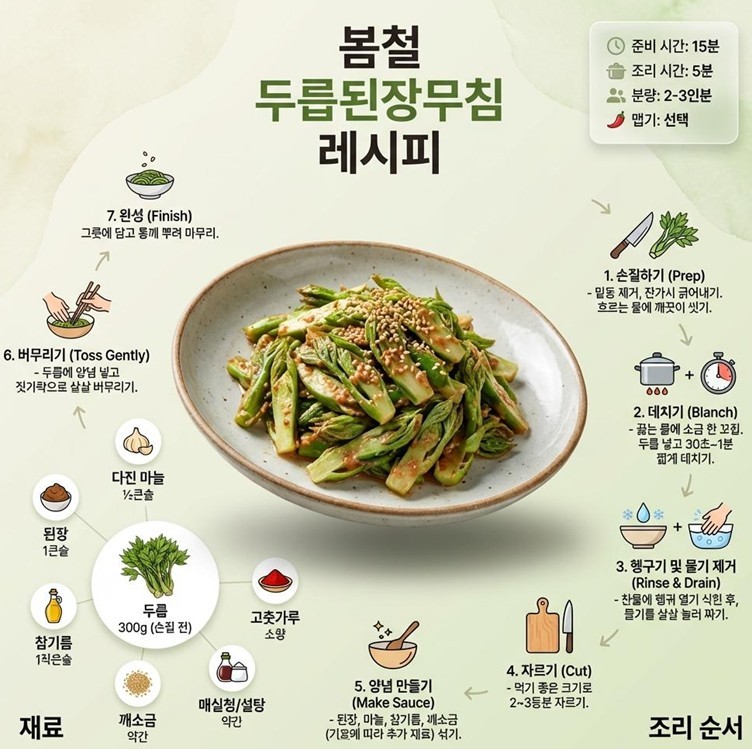
The secret to great dureup-doenjang-muchim is in the prep and quick blanch. Start by choosing fresh dureup: stems should be slim and tender, with tightly curled leaf tips. Look for a vivid light-green color and a springy feel when you touch them. Before prepping, trim off the tough base and gently scrape away any tiny hairs on the surface with a knife so they’re pleasant to eat.
Rinse the shoots under running water, opening them up to remove any dirt tucked between the leaves. After cleaning, blanch them in boiling water—this step really shapes the final flavor. Once the water bubbles, add a pinch of salt and blanch the dureup for just 30 seconds to 1 minute. Overcooking will make them limp and dull their fragrance, so timing is everything.
Immediately rinse the blanched dureup in cold water to stop the cooking, then gently press out excess water. Avoid twisting them hard, which can break their texture; instead press lightly to remove moisture. Cut the shoots into two or three bite-sized pieces. Move quickly through these steps to preserve their aroma and texture.
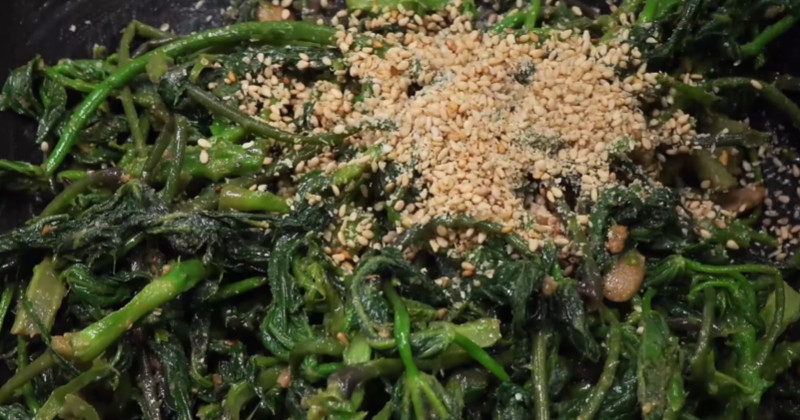
Now for the dressing. The seasoning for dureup-doenjang-muchim is simple, but balance is key. Mix 1 tablespoon of doenjang with 1/2 tablespoon minced garlic, 1 teaspoon sesame oil, and a pinch of toasted sesame seeds. If you like a gentle heat, add a dash of gochugaru (Korean chili powder). For a softer, rounder finish, stir in a little maesil-cheong (plum syrup) or a pinch of sugar. Because the dish is all about the dureup’s fragrance, keep the seasoning restrained.
Toss the prepared dureup with the dressing gently. Rather than kneading with your hands, use chopsticks or your fingertips to fold the sauce in so the shoots keep their shape and crispness. Finish with a sprinkle of sesame seeds. Though the process is straightforward, fresh ingredients, careful prep, and balanced seasoning make all the difference.
Serve dureup-doenjang-muchim with warm rice to really taste what the season offers. Its slight bitterness and nutty depth cleanse the palate and pair beautifully with other dishes, helping balance a meal. It’s especially welcome alongside rich or oily foods, where it cuts through heaviness.
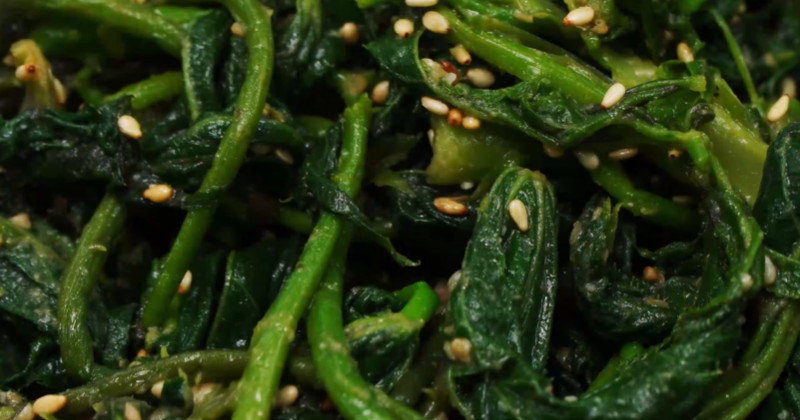
As people increasingly favor healthy, natural eating, demand for seasonal wild greens like dureup has grown. With an emphasis on minimizing artificial seasonings and letting natural flavors shine, simple, nutritious dishes such as dureup-doenjang-muchim are back in the spotlight. Restaurants are also featuring dureup on spring-limited menus to highlight seasonality.
Because the harvest window for dureup is short, use it quickly while it’s fresh. Cook it as soon as possible after buying; wrapping it in newspaper or paper towels and refrigerating will help retain moisture. After blanching, don’t store it too long—consume on the same day for the best flavor.
Dureup-doenjang-muchim captures the brief magic of spring and serves it up with minimal fuss. With careful trimming, a quick blanch, and a simple dressing, this dish is one of the purest ways to bring the season to the table.
Your daily personalized horoscope report! What’s in store for you today?











Most Commented