
Translation result
Eggplant is an ingredient that quietly demands a lot of hands-on care. When you get it right, the flavor comes back honestly; miss a single step and it can turn tough or limp. From skipping blanching and getting soak time right to the seasoning mix, the kneading method, and the cooling timing—each stage has easy-to-miss details.
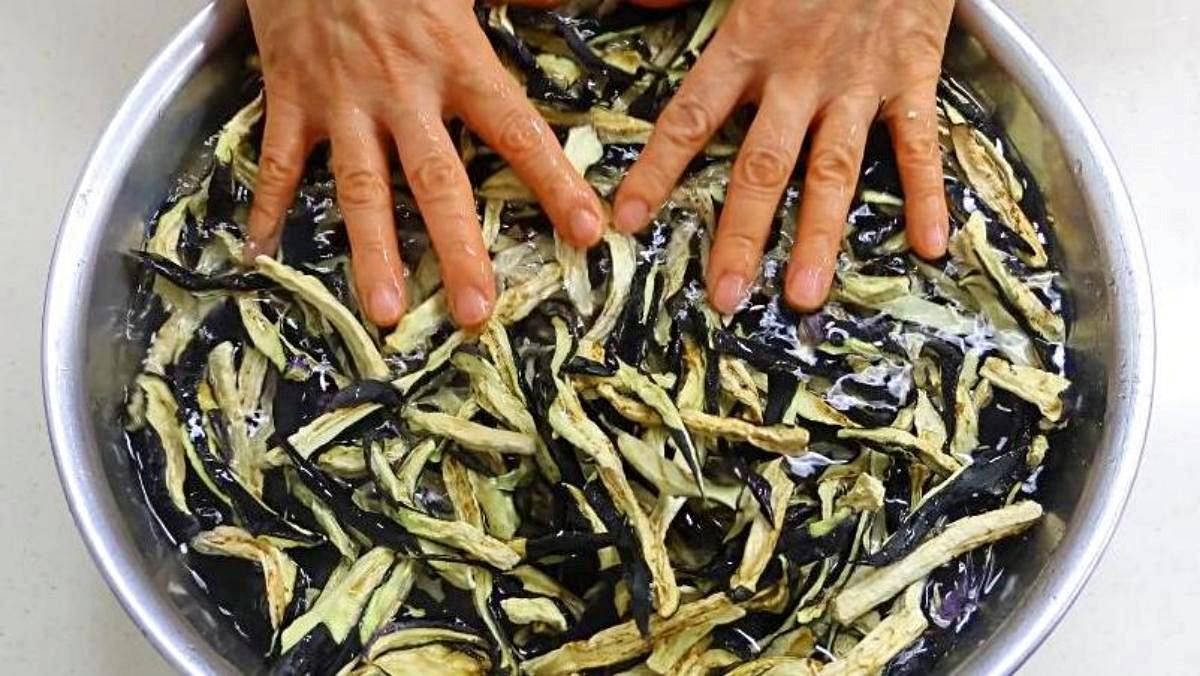
According to the YouTube channel ‘Garussi home cooking,’ the first rule for making dried eggplant banchan is: don’t blanch. Blanching makes the texture overly soft and wipes out the dish’s characteristic chew. Instead, soak the eggplant in cold water for at least 4 hours 30 minutes to 6 hours. When the weather is cold, extend the soaking time so the pieces rehydrate evenly all the way through.
Washing is just as important as soaking. The musty scent typical of dried vegetables needs to be rinsed away 2–3 times after soaking to avoid any off-odor. When you squeeze out the water, don’t wring them tight. Gently press so the pieces keep their shape and still hold a bit of moisture. If they lose too much water, they’ll become stiff during frying.
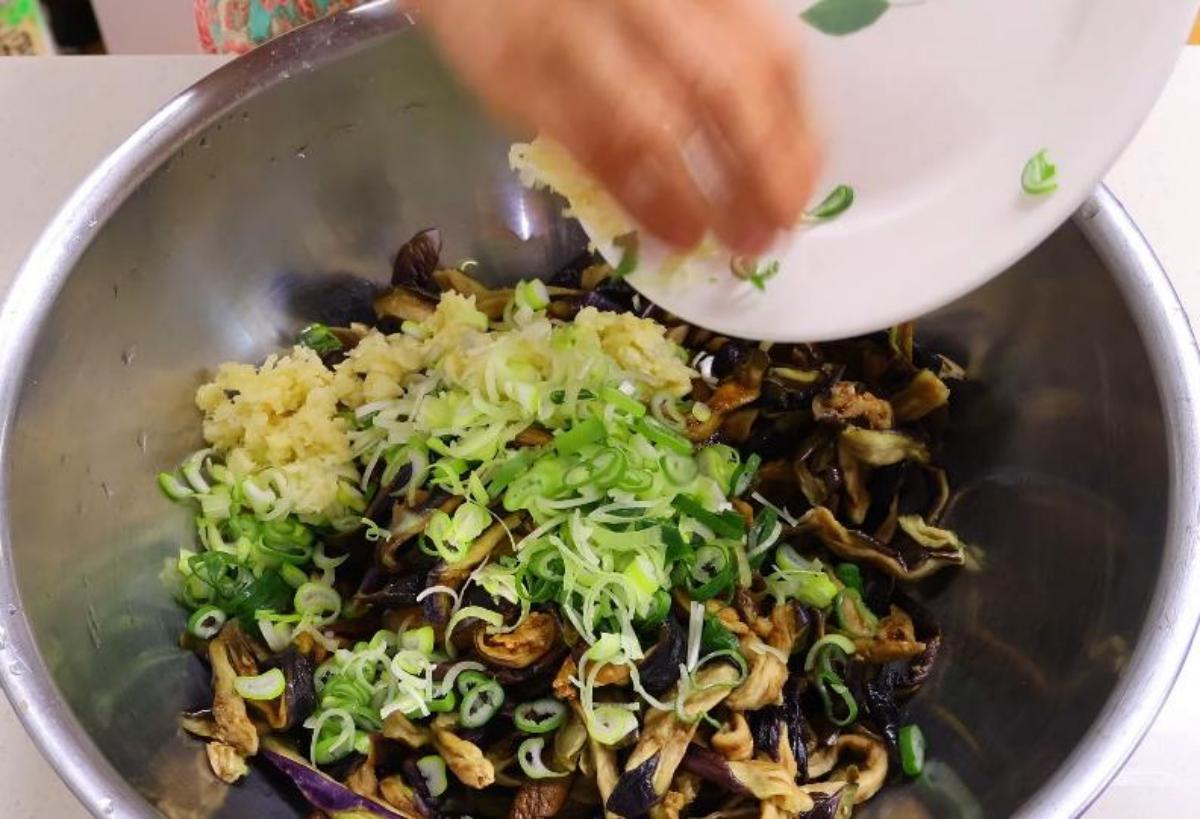
The base for dried eggplant seasoning is guk-ganjang (Korean soup soy sauce). Adding a splash of tuna fish sauce deepens the umami compared with using soy sauce alone. Avoid sweeteners like maesil-cheong (plum syrup) or sugar—sweetness masks the clean, savory character of the vegetable.
Freshly crushed garlic, used right before mixing, gives aroma without the sharp bite of pre-minced garlic. Finely chop plenty of green onion so its fragrance really infuses the dish. Don’t skip perilla oil: it tames the dried texture and gives the eggplant a glossy finish.
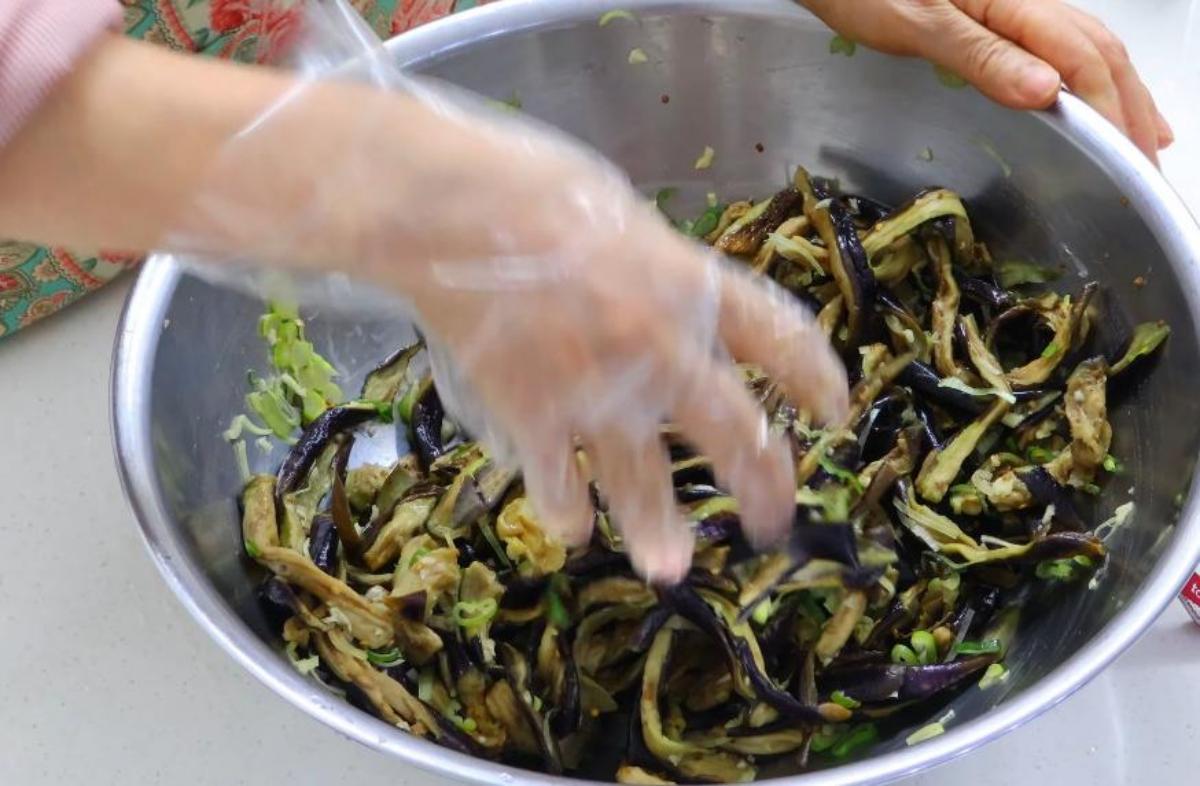
The most crucial step that defines the flavor of dried eggplant banchan is vigorously kneading the seasoned pieces with your fingertips. If you just mix casually, the seasoning sits only on the surface; if you knead thoroughly, the flavors penetrate and the texture softens. Skip this step and no matter how good your seasoning is, the dish will feel off.
While stir-frying, add small amounts of kombu-and-shiitake mushroom broth to provide moisture and extra umami. If you prefer a rich, silky finish, stir in roasted perilla seed powder at the end to taste.
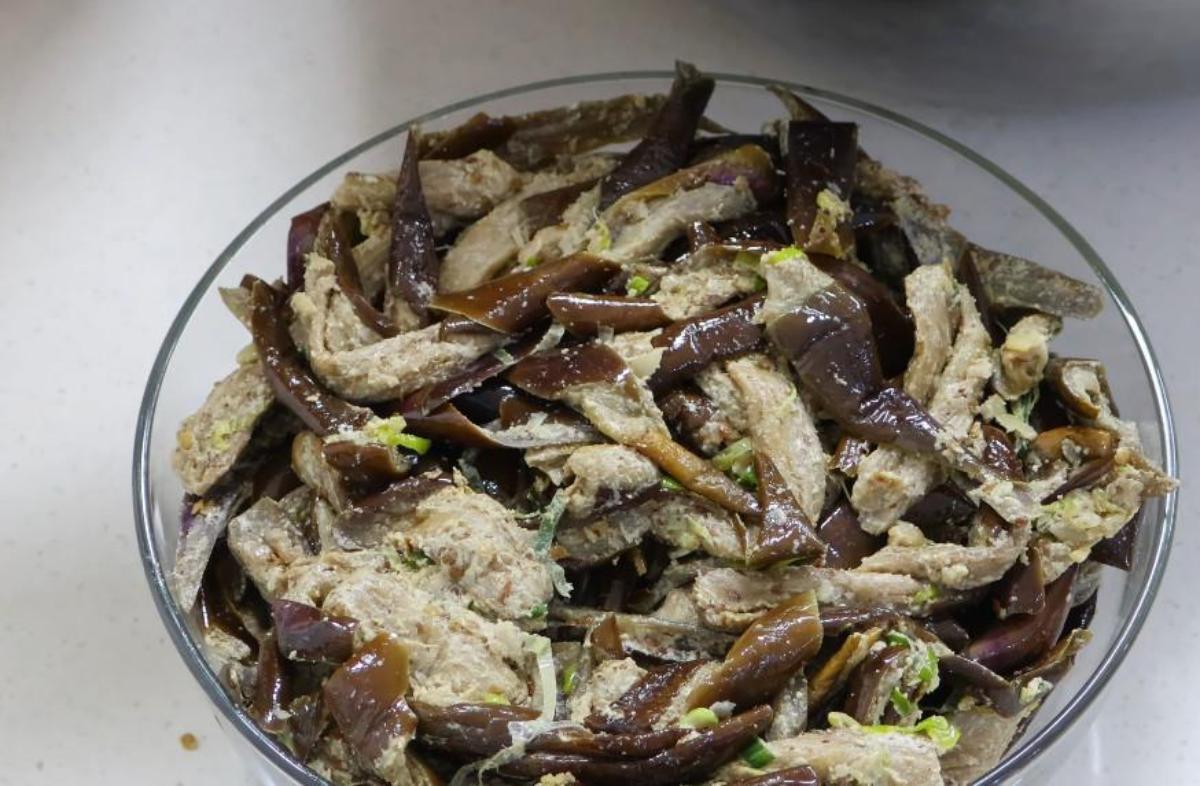
Leaving the eggplant in the pan after frying is the most common mistake that ruins the texture. Residual heat keeps cooking it until it becomes limp. Transfer it immediately to a wide bowl and cool it quickly in a cold place, like a balcony, so it stays springy and slightly firm.
One last trick: gently knead it once more after it has completely cooled. As it cools, the pieces relax and the seasoning redistributes evenly. Complete this step and your dried eggplant will be transformed into something completely different from when you started.
1. Soak in cold water for 4 hours 30 minutes–6 hours (soak longer on cold days)
2. Rinse 2–3 times to remove any off-odor
3. Lightly press so pieces stay moist and keep their shape
4.‘guk-ganjang + tuna fish sauce + freshly crushed garlic + finely chopped green onion + perilla oil’ for seasoning
5. Knead vigorously with your fingertips
6. Stir-fry, adding kombu-and-shiitake broth a little at a time (add perilla seed powder if you like)
7. When done, transfer immediately to a wide bowl and cool quickly in a cold place
8. After it cools completely, gently knead once more to finish
Your daily horoscope report! How will your day go?










Most Commented