
Translation result
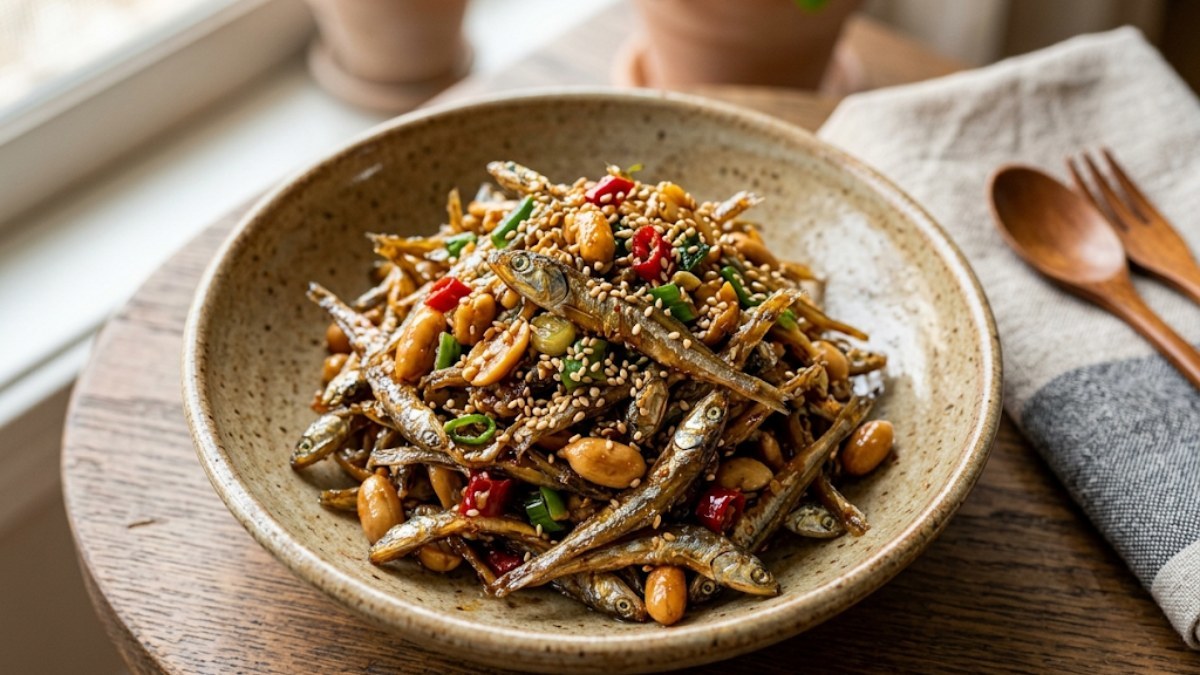
Janmyeolchi-bokkeum (stir-fried tiny anchovies) — a staple on Korean tables — can be deceptively tricky to master. If you’ve ever bravely fried a big batch only to open the fridge the next day and find the anchovies clumped together and rock-hard like candy, you’re not alone. Every newbie cook has probably had that sad moment.
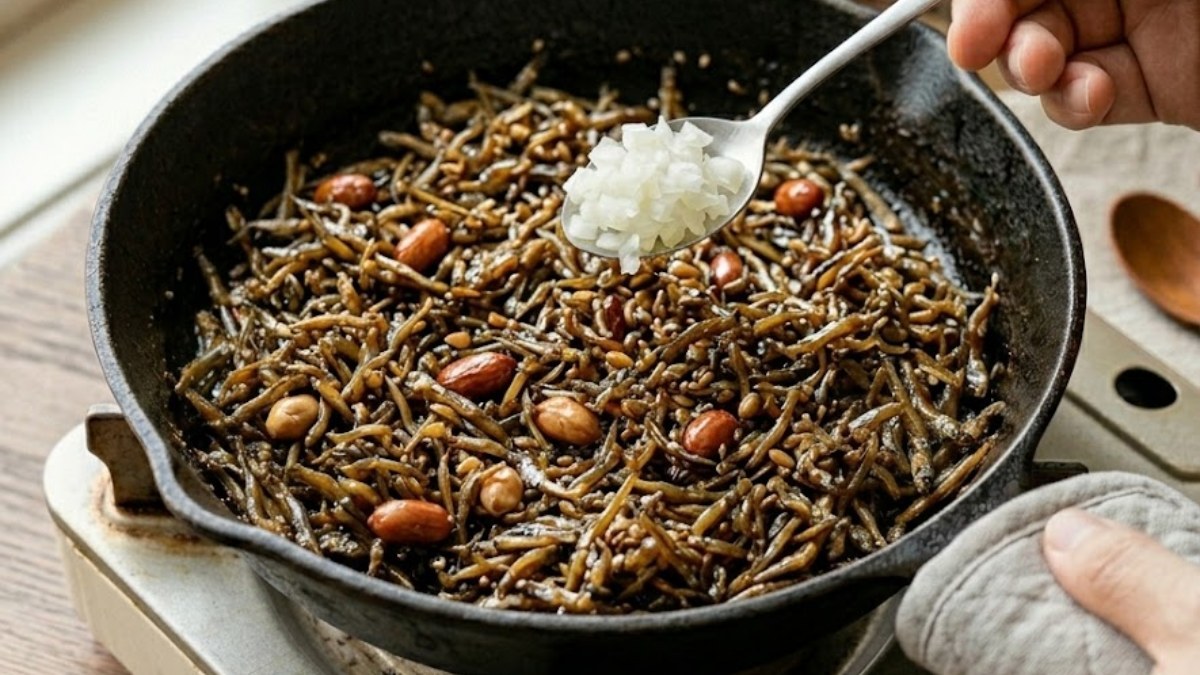
If you followed recipes and loaded up on corn syrup but still couldn’t replicate that tender-yet-crisp restaurant texture, this recipe is here to fix that once and for all.
Let go of the notion that home cooking has to be complicated. With one bag of anchovies hiding in your pantry and a single onion, you can make a crunchy, sweet spoonful of homemade janmyeolchi-bokkeum to pile onto a steaming bowl of white rice tonight.
Trust me—hearing your family reach for seconds (and thirds) is way more satisfying than you might expect.
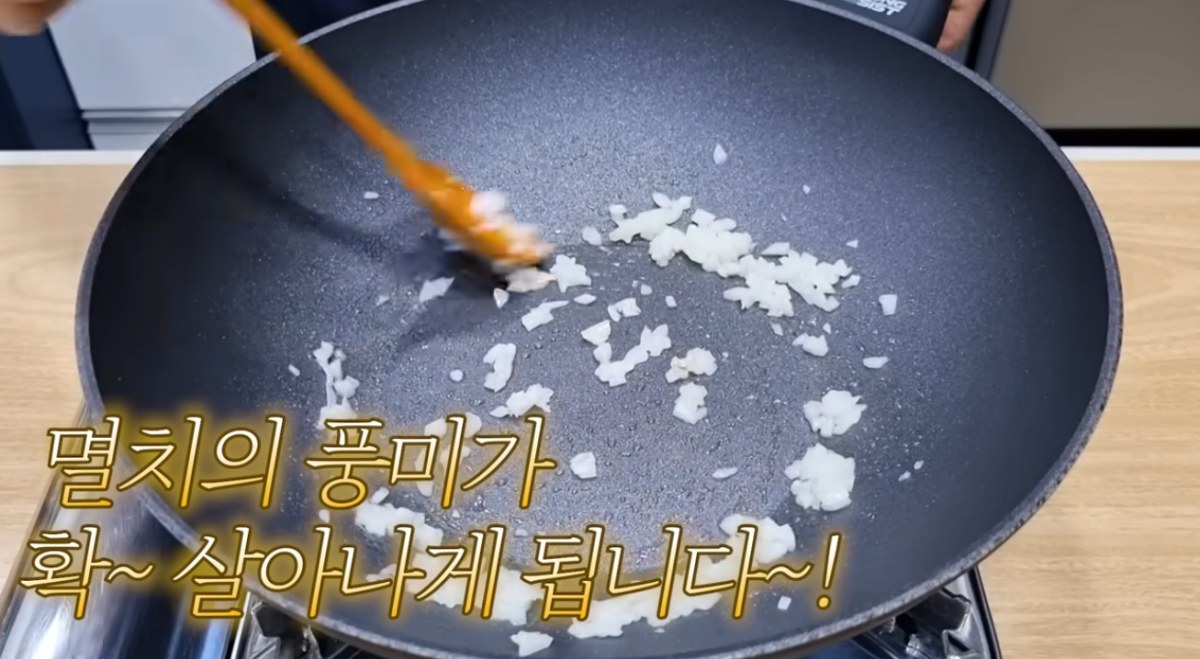
According to the YouTube channel Chef Kim Dae-seok TV, the janmyeolchi-bokkeum recipe goes like this. First, gather 2 cups of tiny dried anchovies (100 g / 3.5 oz), 50 g / 1.8 oz of almonds, and 50 g / 1.8 oz of walnuts.
Next, heat 1/2 tablespoon of cooking oil in a pan and add a heaping tablespoon of finely chopped onion—the day’s unsung hero. Sauté over medium heat for about 1 minute. The onion helps highlight the anchovies’ flavor.
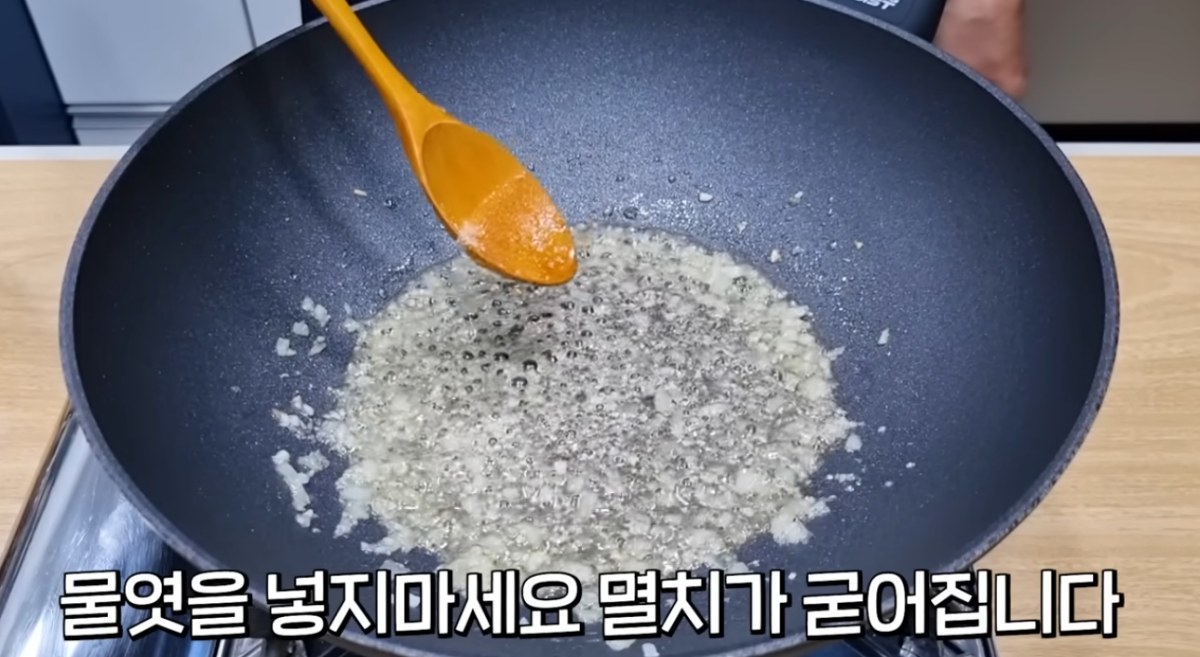
When the onion softens, add 3 tablespoons of mirin, 1/2 tablespoon of minced garlic, and 1/2 tablespoon of sugar, then stir. That half tablespoon of sugar is the secret to extra crunch. Notably, this recipe skips corn syrup, which can make anchovies harden in the fridge.
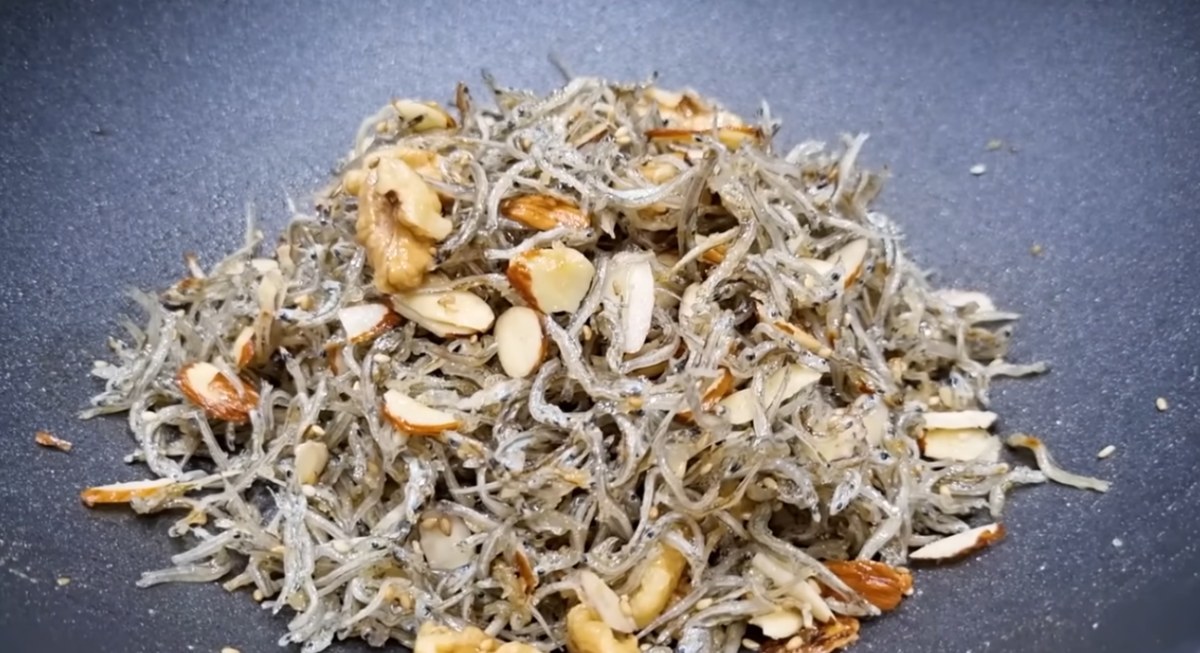
Once the sauce starts bubbling, lower the heat and add the pre-fried anchovies. Then add 30 g / 1.1 oz of almonds and 30 g / 1.1 oz of walnuts and slowly stir-fry to combine. Add more nuts to taste for extra nuttiness.
After about 1 minute 30 seconds of frying, sprinkle another 1/2 tablespoon of sugar and toss so the anchovies don’t stick together. The result is a crisp, deeply flavored janmyeolchi-bokkeum.
◆Why skip corn syrup and use chopped onion?
Common household syrups like corn syrup or oligosaccharide add shine, but in a cool fridge they can harden and glue the anchovies together. This recipe drops those syrups and uses sugar instead. The key is adding sugar once in the sauce and again at the end.
The final sugar crystals draw out moisture from the anchovy surface and form a thin coating, so the bites stay crisp—more like a snack than a soggy side.
Adding onion to anchovy stir-fry isn’t typical, but it’s a chef move. Sautéing a tablespoon of finely chopped onion softens its bite and tames the anchovies’ fishiness, while naturally boosting umami without artificial seasonings. The onion’s moisture also helps keep the sauce from burning as you cook.
◆When should you add the nuts?
Don’t toss the almonds and walnuts into the pan at the start. Add them near the end after the sauce has boiled—this preserves their aroma and prevents them from turning bitter. Nutritionally, the calcium in anchovies pairs well with the fats in nuts, helping each other’s absorption.
If you want to boost calcium uptake even more, take the chef’s tip and add a little cheongyang or red chili pepper. The vitamin C in the pepper helps the body absorb calcium from the anchovies.
![[Comic] Four-panel comic based on the article / Wikitree](https://contents-cdn.viewus.co.kr/image/2026/03/CP-2022-0028/image-70dd1160-e29f-4235-ab55-262f27bcdc46.jpeg)
◆Storage tips for janmyeolchi-bokkeum
Right after cooking, transfer the anchovy stir-fry from the pan to a wide tray and spread it out to cool—this prevents residual heat from melting the sugar and causing clumps.
Once completely cooled, store it in an airtight container and it will stay crisp for more than a week. This dish isn’t just a side; chop it up for rice balls or use it as a crunchy topping for bibimbap—the texture and flavor work beautifully.
Daily horoscope you check every day! What does today have in store for you?











Most Commented