
Translation result
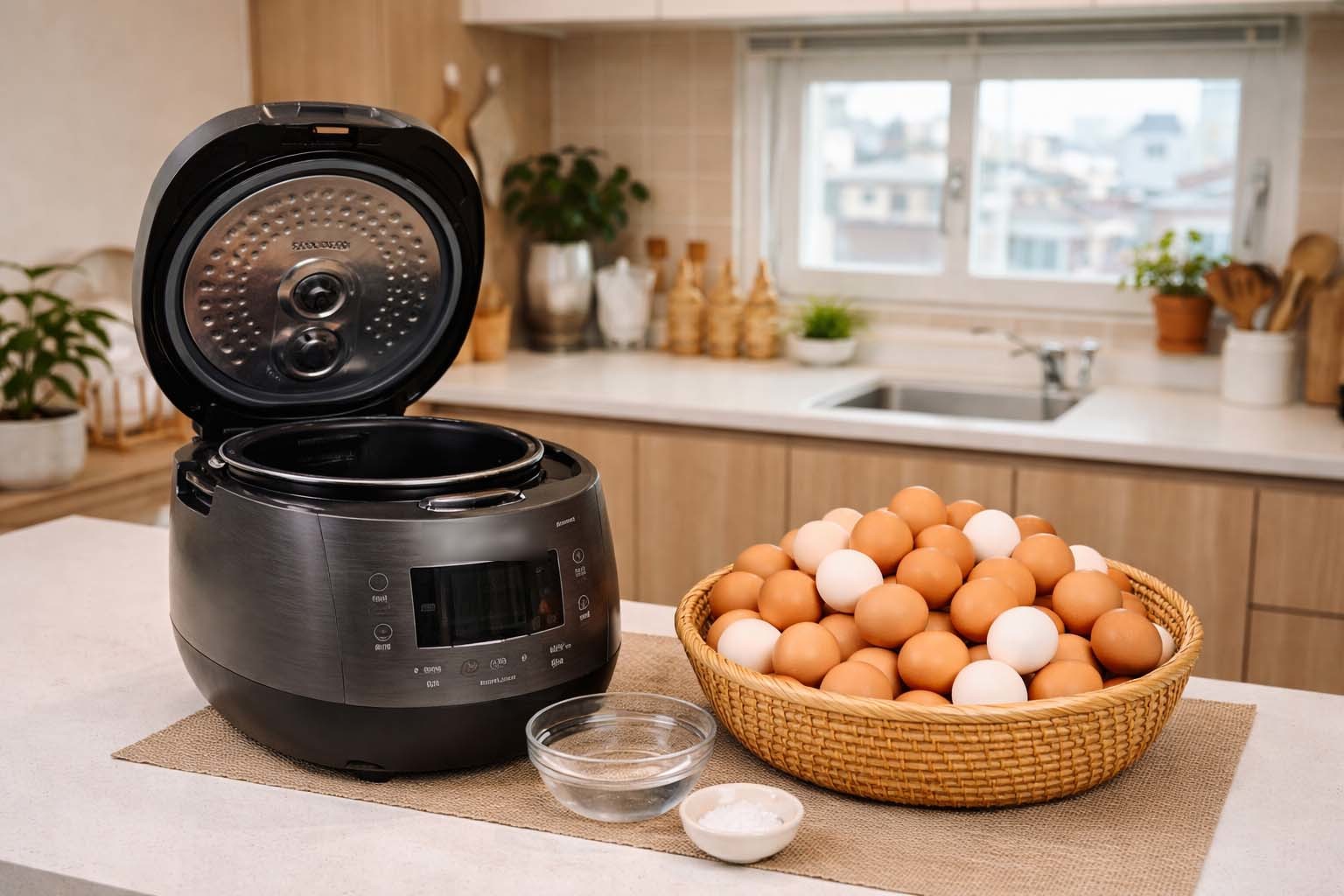
In one corner of a jjimjilbang (Korean spa), baskets of maekbanseok eggs sit heaped in their nets. Crack one open and a toasty aroma rises; bite in and you get that satisfyingly chewy texture. The best part? You don’t have to trek to a public bath to enjoy it — your electric pressure rice cooker at home can recreate that exact experience.
The technique is far simpler than you’d expect. First, bring the eggs to room temperature — don’t use them straight from the fridge. The temperature shock can make the shells crack during cooking. Give them at least an hour, or two if your home is cold in winter. That’s the first rule.
Next, prep the rice cooker. Laying one or two bay leaves on the bottom can help cut the eggs’ stronger aroma, though it’s optional. Then flip a ceramic rice bowl upside down on the cooker’s base and neatly arrange the eggs on and around it. The bowl helps moisture circulate evenly, which makes the eggs chewier and tastier. Use as many eggs as you like.
About 100㎖ (roughly 3.4 fl oz) of water is enough. Too much water can prevent the eggs from developing the deep brown color you expect from stone-baked eggs. Some people add a tablespoon of salt and a tablespoon of vinegar to the water — the salt seasons the eggs, and the vinegar helps control odor without making the eggs taste sour. Adjust to your preference; plain water works fine, too.
When everything’s set, close the lid and press the white rice cooking button. If your cooker has both high-pressure and no-pressure modes, turn the handle to the high-pressure lock before selecting white rice. After one cycle the eggs will be fully cooked. You can eat them then, but if you want that darker color and extra chewiness like the ones at a jjimjilbang, run a second cooking cycle. Don’t open the lid before the second cycle — cancel keep-warm and press the re-cook/start button right away. Check that there’s enough water left; if it’s nearly gone, add a little to avoid burning the eggs or harming the cooker.
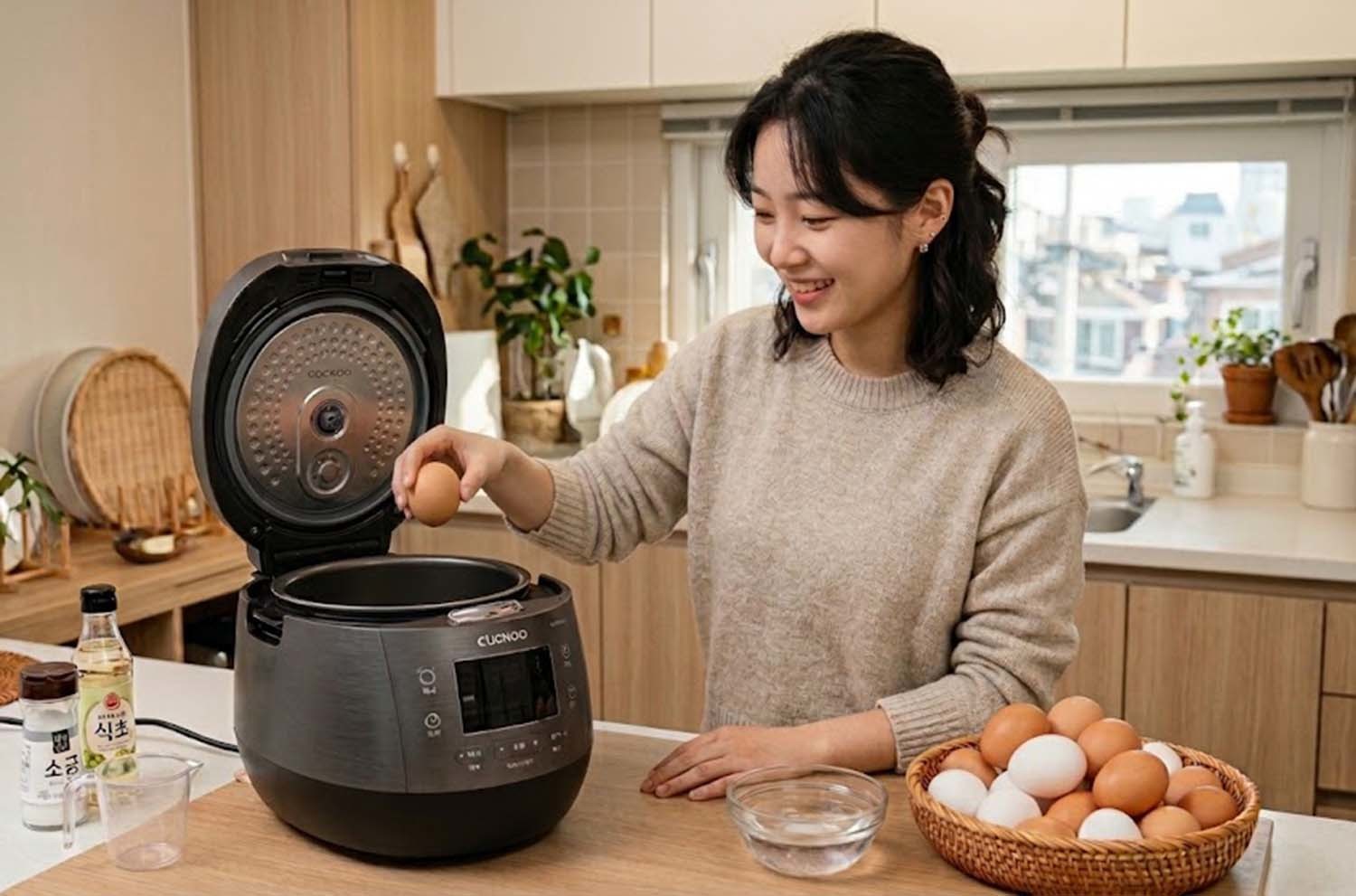
After the second cycle, remove the eggs and transfer them to cold water. That creates a gap between the shell and the white, making the shells much easier to peel. One important caution: don’t pour cold water directly into a hot rice cooker. First put the eggs in a separate bowl, then pour the cold water over them to protect the cooker.
When you peel them, the whites will have a light brown tint on the surface, and the inside will be moist and springy — just like the ones you remember from the spa.
Eggs are often called a complete food because they’re packed with nutrients. One egg contains about 6 grams of protein and a full range of essential amino acids. They’re rich in fat-soluble vitamins (A, D, E, and K), B vitamins, and minerals like iron, zinc, and selenium. Choline in the yolk supports brain function and memory, and antioxidants such as lutein and zeaxanthin benefit eye health. While eggs were once criticized for their cholesterol content, recent research shows dietary cholesterol has less impact on blood cholesterol levels than previously thought.
They’re perfect as a quick breakfast swap or a satisfying snack during a diet. Toss one into a salad or use them as a side dish — for example, in jangjorim (soy-braised eggs).
Get your daily personal horoscope! How will your day go?











Most Commented