
Translation result.
As shoppers increasingly favor activewear for running and outdoor adventures—pieces that work for workouts and everyday life—the golf apparel market is cooling off. The pandemic-era golfwear boom has lost momentum as young adults in their 20s and 30s shift interests and spending habits.
On the 8th, the Korea Federation of Textile Industries reported that fashion spending for the 2025 winter season (last December–this February) totaled 21.0143 trillion KRW (about $15.76 billion). By category, casual wear spending hit 6.5617 trillion KRW (about $4.92 billion), up 18.6% year over year. Outdoor wear reached 2.5258 trillion KRW (about $1.89 billion), up 22.5%, and sports apparel came to 2.6206 trillion KRW (about $1.97 billion), up 8.9%. Golfwear, however, fell 16.1% to 710 billion KRW (about $532.50 million).
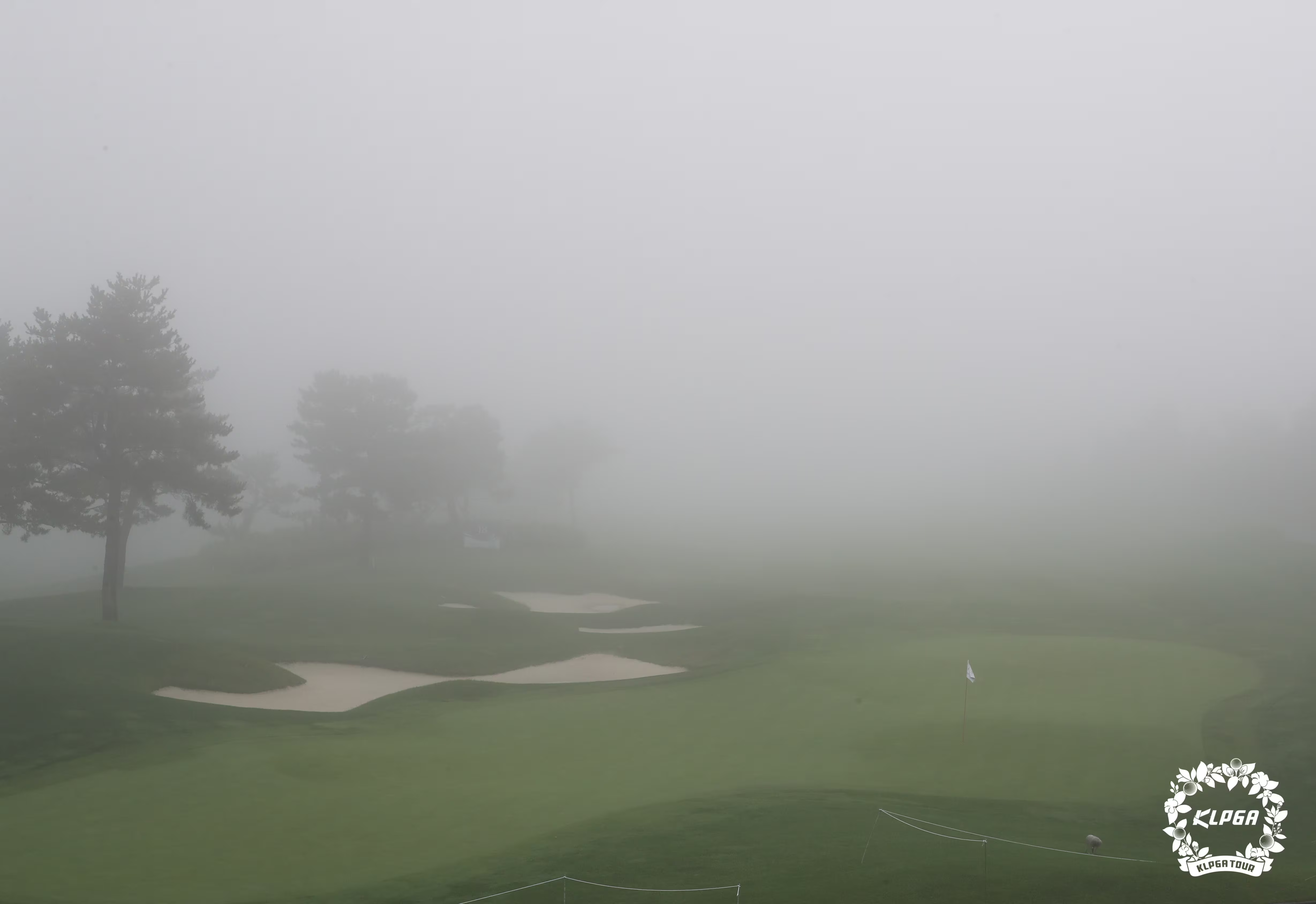
The slump in golfwear shows no signs of letting up. Young adults who helped spark golf’s pandemic surge are gravitating toward running and hiking, while overall golf participation has steadily declined. Domestic golf rounds dropped from 50.58 million in 2022 to 47.72 million in 2023, 47.41 million in 2024, and 46.41 million last year.
Chris F&C, a golf-apparel maker, saw sales and operating profit tumble from 2022 through 2024 and swung to a loss last year, reporting a 47.2 billion KRW (about $35.40 million) deficit. The company sells licensed golf lines such as Parigates, Ping and St. Andrews.
Hyungji Global, which operates the golf brand Castelbajac, posted operating losses in the roughly 8.0 billion KRW range last year and remained in the red. Its net loss widened to 34.5 billion KRW (about $25.88 million), more than double the previous year. Golfwear made up 78.2% of Hyungji Global’s revenue last year.
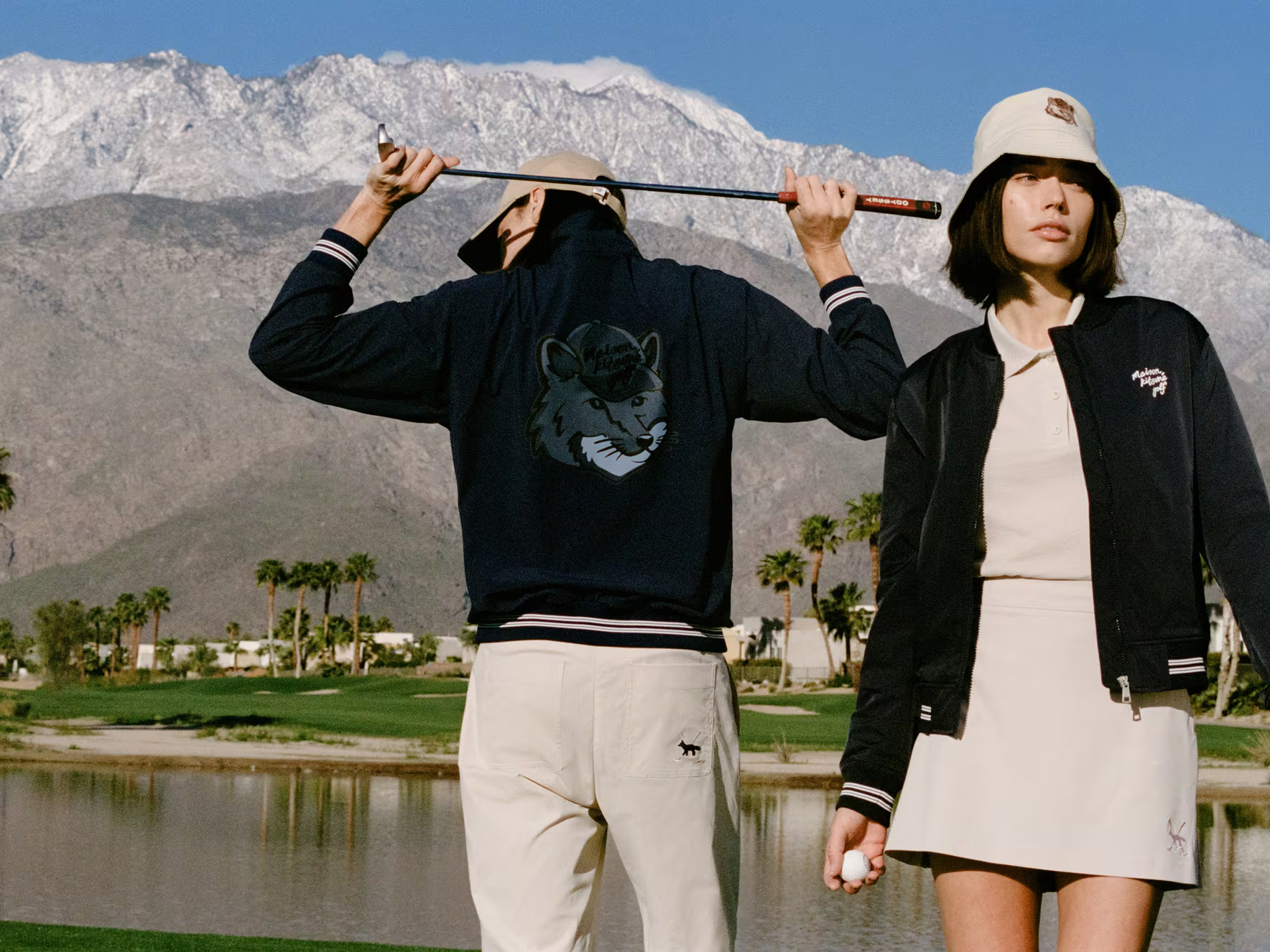
After several tough years, big-name players have pulled back and smaller labels are feeling the squeeze. LF closed its Random Golf Club line, and Samsung C&T withdrew its Maison Kitsuné golf collection just one year after launch. Hansae MK reduced the number of PGA Tour and LPGA golfwear stores to streamline operations.
Smaller manufacturers have also felt the fallout. CDC Golf & Sports, which runs premium label Crack & Kal Golf, entered rehabilitation proceedings. Shinhan Korea, operator of the JDX golf brand, filed for rehabilitation in April last year amid financial strain but secured court approval for a recovery plan at year-end and exited formal receivership.
That shift stands in sharp contrast to the booming running and outdoor categories, which continue to attract 20- and 30-somethings. The industry estimates about 10 million runners in Korea—more than double the roughly 5 million reported in 2017. The domestic sneaker market totaled about 4.0 trillion KRW (roughly $3.00 billion) in 2024, with running shoes making up about 1.0 trillion KRW (roughly $750.00 million) of that.
Retailers are racing to capture running demand. Sports and outdoor brands are beefing up running lines, and department stores and convenience stores are creating running-only spaces, hands-on demo zones and tailored services.
Hyundai Department Store opened a dedicated “Running Club” space at The Hyundai Seoul in Yeouido to showcase running brands and let shoppers test products. Convenience store chain CU launched its first running-focused outlet, “Running Station Signature,” near the Han River in Yeouido.









Most Commented