
How AI is Revolutionizing the Fashion Industry: Insights from Fashion AI Connect 2026
Daniel Kim Views
Translation result.
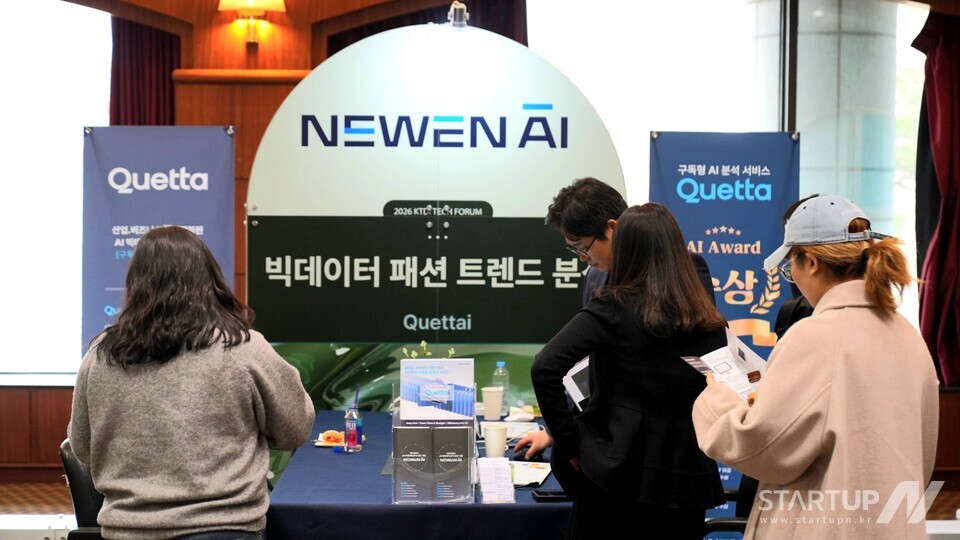
AI-powered data analysis is rewriting the playbook for fashion planning. Beyond trend forecasting, new tools now quantify fabric choices and even consumer emotions — and the industry is definitely paying attention.
On the 24th, Newn AI debuted the fashion-industry–specialized Intel CorporationRegions Platform at Fashion AI Connect 2026, held at the Korea Textile Development Institute headquarters in Daegu. The seminar brought together leaders to share AI technologies applicable to fashion and textiles and to boost industry competitiveness.
Representatives from fashion brands and textile companies packed the room to see how AI is already being applied to product planning and marketing, and the response was enthusiastic.
Newn AI director Eunjeong Park unveiled the platform’s analysis of women’s fashion trends and consumer behavior. She also highlighted the key fashion keywords and market movements the AI prediction model suggests tracking next.
The platform is built for practical, in-the-field use rather than simple data aggregation. Its main features include seasonal trend analysis; in-depth breakdowns across roughly 40 subcategories such as tops, bottoms, outerwear and dresses; brand positioning and competitive landscape analysis; connectivity mapping between brands and items; platform-specific market share and data-volume assessments; celebrity and influencer trend monitoring; and AI-driven trend forecasting.
What sets it apart is that teams can use it directly during the product-planning stage, turning insights into immediate action.
The presentation’s standout feature was the material AI analysis model. It dissects more than 30 materials — from natural fibers like cotton, silk and wool to functional synthetics, leather, tweed and boucle — and converts sensory impressions into data.
By quantifying descriptors such as crisp nylon, cozy cashmere and cool linen, the platform helps designers and merchandisers choose next season’s materials with data-backed confidence instead of relying solely on intuition.
Data reliability is another core focus. Newn AI applies its Quetta_SentimentAnalysis model for precise consumer-response analysis and uses Quetta_Buzztype to surface genuine user opinions. Quetta_SpamDetection then filters out promotional or malicious content.
They also employ the RAG-based Quetta_TrendGPT — which doesn’t depend on external APIs — to enhance the consistency and trustworthiness of the results.
The Korea Textile Development Institute, which hosted the event, said AI has moved beyond a mere support tool to become core infrastructure for the fashion industry. Their assessment: data-driven decision-making now directly influences competitiveness and revenue.
Newn AI said it will keep refining the platform so fashion brands can better read rapidly shifting markets and deliver measurable outcomes.
As AI becomes more embedded in fashion, planning, production and marketing are clearly shifting toward a data-centric model.
Still, challenges remain — from data bias and herdlike trend conformity to potential hits to creativity. As the technology advances, the industry needs a balanced approach to address these risks.















Most Commented