
Translation result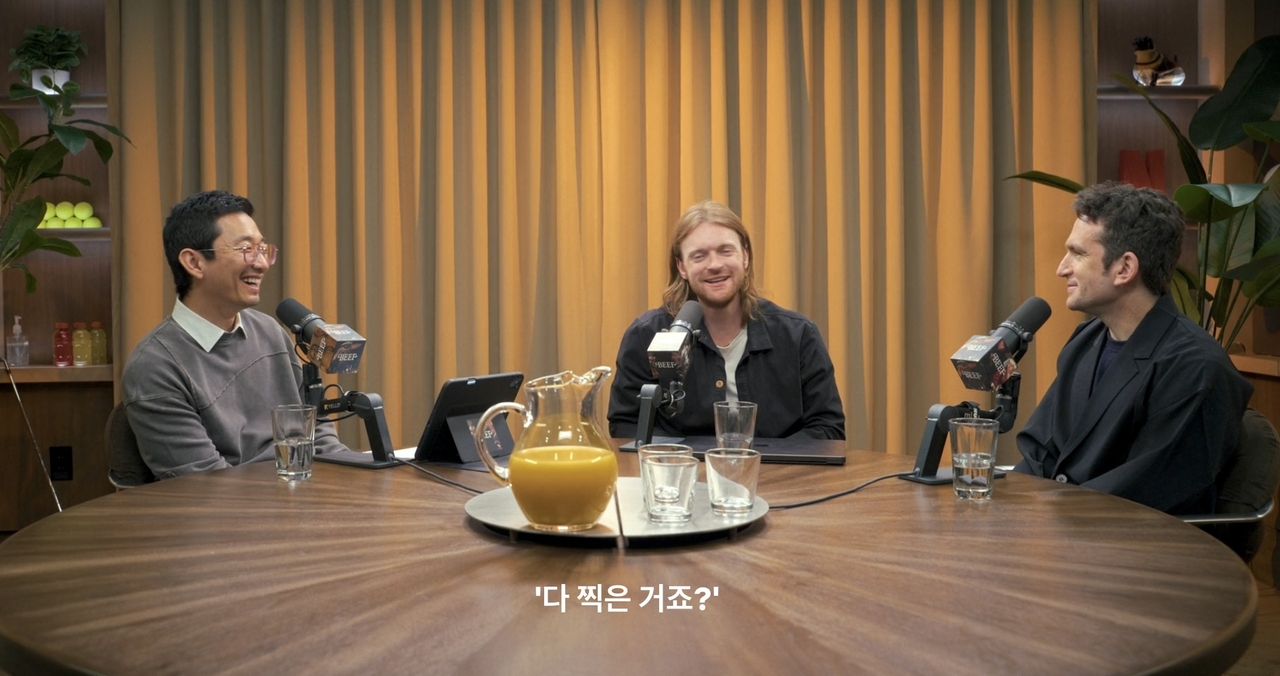 [Herald Economy = Reporter Son Mi-jung] “Podcasts are no longer just something you listen to.”
Global consulting firm Deloitte used that line in a year-end outlook to describe the podcast market’s shift. Podcasts that were once audio-only are now entering a new peak centered on video podcasts, or vodcasts. Deloitte said visual elements draw audiences into conversations in ways audio alone cannot, and that vodcast viewers consume roughly 1.5 times more content than typical podcast listeners.
The boundaries of audio content are collapsing. Podcasts and audiobooks that people once only listened to now pair with video, on-screen text and interactive features. Video podcasts are emerging as a dominant format, and text-plus-audio audiobooks have begun to appear — a sign that companies are racing to diversify formats.
After YouTube led the video-podcast era for years, Netflix’s entry has intensified competition. The audiobook sector is likewise competing to attract listeners with easier, more convenient listening experiences and new formats.
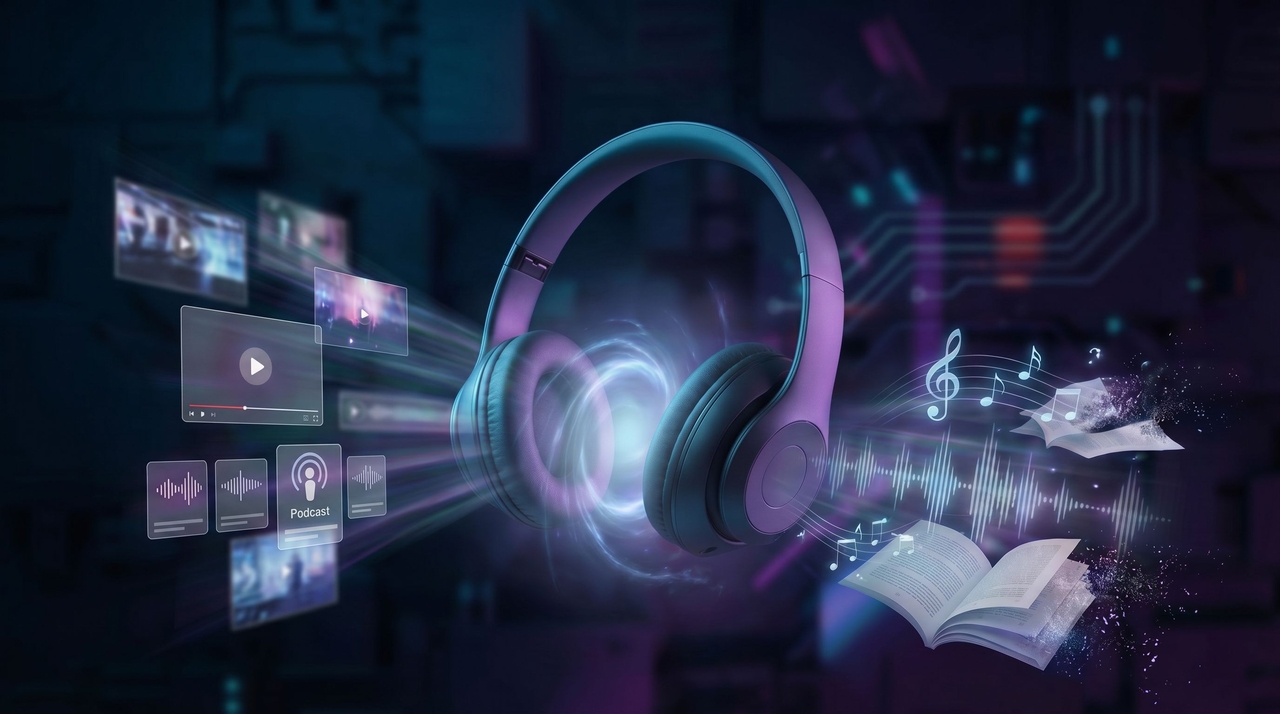 The audio-content market is growing rapidly. Global research firms such as Business Research Insights project that key audio markets — podcasts, audiobooks and music streaming — will see annual growth rates in the range of about 19% to 29%.
As consumption expands beyond screens into audio and hybrid watch-and-listen experiences, platforms are scrambling to capture that growth. After YouTube, major streaming services including Netflix have jumped into the mix.
Late last year, Netflix struck a distribution deal to make popular video podcasts from Spotify available on its service. This year, it has also begun releasing vodcasts featuring creators and talent from several flagship titles — including the Emmy-winning series The Angry People, the Cillian Murphy–led Peaky Blinders: The Immortal Man, and the live-action One Piece. Industry observers view this as part of Netflix’s effort to broaden its scope from film and television into audio and related formats, positioning itself as a more comprehensive entertainment platform.
Lauren Smith, Netflix’s head of content licensing and scheduling, said at the time of the Spotify deal, “With the growing popularity of video podcasts, we can now offer full video versions of popular shows to both Netflix and Spotify users. That will make Netflix’s entertainment offering richer and more engaging.”
 Spotify, which rolled out video-podcast features in 2020, has continued to invest aggressively. Early this year it teamed with HYBE to launch an official video podcast channel called STAN:A, and since April it has been releasing K-pop–related content.
Available now on Spotify are shows such as ENHYPEN’s The Blood Diary, where the group shares mysterious stories from around the world, and Music Talk, in which producer Hitchhiker and singer-songwriter Choi Jin discuss music production and industry life.
YouTube remains the market leader. In February last year, it surpassed 1 billion monthly active users for video podcasts, cementing its dominant position. It has recently introduced AI tools that automatically turn audio into video, lowering barriers for creators. Apple has also announced plans to add video features to its Podcasts app this year.
Deloitte noted, “The popularity of video podcasts will continue to put pressure on other video platforms,” adding that traditional streaming services are increasingly likely to consider investing in the podcast market.
 The audiobook market is evolving quickly, too. Efforts to make listening more convenient have led to new services and reading experiences.
Wela, a leading audiobook platform, became the first domestic reading service to adopt AI-based text-to-speech technology, letting users listen to e-books in voices they choose. Last year Wela added AI-driven captioning, enabling simultaneous listening and reading.
KT’s Millie’s Library now offers an interactive reading service called AI Dokpaming, where an AI chatbot helps users skim texts or extract key points in real time.
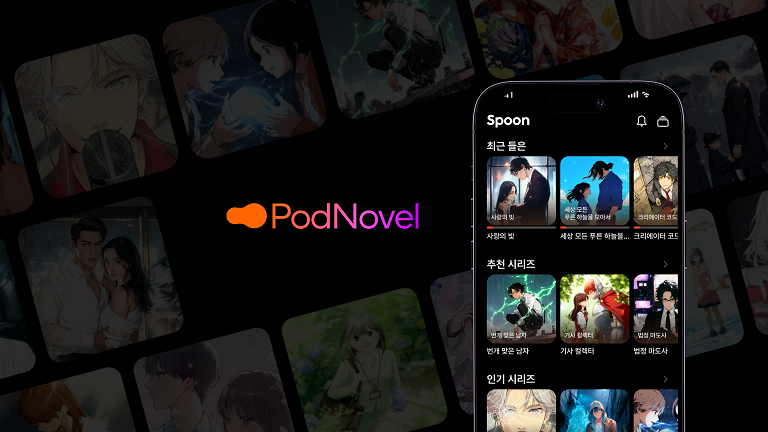
Beyond simply converting print books to audio, creators are developing originals designed specifically for listening. Audio platform Spoon launched the audio-story service PodNovel globally in February. PodNovel produces roughly 10-minute episodes so listeners can enjoy a complete installment during short breaks; each episode includes background music and sound effects tailored to the story. Episodes run in serial form, building into a full novel.
Kim Hyung-geon, head of Spoon’s business division, said, “If the audiobook market used to focus on transferring existing books into audio, PodNovel redesigns the experience specifically for audio. Its audio-only scripts and 10-minute serialized format deliver a listening experience distinct from traditional audiobooks.”
Voice-driven formats like podcasts and audiobooks are not only refining existing forms; they are merging with video and text and spawning new genres. With AI joining the mix, the content industry is moving into broader territory and paying close attention to the audio market’s expansion.
A content-industry official said, “AI does more than make creation and consumption easier — it’s reshaping the content ecosystem and culture itself. AI-driven innovation across production, education and consumption will fundamentally change how we interact with content.”














Most Commented