
Translation result
By Lee Joon-seop, News Culture — World K-POP Center, a specialist in K-pop education, is accelerating its expansion into Central Asia with Mongolia as its focal point. The center plans to build local training infrastructure directly to broaden its system for cultivating K-pop talent abroad.
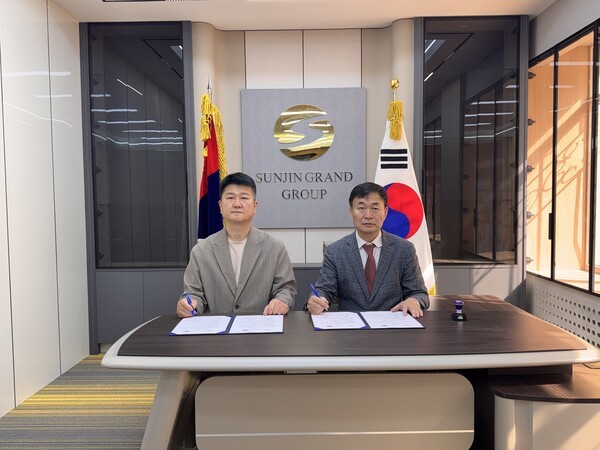
Central to the push is a local partnership in Mongolia. On May 17, World K-POP Center signed a memorandum of understanding (MOU) with Mongolia’s Sunjin Grand Hotel and said it will establish education hubs sequentially across Mongolia and the 17 CIS countries. Unlike earlier overseas efforts that focused mainly on concerts and events, this initiative is designed for long-term operation.
Korean cultural content is already woven into daily life in Mongolia. Korean brands are prominent across retail, dining and convenience-store sectors, making consumers familiar with Korean culture—E-Mart, CU and GS25 are notable examples.
The trend continues in food and lifestyle: Tom N Toms, Caffe Bene and Tous Les Jours have become part of everyday life, raising cultural affinity. Observers say this environment provides a strong foundation for expanding the K-pop education industry.
Industry executives note that the Mongolian market is evolving faster than before. They see movement beyond fandom-driven consumption toward structures that can support education, content production and artist development. Some analysts even suggest K-pop could become a viable career path for local youth.
Local stakeholders offer a similar assessment. The Korean Association in Mongolia said many entertainment companies previously showed interest in the market, but few initiatives emphasized long-term education systems. They view this partnership as significant because it prioritizes sustainable talent development.
If a domestic pipeline from training to selection and debut takes hold, the ripple effects would extend beyond cultural exchange. An industry-style education model centered on K-pop could reshape the content ecosystem across Central Asia.
Mongolia’s geography also makes it a logical starting point: it sits at a crossroads linking Central Asia and the CIS, allowing the project to connect multiple countries rather than operate in a single market. That regional connectivity is a key driver of the initiative.
Meanwhile, Mongolia’s Sunjin Group is preparing an idol project spanning 16 Asian countries tied to the global awards event “Blink1 Grand Prix (World Blink1 Grand Prix),” scheduled for year’s end in Jung-gu, Seoul. The plan includes local auditions in Mongolia to channel selected talent to global stages.
If realized, the effort could shift K-pop from a mainly export-oriented product to a model that blends education and industry. Locally scouted and trained performers would have a direct path to the international stage.
Ultimately, the Mongolian initiative reads less like a single business expansion and more like an effort to transplant a Korean-style K-pop education system abroad. If it spreads across Central Asia, the influence of that model is likely to grow.
News Culture Lee Joon-seop rhees@nc.press














Most Commented