
How ‘Ballet Arirang’ Redefines Hope and Despair Through Dance: A Deep Dive into the Creative Process
Daniel Kim Views
Translation result.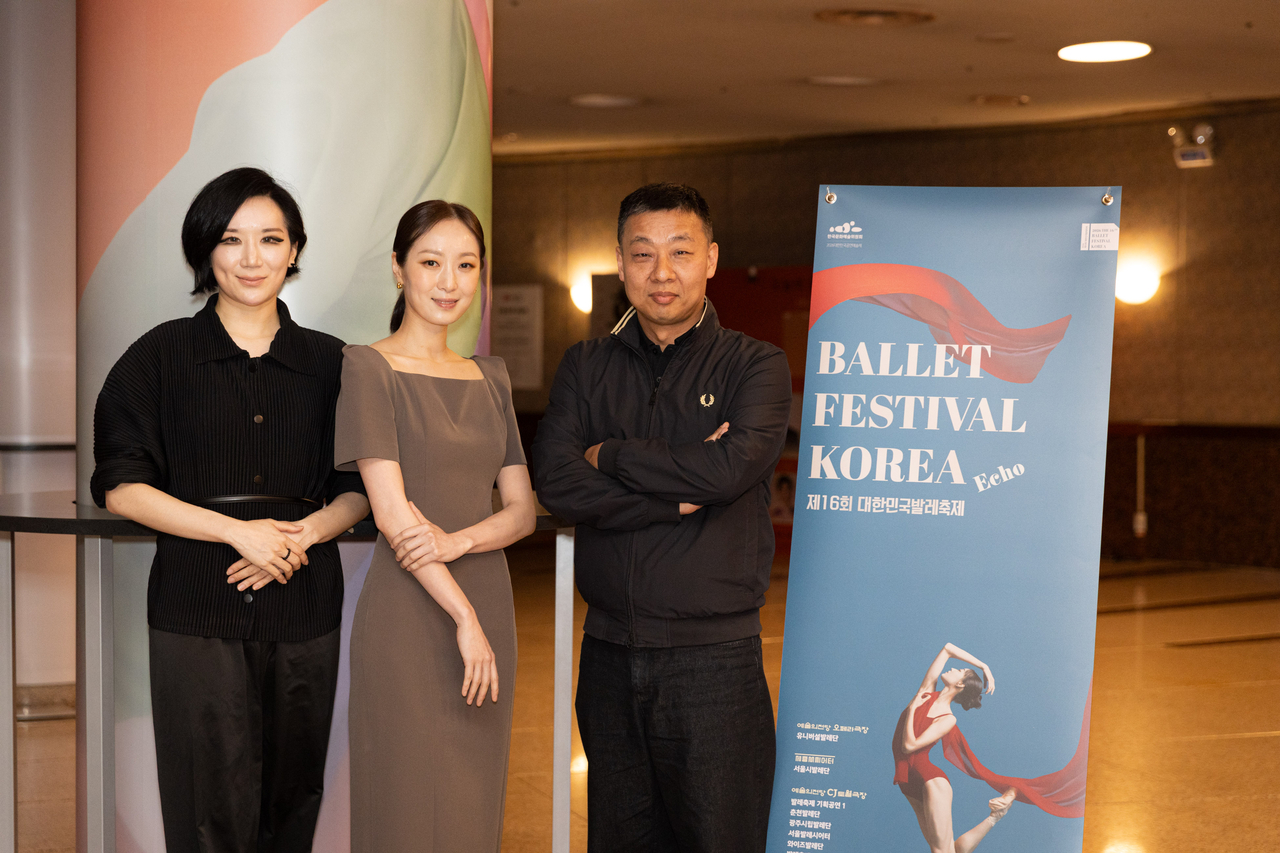 [Herald Economy reporter Seung-hee Ko] “Arirang—Arirang—Arariyo.”
The production is titled Ballet Arirang, yet you won’t hear a single line of the traditional Arirang melody. The creators stripped away the familiar tune and the associated feeling of han. What remains is the “spirit of Arirang,” expressed through the language of the body.
“There’s no Arirang melody in the performance, and no one sings Arirang. We place a single, large wall inside our hearts,” said Park Hoon-kyu of MUTO, director of the Korea Ballet Festival’s commissioned production Ballet Arirang, which premieres in June at the Sejong Center for the Performing Arts. Park defines “Arirang” for the piece as “a scream ricocheting off a wall of despair that, in the end, becomes a song of salvation connecting people.”
The creative team is an intriguing blend. Park, who leads MUTO and fuses the geomungo with synthesizers to craft contemporary mise-en-scène, joined choreographers Choi Su-jin and Iruda, both of whom move fluidly between contemporary dance and ballet. Notably, the work is divided into two acts, with each choreographer handling one act.
The collaboration began when Kim Joo-won, artistic director of the Korea Ballet Festival, proposed the idea. After surveying MUTO’s portfolio, Kim believed their refined visual sensibility could bring a fresh voice to ballet and invited Park to participate.
MUTO’s team includes geomungo player Park Woo-jae, DJ–beatmaker Shin Beom-ho of Idiotape, Hong Chan-hyuk of Media AF, and graphic artist Park Hoon-kyu.
Park recalled meeting Director Kim last summer and sensing a clear brief: make Ballet Arirang unlike typical ballets. MUTO has pushed boundaries before—most notably in a reinterpretation of the pansori Simcheongga, titled Two Eyes, created with the Ipgo & Hand project.
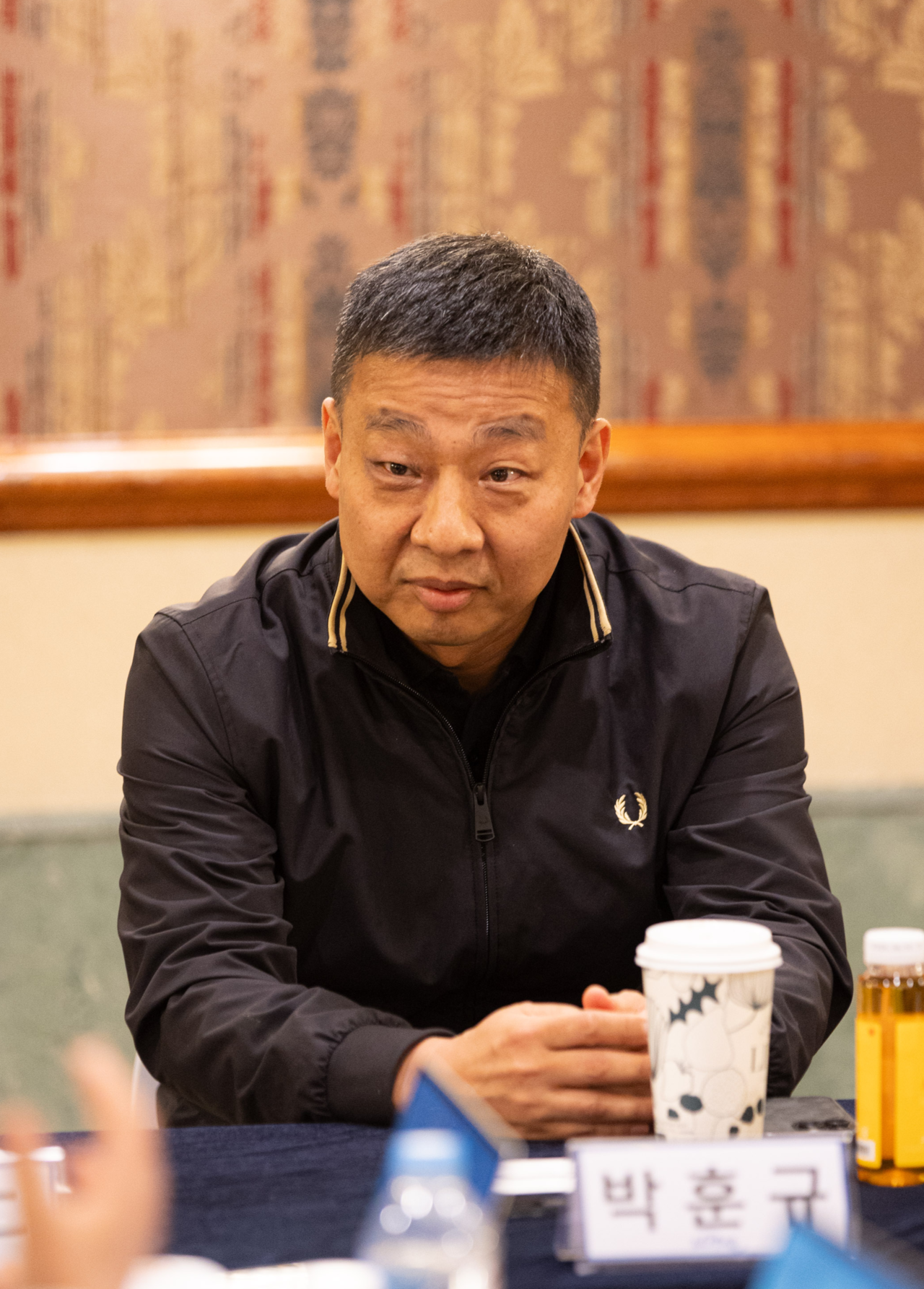 He said the team intentionally approached the piece differently from conventional ballet productions. “To secure originality, I wrote a script and handed it to both choreographers. We also created a storyboard to map out how the choreography should unfold,” Park explained.
The “wall” Park describes symbolizes the despair that everyone encounters in life. The poster’s looming wall draws visual inspiration from Stanley Kubrick’s 2001: A Space Odyssey. “If you’ve ever stepped out at dawn, you know every building can look like a wall. In the dark, there’s no obvious way to ease your own sadness,” he said. “But when you look up, you might see a single star shining down. That’s how we’ve found hope.”
Ballet Arirang is structured in two acts. Act I depicts the crushing weight of life and the pull of despair; Act II charts a movement from that despair toward solidarity and transcendence. Choi Su-jin choreographs Act I; Iruda handles Act II.
“In Act I, Su-jin will render the tragic reality of people being consumed by the wall,” Park said. “In Act II, Iruda will create movement that shows people breaking through together.”
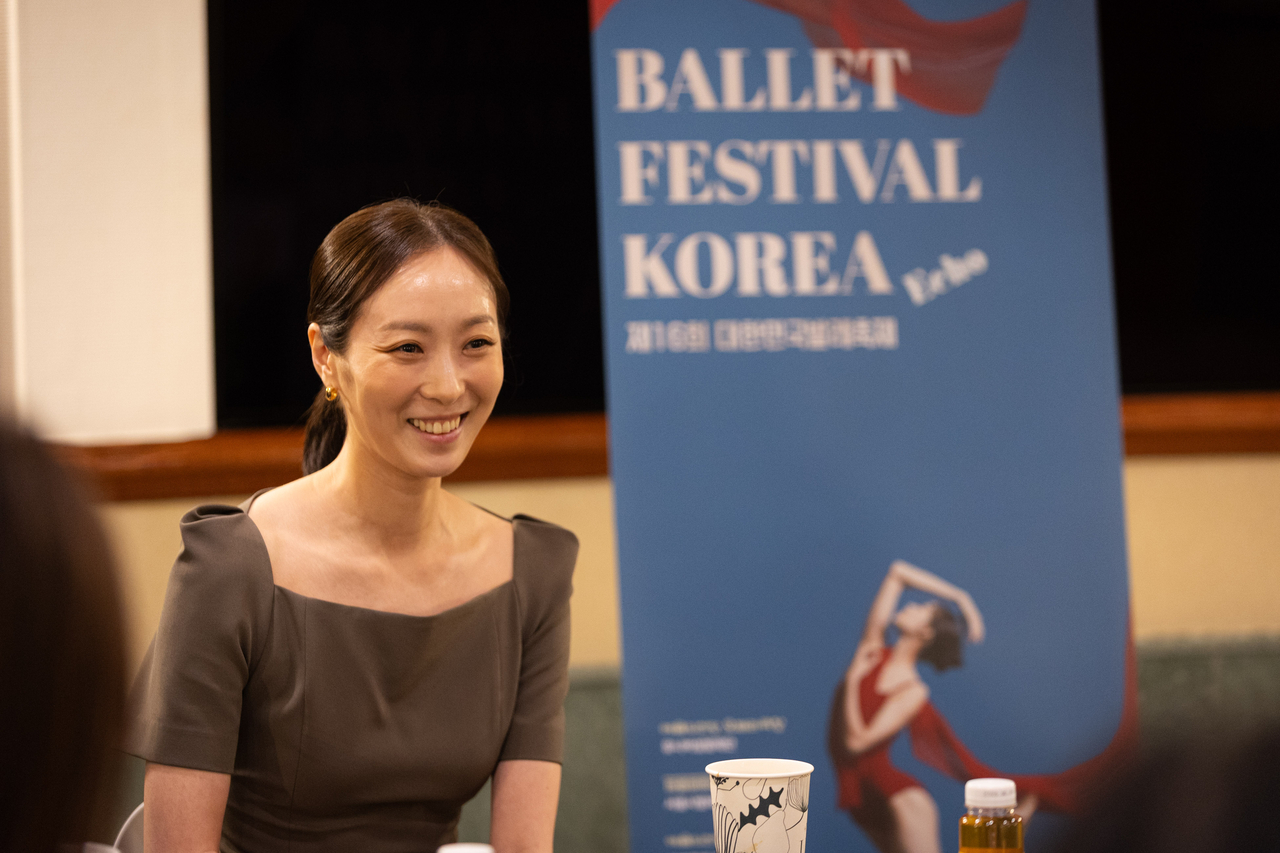 Choi Su-jin focused on transforming the theme of despair into something artistically elevated. “Despair is a heavy word to me,” Choi said. “When I create dance, I want sorrow, pain, and anguish to be expressed beautifully.”
That aspiration shaped the movement language. “I kept reminding myself not to leave despair as mere sorrow,” Choi said. “Where despair exists, there were likely great dreams and hopes before it. When despair arrives, I wanted to show the strength to move beyond it, and to do so with beauty.”
Overcoming despair and moving toward solidarity, they say, is the essence of the Arirang spirit. Iruda’s Act II functions as a space of release, and a massive LED media wall at center stage is intended to deliver catharsis.
“When I heard the music for Act II, the janggu and percussion rhythms kept propelling me,” Iruda said. “It felt like a ritual. I wove Korean breathing techniques, taekwondo forms, and shamanic gestures into ballet vocabulary. By recognizing despair and joining hands to bring down the wall, we wanted to show a hopeful solidarity.”
The choreographers made distinct stylistic choices. Choi prioritized dancers who could perform en pointe. “I thought of ballerinas first when casting,” Choi said. “I prioritized dancers who could wear pointe shoes.” Act I features former National Ballet Company dancers performing on pointe. “I wanted to push pointe work in bold ways and explore male–female pas de deux,” Choi added.
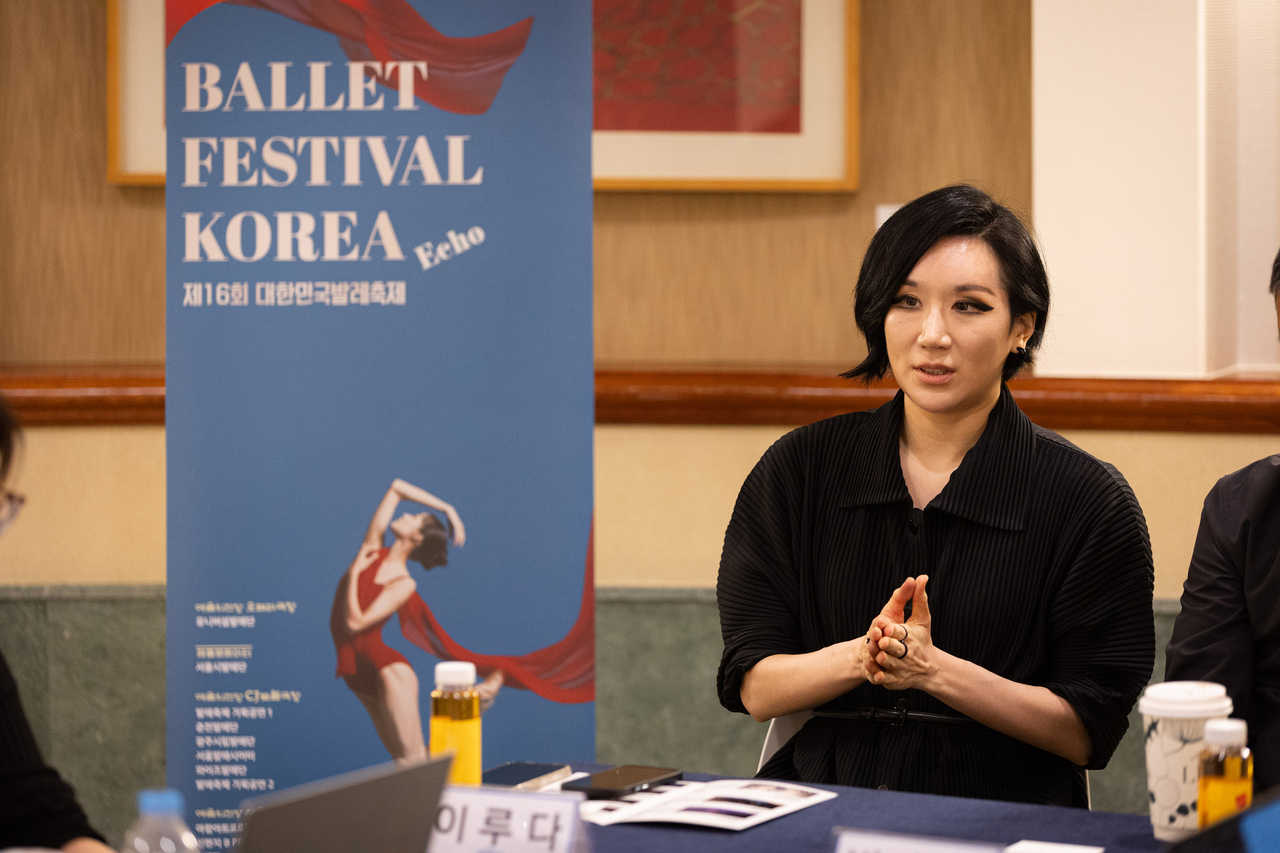 Iruda took a different approach. “Some scenes use Korean breathing and taekwondo patterns,” Iruda said. “Because those movements can make pointe work feel cumbersome, only the protagonist wears pointe shoes; the other dancers move with Korean dance idioms blended in.”
Over the past six months, MUTO composed 12 original tracks for the production. The score combines traditional instruments such as the geomungo and taepyeongso with modular synthesizers and sweeping orchestration. Park Woo-jae’s cello-like geomungo technique and tracks built from noise showcase the team’s experimental edge.
“This was an extremely challenging project,” Park admitted. “We mix the geomungo with electronic music—the most current sound—but we worried whether that sonic palette would suit ballet and whether both choreographers could work with it.”
Even after laying out the story, creating distinct musical worlds for despair and for hope across the two acts proved difficult. Park called the classical-style arrangements a new experiment for the team. Iruda, by contrast, said MUTO’s music felt adaptable: “I thought any of these pieces could support a variety of dance expressions.”
Ballet Arirang blends dance and sound to reveal a new landscape for contemporary ballet and ballet music. Although there is a through-line narrative, the three creators emphasize an intuitive experience—the visual, the sound, and the dancers’ physical energy should be felt directly.
“Everyone meets walls in life,” Park said. “Ballet Arirang is about choosing to lift your head toward starlight and find hope instead of collapsing before those walls. I hope audiences come to the theater and experience the energy words can’t capture—the energy that only the body can convey.”













Most Commented