
Translation result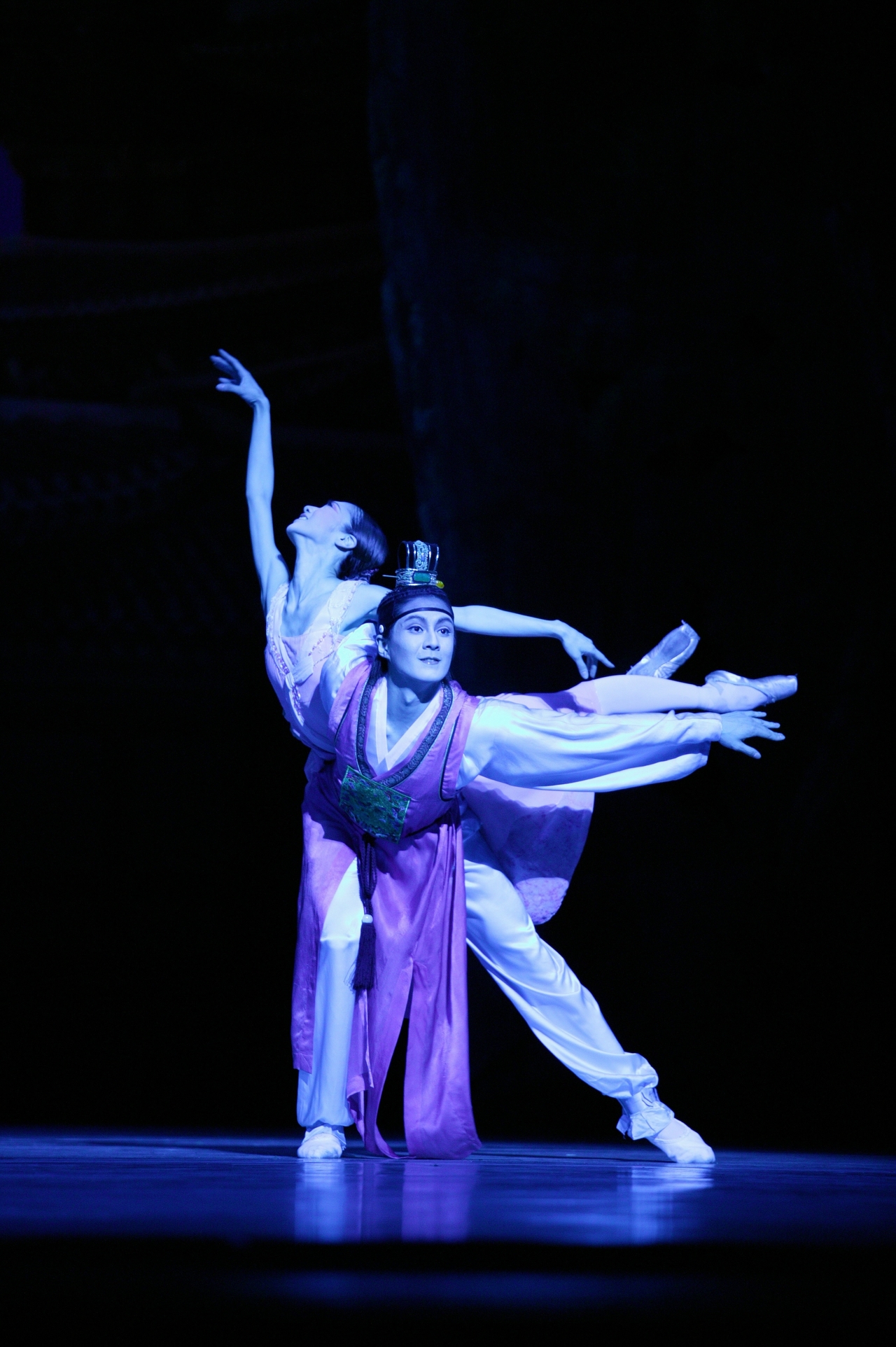 [Herald Economy = Reporter Go Seung-hee] In 2001, a 22-year-old rookie ballerino claimed the stage of the blue sea. He was cast as one of Simcheong’s three partners — the role that demands the gentlest, most benevolent presence. Brimming with youthful vigor, he smiled and used his arms like fins, flowing through port de bras. Each time his fingertips sliced the air, the stage seemed to ripple with delicate waves, as if white foam had surfaced.
“He was young, and yet bold to partner with the company director. (Laughs),” Moon Hoon-sook said.
Every lift and catch — the movements that raise Simcheong into the air — showed the poise and steadiness of a newly debuted dancer. Eom Jae-yong remembered, “Of course I felt awkward — it was my debut — but the director put me at ease and guided me through the key moments.” It was the original Simcheong’s final performance as she entered her 40s.
Listening, Moon said, “Dancing with Eom, I never once thought he lacked experience. He was excellent from the start; everyone wanted to dance with him. We call such a dancer ‘Golden Hands.’”
The golden hands have returned. He debuted in Simcheong 25 years ago, left the role in 2016, and now, a decade later, returns. Forty years — roughly the span from a child’s birth through youth to the backbone of society — have layered countless memories and sweat into this ballet. The stage, built from each participant’s recollections, is both an extension of unfinished dreams and a living legend of K-ballet.
“When we tour Simcheong overseas, you can see local audiences puzzled at first. The value of ‘filial piety’ is so particular to our culture that they don’t always grasp it immediately. Before the show they whisper, ‘What is filial piety?’ but when Simcheong and Sim Bong-sa meet, people of every race and nationality cry,” Kang Mi-sun said.
Since its premiere in 1986, Simcheong has won standing ovations in more than 40 cities across 12 countries — from Paris to Moscow — and established itself as a sustainable K-ballet classic. The idea began with a children’s storybook noticed soon after the Universal Ballet Company (UBC) was founded in 1984.
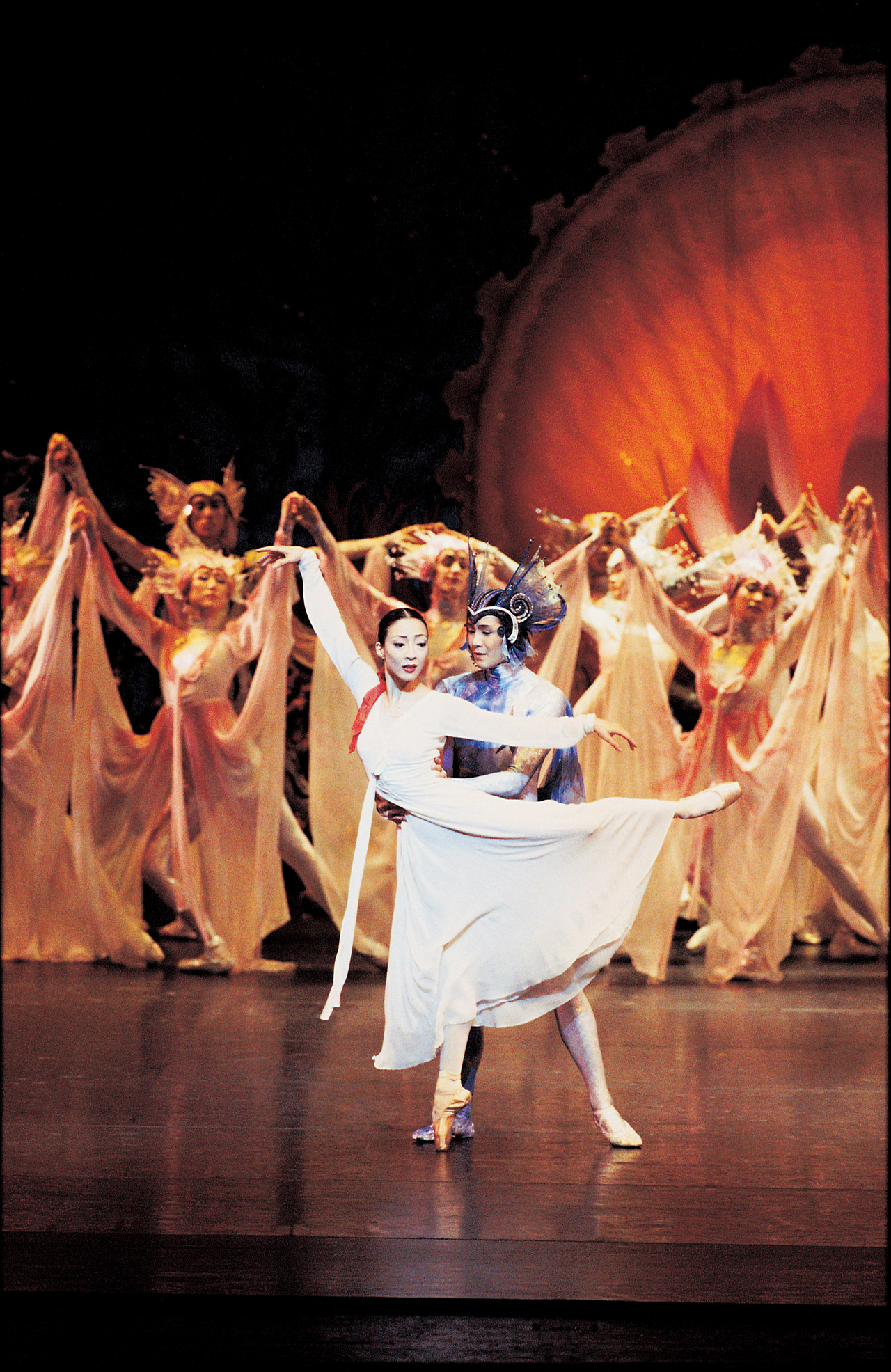 Adrian Deller, UBC’s founding artistic director, read an English translation of Simcheong and recognized the uniquely Korean idea of filial piety. He believed the tale was perfectly suited to a Korean original ballet. The foreign choreographer treated the folktale not as a local curiosity but as a narrative that could be expressed in the universal language of ballet. Invited in 1976 to teach ballet at Sunhwa Arts Middle and High School, Deller helped build what many call the cradle of Korean ballet; he led the first effort to translate Korean classics into ballet’s vocabulary.
Moon said, “We conceived Simcheong strategically — to introduce Korean culture to overseas audiences ahead of the 1986 Asian Games.”
Simcheong was one of the first major global collaborations of the 1980s, a close partnership between Korean artists and foreign creators. Deller’s choreography took shape alongside a bilingual script by critic Park Yong-gu and a grand score by Kevin Barber-Piccard.
It was a daring gamble. At the time, Korean ballet had almost no infrastructure: dancers lacked proper practice floors, and companies weren’t ready to stage works like Swan Lake. Moon recalled challenging that scarcity: “Why not a Korean La Bayadère or a Korean Don Quixote?” That question — “Why not Korean culture?” — launched Simcheong.
Marrying Korean aesthetics to classical ballet required exacting refinement. “To avoid anything that might feel provincial, we polished every costume, set piece, and movement,” Moon said. They preserved the hanbok silhouette without breaking the lines of ballet and built a dramatic structure that kept Korean feeling while remaining accessible to Western audiences. Born of an emphasis on “balance and harmony between Korean culture and Western ballet,” Simcheong’s global collaboration laid the foundation for its four-decade success. Moon compares it to how K-pop conquered the world through collaboration between Korean systems and foreign composers.
“Every time I watch recordings, I find new details. I wonder why I missed them three years ago,” Moon said. “We keep refining.”
Forty years after its September 1986 premiere, Simcheong has evolved like a living organism, not a museum piece. Moon credits its longevity to relentless innovation. “As cultural tastes and trends shift, we never rested on past success. We kept revising and improving,” she said.
 Upgrades in music and costume raised the production’s standards. After three composers split the original score, UBC unified it under Kevin Barber-Piccard from 1988 onward. His flowing piano lines and symphonic grandeur sharpen Simcheong’s narrative. “Music determines about 80 percent of a ballet’s level,” Moon said. “Having one composer for all three acts elevated our standard.” On tour, audiences have asked where they could buy the CD.
Costumes evolved too, notably during Oleg Vinogradov’s artistic directorship around 2000, which clarified visual contrasts between characters. The silver, translucent scale tights in the Dragon Palace scene were daring at the time. Kang laughed, “The fabric was so thin the dancers spent a lot of time arranging it to conceal themselves.”
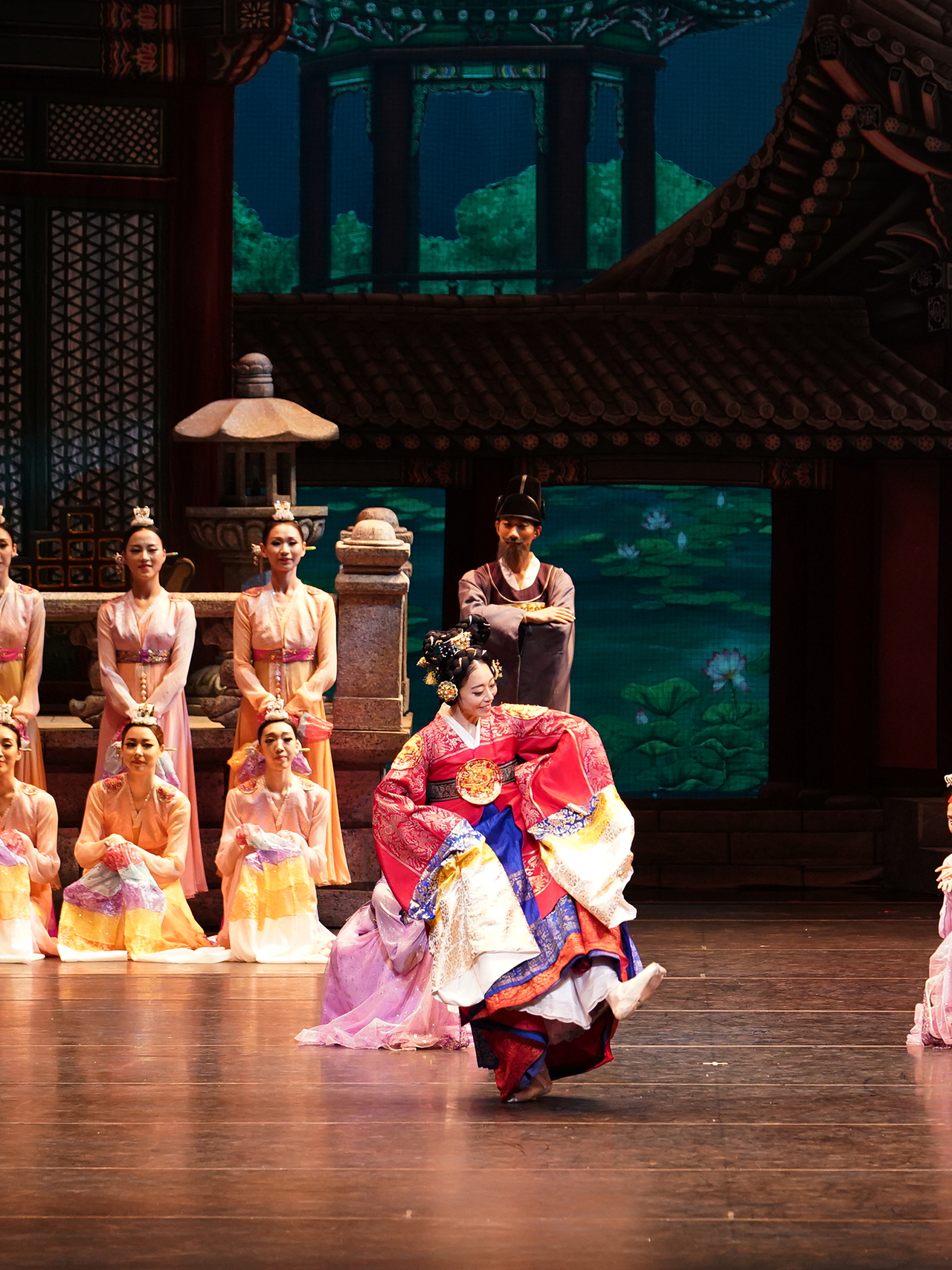
Vinogradov also added the selection scene: three queen candidates dancing in Korea’s formal ceremonial dress, daeryebok, to showcase Korean beauty. Kang said the vibrant costumes were so coveted that some dancers competed to be one of the brides-to-be. But the role is not for everyone — it is reserved for those trained in traditional Korean dance. Moon herself choreographed those sequences, drawing on decades of practice.
After many changes, the current Simcheong is the most up-to-date version. Its refinement process relies on the “art of subtraction.”
UBC’s Simcheong omits the comic figure Paengdeok, present in the original tale, to sharpen the focus on Simcheong’s relationship with her father. Moon explained they compressed the work into two acts from the 2023 production to tighten pacing and revived a briefly appearing monk character to strengthen the drama’s causal logic.
This production is also unique within UBC: Moon does not give a pre-show talk ten minutes before curtain. “The story is so well known that it moves audiences without explanation,” she said.
The 40th-anniversary Simcheong celebrates not only the work’s history but the time dancers have devoted to it. The finale on May 3 spotlights veteran principal dancers who have served the company for decades. The idea came from Konstantin Novoselov.
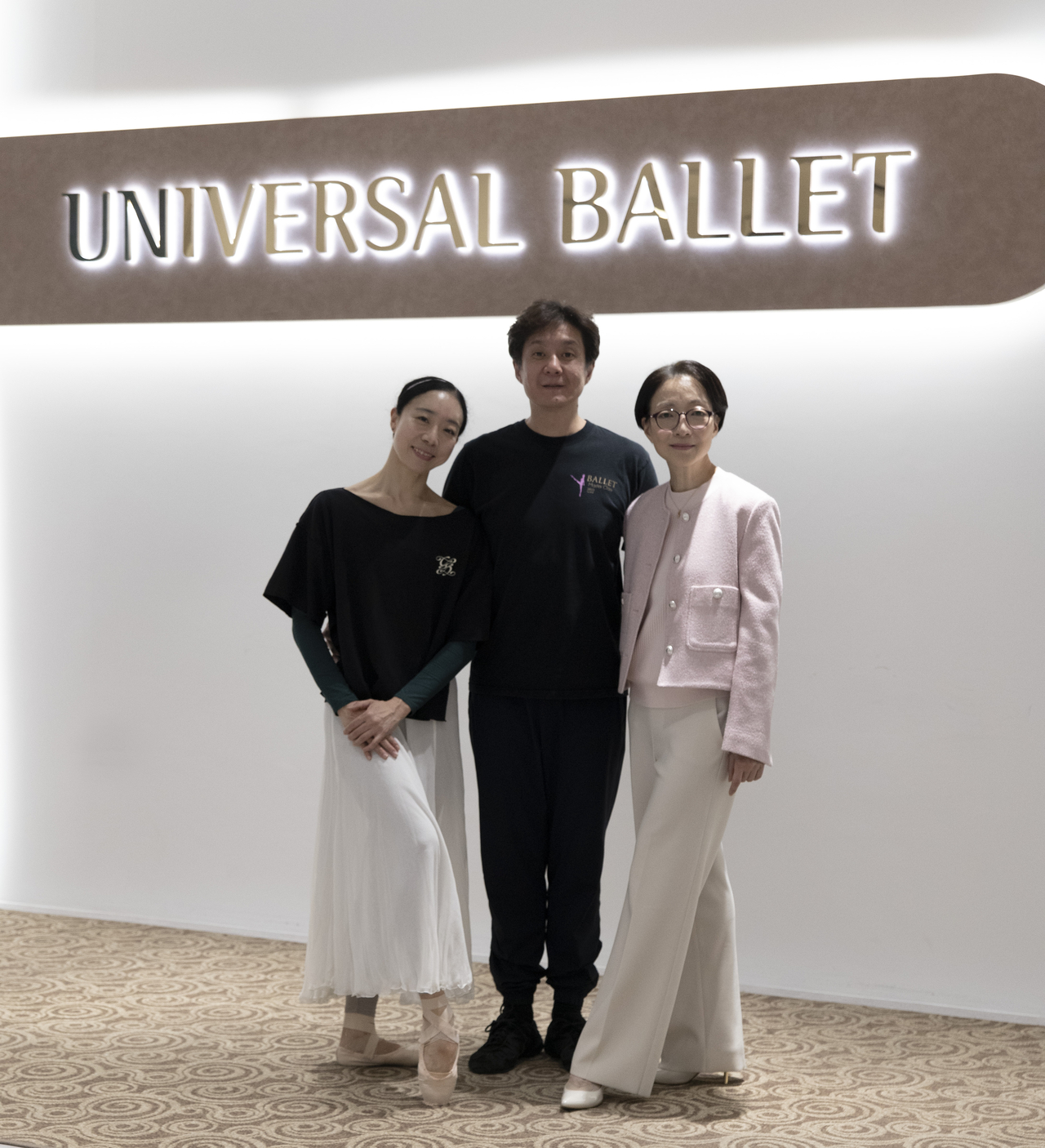 Eom Jae-yong — UBC’s “Golden Hands,” who danced many Simcheong roles through 2016 and later served as an advisor — had not previously performed with Kang Mi-sun. When someone suggested gathering dancers in their 40s, Moon embraced it. “Great idea!” she said.
Simcheong asks leads for something beyond classical technique: Moon stresses that acting often matters more than bravura. “Movement is the dialogue. Dancers must fill the spaces between lines with physical language,” she said. Casting prioritizes performers who can translate unseen text into their own physical signatures. That quality created the “golden lineup”: Kang Mi-sun (43), Lee Hyun-joon (41), Konstantin Novoselov (41), and senior advisor Eom Jae-yong (47).
For Eom, returning to Simcheong after ten years carries deep meaning. Retired in 2017 and then working as an advisor, he said, “Before my body stops cooperating, I wanted one more chance onstage.” Kang, who has led the company for 24 years, called it a blessing to perform a role she dreamed of since middle school well into her 40s. “My feelings now, as a parent, are different from what I felt when I first auditioned. I’ve learned to channel those deeper emotions onstage,” she said.
For Eom — who returned to the stage last year in The Nutcracker after serving as an advisor — this production is a second chance. “Teaching dancers teaches me, too. I used to regret not trying certain things when I saw fresh ideas, but now I can try them. Having this opportunity feels like real luck,” he said with a smile.
It is rare in Korea for dancers over 40 to take leading roles. Moon said, “Such roles require extraordinary self-discipline. Experience can’t be bought or faked.”
For the dancers, this performance is more than a commemorative show. Kang, who now serves as an advisor, said, “I approach every role as if it could be my last. That’s why this 40th anniversary feels more urgent and more special than ever.”
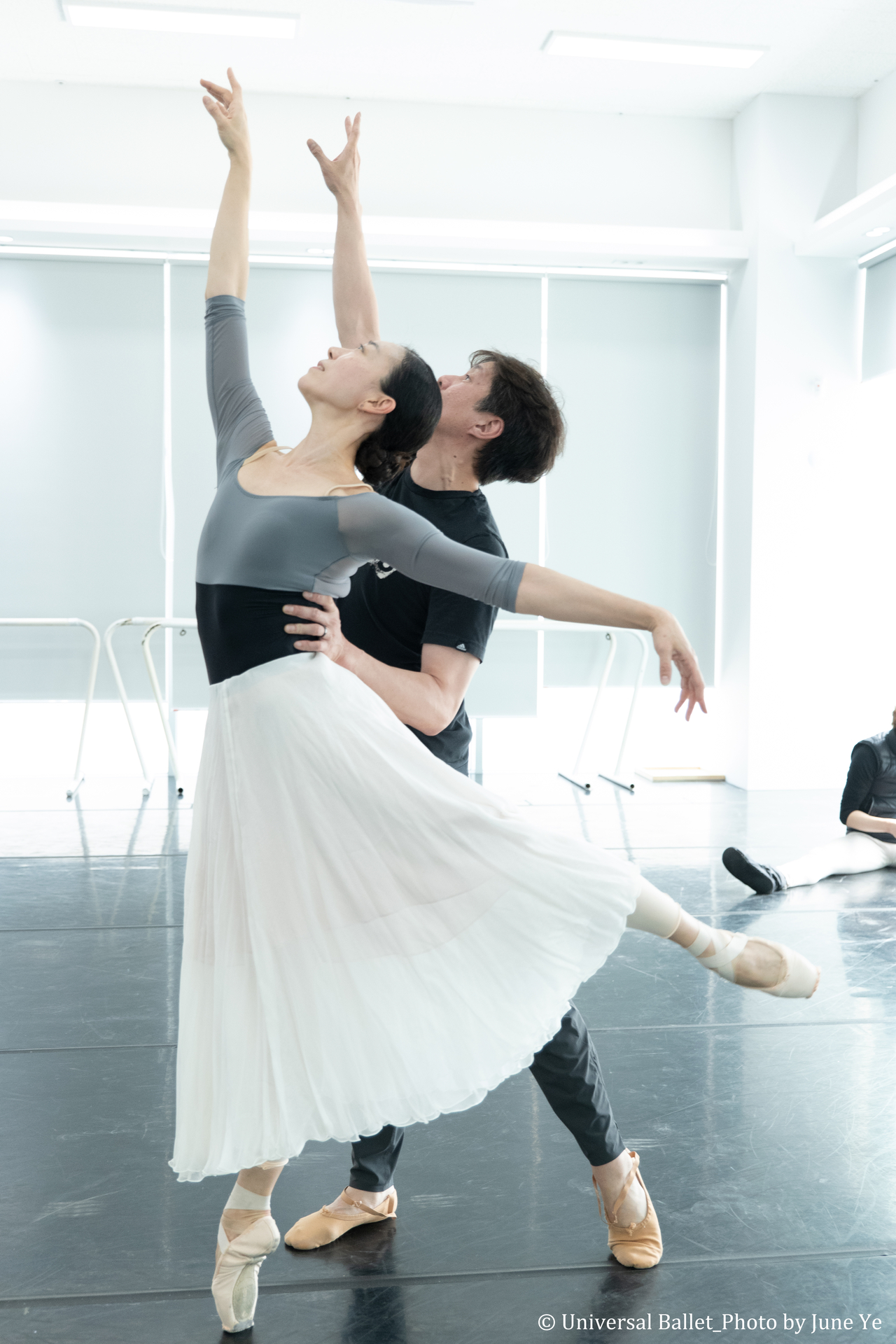
Over 40 years, Simcheong has remained the same work while becoming different each time. Beyond the spray of Indangsu, the ballet’s arc bears the imprint of thousands of rehearsals and hundreds of performances accumulated across decades.
Its greatest strength is its core values. As the first global collaboration to pair Western creators with a Korean story, it rewrote the K-ballet classic. Moon said it excavates “the roots and spirit of K-content,” and Kang emphasized its role in reviving the fading meaning of filial piety. The 40-something leads carry the DNA built since the founding artistic director’s era and testify to UBC’s identity. The details and spirit passed down by predecessors flow through these dancers to the next generation. Simcheong is not merely an old ballet; it condenses UBC’s aesthetics, history, and generational continuity.
Standing on a stage that borrows Western dance to tell a Korean story in Korean costume gives dancers both pride and a reaffirmation of artistic identity. Eom said, “Simcheong exists only here at UBC, which makes it all the more meaningful.” That is why the work exceeds a single performance and stands as a chronicle of Korean ballet’s journey.
“Ballet is not passed down through scores alone but body to body, mouth to mouth — a living history. The Simcheong performed by dancers who have proven their lives onstage for 40 years is a universal story that crosses generations and borders and points the way forward,” Moon said.













Most Commented