
Translation result.
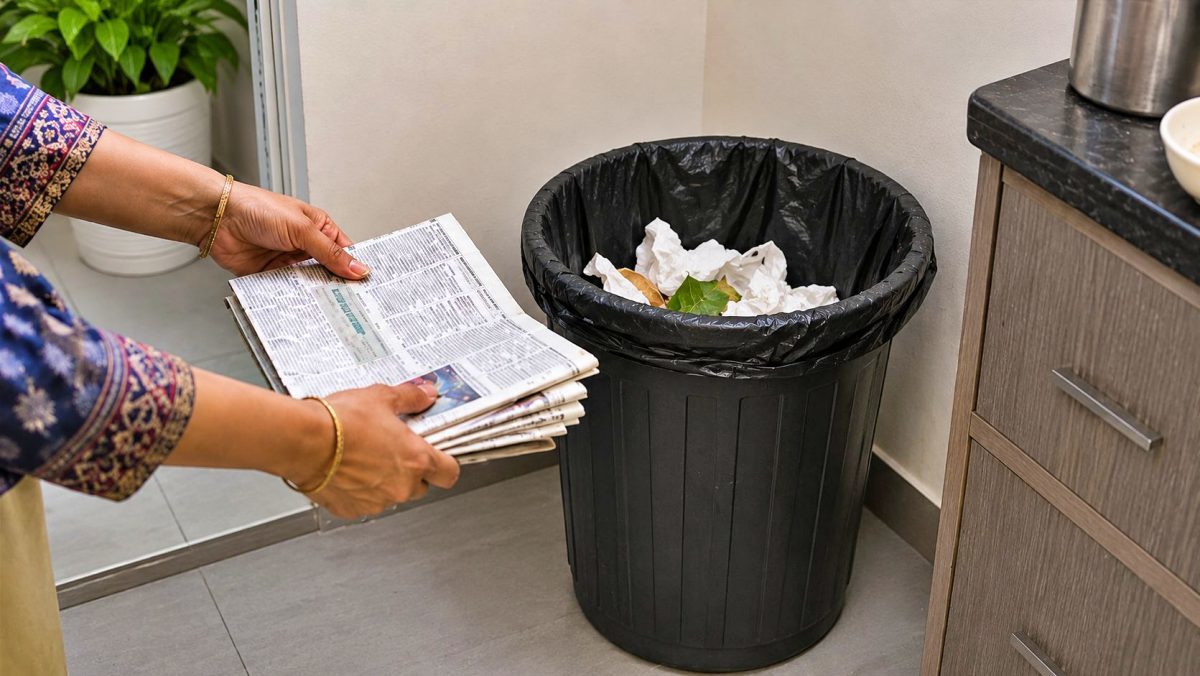
In early summer, when daytime temperatures rise, humidity and odors easily linger throughout the home. Poorly ventilated areas—like kitchen trash cans, shoe cabinets, and closets—can become damp and musty in a short time if left unattended. Used newspapers, applied correctly, can help keep living spaces fresher without added expense.
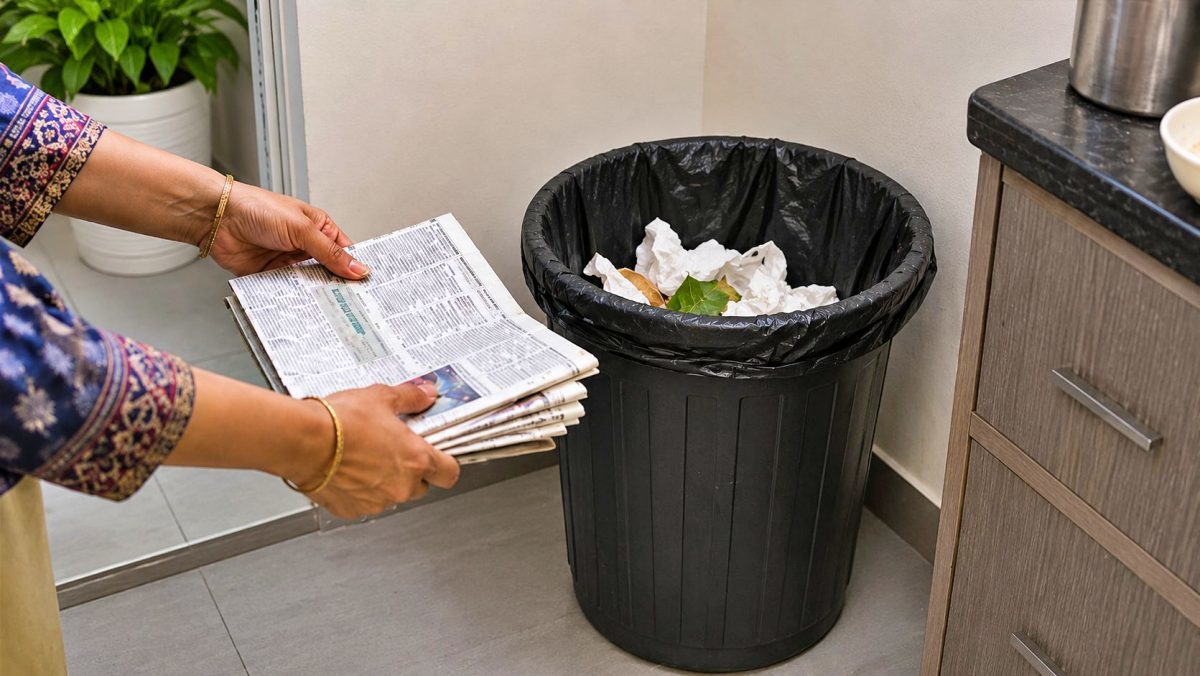
How to use newspaper to neutralize trash-can odors
The kitchen trash can is often the first place hygiene issues appear in summer. Once temperatures exceed 25°C, food scraps and other organic waste spoil more quickly. Leachate and odors that build up inside the bin attract fruit flies and deepen the smell. Air fresheners help briefly, but unless you address moisture, odors will return.
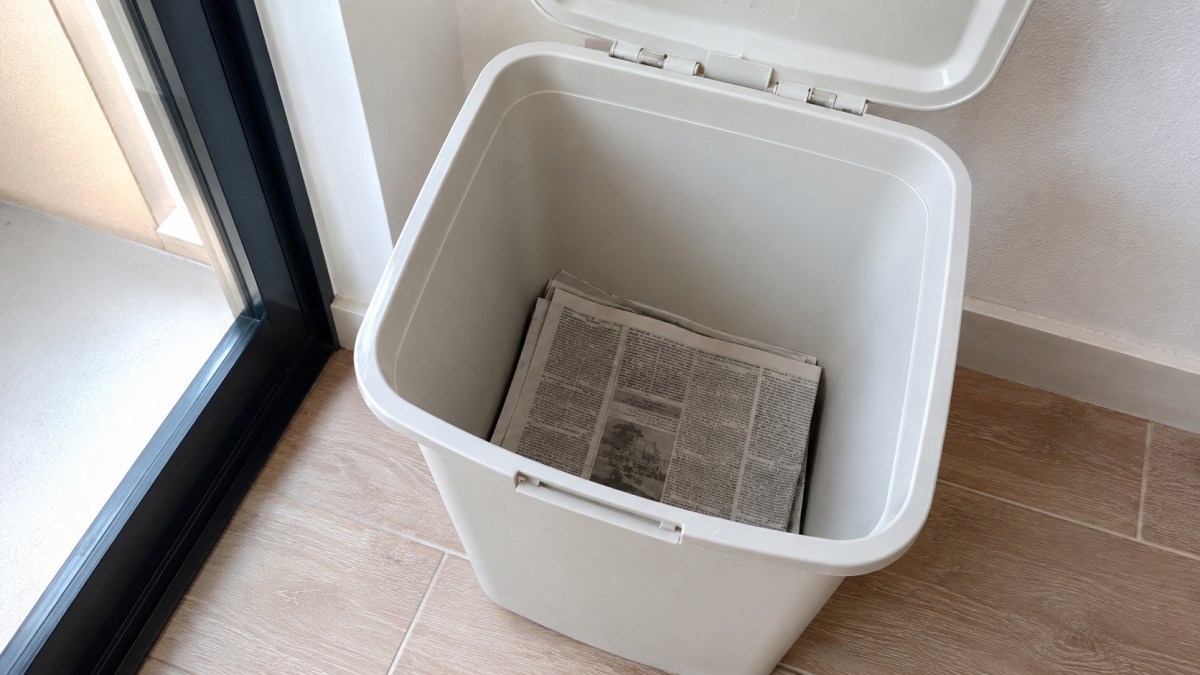
One simple technique is to line the bin’s bottom with newspaper. Newspaper is made from wood pulp, whose fibers contain tiny pockets that absorb and hold moisture. Fold three to four sheets together and place them flat at the bottom before inserting a trash bag; the paper soaks up liquid that seeps through the bag and any condensation inside the bin.
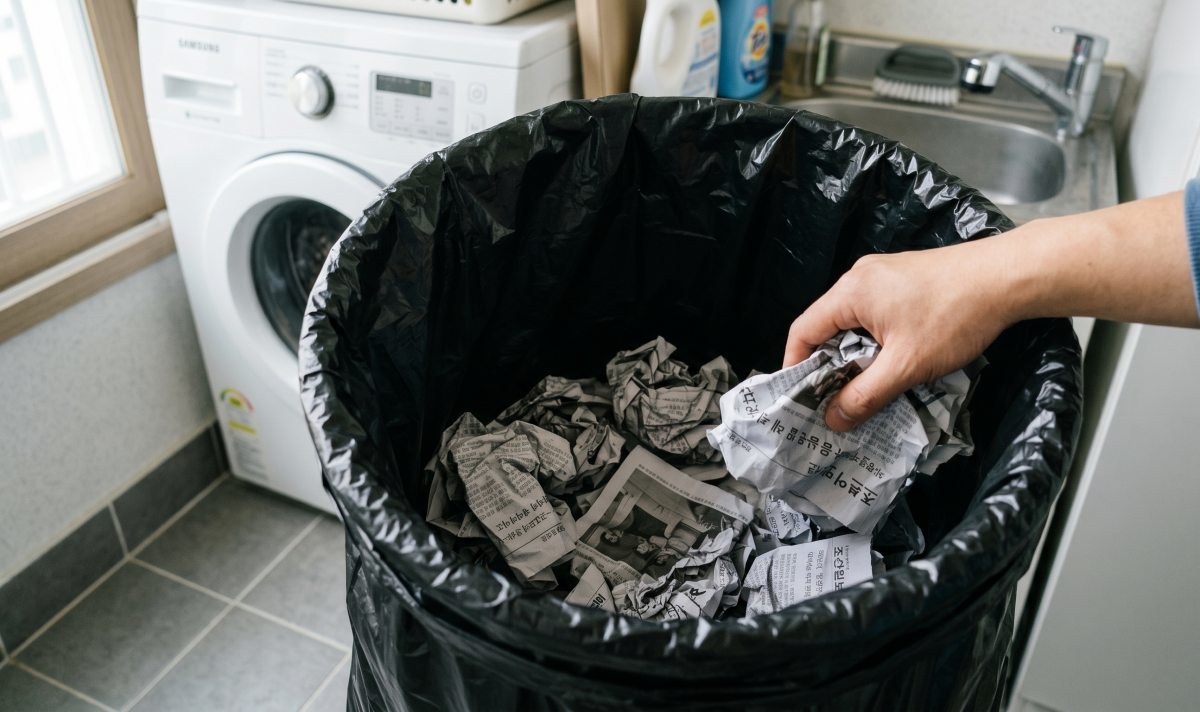
Managing the inside of the liner boosts this effect. Crumple a sheet and drop it into the bottom of the trash bag so liquids won’t pool on the bin floor. With less standing moisture, bacteria multiply more slowly and odors are reduced. Pay attention to narrow gaps around the lid and pedal, which often stay damp; lowering humidity around the bin is important.
If you want extra sanitation, lightly spray the newspaper at the bottom with rubbing alcohol. As it evaporates, alcohol helps reduce bacterial growth and can trap some odor compounds. But don’t leave wet newspaper in place too long—prolonged dampness can let the paper grow mold. Replace the newspaper each time you change the trash bag.
Managing moisture and odor inside shoes
Sweaty feet in early summer make shoe interior care necessary. Closed shoe cabinets trap humidity, which shortens the life of leather and athletic shoes.
The easiest fix is to loosely ball up newspaper and tuck it into shoes. Crumpled paper conforms to the interior, absorbing sweat and odors from leather and fabric. Stuffing newspaper into soft leather or canvas shoes also helps them keep their shape as they dry. Don’t pack the paper too tightly—leave it loose so air can circulate.
If shoes get wet, newspaper is useful there too. Remove insoles, roll up paper and insert it into the shoe, then check it every two hours. Replace the paper when it becomes soggy. This method is gentler on materials and adhesives than hot-air drying. Let shoes dry in the shade with good airflow rather than in direct sun.
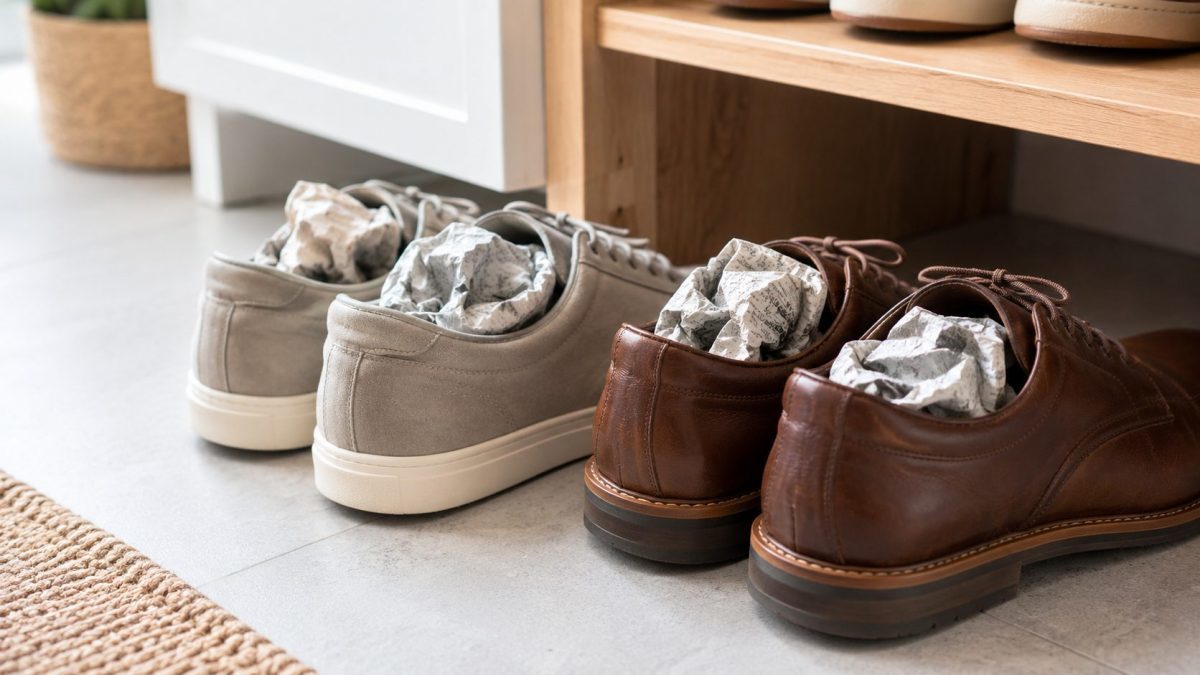
Be cautious with light-colored canvas or pale natural leather—if newspaper contacts them while wet, ink can transfer. For those shoes, wrap the newspaper once in plain white paper or a kitchen towel before inserting. Lining each shelf of the shoe cabinet with broad sheets of newspaper reduces overall humidity and mustiness. Adding a small container of charcoal or baking soda increases dehumidifying and deodorizing effects.
Removing kitchen grease and storing ingredients
Newspaper can also help wipe away kitchen grease. Much printing ink is based on oil compounds—petroleum derivatives or soybean oil—that attract and hold greasy residues. That property makes newspaper useful for cleaning stubborn oil.
After cooking fatty foods like pork belly or grilled fish, lightly wipe the pan with crumpled newspaper before it cools completely. The paper fibers and ink absorb slick residues and make washing easier. For small grease spots on stovetops or induction surfaces, dampen newspaper slightly with warm water and wipe to reduce detergent use. Avoid scrubbing pans whose nonstick coating is damaged; the paper can worsen the surface.
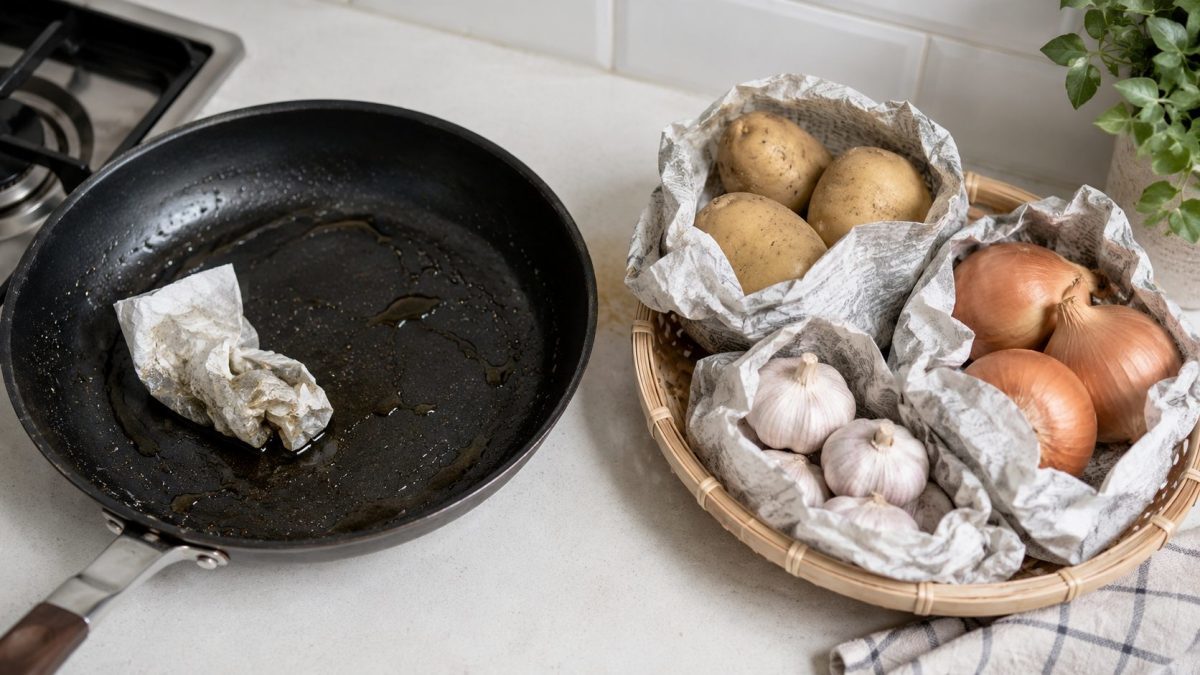
Newspaper’s moisture-control qualities also help with food storage. Bulb crops—potatoes, onions, garlic—soften and sprout more easily in summer humidity. Wrap each item in newspaper or line storage boxes with sheets and layer them to cut external moisture. A single sheet on the refrigerator vegetable-drawer floor can prevent water from pooling under produce.
When wrapping bulbs, make sure surface dirt and moisture are thoroughly dry; trapping wet produce speeds decay. A potato wrapped in newspaper with an apple nearby can be less likely to sprout—the apple’s ethylene helps suppress shoots. Keep onions separate from apples, though, because apples can make onions soften. For fruits that continue to ripen, like tomatoes and bananas, wrapping them in newspaper and storing them in a cool room slows water loss and delays overripening.
Tips for streak-free windows and mirrors
Frequent summer rain and dust can leave windows dirty. Bathroom mirrors often develop water spots and a cloudy film in high humidity. Cloth rags or wet wipes can leave lint or streaks.
Newspaper compresses fine fibers, so it leaves less lint when you wipe. The black pigment in printing ink helps lift dust and film from glass, and it can slow how quickly dust settles back after cleaning.
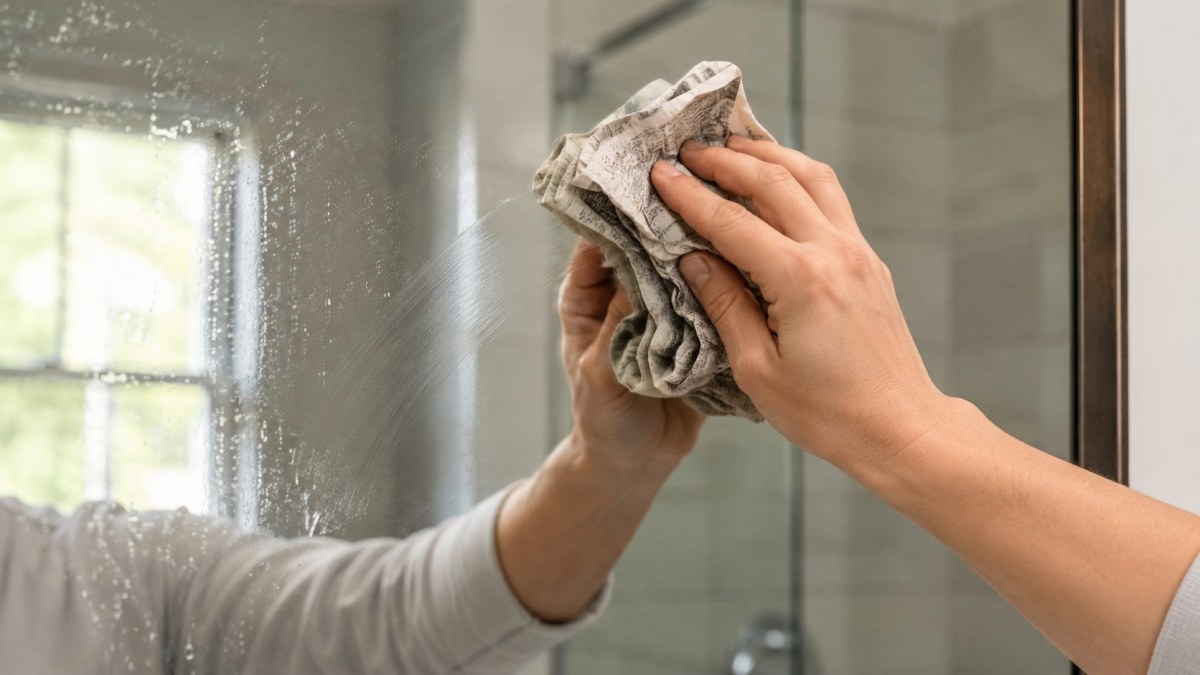
Spray water evenly from a bottle, crumple newspaper, and wipe from top to bottom and side to side. For heavy soil, start with dampened newspaper, then finish by removing moisture with a dry sheet. After a shower, a dry sheet of newspaper can clear mirror fog without cleaners. For window frames, fold newspaper into a narrow strip, wet it, and slide it into crevices; dust will cling to the paper. Use black-and-white print rather than color pages for glass cleaning, and be gentle around cracked or weakened panes to avoid breakage.
Controlling humidity in closets and linen chests
Before the rainy season, check sealed closets and linen chests. Higher humidity causes fabrics to retain moisture, become musty, and attract mold or pests. Chemical dehumidifiers work, but treating every drawer and box can be costly and cumbersome.
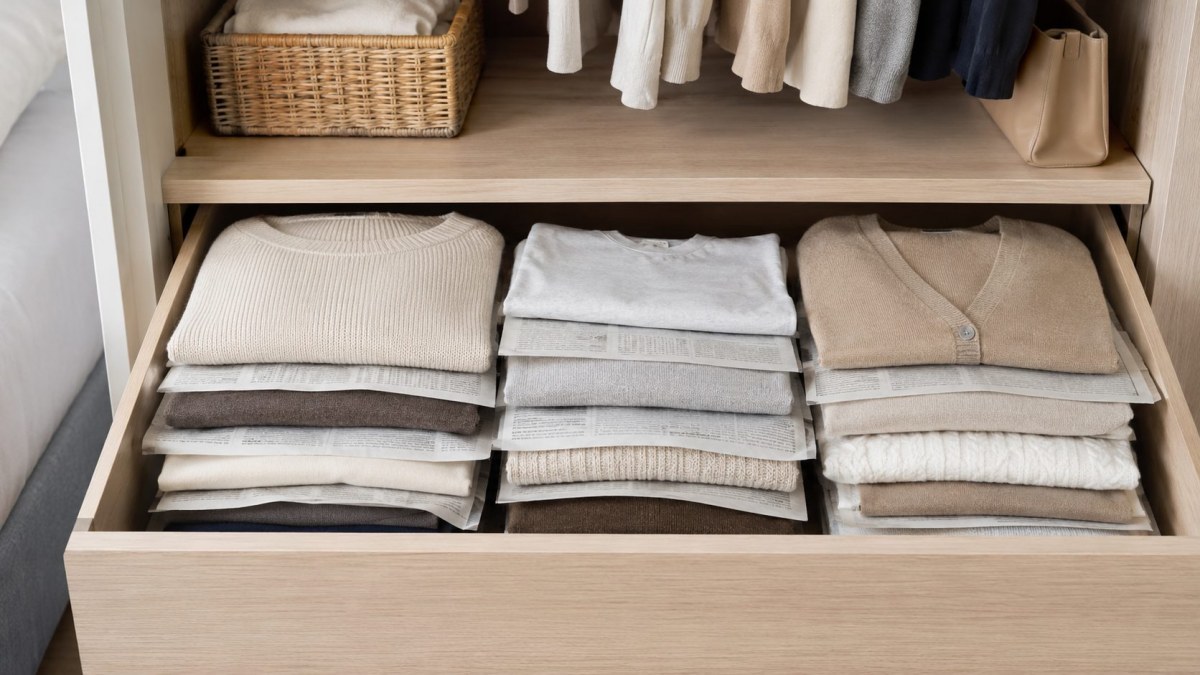
Slip newspaper between garments to reduce trapped moisture. Line drawers and storage boxes with clean sheets, place clothes on top, and insert thin sheets between every one or two items. The paper absorbs humidity that would otherwise cling between fabrics. When storing out-of-season bedding, tuck sheets of newspaper between folds to help prevent dampness.
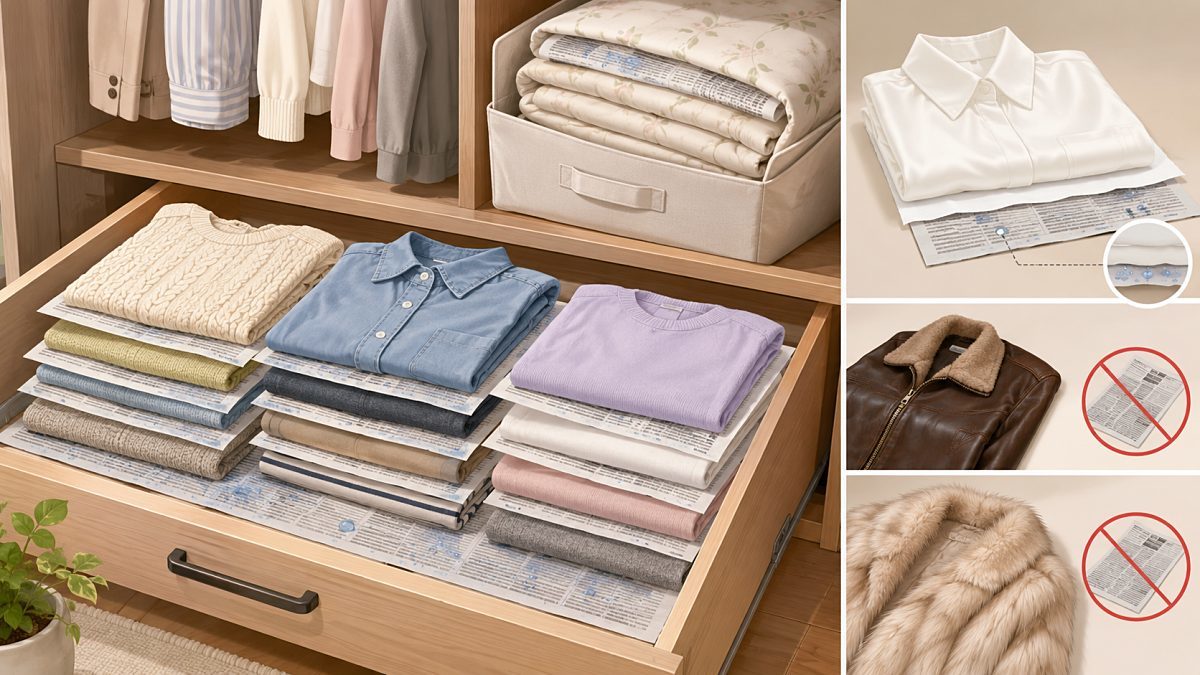
Check garment materials before using newspaper. Light-colored cotton shirts, silk, and fine wool are prone to ink transfer under pressure and humidity; place a thin cloth or traditional paper between these items and the newspaper. Leather jackets and fur can also be affected by ink, so avoid direct contact. If the paper in a drawer becomes damp, it has already absorbed a lot of moisture—inspect roughly once a month and replace sheets as needed to maintain dryness.
Managing condensation-prone balconies and utility rooms
Balconies and utility rooms also collect moisture. Washing machines raise humidity through hot water and the wash cycle, and condensation on walls can lead to mold.
Fold several layers of newspaper and place them on utility-room shelves or in floor corners to act as a moisture buffer. Lining hard-to-reach areas under the washing machine or around drain pipes helps cut musty odors. Lay long strips of newspaper along the bottom of balcony window frames to absorb condensation from temperature differences and keep the frames cleaner.
Put newspaper under detergent boxes or cleaning supply bins to catch spilled powder and prevent residual water from sticking to tiles. When discarding used newspaper, cut away soiled sections and let the rest dry completely before recycling. Don’t toss wet newspaper into recycling bins—dry it in the shade first to avoid contaminating other paper.
Controlling moisture around indoor plants
Balconies or living-room corners with houseplants need attention in early summer. Standing water in plant saucers can breed mosquito larvae and raise indoor humidity.
Layer newspaper under plant saucers or on plant shelves to absorb small drips and protect floors. Because newspaper can grow mold if it remains wet, check it often and replace it when necessary.
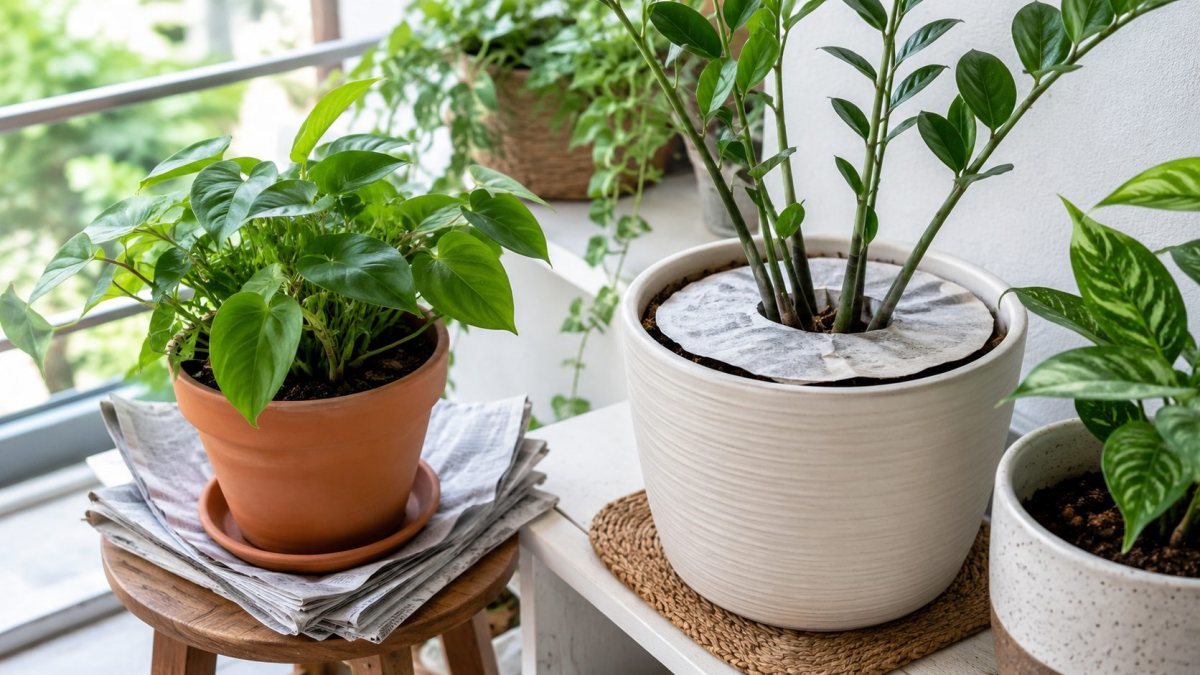
Newspaper is widely available and useful, but left wet too long it can become a contamination source. Use it selectively, replace it regularly, and avoid direct contact with bright or delicate materials to reduce staining risks.














Most Commented