
Translation result.
Does your stomach drop when you open your winter utility bill? Turning the boiler down isn’t the only answer. Stop the heat leaking from around your home and you can cut your bill significantly.Five efficient heating tipsyou can use today. Try these practical, optimized household strategies.
1. Find the “invisible culprit” inside your boiler pipes
If the boiler itself seems fine but your house takes forever to warm, the problem is often the water circulating through the pipes—not the unit. Like engine oil, the heating fluid needs servicing. In homes older than five years, rust and residue can coat the inside of pipes and block heat transfer. In houses more than a decade old, a pipe cleaning can boost heating efficiency by as much as 20%.
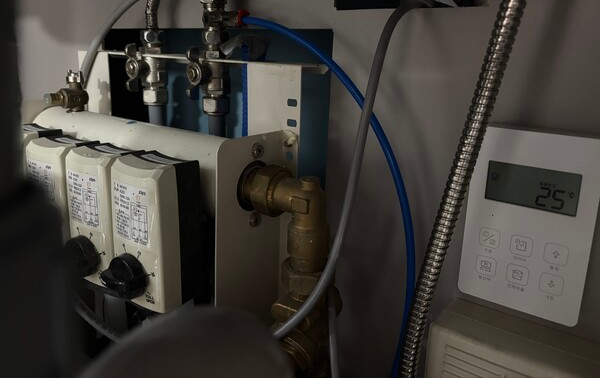
💡 DIY checklist to diagnose your pipes
You notice uneven heating—certain rooms stay unusually cold.
Even after running the boiler for an hour or more, the floor is only lukewarm.
You haven’t had the pipes cleaned in over ten years.
Your gas bill has climbed noticeably compared with last year.
💡 DIY checklist to diagnose your pipes
You notice uneven heating—certain rooms stay unusually cold.
Even after running the boiler for an hour or more, the floor is only lukewarm.
You haven’t had the pipes cleaned in over ten years.
Your gas bill has climbed noticeably compared with last year.
2. Valves: ‘half open’ beats fully closed
Is it really a good idea to shut the valve on an unused room completely?
Boilers are designed to regulate systemwide water pressure. If you close too many valves, pressure can build up in certain pipes, causing noise and stressing the boiler. That also increases the risk of frozen pipes during extreme cold.
-
Best practice: Don’t shut valves all the way; leave them about halfway open. A small, steady flow keeps pressure balanced and reduces repair costs while improving heating performance.
3. Seal the window tracks — where bubble wrap misses the drafts
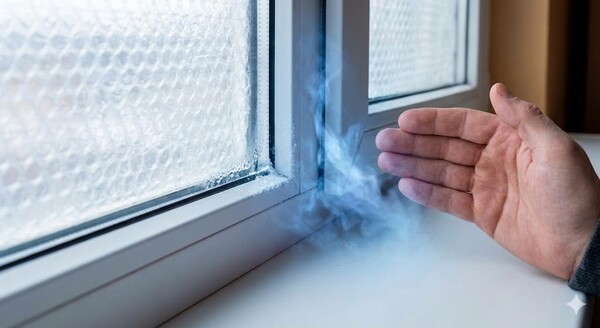
If your nose still feels cold after taping bubble wrap to the windows, the leak may not be the glass but the gaps in the window tracks.
-
Practical tip: Use foam backer rods, dry towels or cut cardboard to tightly fill the track gaps—these items are easy to find at discount stores. Seal the tracks as if you were completely caulking the window, and you’ll often see the room temperature jump by about 2–3°C almost immediately.
4. The secret of a 10 cm air gap between furniture and the wall
Do you push furniture right up against exterior walls? Cold from the wall transfers into the furniture and constantly saps indoor heat.
-
Small change: Pull furniture at least 5–10 cm away from the wall. That air gap acts as a natural insulator and can also help prevent mold behind furniture — a twofold benefit.
5. Point your circulator at the ceiling
Warm air rises and cold air settles. If the floor is warm but the room feels chilly, hot air may be pooling at the ceiling — and you need to push it back down.
-
How to use it: Place a circulator or fan on a diagonal so it blows toward the ceiling. That circulation evens out the temperature. Run it with a humidifier to help moisture hold heat longer — the room will feel warmer for longer.














Most Commented