
Translation result
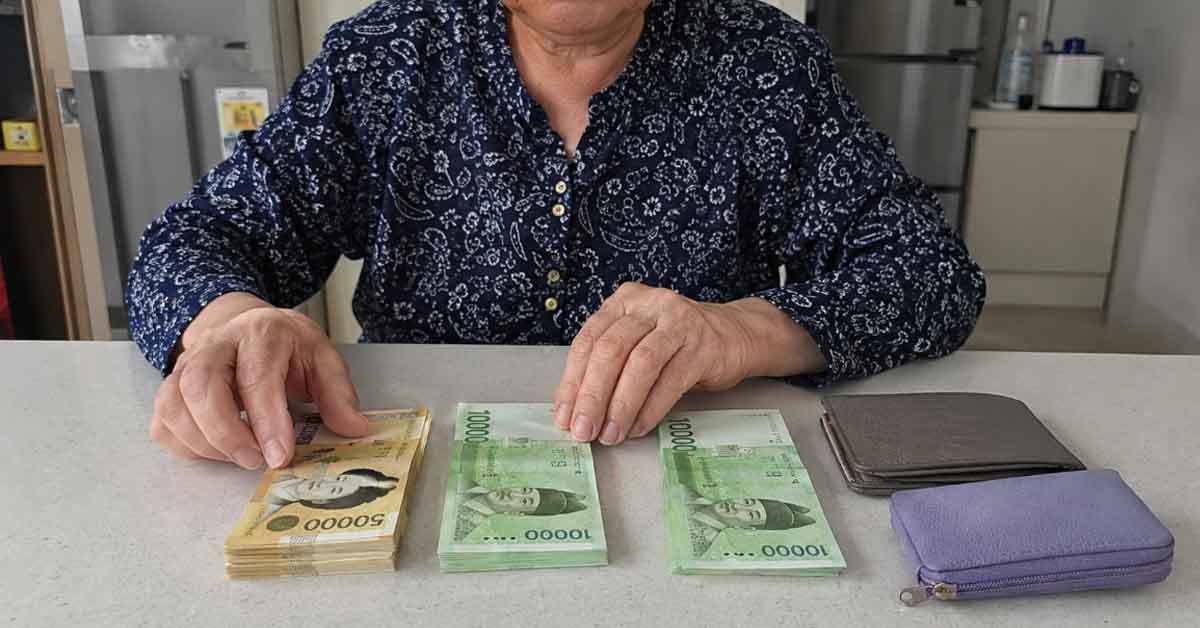
After 80, money often means something different. The pressure to keep earning fades; what matters more is how long you can live without financial anxiety on what you already have. Those who live relatively comfortably past 80 tend to share a pattern. They aren’t necessarily heavy investors or large real-estate owners. More often, they quietly kept their own habits while others chased stocks or crypto.
Financial security in old age often springs from lifestyle choices more than account balances. Here are three habits common to people whose money doesn’t run out after 80.
3. People who don’t spend by comparing themselves to others
They aren’t easily swayed by what others buy or how others live. They avoid excessive spending for appearances and consider their own circumstances first. That restraint can look cautious when you’re young, but with age people learn that social comparison impoverishes the spirit faster than it empties the wallet.
In consumer psychology this is called social-comparison consumption: the drive to have better things than others increases spending, and that spending erodes retirement savings.

A 2026 survey on dating and marriage by the matchmaking firm Gayeon found that married respondents ranked holiday spending—what they called the financial burden of holidays—first among their worries (26.6%), illustrating how real the pressure to spend for appearances can be.
By contrast, people who kept their spending balanced within their means don’t see large financial leaks after 80. At that age, comfort comes from contentment rather than displays of wealth.
2. People who keep life simple
Their homes, spending, and social ties aren’t overly complicated. They keep fixed expenses low and maintain steady daily rhythms. They built resilient routines long ago, so unexpected events don’t throw them off balance.

Statistics Korea reported in 2025 that in 2024 the net assets of households headed by someone 65 or older averaged 465,940,000 KRW (about $349,455). Experts note that many older adults have assets on paper but lack sufficient cash flow.
The fewer fixed costs you carry, the better you can absorb unexpected medical bills or emergency expenses. In retirement, a structure that prevents money from leaking out matters more than the capacity to earn more. People who remain comfortable for a long time tend to live simply.
1. People who find satisfaction in small daily routines
The biggest difference comes down to this. They eat well, sleep well, and value ordinary days without lavish spending. Their lives aren’t destabilized by appetite for more. The stronger the urge for something better, the more dissatisfaction accumulates with what they already have, and that dissatisfaction often leads to unnecessary spending.
According to the National Data Agency’s 2025 Quality of Life report (released in 2026), people 70 and older averaged 5.5 hours of leisure per day—the most of any age group—but had the lowest leisure satisfaction at 30.1%. That gap shows how the quality of retirement depends on how abundant time is spent.

Austrian psychiatrist Viktor Frankl wrote in Man’s Search for Meaning that everything can be taken from a person except one thing: the last of the human freedoms—to choose one’s attitude in any given set of circumstances and to choose one’s own way.
The common trait among people who live past 80 without money worries isn’t wealth. It’s an attitude of finding sufficiency in the life they already have. That mindset becomes the strongest foundation for a secure old age.
Retirement security isn’t achieved by saving or investing alone. Those who live comfortably past 80 avoided comparing themselves to others from a young age, kept life simple, and found satisfaction in small daily routines. Neither stocks nor crypto can replace those habits.
※ This article is original knowledge and cultural content from Wikitree.














Most Commented