
Translation result
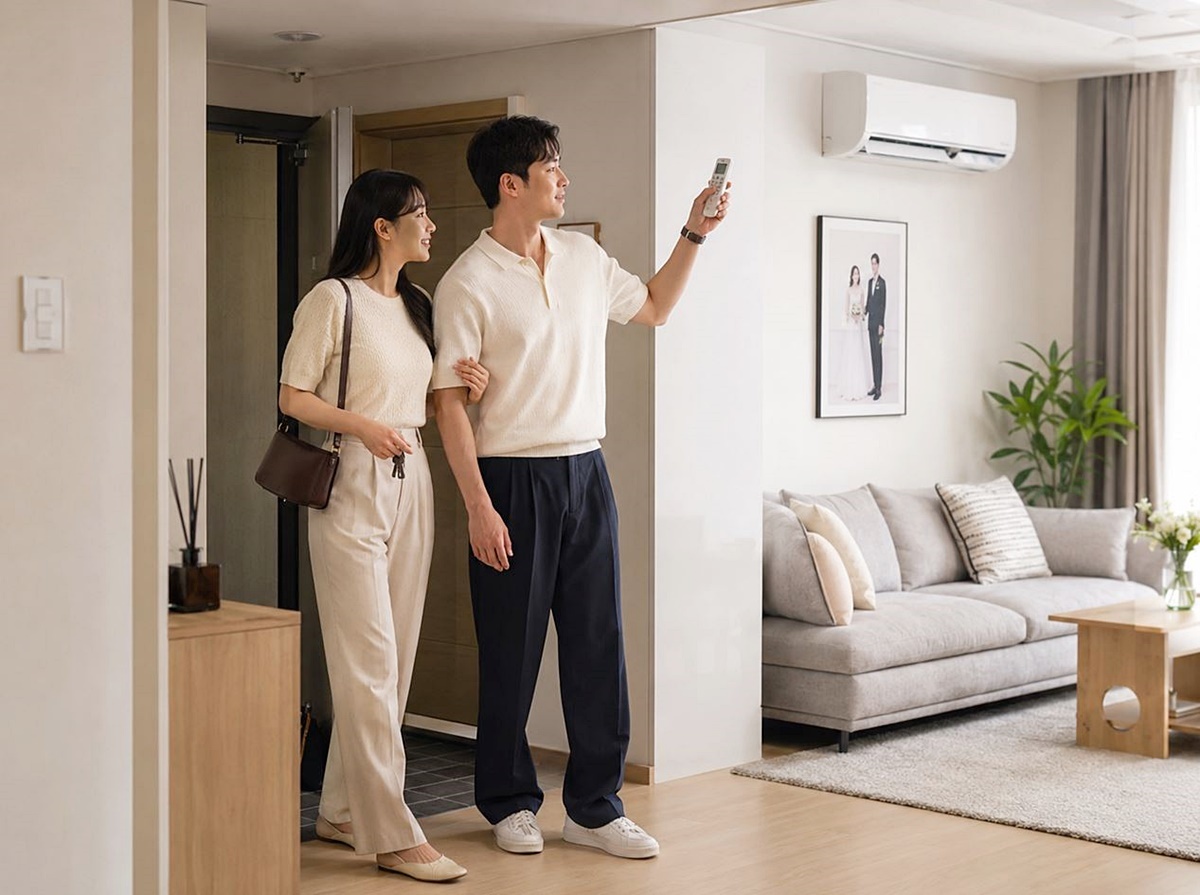
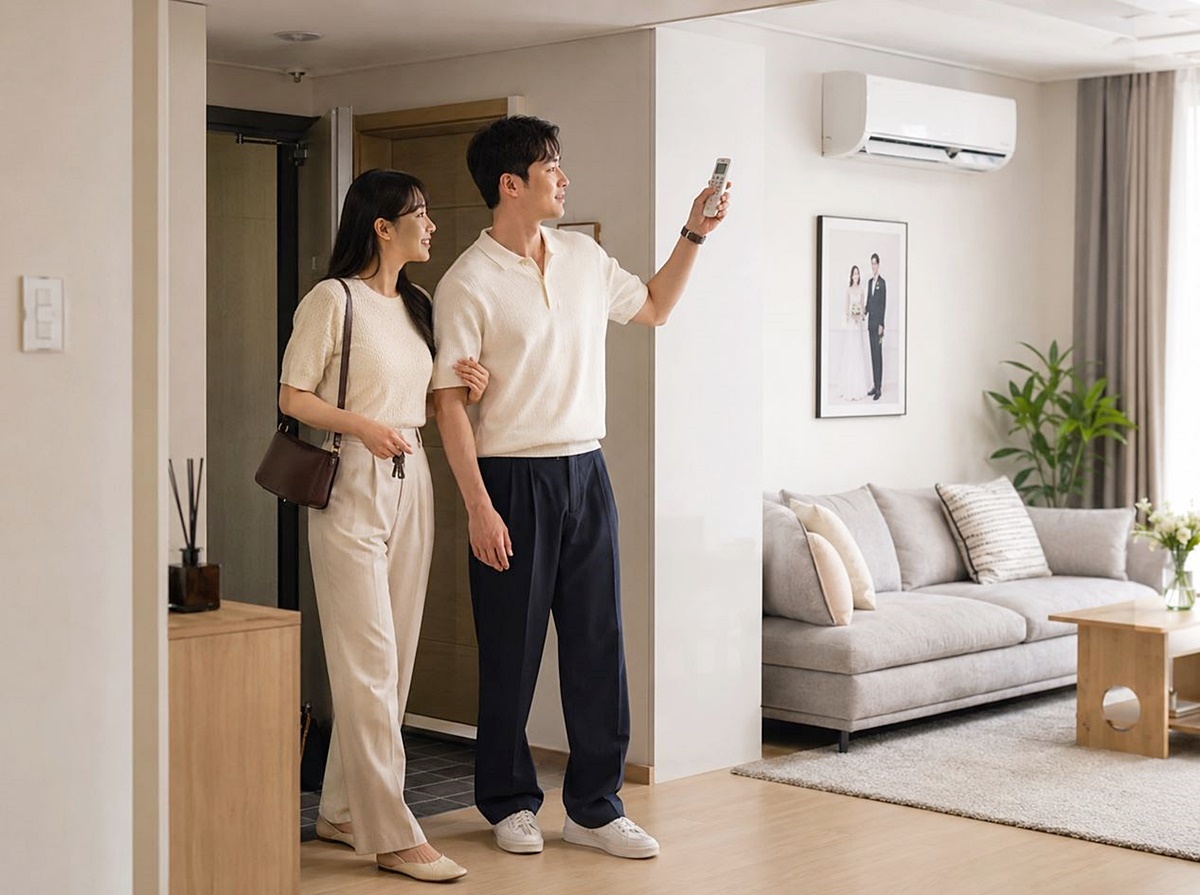
When people step out for a short time, they often wonder whether to shut the air conditioner off or leave it running. To save on electricity, many turn the unit off immediately. But depending on the circumstances, leaving it on at a low setting can be more efficient.
Modern inverter air conditioners, now common in homes, automatically reduce compressor and outdoor-unit output as the room approaches the set temperature. They don’t run at full power the whole time; instead, once the room is cooled, they maintain that temperature at a lower output.
If you’ll be out for about 1–2 hours, don’t turn the AC off
For short trips of roughly 1–2 hours, it can make sense to raise the thermostat to about 81–82°F (27–28°C) and let the AC run on a low setting rather than switching it off.
Turning the AC off does save electricity in the immediate moment, but houses absorb a lot of heat during summer. Walls, floors, ceilings, furniture, bedding, curtains and appliances all store heat. If you turn the AC off while you’re away, the air warms quickly and that stored heat radiates back into the room.
When you return and restart the AC, it must cool not only the air but also the heated surfaces. That forces the unit to run at higher power for longer to reach the set temperature. Even a short shutdown can lead to a surge in electricity use as the system works to bring the home back to comfort.
By contrast, keeping an inverter AC running but raising the set point prevents the room from overheating. If a room is already reasonably cool before you leave, raising the thermostat to about 81–82°F (27–28°C) and setting the fan to low can maintain comfort without heavy operation.
In that mode, the AC won’t run hard continuously; it will cycle minimally to prevent large temperature swings. When you return, the house won’t feel like an oven, so you’ll need less aggressive cooling. The result is often more comfortable and, in some cases, uses less energy overall.
That approach isn’t right for every home. Results depend on AC type, house layout, insulation, how long you’re gone, outside temperature and how much sun hits your windows. Non-inverter, fixed-speed units cycle fully on and off even after reaching set temperature, so leaving them running during a short absence may not be beneficial.
If a home has poor insulation or receives strong direct sunlight, cold air can escape quickly even on a low setting. In such cases, use curtains or blinds to reduce incoming heat as well.
If you’ll be out 3–4 hours or longer, turn the AC off
The calculation changes for longer absences. If you’ll be away for 3–4 hours or more, or out for half a day, turning the AC off is generally the better choice. Even inverter systems can waste energy cooling an empty space for long periods.
The key factors are how long you’ll be gone, whether the room is already cool, and whether your unit is an inverter model. For quick errands of about 1–2 hours, consider raising the set temperature and keeping the unit running; for longer absences, switch it off.

Knowing how to cool effectively helps. Many people, trying to save electricity, set the thermostat to 79–82°F (26–28°C) from the start. If the room is already hot, that can take a long time to feel comfortable.
Begin by lowering the set point to about 64–72°F (18–22°C) and set the fan high so the AC removes hot air quickly. After 10–15 minutes, once the room has cooled, raise the thermostat to 79–82°F (26–28°C) to maintain comfort. Rapid initial cooling followed by steady maintenance feels noticeably cooler than starting weak and running a long time.
Using a fan or air circulator with the AC also improves performance. Cold air sinks and hot air rises, so relying on the AC’s airflow alone can take time to cool a whole room evenly. Point a circulator toward the ceiling or into the room to distribute cool air so it doesn’t pool in one spot.
How to get the most out of your AC this summer
With a fan, avoid placing it directly in front of the AC. Instead, put it near the center of the room or aimed where people sit, on a low setting; that lowers perceived temperature. Better air circulation makes a room feel much cooler even at the same thermostat setting.
Blocking sunlight matters. Strong midday sun through windows makes it hard for an AC to lower indoor temperatures. West- and south-facing homes heat up in the afternoon. Closing curtains or blinds before you turn on the AC reduces incoming radiant heat.
If you plan to keep the AC at about 81–82°F (27–28°C) while you’re out, closing curtains will also help prevent cool air from escaping. Managing sunlight and circulation together is far more effective than adjusting the thermostat alone.
Also pay attention to airflow direction. When you first turn the AC on, aim airflow downward or toward people to feel cool quickly. Once the room cools, switch the airflow upward or to auto mode. Since cool air sinks, sending air upward helps mix the room and cool it evenly.
When sleeping or staying in one place for a long time, avoid having cold air blow directly on your body. Continuous direct airflow can make you too cold and dry your throat.
Ultimately, efficient AC use is about adjusting to circumstances, not an absolute rule to always turn it off or always leave it on. If you have an inverter AC, the room is already cool, and you’ll be out for about 1–2 hours, raising the thermostat to 81–82°F (27–28°C) and keeping the unit on low can help.
For longer outings or with a fixed-speed unit, turning the AC off usually makes more sense. Start with strong cooling to remove built-up heat, then maintain a reasonable temperature while circulating air with fans and blocking sunlight with curtains to keep comfort without excess cost.
Using the AC efficiently in summer means managing power cycles along with indoor heat, humidity and airflow together.















Most Commented