
Translation result
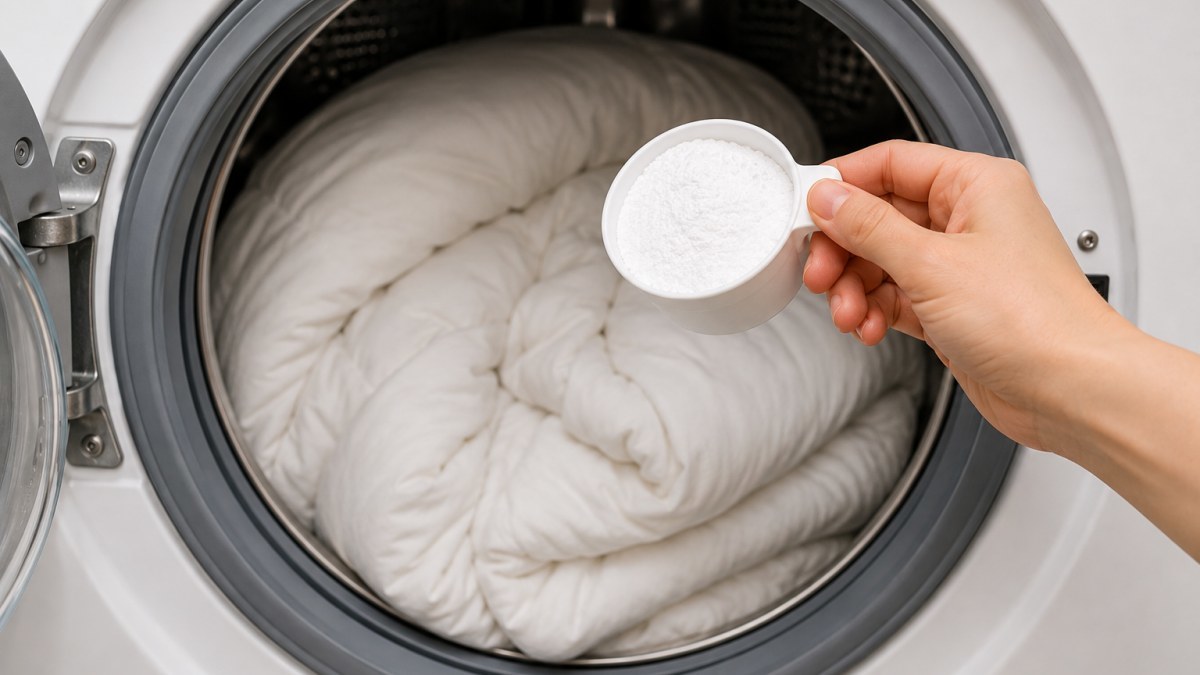
If the comforter and pillows that press against your skin each night suddenly take on a sour, musty odor, it can make your whole bedroom feel unclean.
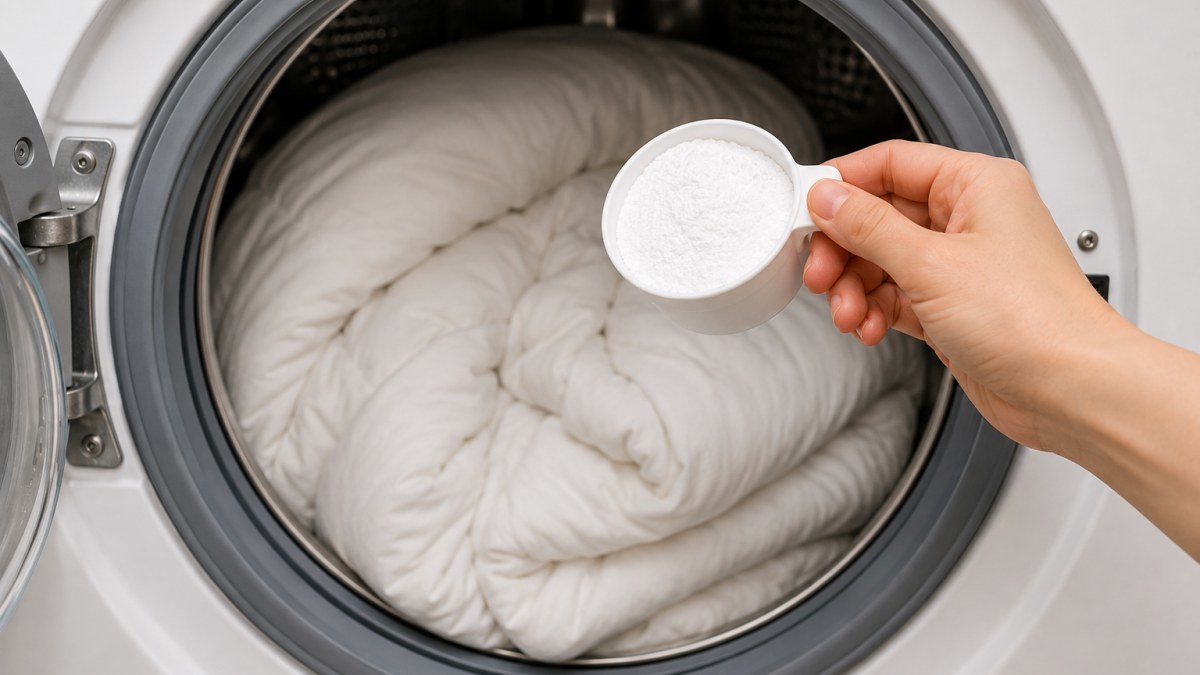
Many people try to banish these smells by running multiple cycles or pouring in extra fabric softener, only to have the odor return. That happens because body oils and microscopic bacteria settle deep in the fibers of comforters and pillowcases and aren’t removed by a typical cold-water wash.
Why bedding develops a sour smell

While you sleep, your body releases more sweat and secretions than you might expect. Adults typically lose roughly the volume of a paper cup overnight, and dead skin cells and skin oils soak into blankets and pillowcases. As these residues meet air and begin to break down, they create a hospitable environment inside the fibers for bacteria such as Moraxella and other microbes.
The trouble is that ordinary cold-water cycles and standard machine settings often can’t dissolve the hardened oils trapped deep in fabric. A comforter may look clean after washing, but once it dries, the trapped bacteria and decomposed oils reactivate and emit that characteristic sour, musty odor. The problem intensifies in hot, humid months when longer drying times allow bacteria to multiply rapidly, creating a frustrating cycle of recurring smells.
A three-step home laundry method to eliminate sour odors
To remove deeply embedded sour odors from comforters and pillowcases, combine warm water with oxygen-based bleach and natural agents such as baking soda or citric acid. Used together in a three-step routine, they address oils, stains, and lingering microbes.
Step one: pre-soak in warm water. Skin oils don’t dissolve well in cold water, so fill a large tub or basin with water around 40–50°C (104–122°F), similar to a hot bath. Dissolve about one paper cup of oxygen bleach (sodium percarbonate) — available at most stores — into the water.
Fully submerge the affected comforter and let it soak for roughly 30 minutes. In warm water, oxygen bleach releases bubbles that help lift yellowed grime and oil from fibers and provide an initial sanitizing effect. Avoid soaking much longer than 30 minutes, as extended exposure can fade dyes.
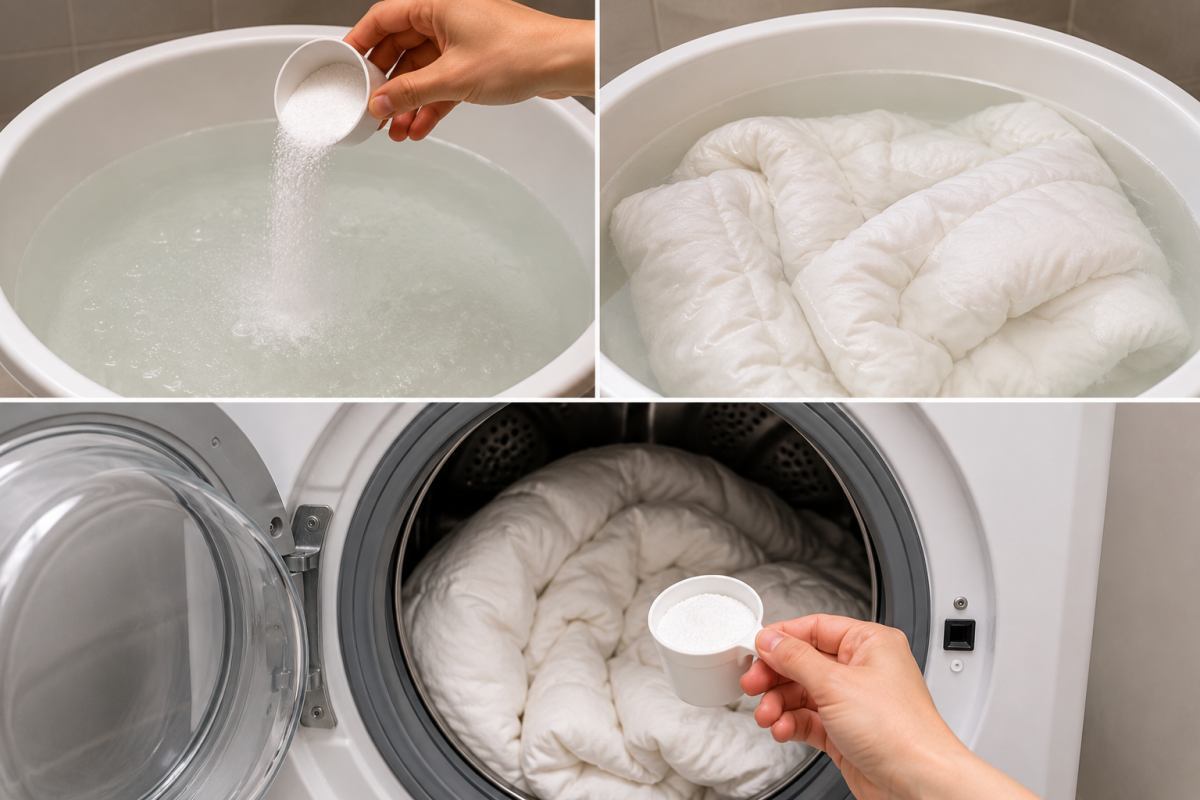
Step two: run the main wash. After soaking, place the comforter in the washing machine with your regular liquid detergent and add about half a paper cup of baking soda. Baking soda absorbs odors and softens water, which boosts cleaning power. Use the bedding or standard cycle and keep the water warm so residual bacteria and soils rinse away thoroughly.
Step three: neutralize during the final rinse. Just before the machine begins its final spin, add a dissolved measure of citric acid or about one shot glass of household vinegar in place of fabric softener. Oxygen bleach and baking soda are alkaline and can leave a slightly crisp residue; an acidic rinse neutralizes that residue. Vinegar also has mild antiseptic properties, helps eliminate lingering odors, and softens fabric, so you can skip commercial softeners. The vinegar smell will dissipate as the bedding dries.
One important caution: don’t use oxygen bleach on protein-based fibers. Because it can break down proteins, oxygen bleach should never be used on wool, silk, or expensive down comforters filled with goose or duck down. It can damage the fibers, cause shrinkage, or destroy the loft that provides insulation. For goose-down or wool bedding, wash gently in lukewarm water with a neutral detergent instead.
Pillow washing tips
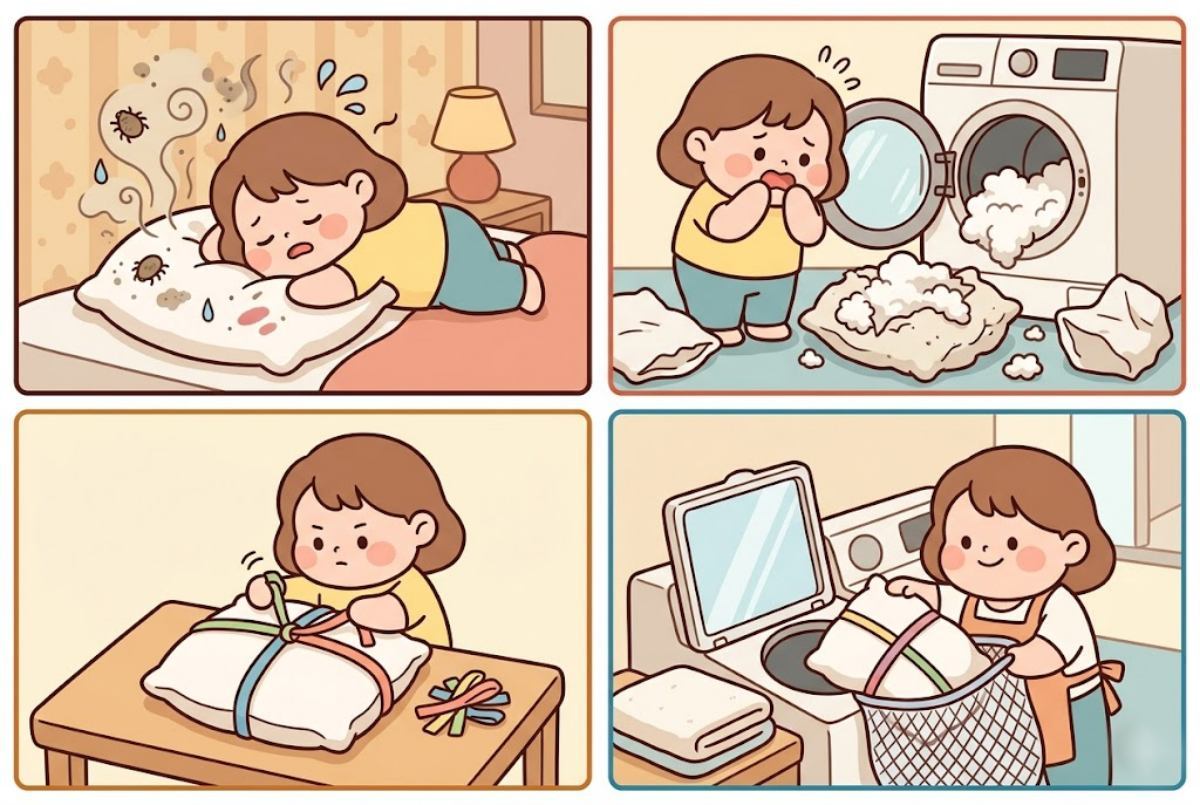
Pillows make the most direct contact with your skin and accumulate the most grime. Change and wash pillowcases at least once a week. Pillow inserts collect invisible dust mites, oils, and dead skin, so wash them whole at least three to four times a year to help prevent skin irritation. But tossing a pillow into the washer without taking precautions can leave the fill clumped or cause the casing to burst.
To preserve a pillow’s shape during washing, use an old shoelace or a soft laundry strap to bind the pillow in a cross pattern: two ties across the width and one down the length, creating three secured sections. This keeps the fill from shifting and clumping during agitation. Place the tied pillow inside a large laundry bag before washing to protect the fabric from tearing.
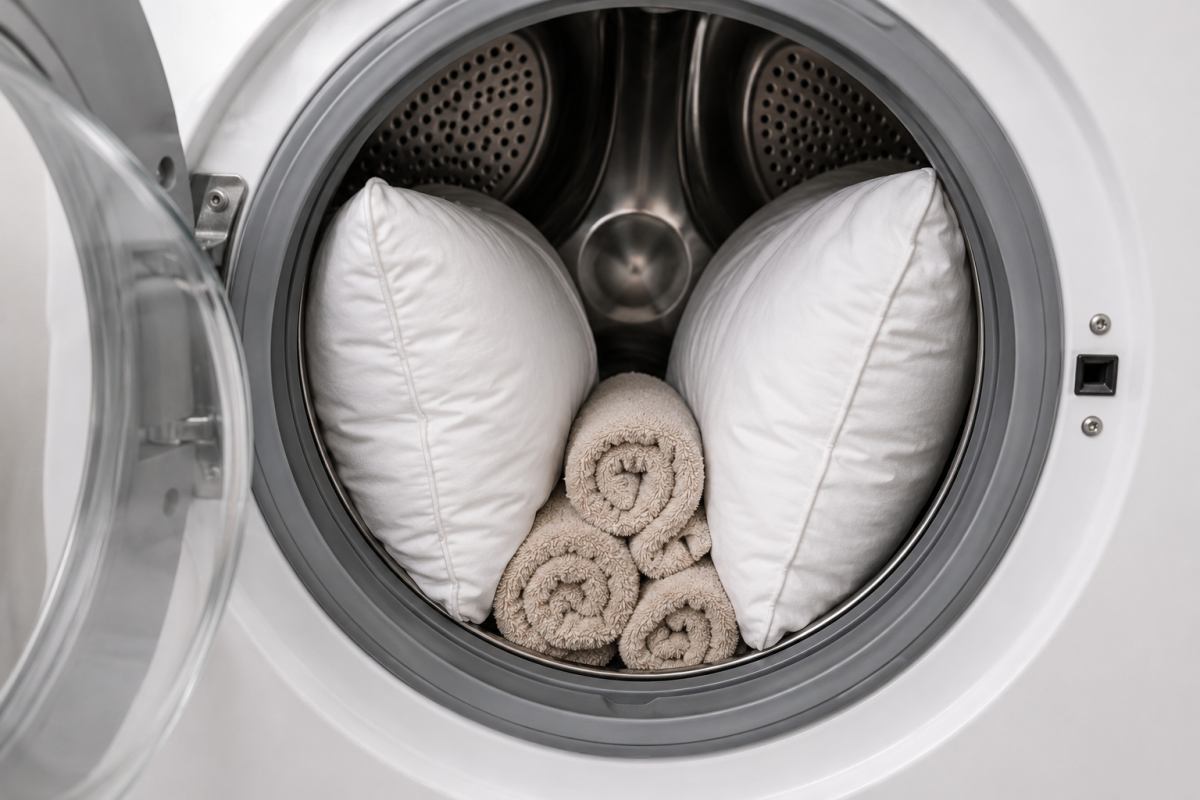
Also pay attention to load balance. Pillow fills absorb a lot of water and become several times heavier when wet. Washing a single pillow alone can unbalance the drum during spin, causing loud banging or triggering a weight-imbalance error that halts the cycle. Always wash two pillows together, placed opposite each other, or add three to four clean towels if you have only one pillow to keep the load even and allow a safe spin cycle.
Proper drying
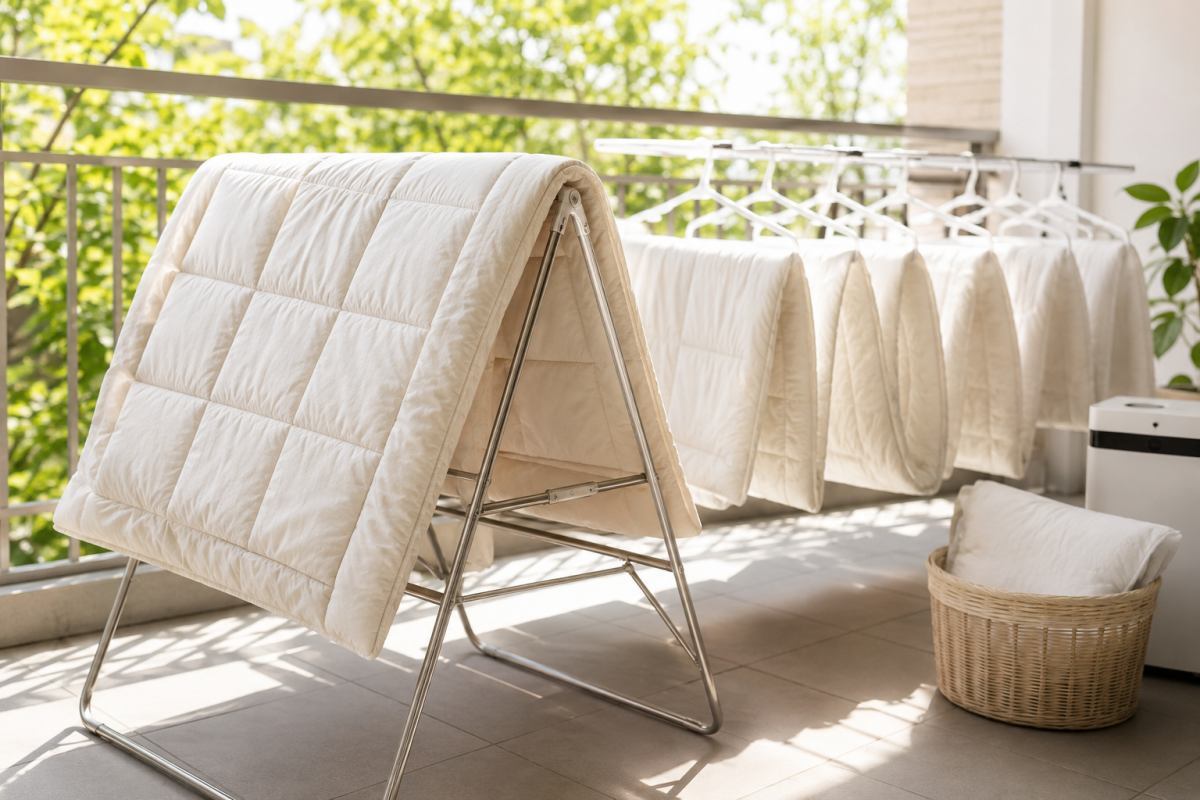
No matter how thoroughly you wash, neglecting drying can undo your work. Thick comforters and waterlogged pillows can smell musty again within hours if the inner fibers stay damp. It’s essential to dry them completely.
If you’re air-drying because you don’t have a dryer, choose a sunny, well-ventilated balcony or yard. When you hang a comforter, don’t simply fold it over the line. Create channels for airflow: use two drying racks to drape the comforter in an A-shape, or hang multiple coat hangers across a rack and drape the comforter in a zigzag so more surface area is exposed to air. That approach can cut drying time by nearly half.
Don’t forget dust mites — a major health concern in bedding. Dust mites feed on dead skin and can trigger allergies like eczema, allergic rhinitis, and asthma. They aren’t reliably killed by washing alone; they require exposure to temperatures of at least 60°C (140°F). If you use a dryer, choose the bedding or high-heat setting and run it for at least 30 minutes to eradicate mites hiding in the fibers.
After the dryer cycle, take the bedding outside and give it a light shake to remove dead mite bodies and residual dust. That final step helps ensure your bedding is hygienic and safe.















Most Commented