
Translation result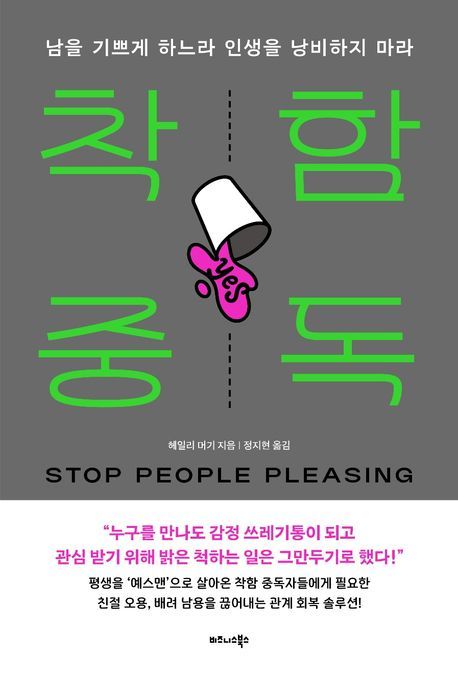
‘Addicted to Being Nice’ lays out a recovery plan for people who lose themselves trying to manage others’ moods. In the Korean edition from Business Books, Hailey Mugi traces habitual people-pleasing back to early parenting, collectivist cultural pressures and gendered expectations, and she helps readers face those roots with clear-eyed perspective.
She defines people-pleasing as a habitual tendency to put others’ needs, wishes and feelings ahead of your own. Although it shows up in relationships, Mugi argues that its deeper origin is a disconnection from the self — what she calls self-abandonment — a state in which people ignore their own needs and emotions even when they are alone.
The book delves into how these patterns take hold. By examining parenting styles, collectivist norms and gender stereotypes, Mugi shows that the impulse to put others first is shaped not only by individual temperament but also by social conditions.
The book is organized into 21 chapters. Part 1 guides readers through shedding others’ expectations to find their authentic selves. Part 2 explains how to protect yourself with gentle but firm boundaries. Parts 3 and 4 address enduring rejection and loss and rebuilding a more flexible life.
It also offers practical tools: the gray-rock technique for responding to emotional attacks with calm neutrality; the broken-record method for calmly repeating the same refusal in the face of unreasonable demands; the values wheel and the ladder of wants to clarify true desires; and I-statements to express feelings and needs clearly.
She emphasizes making requests clearly and directly. Rather than long explanations, Mugi suggests practicing a simple template: When you [action], it causes [impact], and I feel [feeling]. Could you [specific request]? This format helps state emotions and needs without ambiguity.
The book includes concrete scenarios for people who struggle most in close relationships such as family or romantic partnerships. Examples — like leaving the dinner table instead of tolerating hurtful jokes or rude behavior — show that practicing boundaries, even when guilt and anxiety arise, is the first step toward reclaiming your life.
‘Addicted to Being Nice’ is a relationship-recovery guide urging readers to stop playing the supporting role of mood manager and return as the protagonists of their own lives.
△ Addicted to Being Nice / Hailey Mugi (author) / Jeong Ji-hyun (translator) / Business Books / 20,000 KRW (about $15.00 USD)















Most Commented