
Translation result
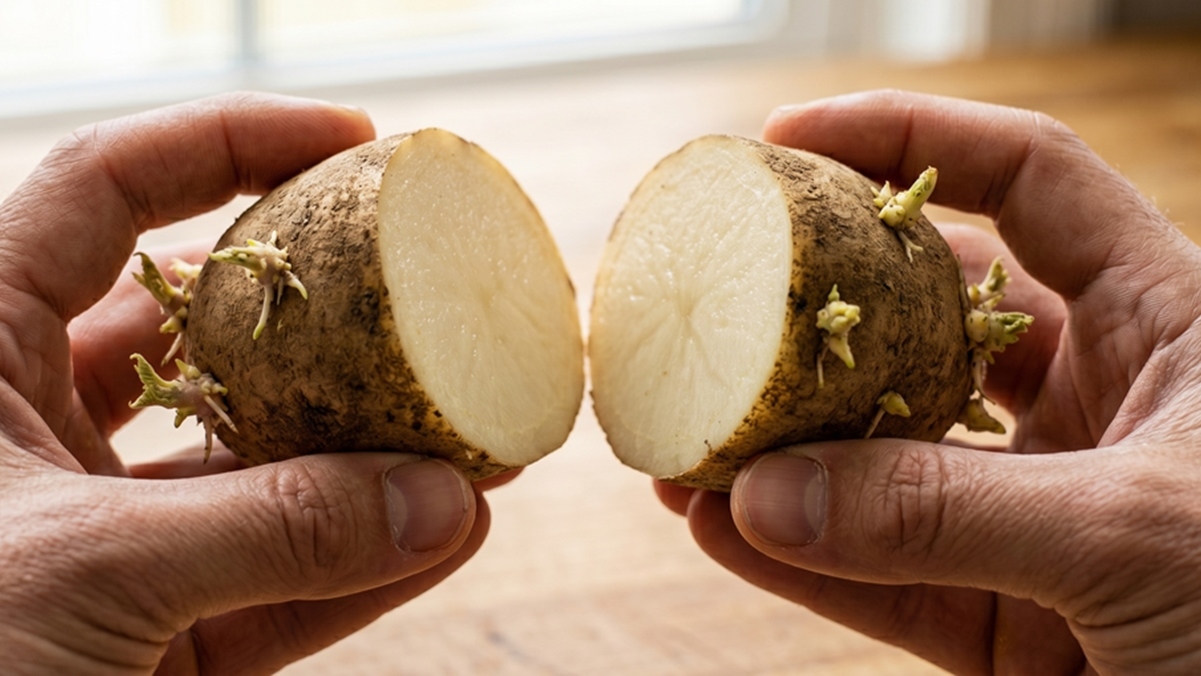
A potato left to languish in a corner of the fridge or in a produce bag under the table will sometimes sprout tiny, sharp shoots. Most people think, “I should throw this away,” and send it straight to the food-waste bin.
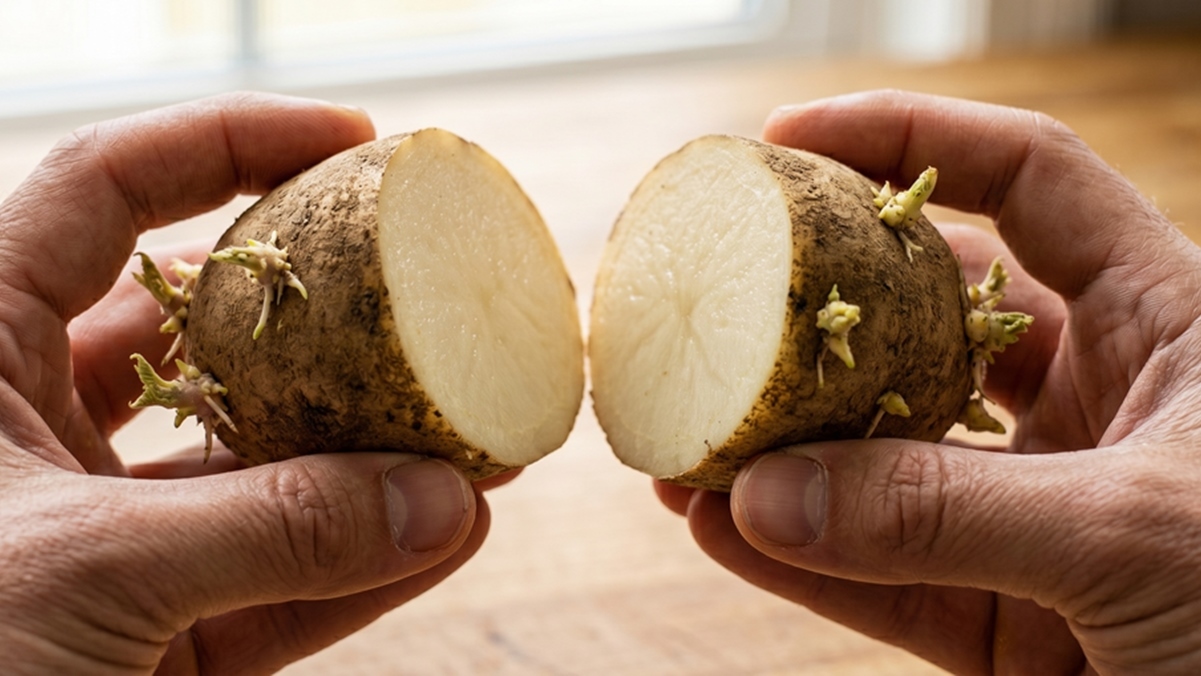
Wait. Before you toss it, take it to the bathroom.
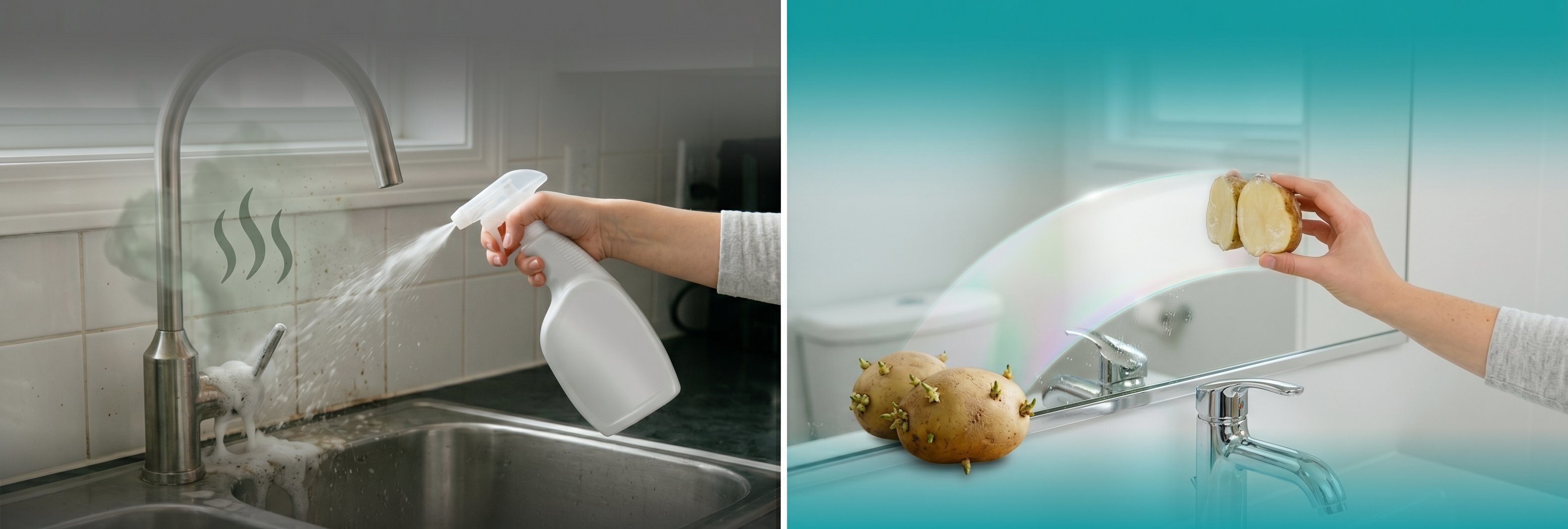
It’s true that you shouldn’t eat a sprouted potato. But sprouted spuds can be ideal for making windows and bathroom mirrors sparkle. The “potato cleaning” trick has been quietly spreading through online homemaker forums and lifestyle channels; here’s how and why it works.
Why shouldn’t you eat sprouted potatoes?
Before we get to the cleaning tip, it’s worth explaining why sprouted potatoes are unsafe to eat.
Potato sprouts contain a toxic compound called solanine. A healthy potato typically contains less than 7 mg of solanine per 100 g (about 3.5 oz), a level considered harmless. Sprouted or greened areas, however, can spike to 80–100 mg per the same weight. Excessive solanine intake can cause vomiting, symptoms similar to food poisoning, dizziness, an itchy throat and, in severe cases, breathing difficulties.
Can you simply cut away the sprouts and eat the rest? If you remove the sprouts deeply and there’s no green discoloration, the remaining potato is usually safe to eat. But if the greening is extensive, it’s safer to discard the whole tuber.
Even when a potato is no longer fit for the table, it need not be useless. As a household cleaner, it can outshine many commercial products.

How potatoes clean glass: starch’s absorbent and coating properties
The cleaning power of the potato comes down to one thing: starch.
Slice a potato and a milky white juice appears on the cut surface — that’s starch. Its porous structure allows it to cling to and absorb fine dust, fingerprints, light water spots and grease from glass.
While commercial cleaners often dissolve grime chemically, potato starch lifts contaminants by sticking to them and removing them physically. The key is that it works without synthetic chemicals.
There’s an added bonus. Rubbing a potato on a mirror leaves a thin starch film that delays condensation, helping prevent the fog that commonly builds on bathroom mirrors. In short, it cleans and provides a light anti-fog coating in one step.
Many glass cleaners leave streaks or residue that require a second wipe. Potato starch, once dry, generally comes off cleanly with a single pass of a dry cloth.
How do you use a potato to clean?
The method is simple, and one potato is usually enough.
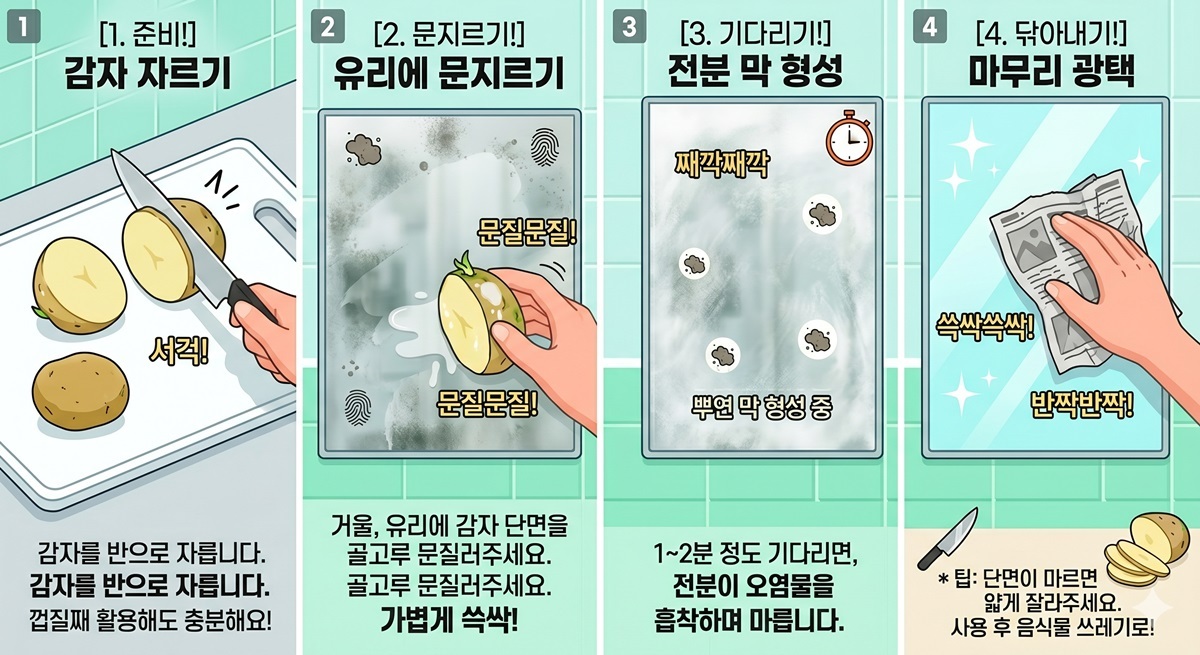
① Cut the potato in half
Halve the potato with a knife. You can leave the skin on; the exposed cut surface beneath the skin is effective.
② Rub the cut surface evenly over the glass
Gently rub the cut surface across the glass you want to clean — windows, bathroom mirrors, shower doors, car interior glass, etc. No heavy pressure is needed; glide the potato over the surface.
③ Wait a moment for the starch to dry
The glass will look slightly cloudy after rubbing. That’s the starch forming a film as it binds dirt. Let it sit for a minute or two.
④ Wipe it off with a dry cloth or crumpled newspaper
Once the starch firms, remove it with a dry rag or crumpled newspaper. Newsprint can help buff the surface to a final shine.
⑤ If the cut surface dries out, slice a thin layer off to expose a fresh surface
If the exposed surface becomes dry or soiled during use, thinly slice it to reveal a fresh face and continue cleaning.
Dispose of used potato pieces in the food-waste bin.
Even a single sprouted potato can go a long way
One potato can handle a surprising share of your glass-cleaning needs.
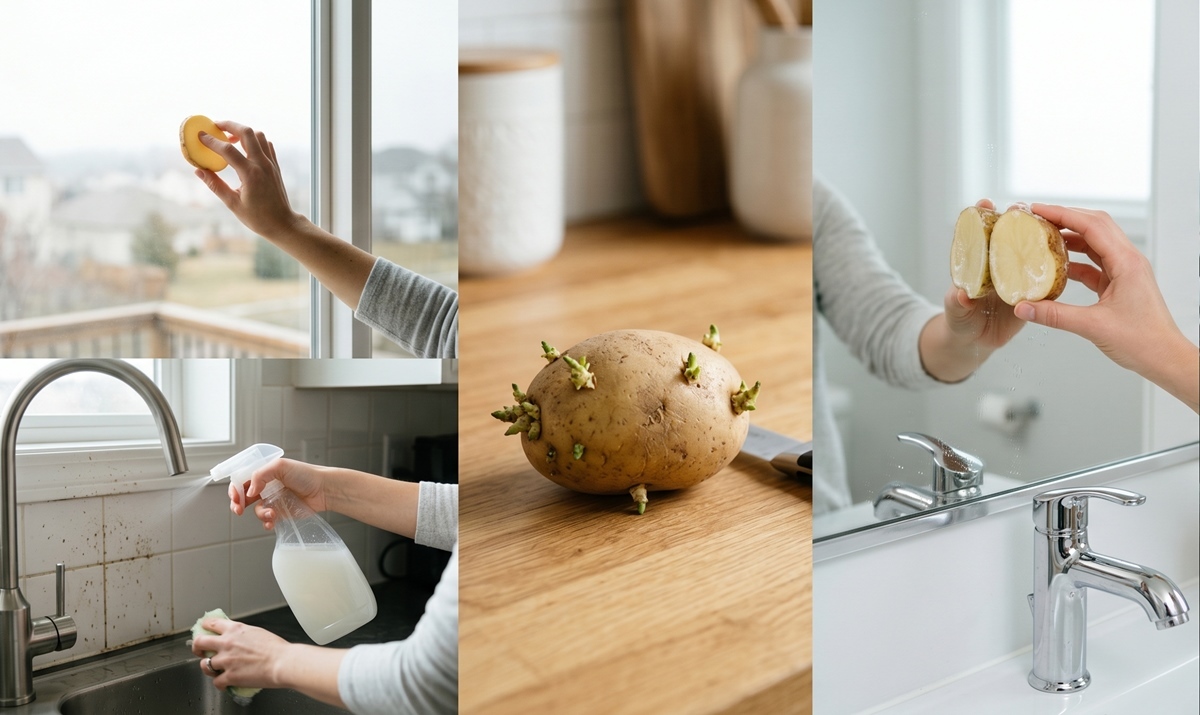
– Living-room windows: the interior side where fine dust and fingerprints collect
– Bathroom mirrors: removes water spots and toothpaste splatter and helps prevent fogging
– Shower glass: bathroom partitions that gather water stains
– Car glass: effective at removing oily residue from interior glass
– Faucet mineral deposits: rubbing the cut potato on white mineral buildup around faucets helps restore shine
One more tip: don’t discard potato cooking water. The dissolved starch is useful on stubborn grime in sinks or on bathroom tiles. Put it in a spray bottle, mist it onto soiled tiles or grout, let it sit briefly, then wipe — it works well in tight crevices.
How does it compare to chemical cleaners?
Commercial glass cleaners deliver strong cleaning power, but they come with downsides.
First, the chemical odor. Using cleaners in bathrooms or confined spaces often leaves a sharp scent that lingers. Potatoes have little to no odor, so you can use the room immediately after cleaning.
Second, safety in homes with children. If you avoid chemical cleaners on mirrors and glass that kids often touch, the potato method is a practical alternative.
Third, cost savings. You’re repurposing something that might otherwise be thrown away, so there’s no extra purchase required.
There are limits. For old, baked-on mineral deposits or deeply ingrained grime, a potato alone may not be enough. In those cases, loosen stains first with vinegar or baking soda, then finish with a potato to improve the result.
Potato storage tips: how to prevent sprouts entirely?
If you don’t intend to save potatoes for cleaning, it’s still useful to know how to keep them from sprouting.
Placing one or two apples in the potato storage box can inhibit sprouting. Apples emit ethylene gas, which slows potato germination. One apple is said to suppress sprouting in roughly 10 kg (about 22 lb) of potatoes.
Conversely, don’t store onions and potatoes together — they accelerate each other’s spoilage, so keep them separate.

If a potato has already sprouted, don’t dump it right away — take it to the bathroom or balcony first.
A potato that has sprouted after sitting unnoticed in the fridge may be disappointing as an ingredient, but it can shine as a cleaning tool. You need no special tools or expensive cleaners — just cut, rub and wipe. Few household hacks feel as satisfying as using a kitchen scrap to brighten the glass in your home.














Most Commented