
Translation result.
More 20‑ and 30‑somethings are choosing running, workouts and alcohol‑free options over office drinking and all‑night binges
Drinking less and taking care of yourself increasingly seen as cooler
Non‑alcoholic market has grown ninefold in a decade…a new culture of the “right not to get drunk”
Expert: Rising job uncertainty pushes young people to treat self‑care as a competitive investment
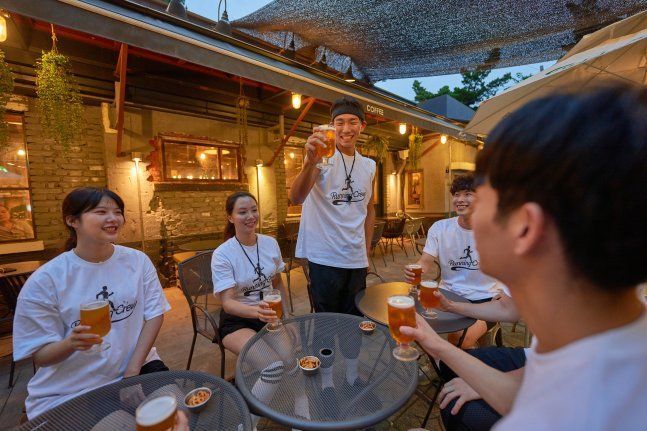
There was a time when Friday night meant drinks without fail. Now I’d rather be up for a morning run or a workout.
A man in his 30s who works in Yongsan, Seoul, said he sharply reduced his drinking over the past year or two. He used to go along with after‑work dinners and gatherings, but now he often opts for exercise or rest instead of evenings that stretch into the night.
He said that where drinking once signaled someone who set the mood, these days people who manage themselves well look more impressive. “I don’t want to drink if it wrecks my condition the next day,” he said.
Drinking habits among people in their 20s and 30s are changing. What used to be treated as part of social and work life — all‑night drinking and obligatory company dinners — is giving way to lifestyles in which young people cut down or avoid alcohol entirely. As more opt for running, workouts, alcohol‑free drinks and morning activities, the broader drinking culture is beginning to shift.
Alcohol long served as a principal social lubricant — at company dinners, university gatherings and in forming friend groups. But among today’s 20‑ and 30‑somethings, the idea that “you don’t have to get drunk” has taken hold. With health, daily condition and self‑care prioritized, many now view heavy drinking as a burden rather than a necessity.
That change shows up in the market. Research firm Euromonitor estimates South Korea’s non‑alcoholic beer market grew from roughly 8.1 billion KRW (about 6.1 million USD) in 2014 to more than 70 billion KRW (about 52.5 million USD) in 2024 — about a ninefold increase in a decade — and could reach around 94.6 billion KRW (about 71 million USD) by 2027. Industry observers expect growth to continue.
Beverage makers are responding quickly. Companies are no longer focused solely on selling drinks that get you drunk; they’re building brands around health, fitness and wellness.
HiteJinro has sponsored university running programs to promote Terra Light. After entering the non‑alcoholic category with Cass 0.0 in 2020, Cass expanded its lineup in 2022 with a 500 ml bottle and launches like Hoegaarden Zero and Budweiser Zero.
In 2024 Cass introduced Cass Lemon Squeeze 0.0, and last year it rolled out Cass All Zero, further broadening its non‑alcoholic offerings. Where alcohol marketing once leaned on nightlife, brands increasingly try to connect with exercise and self‑care imagery.
This trend aligns with consumer movements like “Healthy Pleasure” and “Sober Curious” — approaches that aim to enjoy life while staying healthy and intentionally cutting unnecessary drinking. Analysts say the pattern is especially pronounced among people in their 20s and 30s, who are sensitive to how drinking affects next‑day performance.
A worker in his 20s from Mapo, Seoul, said he has spent recent years focusing on exercise and fitness instead of drinking. “Among my friends, people who take care of themselves get more positive recognition than those who just handle their liquor well,” he said.
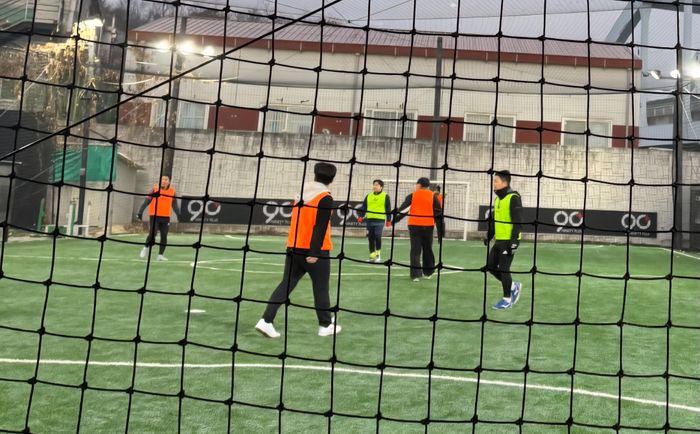
A graduate student in his 30s said that in futsal or climbing groups many people don’t drink at all, and those who do usually keep it light with a highball or low‑alcohol option. “Protecting the next day’s schedule and condition is important,” he said.
The rise of running and exercise culture is often mentioned alongside shifts in drinking. According to Naver Band, groups for running and walking increased by 77 percent over the past three years. Observers note that social activities once centered on late‑night drinking are moving toward early‑morning runs and workout meetups.
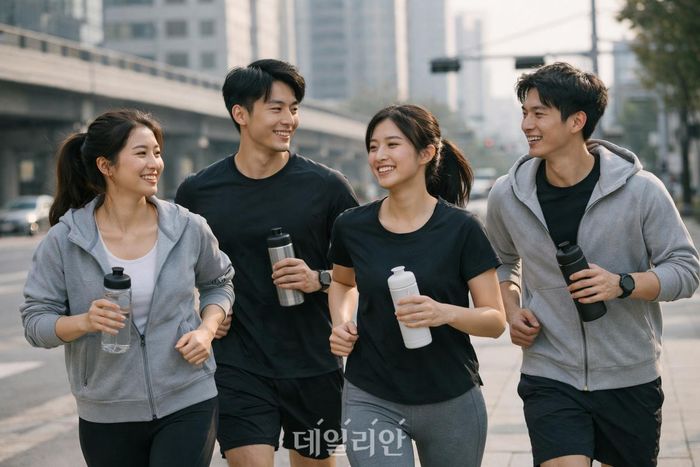
Experts say this shift goes beyond a trend and reflects structural changes in society. Faced with high prices, a tight job market and economic uncertainty, young people are trying to manage time, energy and money more efficiently. Prioritizing health and daily rhythms over late‑night networking has become increasingly natural.
Yoon In‑jin, a sociology professor at Korea University, said that under the old collectivist workplace model, dinners and drinking were effectively essential for building workplace ties. Today’s young people, she said, place more importance on private life and individual competitiveness than on organizational harmony. With employment uncertainty rising, cutting unnecessary activities and investing in health and self‑management has become a form of competitive advantage.
Yoon also pointed to the weakening idea of a lifetime job as a significant factor. Whereas maintaining relationships inside a company once mattered most, people now focus on boosting their market value to move to better positions. Investing energy in exercise, self‑improvement and health often feels more practical than spending it on drinking and company dinners, she said.
Still, some warn that an excessive focus on self‑management can create new pressures. Choosing not to drink should be respected, but an extreme emphasis on health and productivity may increase fatigue among young people.
Even so, for today’s 20‑ and 30‑somethings, alcohol is no longer an automatic social glue. Protecting the “right not to get drunk” has become a new lifestyle value that stands alongside — and sometimes above — the old skill of being able to hold one’s liquor.
© Dailyan Co. Unauthorized reproduction and redistribution prohibited
- “Sorry, I need a break”—Young people choosing quiet solitude and JOMO [Now 2.30]
- Samsung overhauls compensation system to head off strikes…what each side gained (comprehensive)
- “MZ culture” exposed in Samsung crisis: Pragmatism over ideology
- Memory worth 600 million KRW (about 450,000 USD)? Loss‑making division 160 million KRW (about 120,000 USD)? Breaking down Samsung’s bonus math
- Nvidia posts Q1 earnings surprise…sets revenue record for 12 straight quarters










Most Commented