
Translation result.
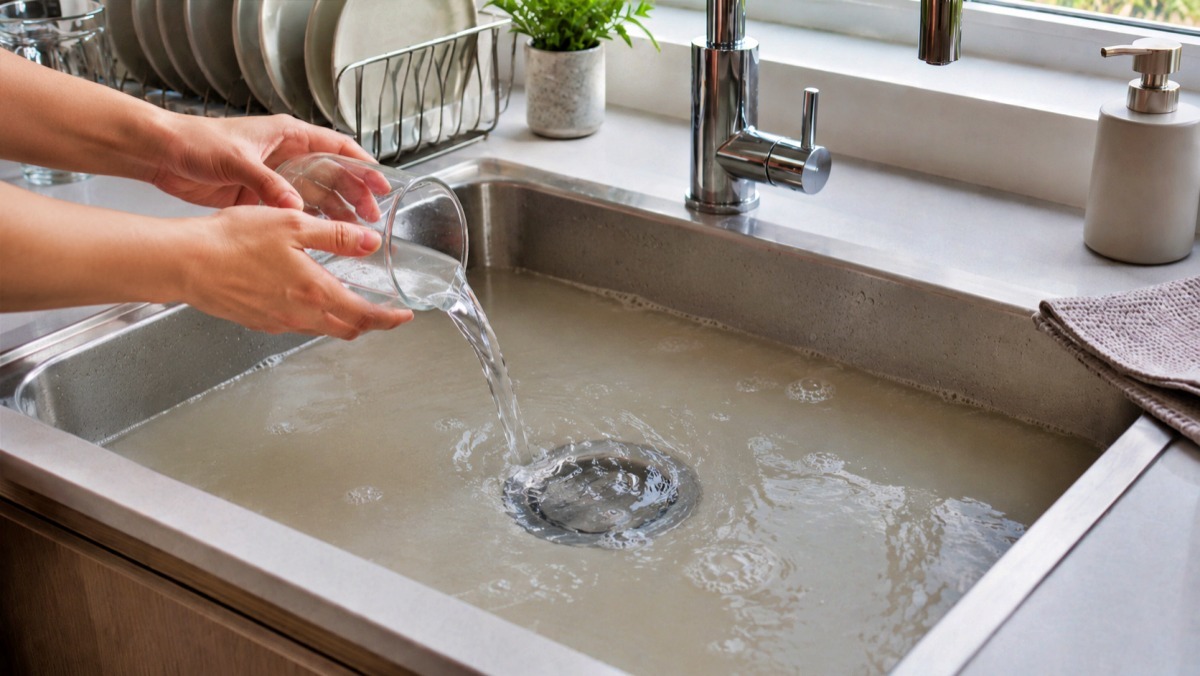
When a sink that usually drains smoothly suddenly starts to back up, it can be unnerving. Most clogs develop over time, not overnight. Coffee grounds, grease and food scraps you casually rinse away collect inside pipes and eventually restrict flow. Preventing clogs starts with knowing what not to put down the drain.
Don’t pour coffee grounds down the drain
After brewing, many people rinse coffee grounds into the sink. They may look harmless, but grounds put strain on drains. Coffee doesn’t dissolve in water; instead, grounds can cling to the inside of pipes.
Wet grounds tend to clump like mud. If they settle in pipe bends or slow-flow areas, they catch other food particles. Add dish grease and the clump grows. At first you may notice only slower drainage; over time the sink can stop draining properly or begin to emit unpleasant odors.
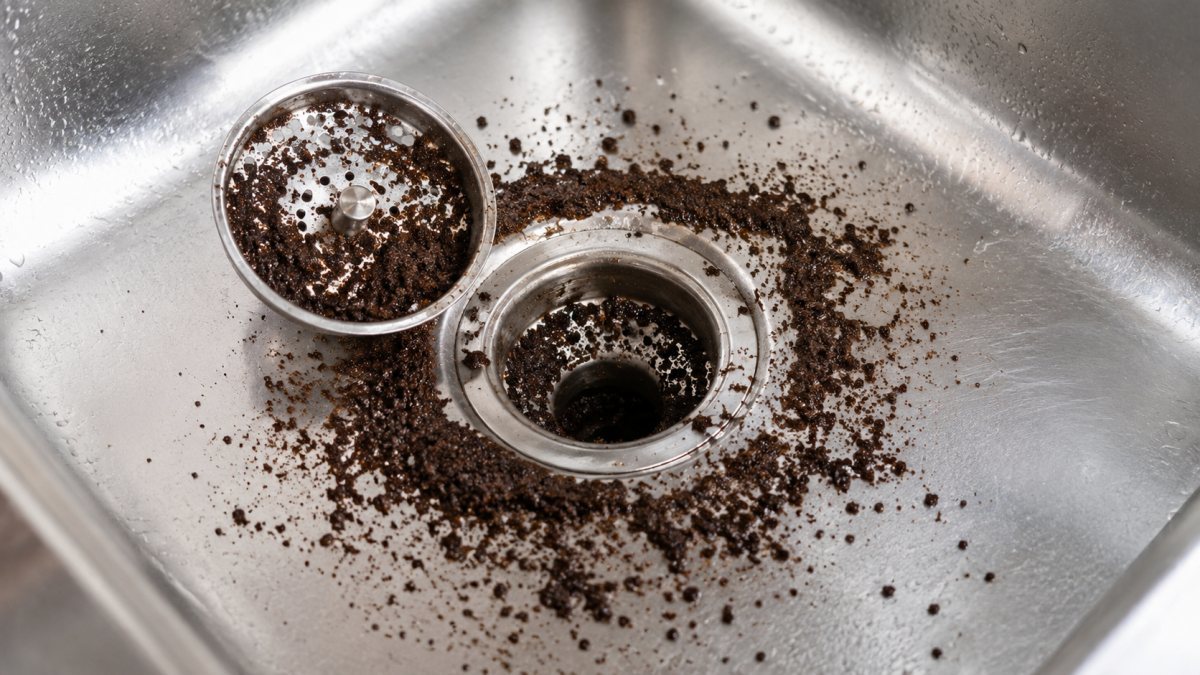
Dispose of coffee grounds after squeezing out excess moisture. Local disposal rules vary, so follow your municipality’s guidance—most require you to throw grounds in the regular trash. If you reuse grounds as a deodorizer, dry them completely to prevent mold. Simply keeping grounds out of the drain goes a long way toward preventing clogs.
Why you shouldn’t pour boiling water directly down the drain
Pouring boiling water down the sink to melt grease is a common impulse. One or two uses may not cause immediate harm, but repeated pouring of scalding water is risky. Many household drain pipes contain plastic components that don’t tolerate extreme heat well.
Older plumbing or flexible corrugated hoses under the sink can deform with repeated exposure to high temperatures. Loose joints or gaps can lead to leaks. In multiunit buildings, under-sink leaks can damage lower units, so take extra care. If pipes sag or change shape, water flow slows and debris can collect, causing recurring odors and blockages.
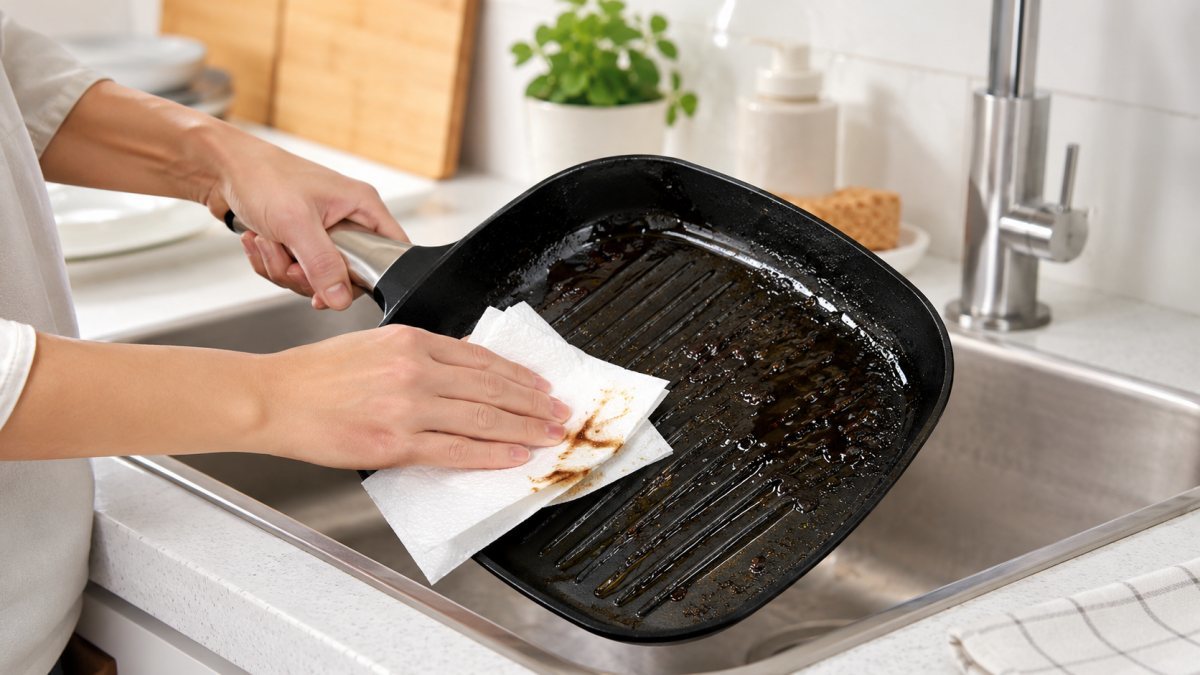
If you’re trying to remove grease, use warm—not boiling—water. Wipe grease from plates and pans with a paper towel before washing, then clean with warm or lukewarm water and dish soap. The goal is to limit the grease entering the drain, not to dissolve it with hot water.
Grease hardens easily inside pipes
Grease is a leading cause of kitchen drain clogs. Leftover cooking fat, oils and stew fats may look liquid when hot, but they solidify when they hit cooler pipe walls and stick.
Hardened grease creates a thin film inside pipes. Tiny particles—rice grains, spice flakes, vegetable bits or coffee grounds—stick to that film and form lumps. As those lumps build, pipe openings narrow and flow slows. Large sewer-level grease masses are called “fatbergs,” and a similar process can clog household pipes when grease and debris bind together.
Wipe greasy pans and dishes before rinsing. Scrape hardened grease with a paper towel and absorb liquid oil into newspaper or paper towels, then dispose of it according to local rules. For larger quantities of used cooking oil, use designated collection points. Even small, repeated amounts can place significant strain on plumbing over time.
Starchy foods like rice and dough can clog drains
Avoid rinsing starchy foods such as rice, noodles, pasta or dough pieces down the drain. Starches absorb water, soften and swell. Caught in pipe bends, they can stick to other debris and block flow.
Be especially cautious with flour. When mixed with water it becomes a sticky batter. If that batter enters pipes, it adheres to walls and traps grease and food particles. You don’t need to worry about tiny amounts of flour left on a dish, but don’t pour expired flour or leftover batter down the sink.
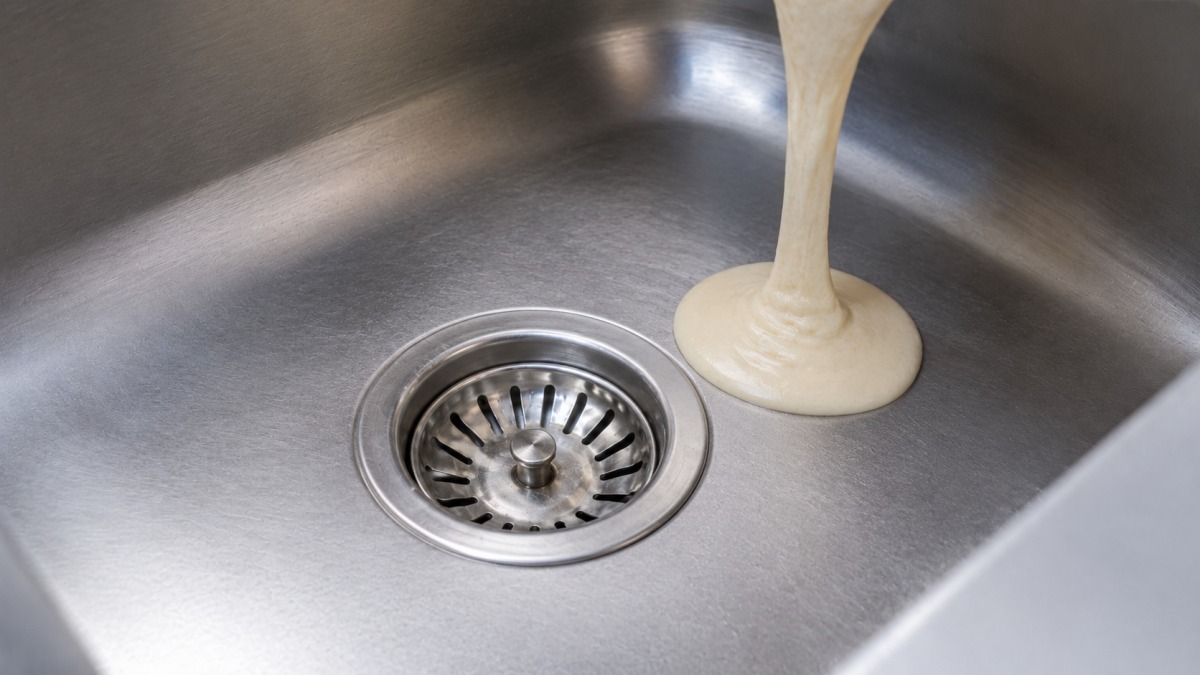
Use a sink strainer to capture starchy foods and dispose of them separately. When draining water from pasta or noodles, strain the liquid so solids don’t go down the drain. For dishes with stuck-on rice, wipe with a paper towel first to reduce debris entering the plumbing.
Watch out for eggshells and tough vegetable fibers
Eggshells break into small pieces, which may tempt you to flush them. But shells don’t dissolve in water. Fragments that become embedded in greasy or sticky debris can roughen pipe surfaces. Rough surfaces trap more particles.
Tough fibers—onion skins, garlic peels, green onion roots and corn silk—also don’t break down easily and tend to tangle. If they form a net inside the drain, small scraps will keep catching and create a blockage.
Remove these materials before washing. When prepping vegetables, make sure skins and roots are kept out of the drain by checking the strainer regularly.
Don’t overuse chemical drain cleaners
Strong chemical cleaners are a common go-to for clogs. Commercial products can help break down protein and grease, but frequent or excessive use can damage pipes. Some cleaners are strongly acidic or alkaline and, if misused, can harm plumbing components.
Be cautious with old metal pipes, thin plastic corrugated hoses and worn rubber gaskets. Never mix different cleaners—chemical reactions can produce toxic gases or heat. Always follow product instructions and use the recommended amounts and contact times.
For routine odor control or light maintenance, physical cleaning is the best first step. Empty the strainer and scrub the drain opening and trap area with a brush. Baking soda and vinegar can help reduce odors and manage mild buildup, but they won’t reliably clear severe clogs. If a blockage is serious, identify the cause instead of repeatedly pouring chemicals down the drain.
How to keep drains clean day to day
Small habits matter more than occasional deep cleaning. Empty the sink strainer after washing dishes. If food sits in the strainer, it decomposes, smells and forms a sticky residue that soils the drain area and promotes bacterial growth.
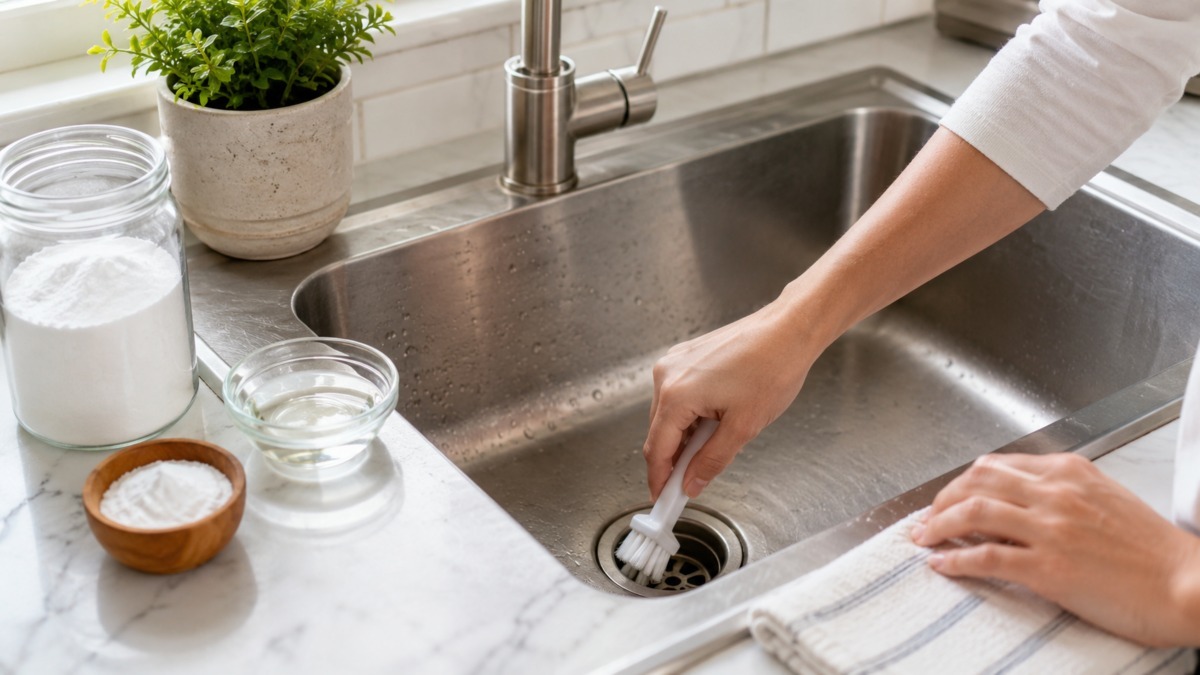
Rinse the strainer daily and scrub it with a brush once or twice a week. Wipe the drain cover and rubber gaskets regularly—food and grease collect there. If your trap is removable, follow the manual to detach and clean its interior.
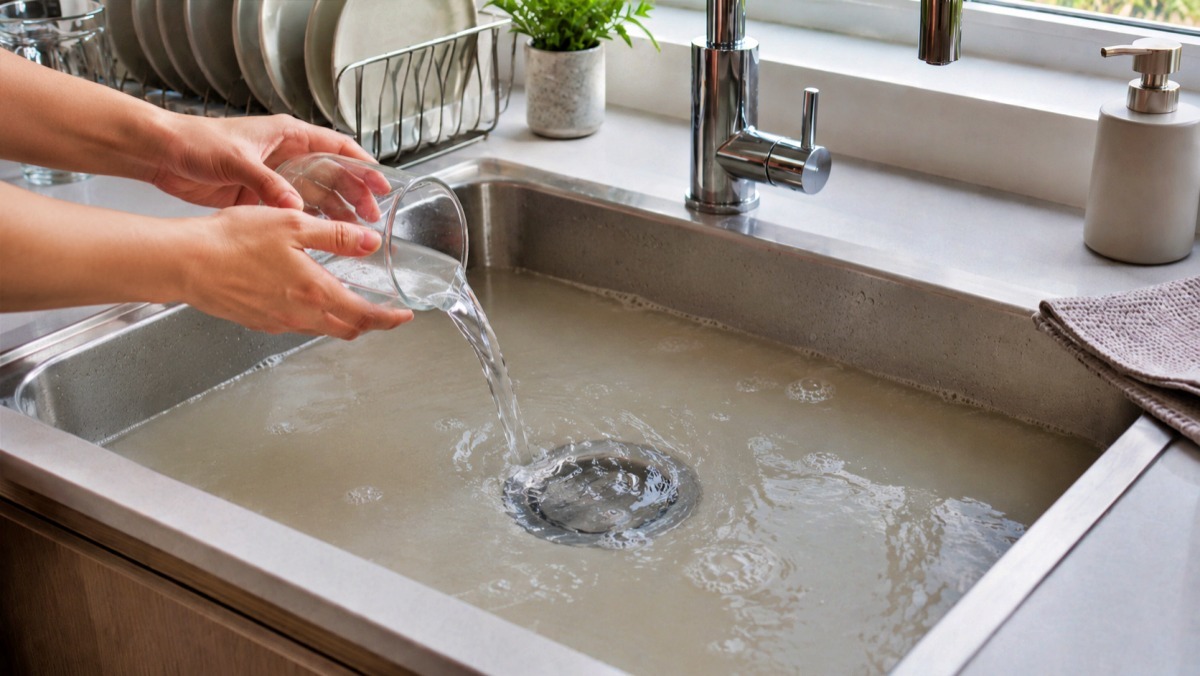
Once a month, fill the sink with warm water and pour it down the drain in one go. Use warm—not boiling—water that’s hot but not scalding. A sufficient volume at once can help push loose debris through the pipe. If the sink is already draining slowly, check for a blockage before pouring a lot of water.
Check under the sink too
Maintaining the cabinet under the sink is as important as the drain itself. Those cabinets stay closed and poorly ventilated, so small leaks or condensation can go unnoticed. Inspect around the drain hose, where floor drains meet piping, and rubber gaskets. If you see droplets or wet spots, wipe them up and find the source immediately.
Loose connections can leak small amounts of water during each wash. The damage may be subtle at first, but over time the cabinet floor can swell and mold can grow. That leads to odors and attracts pests. Avoid storing large quantities of detergents or cookware under the sink so leaks are easier to spot.
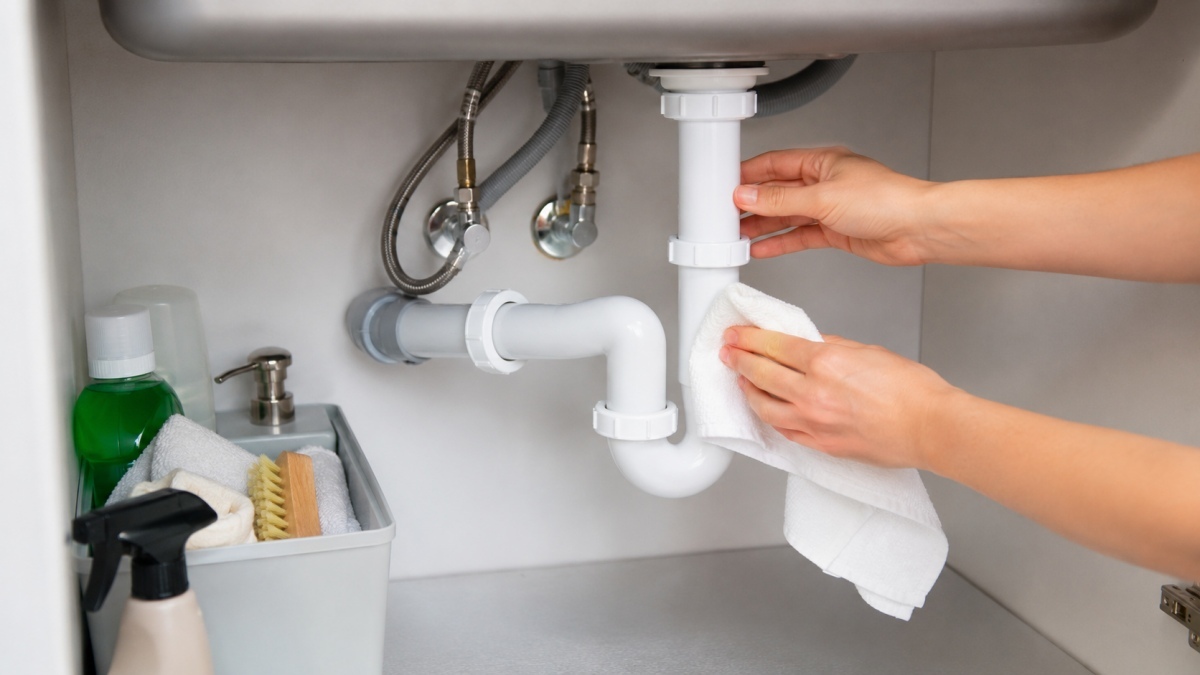
Drain hoses are not permanent. Over time they collect grease and debris inside, and their outer surface can harden or crack. If you see frequent leaks or recurring odors, consider replacing the hose. Replacement intervals vary with use and product quality, so check their condition regularly.
What to avoid when a drain is clogged
Don’t push sharp wires or chopsticks deep into a clogged drain. You risk scratching the pipe interior or puncturing thin hoses under the sink. Flexible plastic corrugated hoses can be weaker than they look and may break under force.
If the clog is minor, remove debris from the strainer and drain opening first. Then use a rubber plunger to apply pressure and dislodge debris near the surface. Don’t overdo plunging; aggressive use can stress weak pipe connections and cause leaks or separations.
If repeated attempts don’t clear the drain or it keeps backing up, a large grease mass or accumulated debris may be blocking the pipe. Instead of pouring more chemicals, call a professional for inspection with a pipe camera or high-pressure cleaning. Early diagnosis can prevent larger leaks or costly replacements.
Dishwashing habits that think about the environment
Pollution that goes down your drain isn’t just a household issue. Grease and food waste entering sewers burden treatment systems. Used cooking oil doesn’t mix with water and breaks down slowly, so collect and dispose of it separately. Pouring large amounts of oil down the sink harms both plumbing and water quality.
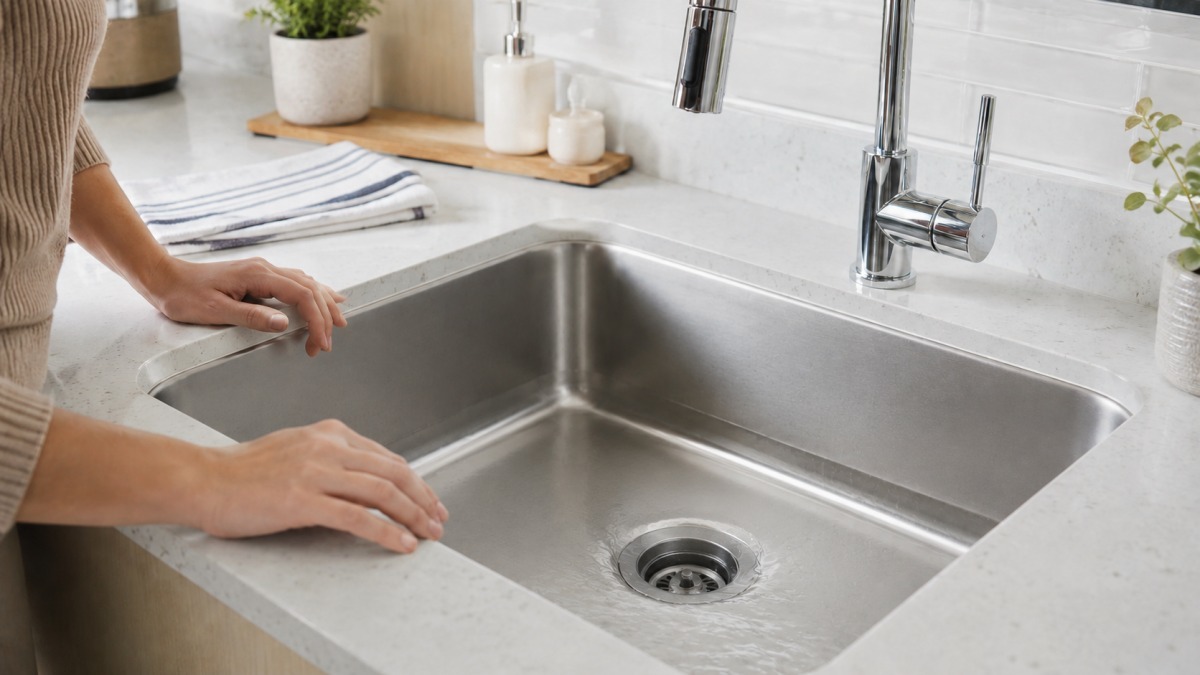
Wipe grease from pans before washing and catch food scraps in the strainer—these are the easiest steps you can take. Using more dish soap doesn’t make dishes cleaner; use only what you need and rinse thoroughly. Excess soap creates extra suds and wastes rinse water.
Sort pots and plates before washing to reduce soap and water use. Wipe greasy pans with a paper towel and scrape off heavy sauces before washing. Those small steps cut the amount of pollution entering the drain. In household care, steady good habits like these are more effective long term than dramatic cleaning fixes.














Most Commented