
Translation result
Selective isolation in an overconnected society — young people choose solo hobbies to recharge
They turn off smartphones and pick up analog cameras — even skipping early-year drinking parties
Prioritizing inner recharge over meaningless social ties, a more intentional way of living
#. Office worker Kim Hee-won (30) packs her bag with old cameras instead of the latest flagship phone. There’s everything from the high-end film Contax T2 — prized for its Zeiss optics — to the cool-toned Nikon Coolpix P3 and a Canon Ixus 70 she impulsively bought on the local app Danggeun Market just a week ago for its design.
Every Friday evening, unlike colleagues who scramble to schedule weekend plans, Kim shuts her smartphone off. She spends the weekend shooting with a low-resolution vintage digital camera from the early 2000s. “With a phone I can take countless photos, but I rarely go back to look at them,” she said. “Even if it’s heavier or less convenient, choosing a camera that matches the mood and taking one careful, meaningful shot at a time makes me feel better — and those moments stick with me longer.”
Recently, a wave of JOMO — the Joy of Missing Out — has swept people in their twenties and thirties.
The age of FOMO — the Fear of Missing Out — has ebbed. Increasingly, young people are unplugging on purpose, choosing strategic solitude to cope with an overconnected world.

This trend shows up clearly in consumer data.
Transaction records from local community platform Danggeun Market reveal a pronounced uptick in analog goods traded by people in their 20s and 30s.
Comparing the first quarter of 2022 — during the COVID-19 outbreak — with the first quarter of this year, completed transactions for vintage digital cameras on Danggeun Market surged 822%.
MP3 players, once rendered obsolete by smartphones, rose 399%; camcorders increased 67%; and turntable transactions — emblematic of analog music — grew 98%.
Even year-to-year comparisons between 2022 and 2025 show digital camera transactions up 302% and MP3 player trades up 157%.

Digital cameras and MP3 players instead of smartphones — young people are drawn to the romance of inconvenience
The rapid revival of analog gear is a sign that more young people are carving out time solely for themselves.
Notably, this slower, more deliberate consumption among people in their 20s and 30s often goes hand in hand with a conscious reallocation of the energy they once spent on excessive socializing and nightlife.
Analysis of Statistics Korea household data shows that households with members under 39 peak their alcohol and tobacco spending at year-end, then cut it sharply in early January.
In the first quarter of last year, households under 39 reduced alcohol and tobacco spending by 11.1%, more than double the overall average decline of 4.6%.
That pattern — an 8.4% drop in Q1 2023 and a 7.8% drop in Q1 2024 — suggests that at the start of each year many young people step away from year-end drinking to focus on personal time and recovery.

Rather than spending money and energy on late-night socializing to expand networks, many young people are investing in solitary analog hobbies or activities that restore them emotionally.
The inconveniences of analog — not seeing results instantly, hunting for a lab to develop film — can feel liberating.
“I stack up several rolls of film and get them developed months later,” Kim said. “Forgotten moments resurface and become idealized memories. It’s like opening a surprise gift when you don’t know what’s inside.”
Charging alone instead of all-night parties — spending patterns have changed
Fatigue from overconnection — returning to the past is an active survival strategy
Experts say this behavior is a psychological survival strategy in response to intense competition, high prices and a difficult job market.
Gwak Geum-ju, a psychology professor at Seoul National University, said people in their 20s and 30s face extreme stress from relentless competition. With social media embedded in daily life, chronic social comparison fuels a persistent sense of deprivation.
“Struggling with unemployment or financial hardship is already exhausting,” she said. “When stress from overconnected relationships crosses a threshold, people opt to be out of sight for a while to avoid draining mental energy. That tendency shows up as JOMO.”
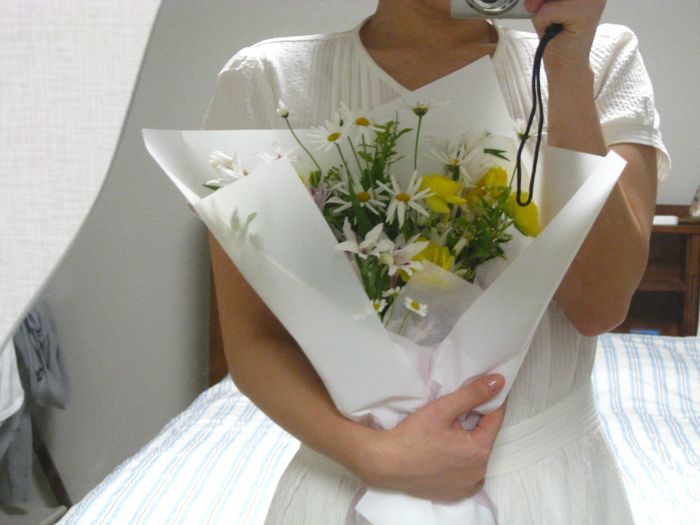
The appeal of decades-old analog devices fits that same dynamic.
Ultra–high-resolution smartphone cameras invite instant feedback — and with it, concern about likes or judgments. Low-resolution digital cameras force a focus on the act of taking a photo and the atmosphere of the moment.
Professor Gwak said that in a world where even relationships can feel transactional, young people seek objects that offer warmth and stability.
“Retreating into the comforting richness of past objects — a return to the past — is an active form of self-preservation,” she added. “It’s a deliberate way to heal from modern fatigue.”
Choosing quiet solitude doesn’t mean abandoning relationships. For many in their 20s and 30s, it’s a conscious decision to prioritize inner recharge over superficial connections.
“In an age that prizes individuality, I notice how quickly I burn out trying to follow others or worrying about opinions,” Kim said. “Sometimes, even if it’s slower or less efficient like the analog era, learning to savor small everyday pleasures is the real way to enjoy life.”
By stepping away from relentless competition and embracing analog pursuits, these young people underscore just how heavy the emotional labor demanded by a connected society has become.
©(주) 데일리안 Unauthorized reproduction and redistribution prohibited
- [6·3 Report] Seoul race looks tense…Jung Won-oh to Oh Se-hoon, who will win the mayor’s seat?
- Only one disagreement remains between Samsung Electronics and its union…Central Labor Relations Committee resumes at 10 a.m. today
- With 45 trillion KRW you could build another Pyeongtaek chip plant…converting the Samsung union’s demanded bonuses shows the scale (45 trillion KRW ≈ 33.75 billion USD)①
- [Exclusive] U.S.: POSCO’s electricity costs also subsidized…tariff fixed at 3.70%
- ‘Daegu Dalseong by-election’ Park Hyung-ryong 41.7% vs Lee Jin-sook 48.5% [Ace Research]














Most Commented