
Translation result
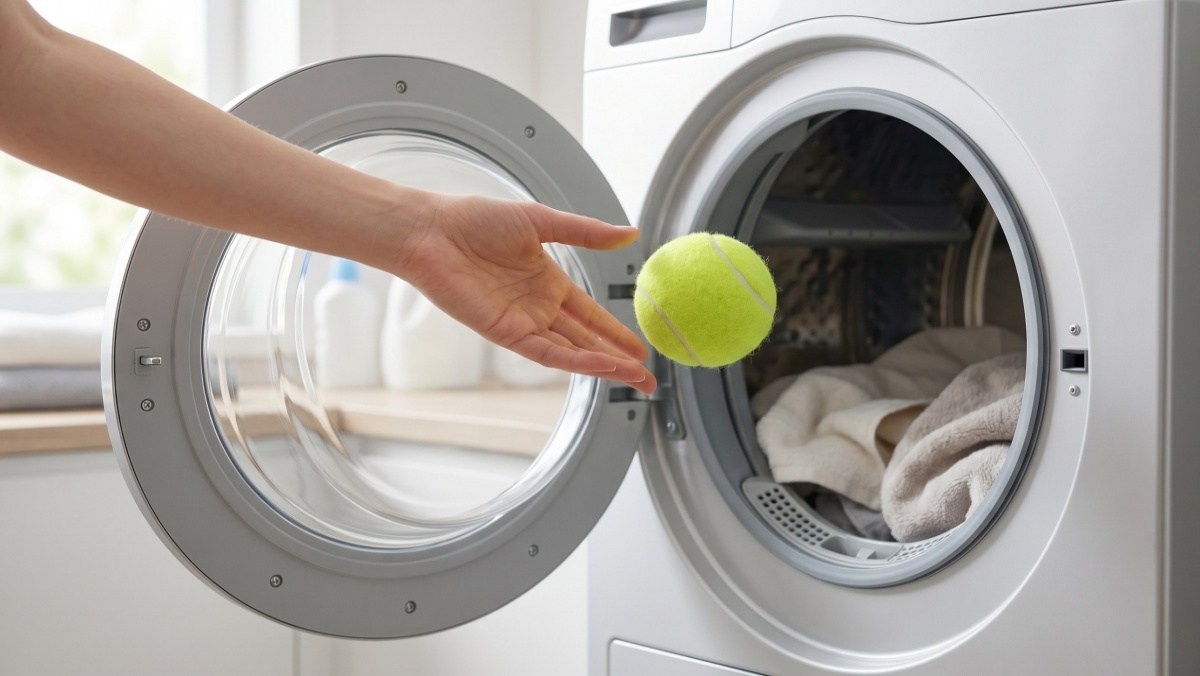
Sometimes laundered towels feel rougher and stiffer than they used to. If a towel that once wiped moisture cleanly turns crisp and still smells musty after washing, it’s time to examine your laundering routine. Pouring in extra fabric softener can actually undermine a towel’s performance. A simple combination of household vinegar and a few tennis balls can help restore a towel’s softness and absorbency.
What makes towels stiff
Towels are built differently from ordinary clothing. Their pile construction features countless looped fibers standing up from the surface. Water wicks into the tiny gaps among those loops, which is why cotton towels absorb so well.
But repeated washing takes a toll. Friction in the washer and moisture loss during drying gradually flatten and mat the loops. The fabric feels harsher and absorbs less. Many people respond by adding more fabric softener, which can make the problem worse for towels.
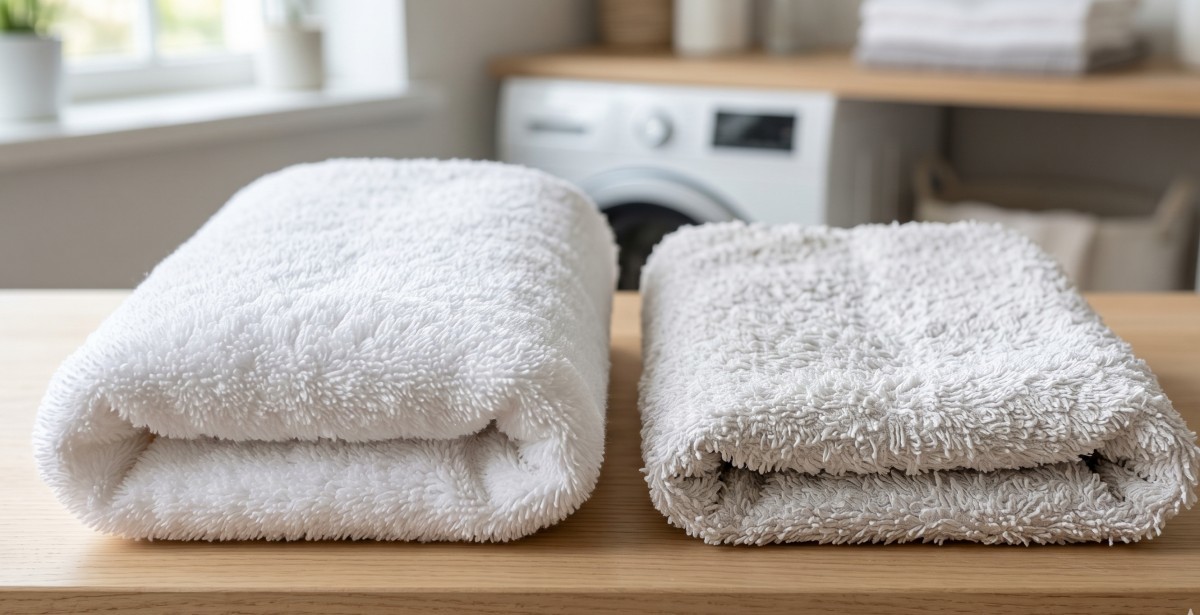
Most fabric softeners contain cationic surfactants and silicone oils that cling to fabric surfaces. They create a temporary smoothness, but repeated oil-based coatings on cotton loops make fibers repel water. That undermines a towel’s primary job: absorbing moisture.
When detergent residue and the oily components of softeners don’t rinse away completely, they build up between fibers and gradually stiffen towels. If towels remain damp for long periods, conditions favor microbial growth, which can leave stubborn odors. To preserve both feel and absorbency, it’s important to remove built-up coatings and residues from the fiber surface on occasion.
Washing habits determine towel condition
Good towel care isn’t about using more detergent or softener; it’s about keeping fibers able to “breathe.” Extra detergent may seem like it will produce cleaner results, but residue can remain after rinsing. Overloading the washer with many towels reduces water circulation and makes leftover detergent more likely.
Because towels depend on open fibers for absorption, avoid packing the washer too tightly. Overcrowding increases friction and reduces rinsing effectiveness, which flattens the pile and lets residues dry onto the fibers, producing a stiff feel. Wash towels in sensible loads and ensure they rinse thoroughly.
Drying methods matter too. Leaving towels damp before they fully dry can produce musty odors, while prolonged exposure to very high heat can dry out fibers and make them feel coarse. Start drying promptly after washing, and once dry, spread towels out so no trapped moisture remains. Vinegar and tennis balls work best when combined with these basic care habits.
Use vinegar to wash away residue
Restoring stiff towels requires two steps: removing surface buildup and lifting flattened loops. Vinegar is useful for removing residue.
Acetic acid in vinegar is mildly acidic and helps break down alkaline detergent residue, mineral deposits from tap water, and silicone coatings from softeners. Use it as a supplemental cleaner when towels feel stiff or retain odors after washing.
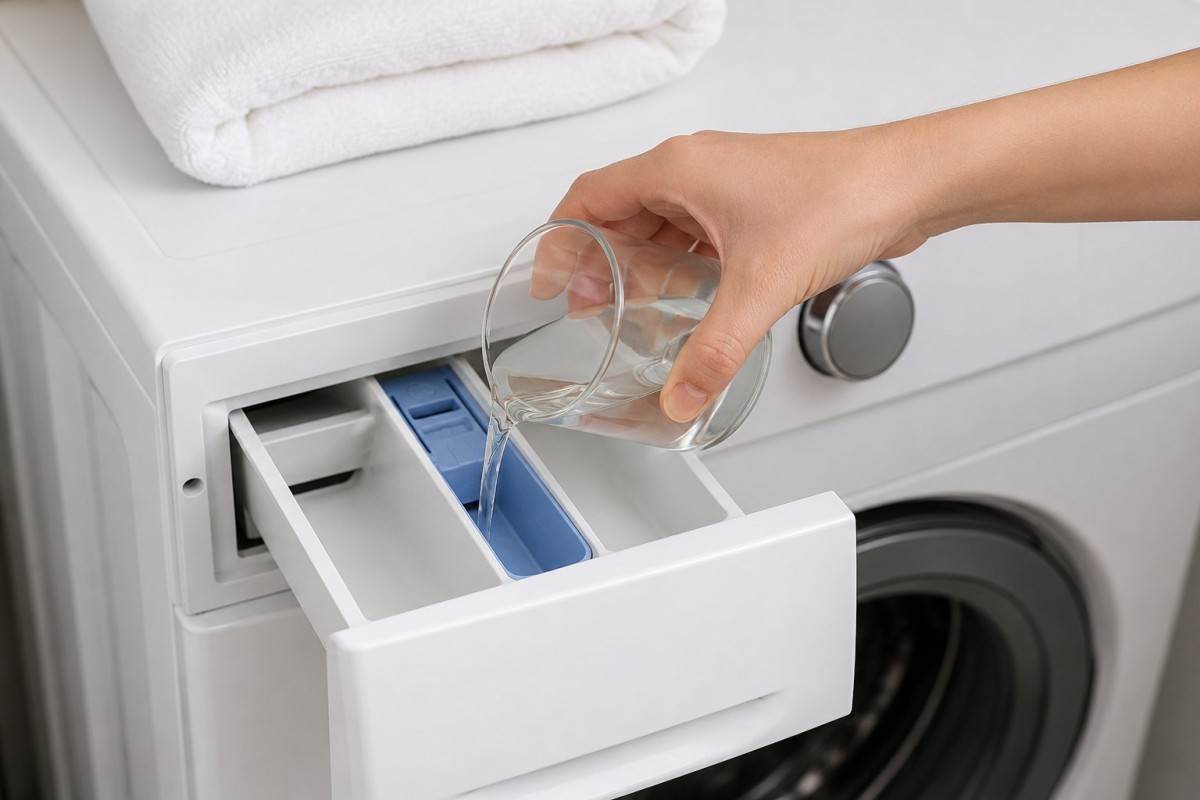
The method is straightforward. Put about 1/3 to 1/2 cup of vinegar into the fabric softener compartment instead of softener. During the final rinse, the vinegar disperses through the fibers and helps wash away residues. Washing in hot water around 60°C (about 140°F) relaxes cotton fibers and makes the vinegar more effective.
The vinegar’s sharp smell dissipates during drying. Don’t overuse vinegar every wash; while acetic acid removes residues, repeated excessive use can stress rubber gaskets or metal parts inside the machine. Reserve vinegar treatments for towels that are noticeably stiff or hard to deodorize.
How tennis balls lift flattened fibers
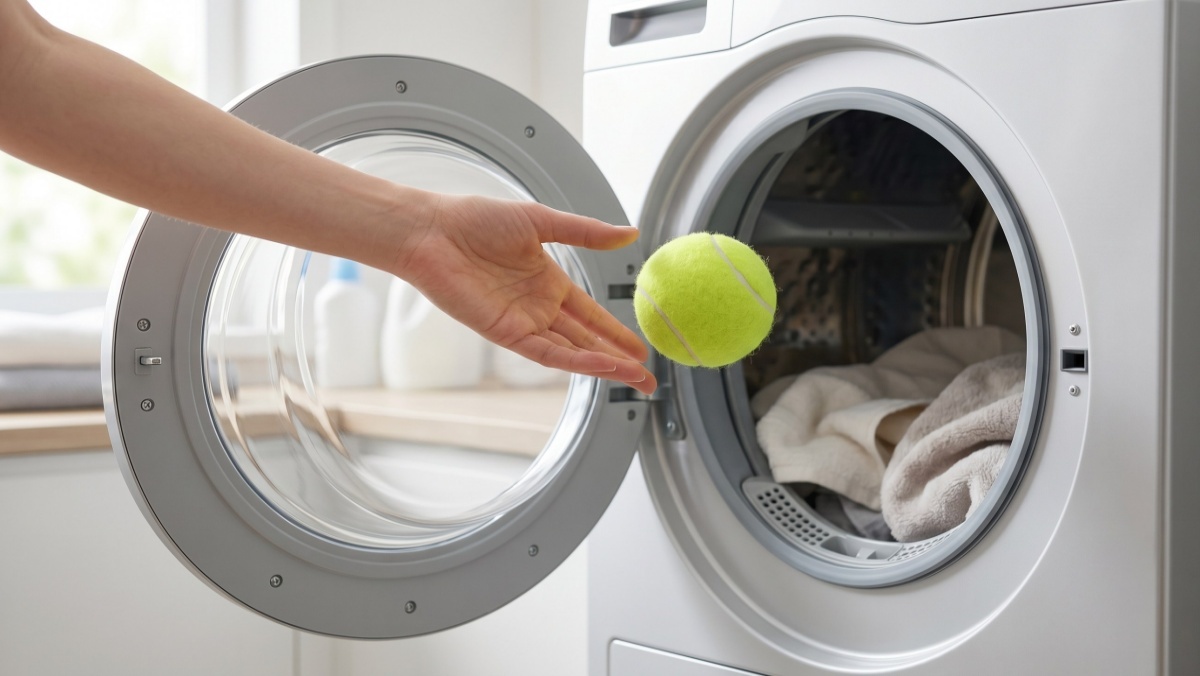
After loosening old residues with vinegar, restore pile with a physical treatment: toss clean towels into the dryer with two or three clean tennis balls.
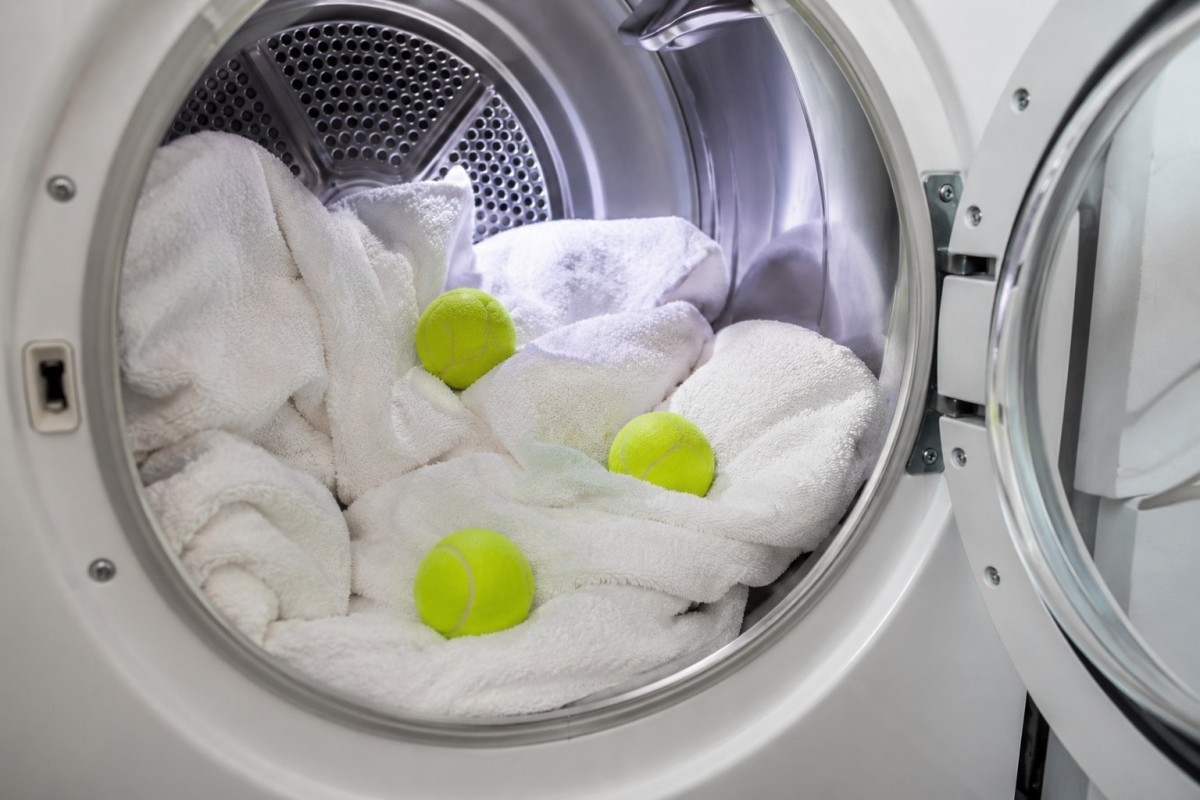
As the dryer tumbles, the tennis balls bounce and repeatedly strike the towel surface, loosening compressed cotton loops. Once the fibers separate and airflow improves, the towel regains volume and softness.
This approach avoids chemical softeners. Rather than coating fibers to create temporary smoothness, it physically teases apart matted fibers—improving texture while preserving absorbency.
Tennis balls also help with padded and down jackets
Tennis balls can help more than towels: they’re useful for restoring winter coats and down jackets, too. Down garments rely on air pockets between feathers to trap warmth. Home washing can leave fill wet and clumped, reducing loft and insulation.
Add three or four tennis balls to the dryer with a washed jacket to break up clumps. As the dryer tumbles, the balls repeatedly strike the garment and disperse stuck fill. Warm airflow then helps reestablish internal air pockets.
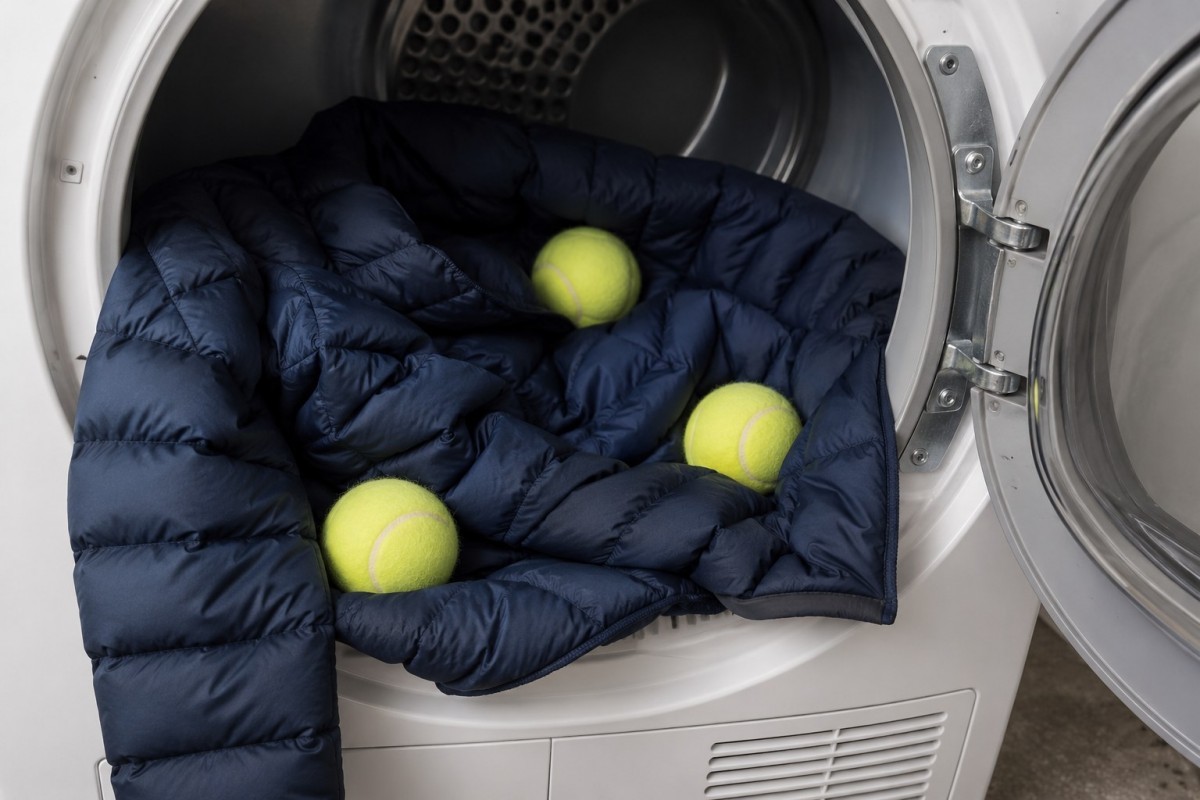
This reduces the need to manually fluff the jacket. Always check care labels first and use the dryer only for items the manufacturer permits; fill and shell materials vary and may require different handling.
Shortens drying time for bulky bedding
Bulky items like fiber pillows or goose-down comforters can be difficult to dry. Washing can cause fabric to bunch, leaving outer surfaces dry while inner cores stay damp. If internal moisture isn’t removed, mold can form and fibers can degrade in storage.
Tennis balls help by working into folds and layered spaces during drying, keeping the load from clumping and encouraging hot air to reach the center. The original source notes this can cut overall drying time by about 20% to 30%.
Shorter drying times lower electricity use and reduce the risk of heat damage from prolonged exposure. Tennis balls also reduce tangling of sleeves, pant legs, or quilt edges, easing post-dry wrinkling. With less fabric crowding, static buildup also drops.
Precautions before using tennis balls
Take a few precautions when using tennis balls in the washer or dryer. Avoid using brand-new tennis balls straight from the package: the fluorescent yellow dye can bleed under heat and moisture, risking stains on white or light-colored items. Surface fuzz may also shed and cling to laundry.
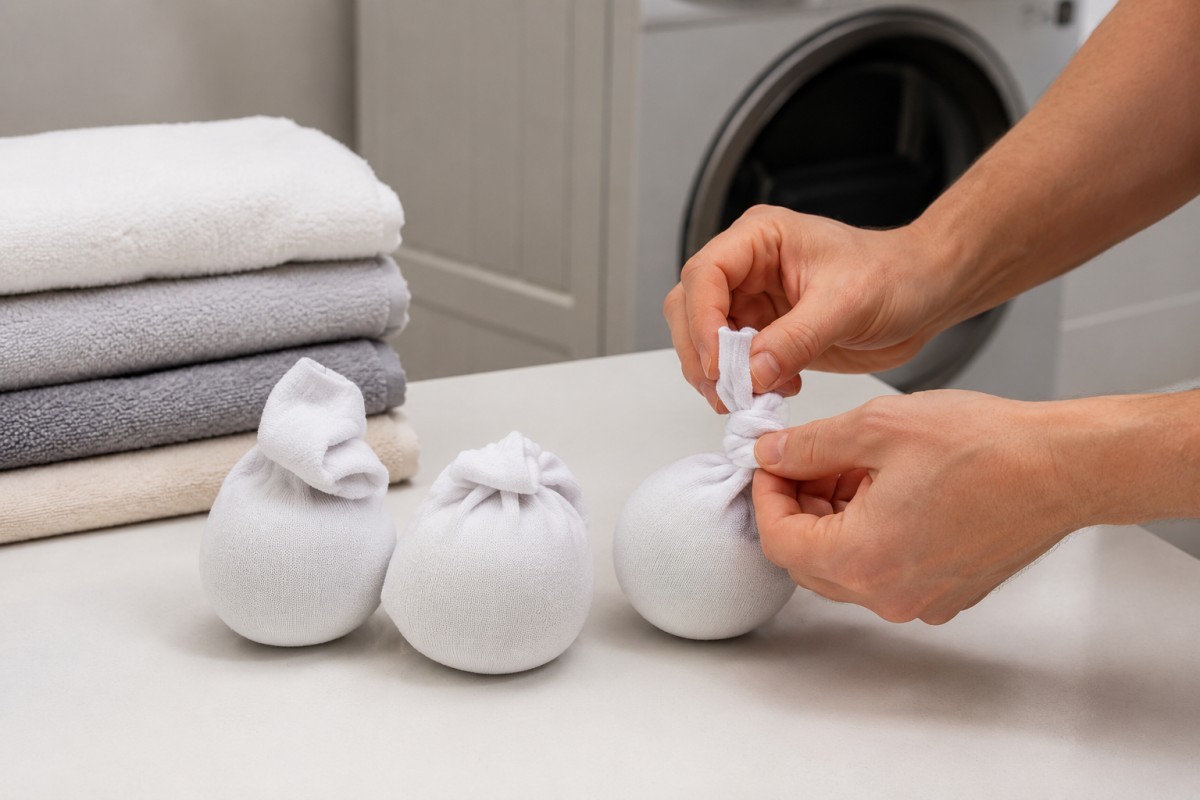
To reduce these risks, tuck each tennis ball deep into a clean white sock and tie the ankle tightly. The sock protects against dye transfer and fuzz loss.
Also consider the noise: hard balls striking a metal drum can produce loud thumping. While this usually doesn’t indicate a malfunction, avoid late-night use in apartment buildings and run the dryer during daytime hours when possible.
Limit how often you use vinegar, too. Instead of adding it every wash, reserve treatments for towels that feel rough or retain damp odors. To prolong both laundry and appliances, balance cleaning effectiveness with reasonable frequency and amounts.
Longer-lasting fabric care
You don’t have to rely on fabric softeners to maintain texture. Removing built-up residue with vinegar and loosening compressed fibers with tennis balls are practical home methods that reduce chemical use while helping towels keep their absorbency and feel.
Care that reduces damage and restores function can delay replacement. Towels are often replaced every one to two years, but maintaining absorbency and slowing wear can extend hygienic use. Managing padded jackets and comforters at home—after checking care labels—can also help lower household expenses.
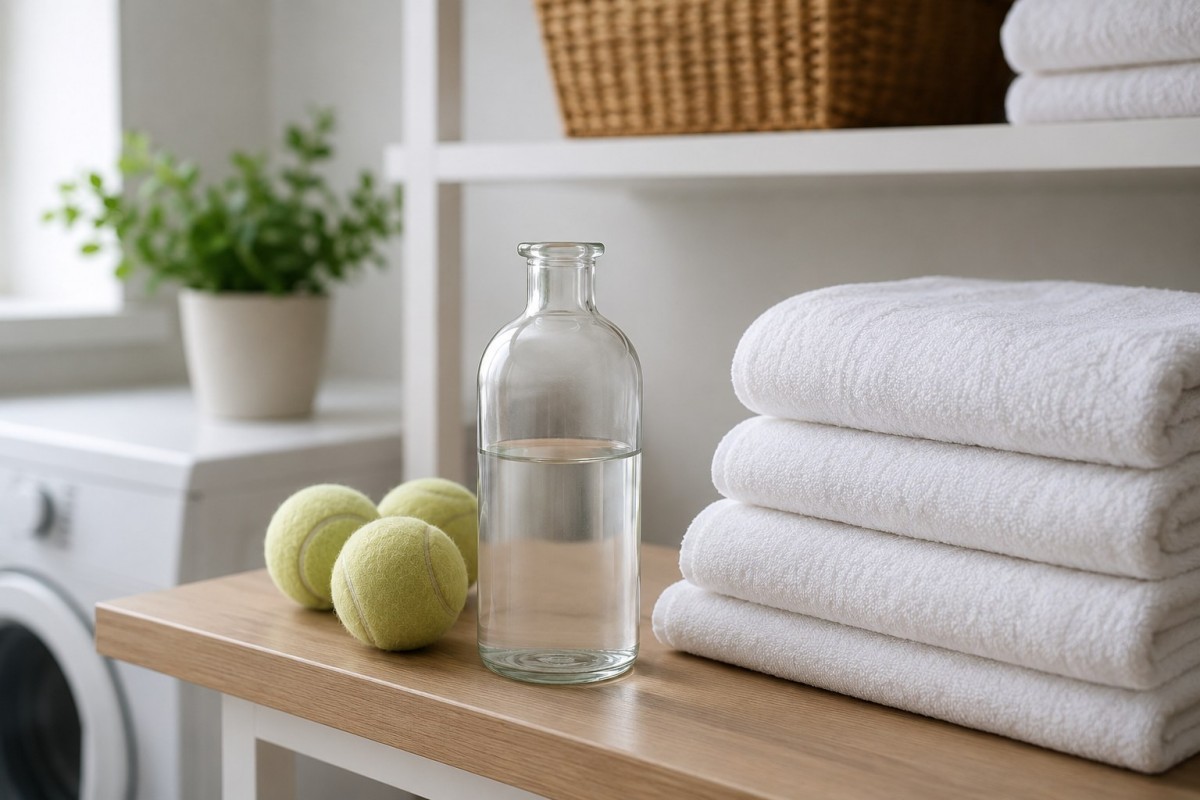
When towels stiffen, the solution isn’t more fragrance or coatings. Remove the residue built up inside the fibers and physically restore the compressed structure. Vinegar and tennis balls are simple, effective household tools for those tasks.













Most Commented