
Translation result
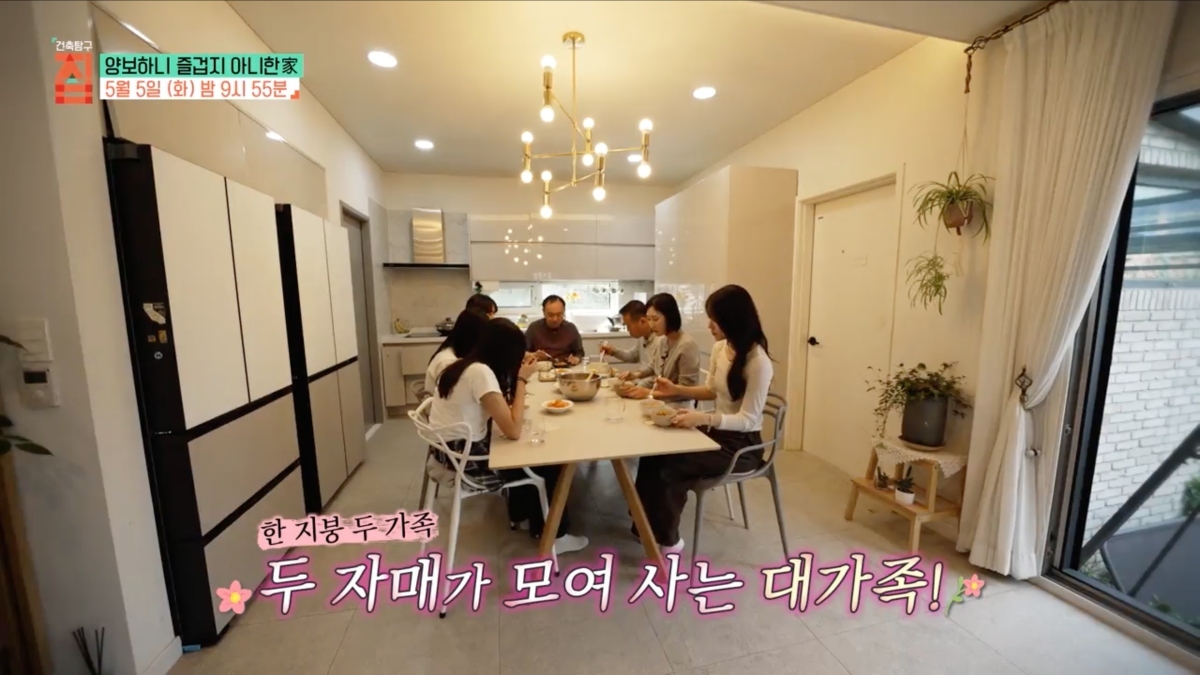
Sharing a roof with another family is rarely just a choice — it often means reshaping everyday life. EBS1’s ‘Architectural Inquiry: Home’ examines what living together looks like through the lens of design. One episode follows sisters who decide to be family rather than neighbors, while another follows a house where multiple generations overlap. Though the approaches differ, both homes confront the same questions about compromise and coexistence.
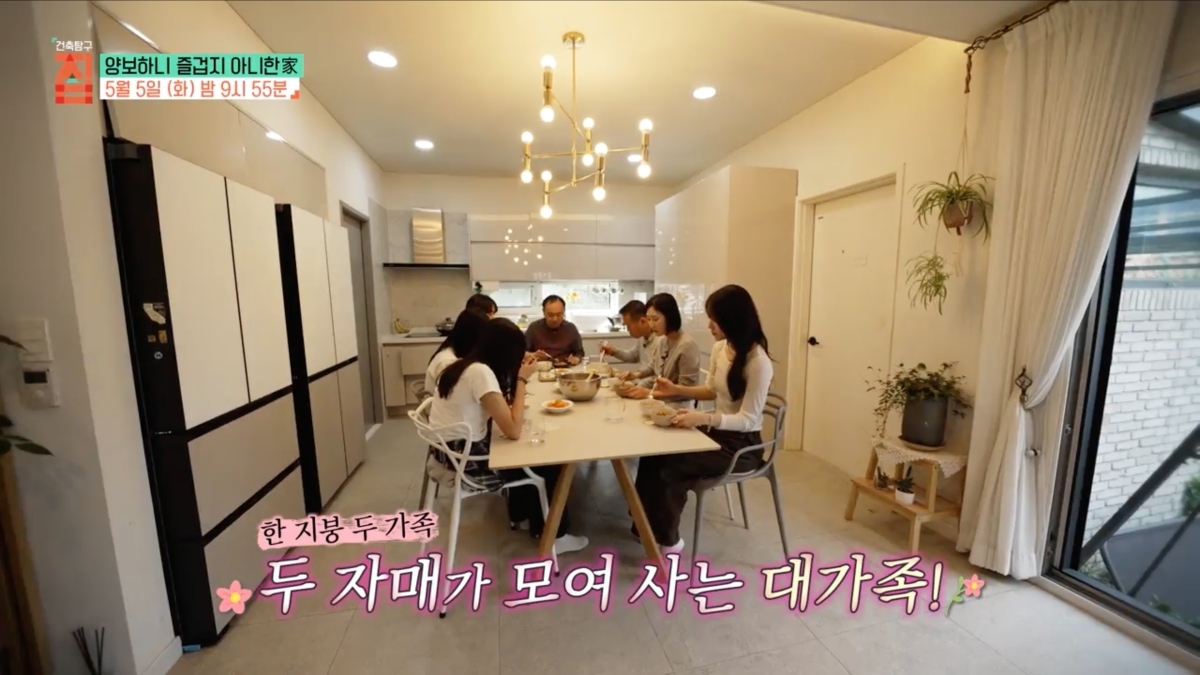
On the May 5 broadcast, the program first visits a residential neighborhood in Yongin, in Gyeonggi Province, where two sisters’ families share one house. The idea began with the younger sister: by living together they could look after each other’s children and share the burdens of daily life. A surprising proposal from the brother-in-law pushed the plan forward, and living as two families under one roof took shape. It made sense that the second-oldest and the youngest sisters — who had been closest among four siblings — chose to cohabit; they found the arrangement comfortable and complementary rather than confrontational.
The first floor is home to the younger sister’s family, marked by a restrained color palette and a practical layout. A small hobby nook for the father sits in a corner of the children’s study. Overall, the design reflects a careful effort to balance daily routines. An originally planned full-featured basement with a theater and game room was dropped due to budget limits. Instead, the second floor became a shared gathering space: the ceiling was raised and an attic added to create openness, and an outdoor terrace was designed to flow naturally from the interior. What began as a pragmatic solution has become routine — their shared household is now in its ninth year.
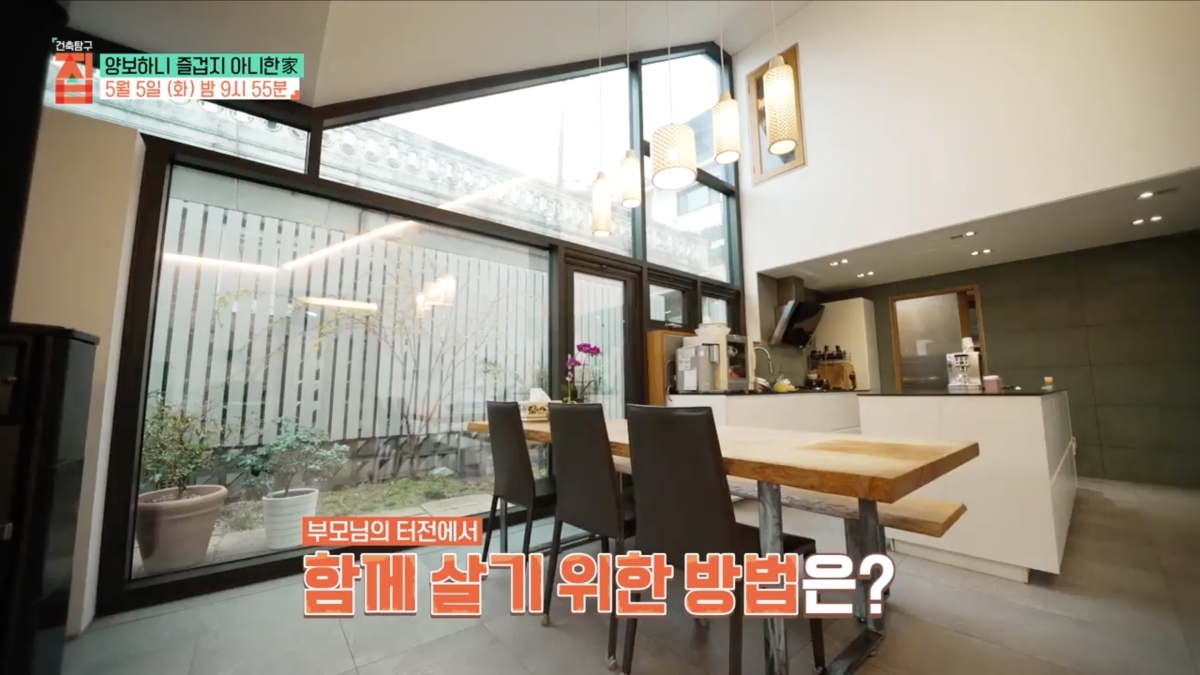
The story then moves to Suwon, in the shadow of Hwaseong Fortress, where three generations live under one roof. A couple who moved in with the wife’s parents just three years after marrying continued that merged living arrangement for various practical reasons. When their original home was designated part of a cultural heritage protection zone and forced them to relocate, the couple chose to rebuild in the same neighborhood to preserve the place the parents had long called home.
Building in a historic preservation district posed its own challenges. They underwent a cultural-heritage survey before construction and accepted extra costs to meet strict regulations. Rather than abandon the plan, the couple focused more intently on the house’s interior layout. A striking feature is a triangular kitchen window rising 5 meters (about 16.4 feet), designed to bring full sunlight into the home for the parents, who had long kept curtains closed because of insulation issues.
The design prioritizes circulation over oversized rooms. The parents’ bedroom sits in a convenient location so family members cross paths naturally, and hidden storage is woven throughout to boost practicality. No space was wasted — from beneath the stairs to under the tea-room floor — so the house can capture the traces of daily life. As second- and third-floor living areas layer together, routines from the couple and the grandchildren intertwine, linking generations organically within a single home.
‘Architectural Inquiry: Home’ presents a range of living patterns produced by the choice to live together. The sisters’ shared routines and the layout of the multi-generational house reveal different forms of concession and care. Different in appearance, both stories return to the same question and invite viewers to rethink what a home truly is. EBS1’s ‘Architectural Inquiry: Home’ airs May 5 at 9:55 p.m.
※ This article was written without any compensation.













Most Commented