
Translation result
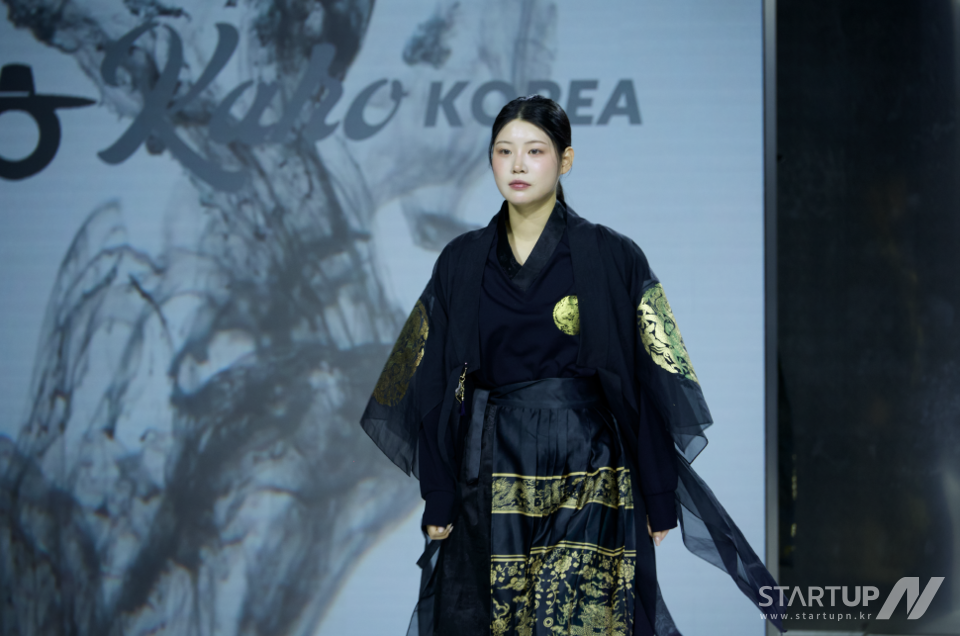
When the hanbok’s poised silhouette met modest fashion from Islamic cultures, the result felt unexpectedly modern and utterly chic — a promising new route into global markets. Designers honored religious customs while weaving in Korea’s singular aesthetic, and the concept made a confident debut in central Seoul.
Hanbok specialist KAHO KOREA staged \”K‑Modest Hanbok: Veiled Elegance\” at 2 p.m. on April 2 at the Seoul Fashion Creation Studio (SFCS) inside Dongdaemun’s DDP Fashion Mall. Positioned as the main runway for the PSID International Textile & Fashion Exhibition, the show drew diplomats based in Korea, fashion insiders, and international buyers eager to see K‑fashion take a bold turn.
Modest fashion, which prioritizes minimal body exposure, has become a major global market centered on Muslim women. KAHO KOREA preserved hanbok’s celebrated sense of negative space while adapting the traditional sseugaechima (a wrapped garment used to cover the head and upper body) into a fresh veil styling for the runway. The result married hanbok’s understated elegance with the guiding principles of modest fashion.
Lead designer Ryu Su‑jeong emphasized that hanbok was originally designed to embrace and drape the body. Ryu said her goal was to position hanbok as a global everyday garment — one that transcends religious and cultural boundaries and that women worldwide can relate to and reach for in their daily lives.
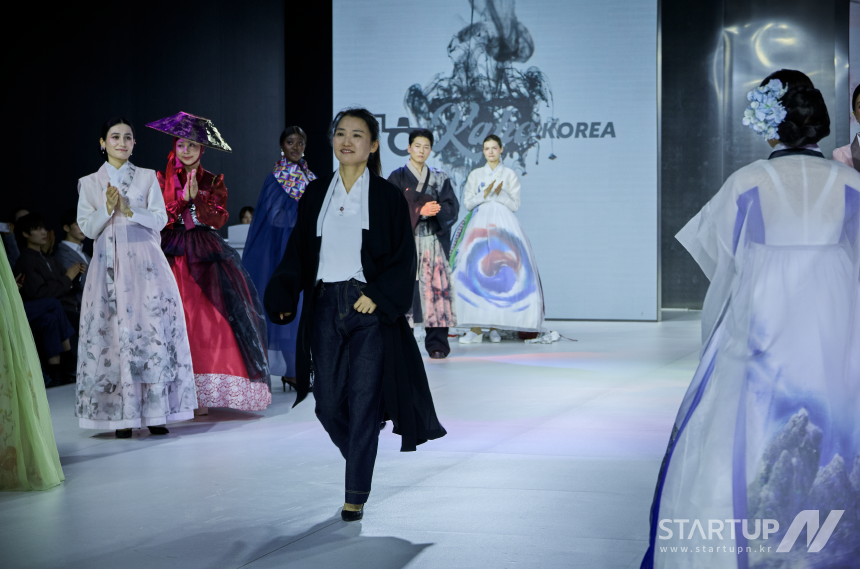
The event also functioned as more than a runway show — it became a platform for business ties and cultural diplomacy. Diplomats from key Central Asian and other Islamic countries attended, using fashion as a bridge for mutual cultural understanding.
Song Soo‑geun, chair of the International Cultural Forum and former vice minister of Culture, Sports and Tourism, underscored the power of dress to build cultural empathy in his congratulatory remarks. The Halal Chamber of Commerce, which co‑hosted the event, laid out plans to actively support K‑Modest fashion as it moves into global distribution channels.
From an industry standpoint, KAHO KOREA’s strategy points to a regional, win‑win business model. Under the slogan \”From Namdaemun to the World,\” the brand taps the dense manufacturing ecosystem of traditional markets. Its MADE IN Namdaemun collaboration links planning and production, pairing urban manufacturing strengths with globally minded cultural content.
That said, translating runway buzz into export revenue won’t be automatic. To land in the sizable Halal apparel market, KAHO KOREA will need razor‑sharp targeting that reflects local body types and lifestyles. Beyond initial headlines, the practical next steps include preparing for rigorous Halal certification, scaling reliable mass production, and securing stable local distribution networks.
The first show — produced with Seoul Click and Halal Korea and sponsored by Daegu University and Frommavel — closed successfully. Industry watchers are now watching to see if K‑Modest hanbok, which links tradition with modernity and Korea with the world, can evolve into a dependable export revenue model within the global fashion ecosystem.














Most Commented