
K-beauty is one of the hottest industries right now.
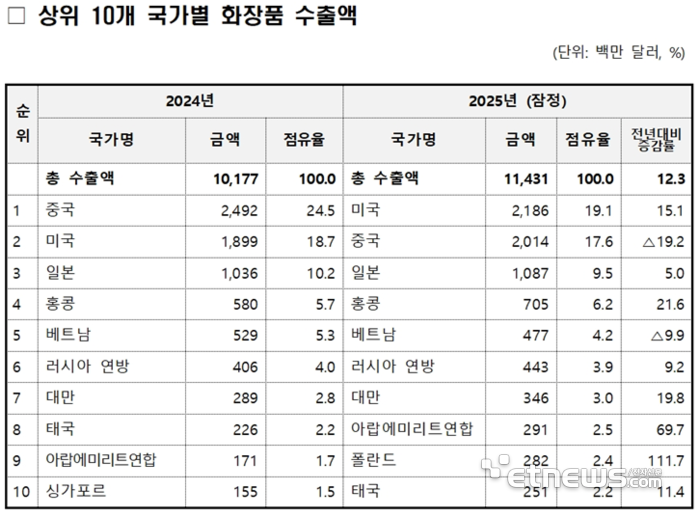
According to the Korea International Trade Association, South Korea’s cosmetics exports hit $11.4 billion last year (about 17 trillion KRW), a record high. That’s a 12.3% increase from the year before, and monthly export totals have been setting new records month after month.
In the U.S., K-beauty overtook France in 2024 to become the top source of imported cosmetics and held that position last year. That shift shows K-beauty has moved beyond mere export growth and become a global force.
K-beauty’s rise is tightly linked to South Korea’s industrial setup. A highly developed OEM/ODM system has been a core engine for brand growth. Around global manufacturers like Cosmax, the infrastructure from product development to production is systematically in place, letting brands plan and launch products quickly. That same setup shortens the time needed to refine or expand offerings in response to market feedback, enabling nimble market entry.
When that production base fused with online platforms and social media–centered marketing and distribution, growth accelerated even faster. Platforms like TikTok and influencer channels can make a product go viral in days, and consumer reactions turn into real-time data that feed directly back into product planning. This “fast production — fast spread — fast feedback” loop has let K-beauty build global momentum quickly.
But speed has a downside: it’s led to waves of very similar products. Lower barriers to development and launch have encouraged rapid churn of items with nearly identical ingredients, textures, and concepts. Differentiation windows are shrinking, and the time a single product dominates the market is getting shorter. The same system that made speed an edge is also accelerating sameness.
In this environment, short-term hits keep appearing, but translating those hits into lasting brand strength is getting harder. Consumers quickly hop to the next alternative, swapping loyalty for novelty. For the industry to evolve, brands need strategies that connect with customers and create repeatable, meaningful experiences.
At the heart of that next wave is technology that designs sustained customer experiences beyond a single product. That shift is showing up most clearly in beauty devices. Device technologies that combine hardware and algorithms create much higher barriers to entry than ingredients or formulations alone. They convert products into ongoing experience assets, expanding long-term touchpoints and creating a new competitive landscape where data and services matter as much as the device itself.
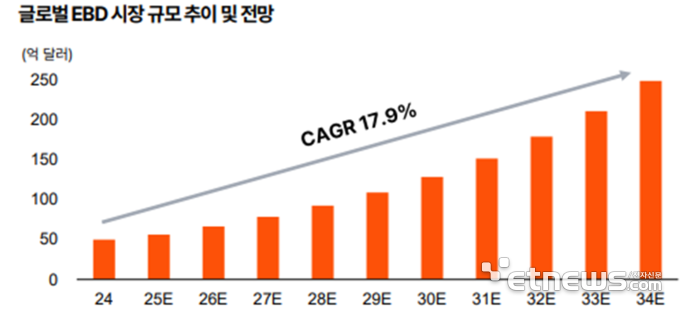
According to the Samil PwC Management Research Institute, Korea’s beauty-device market grew roughly twentyfold—from 80 billion KRW (about 60 million USD) in 2013 to 1.6 trillion KRW (about 1.2 billion USD) in 2022. The global market is also expanding quickly, and analysts expect solid growth to continue over the next decade. Recently, consumer electronics companies with strong tech capabilities have entered the space in force, shifting the competition from product features to underlying technology.
Korea’s edge in beauty devices comes down to three strengths. First is technology that balances efficacy and safety. Devices must deliver visible results while remaining safe for repeated use. Those aims can conflict: raising efficacy can increase irritation, while lowering stimulation may reduce noticeable results.
Device competitiveness ultimately hinges on how well that balance is designed. That requires continuous R&D and data accumulation. One promising example is droplet ultrasound (LDM) technology, which uses ultrasonic vibration to reduce skin irritation while still delivering effective results.
The second strength is an integrated experience that combines devices with skincare. Where the beauty market used to focus on standalone products, devices are redesigning usage itself. Devices provide the mechanism; dedicated ampoules and skincare amplify effects tailored to specific concerns. Consumers end up choosing a routine and care method, not just a single product.
When these elements merge into one experience, products take on new meaning. Routines form around order, frequency, and combinations, and each item plays a role inside that routine. Competitiveness expands beyond individual product efficacy to how well a brand can design the full experience. The device–skincare pairing is turning beauty into a managed care experience.
The third strength is a service structure that supports sustained use. Beauty devices are not one-off consumables—their value compounds with repeated use, and satisfaction grows over time.
Because repeated use and upkeep matter, beauty devices look more like consumer electronics than traditional cosmetics. So a product is judged not only on performance but also on maintenance, after-sales service, and the overall ownership experience.
Technology, experience, and service don’t operate independently; they form an organic whole. Technology produces effects, experience designs how to use them, and service ensures continuity.
When these three elements align, the beauty-device industry gains real competitive strength. K-beauty is moving beyond topical cosmetics into a tech-driven device industry—and the speed of that shift will shape the next decade of competition.
Jungho Yang, CEO of athome athome@athomecorp.com
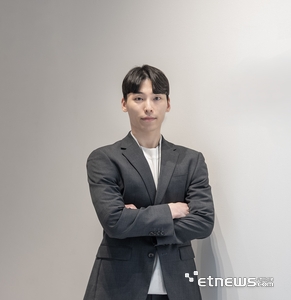
About the author: Jungho Yang founded ATHOME in 2018 to solve everyday problems for customers. Starting with no capital, he grew the company to annual sales in the 100 billion KRW (about 75 million USD) range within seven years. ATHOME has established itself as a device-focused consumer brand group centered on the small-appliance brand Minix and the private aesthetic brand THOME. The company has been recognized with the 2025 Prime Minister’s Award at the Korea Design Management Awards and the Minister of Trade, Industry and Energy Award at the Korea Startup Culture Awards.














Most Commented