
Translation result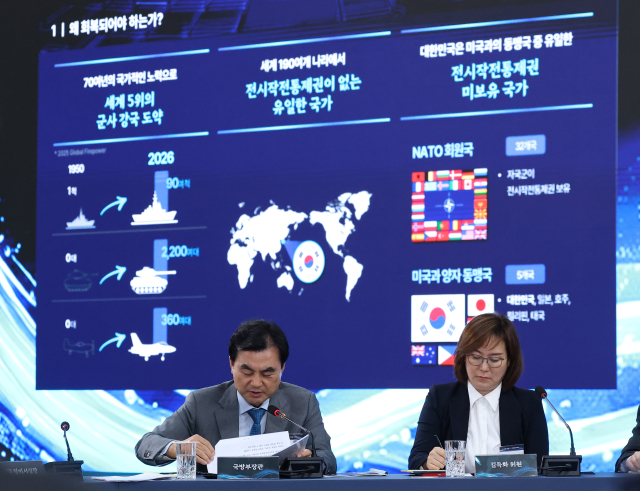
Washington appears to be distancing itself from the Lee Jae-myung administration’s optimism that transferring wartime operational control (OPCON) as soon as tomorrow would cause no problems. U.S. officials praised South Korea as a model ally for securing defense spending, but questioned whether that alone satisfies the conditions for an OPCON transfer. As more voices urge caution against overinterpretation, others warn Seoul should be careful about rushing the handover.
◆OPCON transfer, government pushes for speed
The Lee administration interprets U.S. remarks as a positive signal toward Seoul’s push for an early OPCON transfer. At the 23rd Shangri-La Dialogue in Singapore on the 30th (local time), U.S. Secretary of Defense Pete Heggses urged allies to boost defense spending and cited South Korea as an example. He pointed to Seoul’s pledge to raise defense spending to 3.5% of GDP and said, “Allies like South Korea taking the lead more quickly on operational control is a breath of fresh air.”
He continued on a favorable note, saying, “The U.S. welcomes South Korea’s desire to take over OPCON. That will give both countries more options on the Korean Peninsula, and that’s a very good thing.”
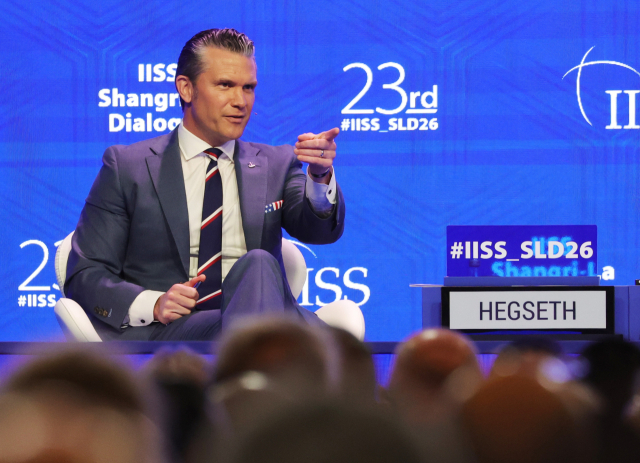
Those were precisely the words Seoul wanted to hear. The government has signaled a strong intent to complete the transfer within its term and even sees next year as a possible target. Heggses added, “We want to keep encouraging that movement,” a remark Seoul could interpret as validation that it has met the conditions early.
Defense Minister An Gyu-baek, who has met successive U.S. congressional delegations, delivered a similar message. He said he told U.S. lawmakers that even if OPCON were transferred tomorrow, there would be no difficulties, and that he had thoroughly explained Seoul’s capabilities, noting that the two countries agreed in 2020 that 94% of the transfer conditions had already been met. But the situation six years ago differs from today’s.
◆Is this a political decision?
Above all, the U.S. takes a different view. U.S. Forces Korea sees meeting the conditions for an OPCON transfer as early as the first quarter of 2029, roughly two years later than Seoul projects. The deeper issue is balance: even Heggses, who offered praise, emphasized aligning any transfer with U.S. military operational plans.
“I believe we should find a balance at a point that respects U.S. operational plans and the responsibilities U.S. service members have carried for decades,” he said. That suggests he does not oppose the transfer itself but wants it to happen at an appropriate time.
Gen. Javier Brunson, commander of U.S. Forces Korea, who faces North Korea on the front lines, stressed that what’s important is acting at the right time, in the right place, with the right capabilities — and ensuring that U.S. perspectives are reflected.
Seoul shows no sign of slowing the transfer. On the 12th of last month, Defense Minister An dismissed Brunson’s first-quarter 2029 timeline as the view of a military official and said early transfer is a matter of policy and political will. At a House Armed Services Committee hearing, Brunson warned that political expediency must not outrun operational conditions, signaling caution about Seoul’s rush.
Critics argue Seoul must not let the slogan of “realizing autonomous defense” blind policymakers to actual security realities. They say Seoul should first ask whether a Korea holding OPCON could independently confront China or Russia in scenarios where those powers would likely intervene automatically in a North Korean contingency.














Most Commented