
Translation result.
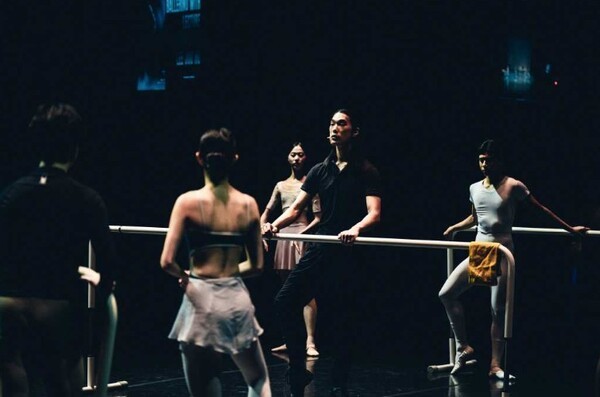
A polished ballet can look effortless and beautiful. But long before dancers step onstage, their bodies are full of questions: Why do we dance? How much can the body express? What training and pain precede a single flawless moment? Lecture Performance With Ballet Dancers: Freedom Within Control, The Aesthetics of Refinement begins at that origin.
At the heart of the production is a renewed inquiry into \”the essence of dance.\” Lee Joo-ho, choreographer-director and artistic head of Busan ID Ballet Company, refuses to treat dance as mere formal movement or refined gesture. He proposes instead that ballet is a language spoken by thinking bodies. While classical ballet has traditionally prized beauty, form and technical perfection, this performance prioritizes the dancer’s inner process, lived experience and physical language.
Lee explained, \”We asked dancers and choreographers to speak directly onstage about what dance means to them, and then to respond through movement. By letting spoken and bodily language exchange, we hoped to build emotional and philosophical resonance.\” In this frame, ballet ceases to be a polished narrative and becomes a live artistic inquiry unfolding in real time.
Rather than staging the plotlines or characters of classical ballets, the show highlights the dancers’ actual lives. Audiences won’t meet figures from Giselle or Swan Lake; they meet the people who have performed them — dancers and choreographers presenting themselves. Onstage realities — mistakes, injuries, love, income, training routines, exhaustion and the question of why dancers continue — emerge through both speech and movement.
Audience members do not watch a finished ballet; they witness ballet in the making. When dancers appear in rehearsal clothes and let their bodies speak instead of hiding behind roles, the theater becomes an anatomical study of the art. Viewers see breath regulation before music starts, the search for center before lifting a leg, and the countless failures that precede a single successful turn.
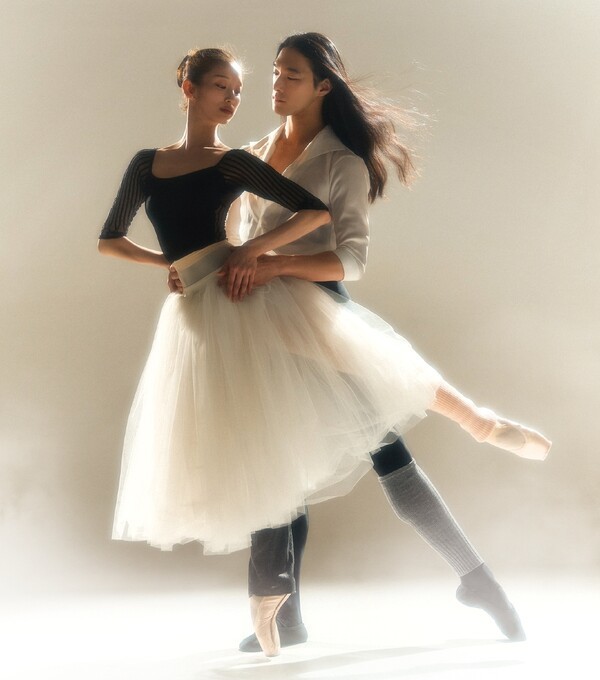
The show’s core gesture is to place \”language\” and \”the body\” on equal terms. Lee framed the piece not as a presentation of finished stories but as a joint question to the audience: \”What is dance?\” He added, \”I wanted to reveal more honestly the thoughts, processes and physical language behind ballet.\”
The spoken passages are not mere commentary. Movement answers speech, and speech reshapes the emotional frame of movement. \”This is a performance where dance is explained through speech, and dance answers back through the body,\” Lee said. \”In some ways, audiences may even experience it as a ballet talk-concert.\”
That approach keeps viewers from stopping at aesthetic appreciation. They become witnesses to how ballet is constructed.
Even basic training is made visible onstage. Bar work and center work — routines usually reserved for the studio — are presented as performance elements. Audiences watch dancers test balance at the barre, align turnout, feet, knees, pelvis and spine, and cultivate spatial control. The production demonstrates why small movements like pliés and tendus are more foundational than dramatic leaps.
In center work, when the barre is gone, turns, jumps, traveling steps, poses and partnering appear in a more vulnerable light. Every fingertip, arm line, neck angle, gaze and landing reveals traces of training. Ballet is shown not only as a perfected result but also as repetition, adjustment and failure.
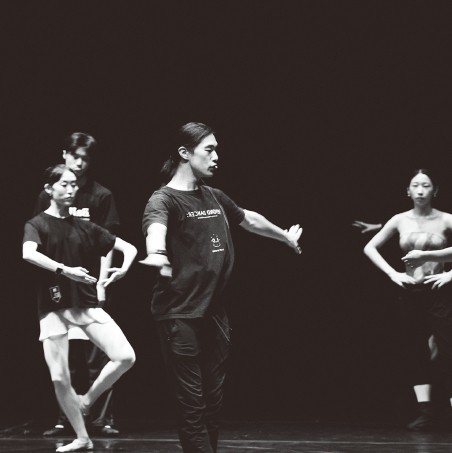
The questions posed onstage are practical and pressing: mistakes, injury, love, financial instability and survival enter the material. Ballet is often remembered in elegant silhouettes and flawless stage images, but dancers’ lives are tougher. For performers whose bodies are their livelihood, pain is routine. One small error can unravel years of work.
The production does not reveal these realities for shock value. It shows why ballet demands extreme discipline and control. Bodies tremble; every stage is different; music breathes differently. Dancers must make room for freedom within unstable conditions. The subtitle, Freedom Within Control, The Aesthetics of Refinement, compresses that paradox at the center of ballet.
Lee said he hopes audiences \”laugh comfortably at moments, discover something new, and leave energized.\” He wants the piece to feel unfamiliar to some and refreshingly accessible to others. The structure is designed so that even those who find ballet intimidating can follow the sensory dialogue between movement and speech.
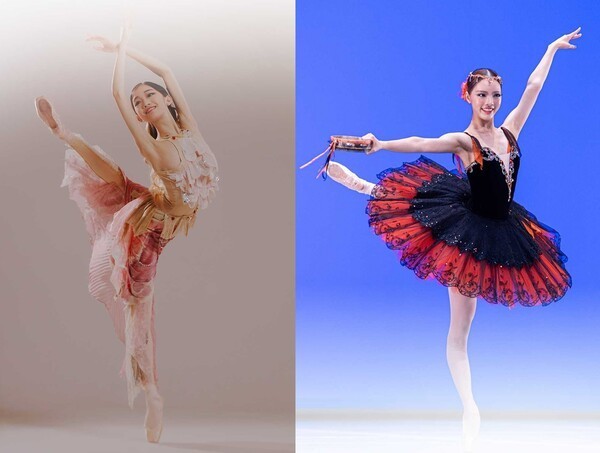
Dancers Son Min-ji, Kwon Do-hyun and Yeom Da-yeon — all decorated at major domestic and international competitions — appear in the production. Son Min-ji won the classical duet division and placed third in the solo category at the 2024 Youth America Grand Prix. Kwon Do-hyun took first place at the 2023 Seoul International Dance Competition. Yeom Da-yeon earned second place at the 2026 Prix de Lausanne.
Together, the three dancers represent ballet’s technical achievement, the promise of young talent and the realities of artists shaped by competitive systems. After hearing explanations of foundational training, audiences see those exercises transform into finished stage work. The lecture and the performance merge into a single flow.
Pianist Jo Su-ji also plays a vital role in shaping the performance’s atmosphere. In ballet, the piano often serves less as background accompaniment and more as a partner that governs the dancer’s breath. The instrument shapes tempo and texture and heightens emotional tension. Even when dancers pause to steady their breathing or regain balance, the music sustains the scene’s intensity.
Busan ID Ballet Company has gained recognition for experimenting with contemporary ballet and building original repertory on a classical physical vocabulary. Lee Joo-ho has consistently translated dancers’ personal experiences into stage structures. Last year’s Ballet, Meeting the Hidden Face used a similar lecture-style approach to foreground backstage realities and training. Freedom Within Control, The Aesthetics of Refinement continues that inquiry on a larger scale with a broader ensemble.
Lecture Performance With Ballet Dancers: Freedom Within Control, The Aesthetics of Refinement will be presented on May 30 at Haneul Theater inside Busan Cinema Center.
Reported by News Culture M.J._mj94070777@nc.press














Most Commented