
Translation result.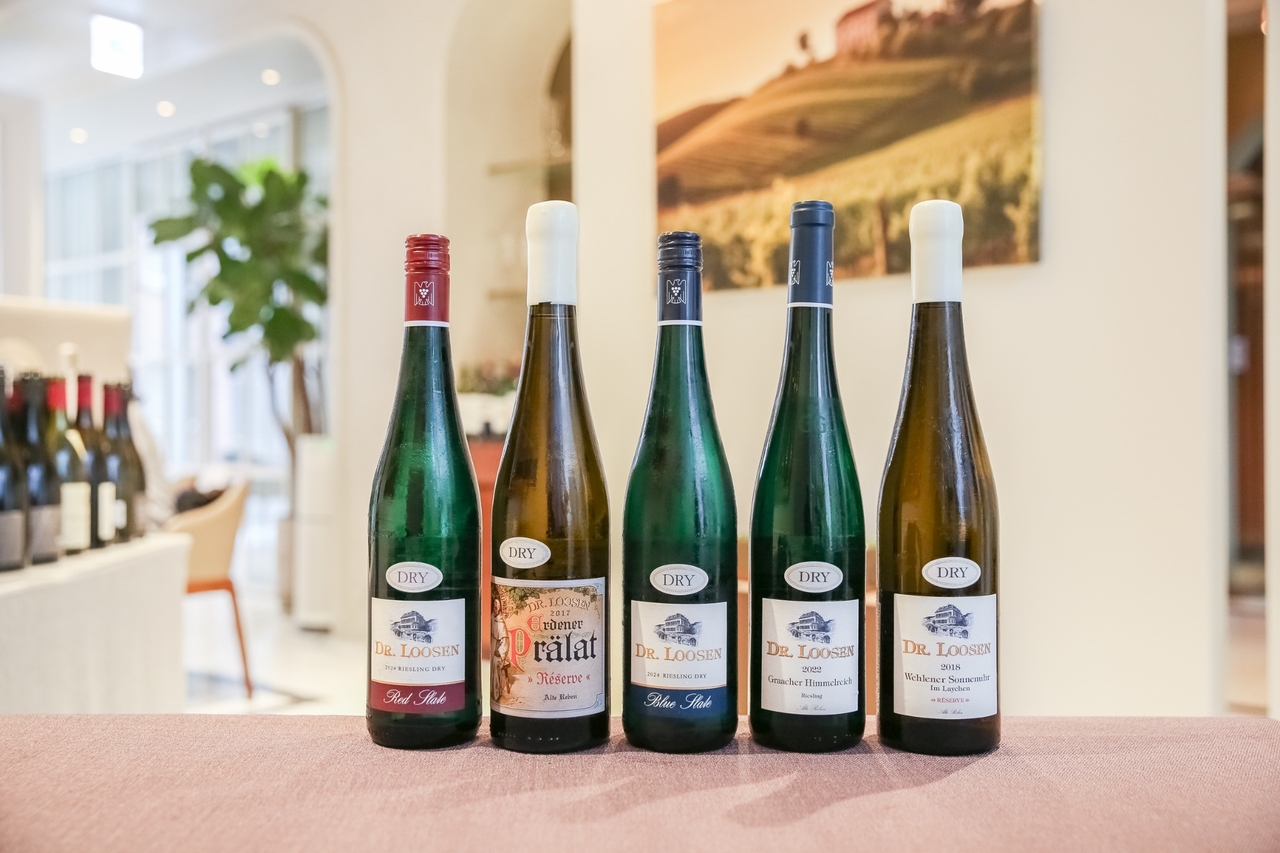 [RealFood=Reporter Yook Seong-yeon] Acidity is everything when it comes to great sparkling wine. “We work with high-acid, highly aromatic Riesling grapes,” Ernst Loosen told attendees.
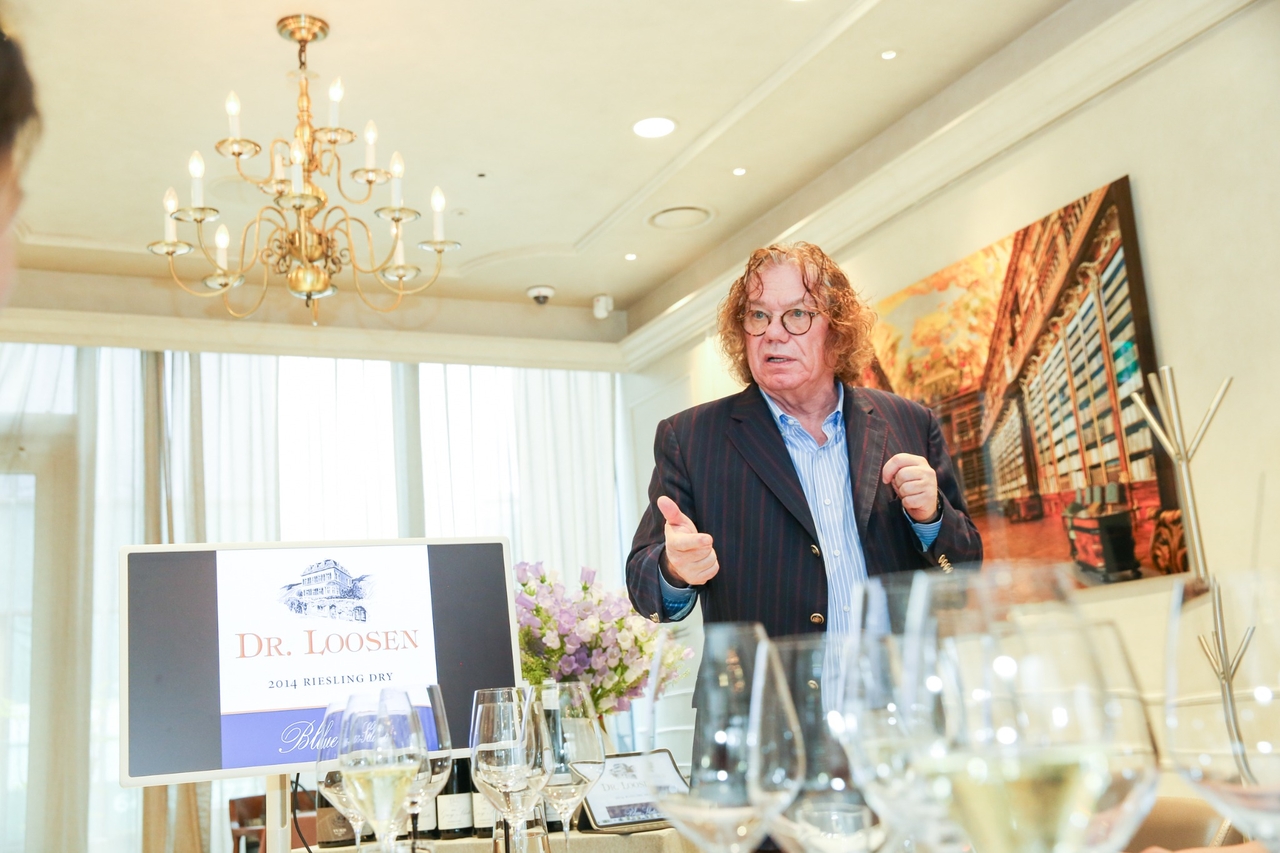
Ernst Loosen, owner of the storied German winery Dr. Loosen, returned to Korea after a decade to speak at a media event held at Le Monde du Vin in Cheongdam-dong, Gangnam, on the 28th. Dr. Loosen is a 200-year-old house synonymous with Riesling.
Ayoung FBC organized the event as interest in white wine surges. Korea’s wine scene once favored big, bold reds, but drinking habits are shifting toward whites with bright acidity, mineral character, and lower alcohol — a trend Riesling embodies perfectly.
Riesling is a white grape variety that developed along Germany’s Rhine, especially in the Mosel region. Alongside Chardonnay and Sauvignon Blanc, it’s considered one of the world’s three major white varieties.
Loosen explained, “A good Riesling vineyard faces south to catch the sun and sits on steep slopes to keep the climate cool.” He noted that the Mosel is among the steepest vineyard areas in the world, with slopes near 30 degrees. While most vines are grafted, Mosel’s slate soils drain so well that Dr. Loosen cultivates ungrafted, own-rooted vines more than 100 years old. Because phylloxera struggles to survive in that environment, they can use those own-rooted vines. For that reason, Dr. Loosen labels its wines by soil and variety rather than by specific vineyard names.
They add no additives during fermentation and adhere to traditional oak barrel techniques. “Oak barrels breathe gently and allow slow oxidation, which creates a more harmonious, layered complexity,” he said.
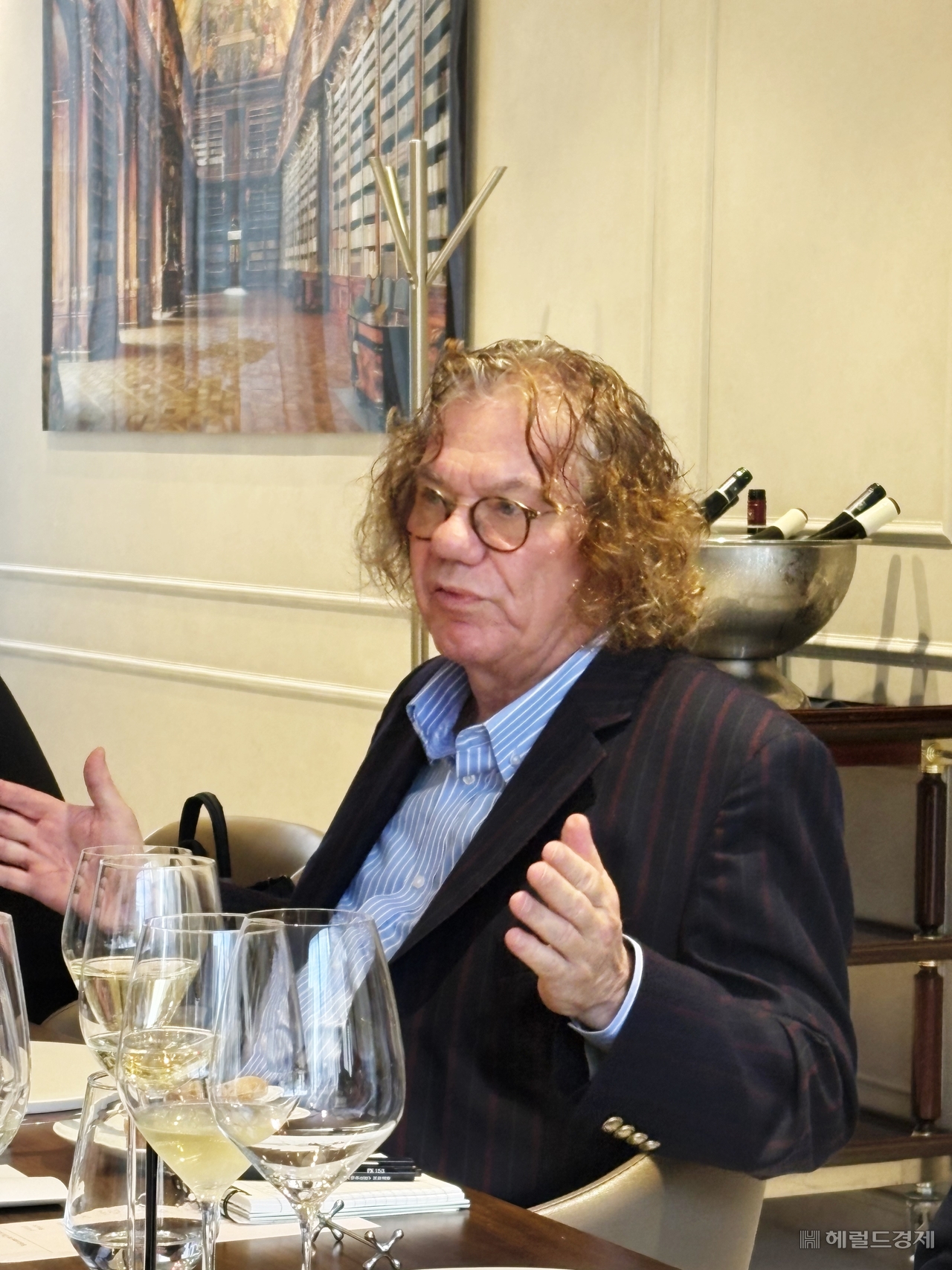 He also traced the long history of German sparkling wine. “Germans love sparkling wine,” he said. “Around 4 to 5 p.m., you’ll often see women enjoying a glass.” He emphasized that sparkling wine made from 100% Riesling has a distinctive flavor profile.
Six wines were tasted at the event. Even with a single Riesling variety, the character changed with the soil. The ‘Blue Slate Riesling Dry’ stood out for its bright acidity and mineral clarity. The ‘Red Slate Riesling Dry 2024’ offered a more powerful, textured profile. Loosen noted that both Blue and Red Slate wines can age for a long time while maintaining a fresh quality.
The food pairings leaned into white-wine-friendly fish and potatoes: sweet shrimp, bluefin tuna, cod, and red potatoes were served. The ‘Riesling Sparkling Dry’ paired cleanly with brioche. Tasting line-up also included ‘Graacher Himmelreich Riesling Dry Alte Reben GG 2022,’ ‘Bellener Sonnenauer Riesling Dry Im Ried GGR 2018,’ and ‘Erdener Pralat Riesling Dry GG Reserve 2017.’
Riesling’s high acidity makes it an excellent match for spicy dishes, rich or oily foods, and fermented flavors. Germany’s classic sauerkraut, for example, is famously well-suited to Riesling’s lively acidity.
Loosen is often called the “King of Riesling” — a nickname earned through decades of influence and praise from global wine media. Decanter inducted him into its Hall of Fame in 2005, and Wine & Spirits named him one of the 50 Most Influential Winemakers in the World.










Most Commented