
Translation result.

Take a photo of a pamphlet and Google’s Gemini Intelligence will open your travel app, find a similar tour and prepare the booking. It will scan your email for the course syllabus, add required textbooks to your cart and take you to the payment step. You only have to tap the final confirmation button.
That is the future Google outlined for its AI assistant, Gemini Intelligence, unveiled ahead of the company’s annual developer conference, Google I/O 2026. We are moving beyond AIs that merely answer questions: these agents will open apps, make reservations and handle nearly every step up to checkout. The convenience is significant, but so are the questions about personal data, security and users’ digital choice rights.
Google revealed Gemini Intelligence on the 13th, ahead of Google I/O 2026. The assistant infers user intent and moves across apps and websites on a smartphone to execute tasks. Google plans to roll it out on Samsung Galaxy and Pixel devices this summer and expand it into cars, smart glasses and laptops by year’s end.
But the trade-off is serious. For an AI to act on a user’s behalf, it must gain broad access to a phone’s data and permissions. That concern over “digital sovereignty” is a core reason the European Union has moved to curb Google’s dominance in Android.
The timing was telling. On the same day Google unveiled Gemini Intelligence, the European Commission closed its consultation on a remedy that would require Google to give competing AIs the same privileged Android access Gemini enjoys. Regulators pressed Google to open that door while Google doubled down on integrating its OS and AI, underscoring its ecosystem control.
“I’ll hand my entire phone to the AI” — security boundaries wobble
The central issue is how far an AI can control a user’s smartphone. Google describes Gemini Intelligence as “personal intelligence,” but in practice it looks like near-comprehensive access to personal data. To book travel or shop on behalf of a user, an AI needs access to email, photos, calendars, location data and even payment permissions.
Google asserts, “We do not directly train on a user’s Gmail inbox or Google Photos library, and connected data will be used only for that single user.” The company also says the app-connection feature will be disabled by default and must be enabled by the user.
Experts disagree. They emphasize that “data training” and “system access” are distinct issues. Lee Sang-geun, professor of smart security at Korea University’s Graduate School of Information Security, warned, “The deeper an AI agent penetrates system-level access, the greater the convenience — but a single malfunction or hack could expose all of a person’s data at once, increasing the single point-of-failure risk.”
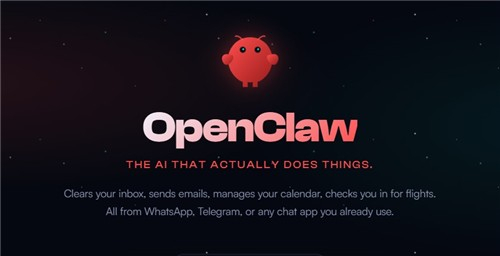
Security threats are already real — Naver, Kakao and Danggeun ban ‘AI agents’
Security threats have already emerged. Earlier this year, major South Korean tech companies including Naver, Kakao and Danggeun prohibited employees from using the open-source AI agent OpenClaw. They judged the agent could roam a PC, scan confidential files and even read messenger windows.
Cybersecurity firm Palo Alto Networks warned that AI agents—because they combine access to personal data with external communication capabilities—are “inherently vulnerable.” An IT company executive said, “Once it goes beyond a developer’s experimental use, it can reach corporate secrets and internal systems. After an incident, it will be too late to respond.”
EU and U.S. target Google’s AI dominance — fate to be decided in July
On April 27, the European Commission proposed a remedy under the Digital Markets Act (DMA) that would require Google to open key Android functions equally to competing AIs. The commission will issue a final decision on July 27. If Google is found to violate the DMA, fines could reach up to 10% of Alphabet’s global revenue—roughly $35 billion.
The EU’s concern centers on a stark asymmetry. Installing ChatGPT or Claude on an Android phone is just installing an app. By contrast, Gemini is built into the OS: it can be summoned instantly by the power button or voice and can control other apps freely. That gives a built-in AI a significant head start.
The United States has also stepped up pressure by banning contracts that force Google’s search engine as the default. On May 8, a federal court in Washington, D.C. issued antitrust relief finding Google abused its dominant position in search and search advertising. The court declined sweeping remedies such as forcing Google to sell Chrome or spin off Android, but it barred exclusive default-search agreements.
Claire Kelly, Google’s senior antitrust counsel, countered that forcing expanded device access would raise costs through mandatory sensitive hardware permissions and would harm European users’ privacy and security.
Samsung, Korean platforms and carriers brace — agency and choice at risk
The fight over “agent sovereignty” strikes South Korea’s tech ecosystem directly. Samsung faces a complex calculus. While Samsung markets “Galaxy AI,” its phones run on Google’s Android. The Galaxy S26, released in February, includes multiple AIs—Gemini (task execution), Bixby (device control) and Perplexity (web search)—but Gemini effectively controls app execution.
As Gemini’s OS-level reach grows, Samsung will need to balance using Google’s ecosystem with preserving Galaxy-specific AI leadership.
Korean platform companies like Naver and Kakao face risks to app visibility. Users formerly selected apps themselves; now the AI may choose apps. If a user asks, “Book a nearby restaurant” or “Send a gift,” and Google Maps or another Google-affiliated service opens first, domestic services could be sidelined.
Carriers are not exempt. KT, SK Telecom and LG Uplus view AI agents as a future growth engine. But without OS-level permissions, their efforts to develop proprietary AI assistants will be limited despite their direct relationships with subscribers.
A South Korean IT industry insider said, “If AI agents keep prioritizing Google services, competing apps will be marginalized. We urgently need domestic guidelines on digital control.”
South Korea’s regulation hasn’t started
While global regulators watch platform power shifts closely, South Korea remains largely unprepared. The AI Basic Act, effective in January, lacks concrete provisions on AI app-execution priority or protections for users’ right to choose.
A platform-regulation expert noted, “The app-execution priority problem for AI agents will not fit neatly into traditional web-search regulatory frameworks. We should link the AI Basic Act with platform competition laws and detail provisions to promote competition.”
Google says users make the choice. That is not untrue. But Google also determines which choices are shown and in what order—the design power rests with Google. The EU argues that other AIs should participate in shaping that design. Experts in South Korea say the same debate needs to start here.















Most Commented