
Translation result
Appealed to the union amid a looming companywide strike…accepted responsibility, saying the fault is his
Six years after apologizing for no‑union management…spearheaded a dramatic agreement
Challenges remain, including institutionalizing advanced labor‑management relations…cooperative management appears promising
[Asia Times=Reporter Park Si‑ha] “I will take the brunt of the fierce storm and accept full responsibility.”

With just days before a planned companywide strike, Samsung Electronics Chairman Lee Jae‑yong publicly bowed and apologized. He apologized three times and said, “Samsung is one body, one family.” Even as criticism of the Samsung Electronics union intensified, Lee stepped forward and took responsibility personally.
Business leaders saw the moment as a symbolic break with the past. Once synonymous with no‑union management, Samsung has entered a phase in which its chair talks directly about harmony and coexistence with labor. Some observers say this demonstrates that the “New Samsung” Lee has promoted has passed a real test.
“From now on, the phrase ‘no‑union management’ will not be used at Samsung.”
In May 2020, Lee publicly declared an end to Samsung’s no‑union management policy. At the time, many inside and outside the corporate world were skeptical. The prevailing view was that decades of entrenched corporate culture and labor practices could not be reversed overnight.
For years, Samsung built its global leadership by prioritizing efficiency, speed, and a no‑defect mindset. A top‑down approach dominated crisis response and organizational control. When controversies grew, Samsung’s crisis playbook was to limit exposure and resolve issues quickly.
But Samsung’s response to the threatened strike was clearly different. The company signaled a shift by treating the union as a negotiating partner rather than an entity to be managed or controlled. The business community interprets this as the opening salvo of a broader cultural change within Samsung.
Lee reportedly monitored the negotiations in real time. Even after government mediation failed and emergency arbitration was mentioned, he pushed for dialogue and compromise. Many point to his direct leadership during the talks as the most visible change.
It was highly unusual, observers say, for the company’s top executive to respond directly to the union’s demand that “the real boss come out.” His message—“we are one body, one family”—would have been unimaginable at Samsung in earlier eras.
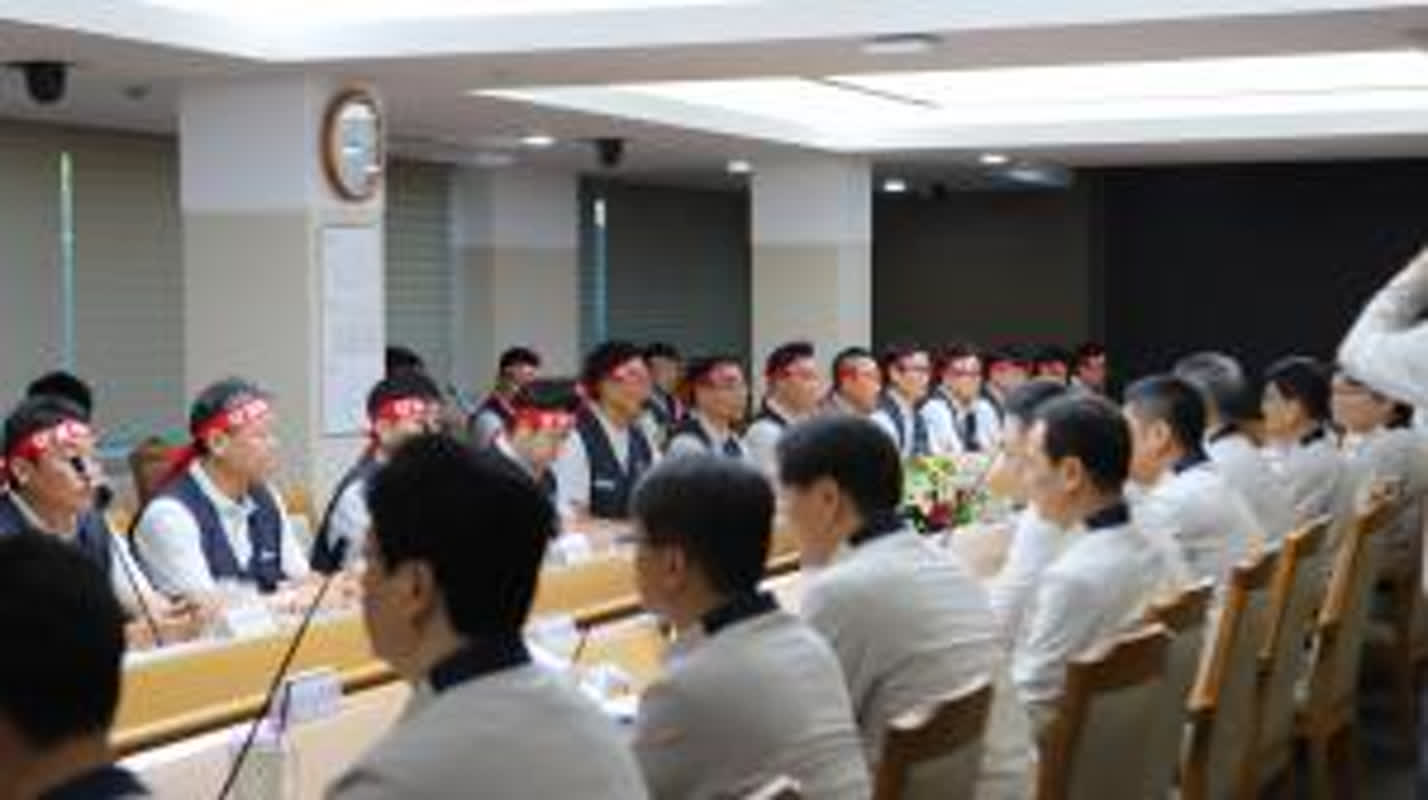
The negotiation process produced other uncommon developments. Management agreed to formalize a special semiconductor performance bonus and ease some caps, while the union scaled back certain demands. They also agreed to drop the civil and criminal cases that were filed during the strike period, helping to defuse the conflict.
Lee’s long‑emphasized themes—“coexistence,” “walking together,” and “social responsibility”—became sharper through this process. Although Samsung rose to the top by pursuing an “unbeatable gap” and a “first‑place DNA,” its vertical hierarchy and rigid communication channels remained persistent legacies.
Lee has been pushing for this structural change for years. Analysts say the strike threat revealed the direction of the New Samsung: not just averting a walkout, but signaling a shift from a “no‑union Samsung” to a “cooperative Samsung.”
Significant challenges remain. Tensions between unions, disputes over the performance‑pay system, and pay imbalances across divisions surfaced during the dispute and still need resolution. As a semiconductor supercycle approaches, Samsung must both bolster its technological edge and entrench mature labor‑management relations.
Nevertheless, the business community views the agreement as a meaningful turning point. Samsung appears to be moving from “enduring” to “engaging in dialogue,” and from “no‑union management” to “cooperative management.” The New Samsung Lee has advocated has charted a clearer course amid the strike crisis.













Most Commented