
Translation result
Valpolicella, the rolling-hill wine region in Italy’s Veneto, is where nobles from Verona and Venice built their country estates. Venetian aristocrats made fortunes on maritime trade, and by the 15th and 16th centuries they were investing heavily in mainland agriculture. That investment gave rise to the region’s elegant villa culture—the so-called “Veneto villas”—which you can still sense across Valpolicella.
These estates were more than summer getaways. They were working hubs where nobles socialized in the warm months while managing vineyards and farms, turning wine into a real income source. Influenced by Renaissance architect Andrea Palladio, the villas favored geometric symmetry and proportion, with façades designed to sit beautifully in the landscape. Main houses—styled after ancient temples—hosted social and cultural life, while arcaded outbuildings stored grain, housed wine cellars and supported agricultural operations.
Valpolicella’s wine heritage grew from that geographic and cultural context. The area’s big day-to-night temperature swings and dry air are ideal for drying grapes. Producers air-dry harvested fruit in well-ventilated lofts or drying rooms for months, a technique called appassimento that concentrates sugars and flavors by gently removing moisture. The result: Amarone, one of Italy’s most iconic premium reds.
If Amarone is Valpolicella’s glamorous star, Ripasso is its resourceful, every-day hero. Farmers noticed that the grape skins left over from Amarone still carried plenty of aroma and flavor. They started running ordinary Valpolicella wine over those spent skins for a second fermentation—hence Ripasso, which literally means “to pass over again.”
What began as a practical trick became a signature Valpolicella style. Wines that go through the Ripasso re-fermentation gain deeper color, richer texture and spicy, dried-fruit notes. Lighter than Amarone but more structured than a basic Valpolicella, Ripasso is often nicknamed “baby Amarone.” In 2007, Ripasso earned official DOC recognition in Italy.
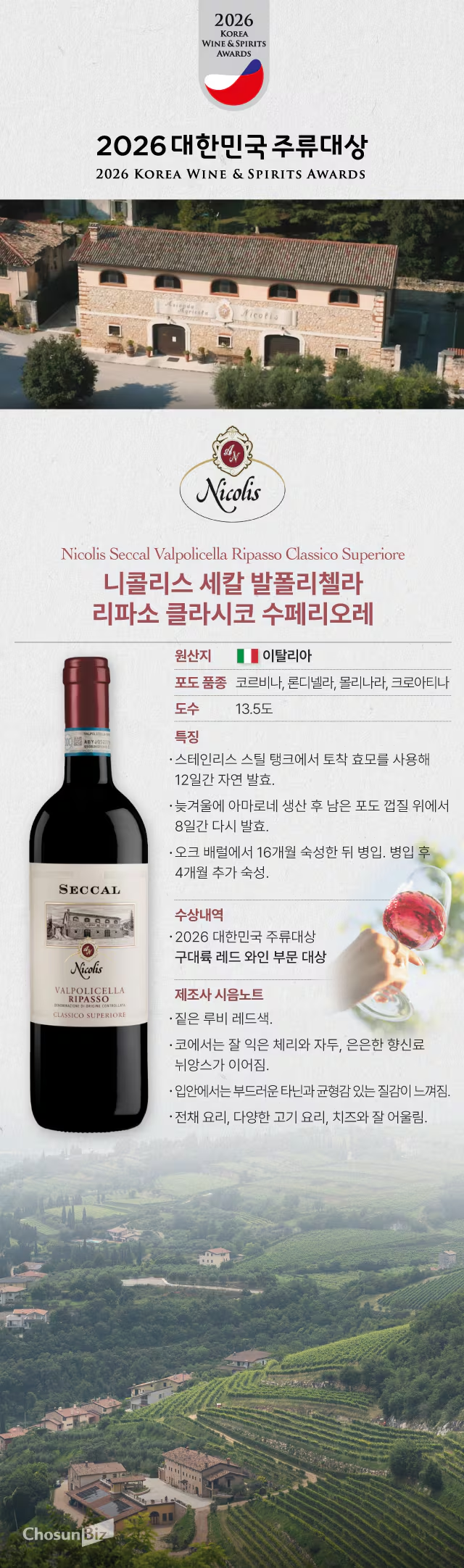
One producer carrying on this tradition is Nicolis, a family winery in San Pietro in Cariano near Verona. Since its founding in 1951, Nicolis has focused on Valpolicella’s native grapes, sticking to regional methods while favoring balance and food-friendly wines over heavy-handedness.
Their flagship, Secal Valpolicella Ripasso Classico Superiore, blends 70% Corvina, 20% Rondinella, 5% Molinara and 5% Croatina. Grapes are harvested in October and naturally fermented with native yeasts in stainless-steel tanks for 12 days. At the same time, grapes earmarked for Amarone go through a 3–4 month appassimento in dedicated drying rooms.
After Amarone production wraps in late winter, Nicolis adds the base Valpolicella to the leftover Amarone skins for an eight-day second natural fermentation in stainless tanks. The wine then matures for 16 months in oak barrels and spends another four months in bottle before release.
In the glass it shows a deep ruby red. On the nose, expect ripe cherry and plum with delicate spice. The palate reveals soft tannins and a balanced, inviting texture. It’s versatile at the table—think appetizers, a variety of meat dishes and cheese. Nicolis’s Secal Ripasso won the top prize in the Old World Red Wine category at the 2026 Korea Liquor Awards. The wine’s Korean importer is Trend International.













Most Commented