
A shaggy puppy perfectly syncs to a trending song, then glossy fruit is sliced with a crisp, scraping sound. That’s not all: a CCTV camera over a cabbage field suddenly picks up a giant tiger. The surprise lasts only a moment—when the tiger rises onto its hind legs and starts to dance, relief and laughter follow. “Oh—so it was an AI video.”
These clips, which have recently taken over Instagram and YouTube recommendation feeds, were all produced with AI. As the technology has become widespread, everyday workers have begun using it to create clever videos and turn them into income.
But can just anyone really monetize AI videos successfully? We spoke with YouTuber NABI, who built roughly 26,000 subscribers by producing story-driven ASMR with AI, to find out.
Below is a Q&A with YouTuber NABI.
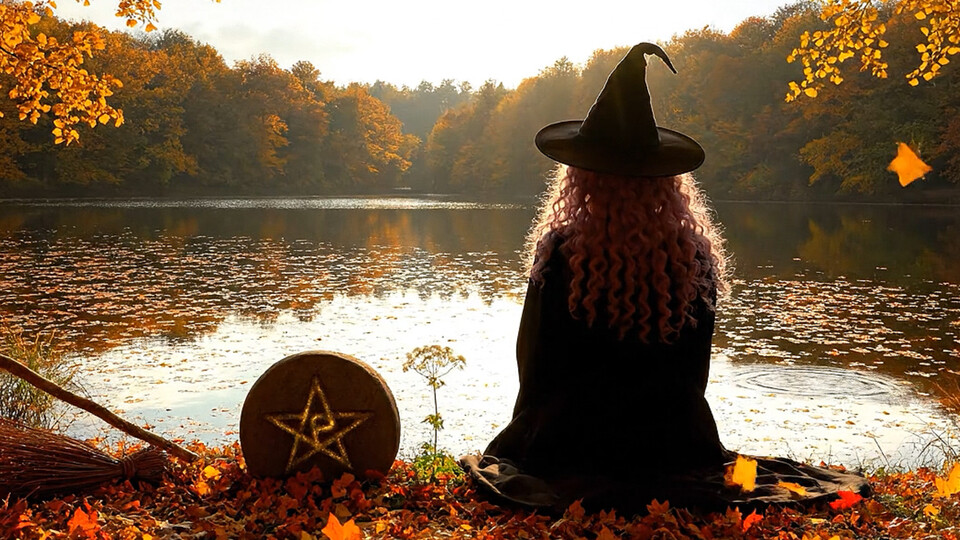
Q. Please give us a brief introduction.
A. Hi—I’m NABI, a creator who produces AI video content. I currently run a healing, story-driven ASMR series called Witch Potion Brewing.
Q. Is content creation your primary job? If you have another job, is it related to AI or video production?
A. My original profession is animation production. Over the years I worked as an assistant director, storyboard artist, layout artist, and concept artist. Those roles overlap a great deal with AI video production: I draw on my experience in planning, storytelling, directing, and editing across the whole process.
Q. What led you to start an AI video channel?
A. I left my job a year ago for personal reasons and wanted to build my own content, so I experimented with a range of projects. That’s when I noticed the AI video boom and started playing around out of curiosity. As I grew more interested, I formally launched my YouTube channel.
Q. One of your channel’s popular videos, “Slicing: Waves, Volcanoes, Glaciers, Space,” has about 2.4 million views. How did you develop that concept?
A. The slicing series—waves, typhoons, black holes—was already trending on TikTok. I added a few elements to make it mine and pushed for more realistic visuals. I didn’t expect it to take off the way it did.
Q. Why do you think that video resonated so widely?
A. I think viewers respond to the surreal sense of wonder and the satisfying visuals AI can produce. I experiment with materials and scenes that can’t exist in real life, and I focus on aesthetic quality. I try to deliver strong visuals without looking cheap. Some dismiss these clips as something anyone can \”click together\” with AI, but that ignores the countless fixes and iterations behind the finished piece. I’m grateful to viewers who recognize that work and value it.
Q. Lately you’ve serialized the story-driven Witch Potion Brewing series. Watching it really feels like peeking into a witch’s workshop. AI clips often repeat short, impossible actions—why choose a story-driven approach?
A. With AI, a well-crafted prompt can reproduce similar outputs, so if someone watches my video and tries to recreate it, they might get a close result. That raises a question: why should viewers seek out my channel? I wanted to create work that AI alone couldn’t replicate—content infused with my own narrative, emotion, and personality.
I’m drawn to fantasy—witches, wizards. In the past, producing that kind of work required expensive, time-consuming 3D production, which made it unrealistic for solo creators. AI changed that, making cinematic expression possible for individuals. I wanted to use that advantage to produce high-quality video content.
Q. Which AI tools do you typically use, and how long does it take to produce a 3–5 minute video?
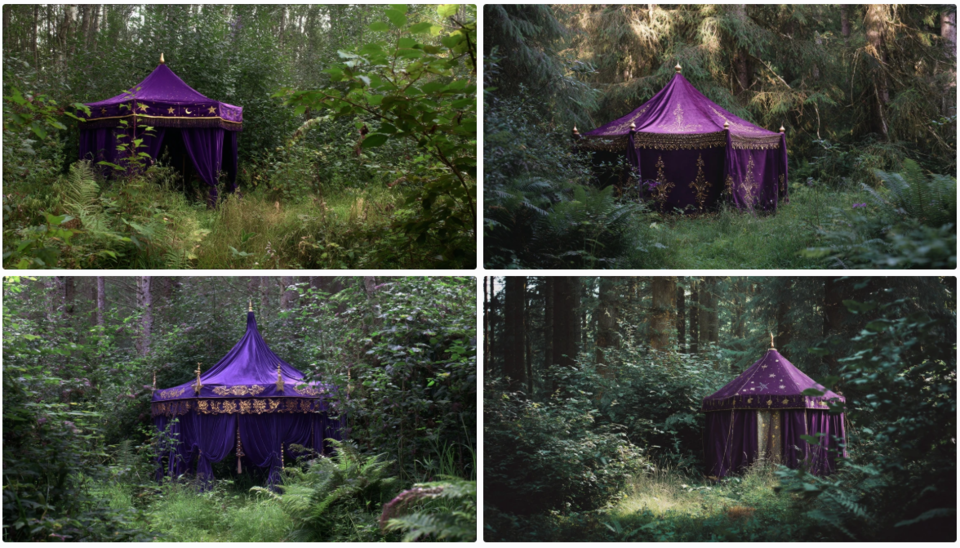
A. I usually refine ideas with ChatGPT, then generate concept images in Midjourney. I use NanoBanana for image edits and VEO to turn finished images into video. Lately I’ve tested all-in-one platforms like Freepik, but VEO still handles most of my workflow. Depending on length and complexity, a 3–5 minute video typically takes about five to ten days to produce.
Q. On social media, you often see claims that anyone can make AI videos. What are the real entry barriers?
A. It’s true anyone can make videos, but the statement hides a catch: “anyone” includes industry professionals. The question isn’t just whether you can make a video, but whether you can make a competitive one.
Professional studios are entering the market, so you need to consider what position you can occupy among them. Rather than blindly learning tools, think first about whether you have a creator’s eye or a distinct taste to bring to your work.
Q. Could a nonprofessional who’s only used ChatGPT make videos like yours?
A. Today’s AI tools have user-friendly interfaces, and many tutorial videos exist, so self-teaching is realistic. Start by copying trending videos to learn the tools, then gradually try directing and developing your own style. Patience is essential.
Q. What do you consider competitive content?
A. Competitive content needs sustainable appeal. Just as meeting an intriguing person makes you want to learn more about them, content should spark curiosity and keep viewers returning. My goal is for my channel to become a compelling world that makes people wait for the next episode.
The AI content market also shows another pattern: when an IP or meme takes off, derivative works flood the platform quickly. That can generate explosive views, but the trend is consumed fast and forgotten just as fast. Constantly chasing fads is exhausting.
As a creator, you do need to catch trends and trigger audience engagement. But real competitiveness, to me, lies in making work people return to repeatedly. That’s why I focus on building my own stories and sensibility.
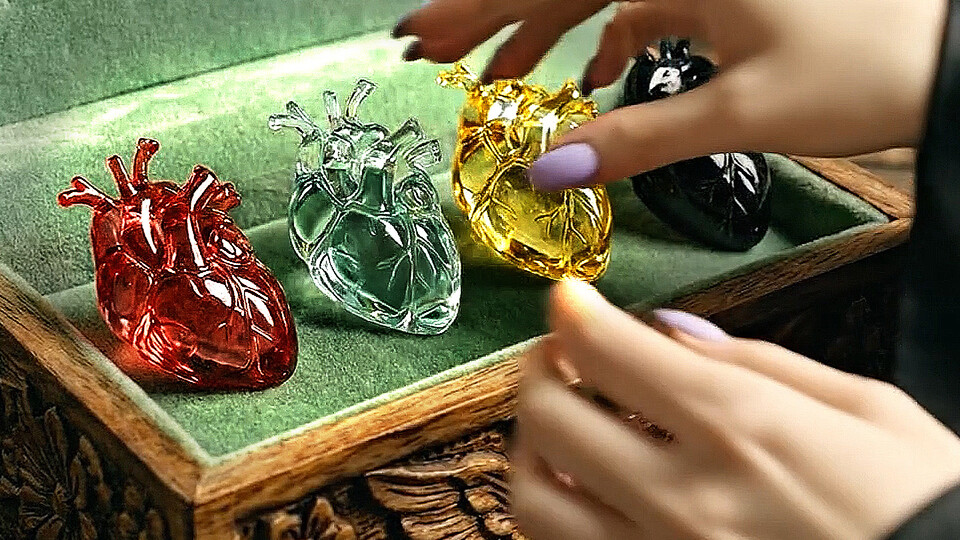
Q. AI content provokes strong reactions—some viewers love the surreal feel, while others criticize it. People report cognitive dissonance or say the production feels hollow and consumptive. As an AI content creator, how do you respond to those criticisms?
A. I recognize those criticisms and the sense of dissonance. As a creator, I wrestle with these questions constantly.
For instance, my witch series rarely shows human faces. Even for the main witch, I usually reveal only the eyes or keep the full face hidden. Despite technical advances, AI-generated characters can still look awkward in some ways.
Many assume AI will produce a perfect scene after a few prompt lines, but that’s not how it works. I once asked for a panicked fleeing scene and got a neat, runner-like posture. To get the result I want, I often iterate dozens of times—or abandon the idea entirely.
I empathize with the public’s sense of emptiness. It’s jarring to see AI quickly approximate the refinement professionals achieved over years. That prompts a deeper question: do we value human effort or AI-produced polish more?
Standing in this transitional moment, I’m trying to find ways for AI techniques and traditional creative practice to coexist. I continuously aim to use AI as a tool that carries human emotion and intent, and I shape my work around that principle.
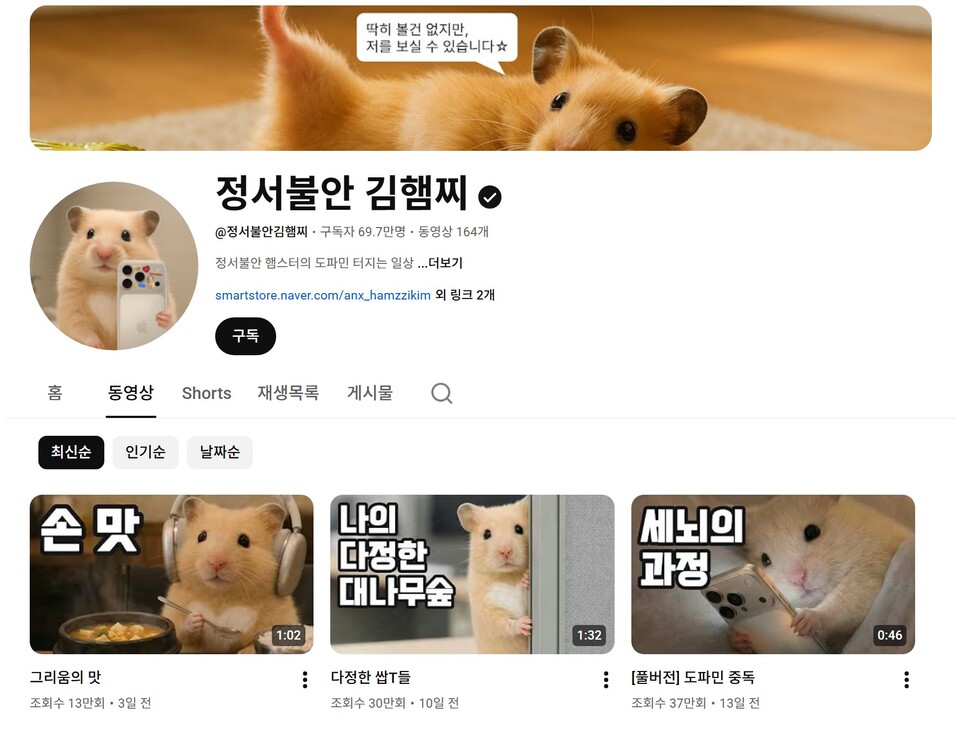 The YouTube channel Emotional Anxiety KimHamzzi has about 700,000 subscribers. The channel earned praise by depicting the struggles of office workers with an AI-created hamster character, and later partnered with well-known brands like GS25 for content marketing collaborations.
 Q. Many people might try AI video production for economic reasons. Do you think the input-versus-output ratio delivers satisfactory results?
A. Creators make money from AI videos through ad deals and view-based revenue. But ad contracts are already dominated by professional studios, so it’s getting harder for individuals to break in. From my experience running a channel, relying on views alone rarely produces stable income.
That’s why individual creators often have better chances by building distinct IPs—like KimHamzzi or BoriAndNyangi—or by producing derivative works based on existing IP. Entering AI content competitions can also help with exposure and opportunities.
Q. Finally, what are your goals as a content creator going forward?
A. In the short term, I want to expand the Witch Potion Brewing universe, introduce more witch characters, and deliver richer episodes. Long term, I aim to combine my animation background with AI technology to pursue an AI-driven animated feature that carries a complete, compelling narrative.











Most Commented