
Translation result
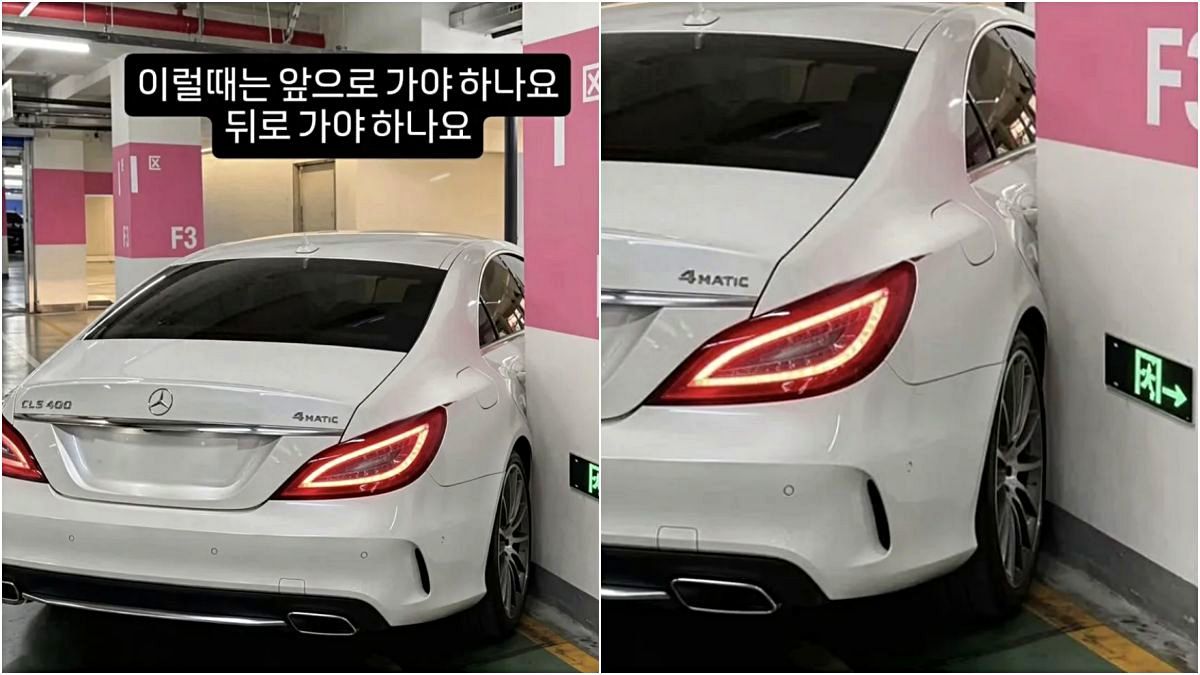
There’s one photo that’s been making the rounds on forums and social media: a white imported car trapped between pink pillars in an underground garage, the rear passenger door and fender pressed tight against a pillar. The poster’s only question was: Should I go forward or back? Within minutes the comments exploded with hundreds of takes.
The real problem: most of those replies were confidently wrong. Without a basic sense of vehicle dynamics, the move that feels instinctively right can easily turn into a repair bill costing several million KRW (roughly $1,500–$4,000).
Why the popular advice is actually the wrong move
One common suggestion was to turn the wheel left — away from the pillar — and back out. Sounds reasonable on the surface: steer away from the obstacle and you’ll free the car. But that trick actually drives the body deeper into the pillar. The critical detail is where the pillar is touching the car. In this case it’s at the rear door where the fender begins, which sits ahead of the rear axle. If you turn left and reverse, the bumper — which pivots around the rear axle — will swing left and clear, while the door area in front of that pivot will be forced more firmly into the pillar on the right. The result: the pillar digs into the door and folds it like paper.
Going forward isn’t the answer either. Due to the difference in turning paths between the front and rear wheels, the more you drive forward, the more the rear wheels will push into the pillar.
The actual solution is the exact opposite of instinct
Experts say the only reliable escape follows a “rewind the tape” principle: retrace the exact path you took in, only in reverse.
Here’s the step-by-step. First, turn the wheel fully to the right — toward the pillar. Then gently lift your foot off the brake and back up very slightly. The instant a gap appears between the pillar and the body, stop. Next, straighten the wheel to the 11 o’clock position and back straight out.
Most people’s reaction is the same: If I turn toward the pillar, how will I move away from it?
Why turning toward the pillar actually frees you
Think about how the car got stuck in the first place. The driver had the wheel turned right while moving forward, which pushed the rear wheels into the pillar and trapped the car. So keeping the wheel turned right while reversing makes the car follow the incoming path in reverse.
As the front wheels — angled right — roll backward, they nudge the car’s nose left. That movement pulls the rear-door area that was jammed against the pillar to the left, creating a 1–2 cm (about 0.4–0.8 in) gap. Once you feel that tiny space, straighten the wheel and back out — and you can escape without fresh scratches.
Panic leads drivers to do the exact wrong thing
Experts say it’s common for flustered drivers to yank the wheel the opposite way, which often wrecks doors or bumpers. On imported cars, replacing a single door can cost several million KRW (roughly $1,500–$4,000). If the door hinge and body panels are also damaged, labor and parts can send the bill much higher.
Remember one rule: don’t keep changing the steering angle. Maintain the angle you had when you entered, back up slightly to create a gap, then straighten the wheel to the 11 o’clock position and exit. It’s the best way to protect both your car and your wallet.
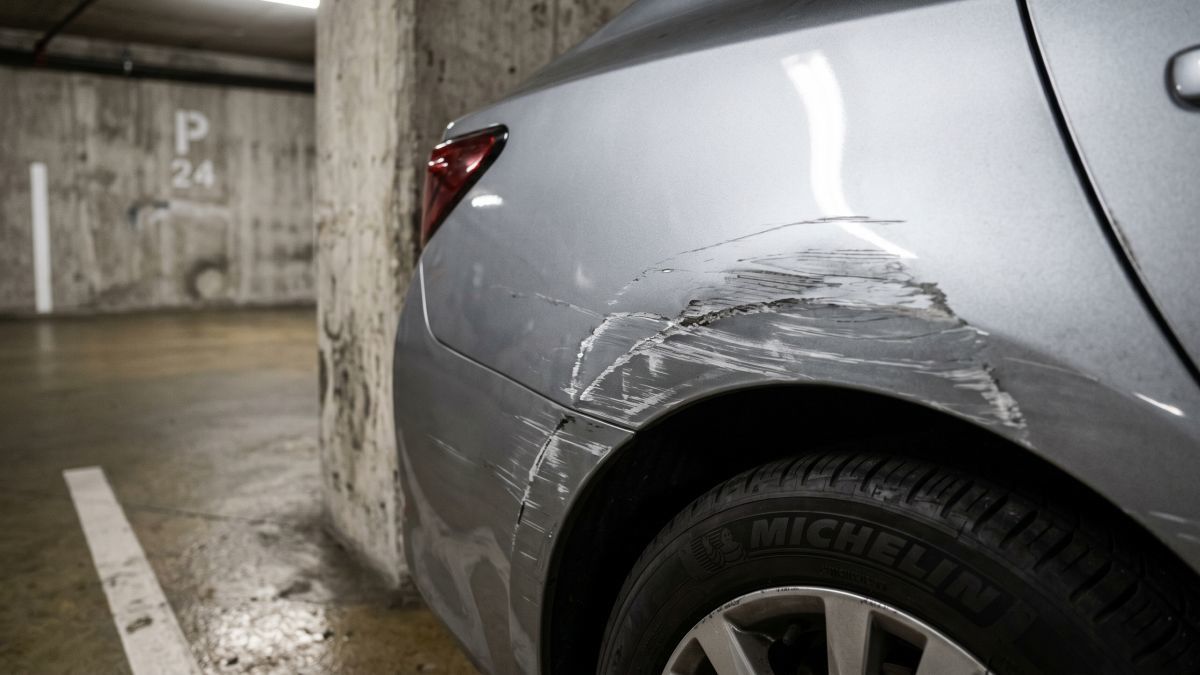
If you scratch your car in a parking lot, the next five minutes will determine the repair bill
Scraping a pillar or wall in a parking garage happens more often than you’d think. What matters most is how you handle it right after. A panicked mistake can turn a tiny scratch into a multi-thousand-dollar problem.
First things first: take photos. Shoot the damage from several angles and capture the pillar or wall, your parking position, and any nearby CCTV. These images are crucial evidence for insurance or disputes.
What to consider before filing an insurance claim
Even for small scratches, automatically using insurance isn’t always the smartest move. Filing a claim on your comprehensive coverage can raise your premium next year, and the added cost over three to five years can exceed the initial repair price.
If the scratched area is smaller than a palm and only the paint is affected, a partial repaint at a paint shop often costs about 100,000 KRW–300,000 KRW (approximately $75–$225). For shallow scratches that don’t need bodywork, a temporary touch-up pen and later out-of-pocket repair can be a sensible choice. But if a panel is dented or the primer layer under the paint is damaged, you’ll need bodywork and repainting — get estimates first, then decide whether to use insurance.
Don’t trust just one estimate
Many drivers head straight to the dealer’s official service center after a scrape. Official centers use genuine parts and charge higher labor rates, so the same repair can cost more than twice what an independent paint shop would charge. Always get at least two or three estimates and compare.
If you plan to use insurance, check with your insurer about their approved repair shops. Using a carrier-designated shop can sometimes lower your out-of-pocket costs, so contact your insurance customer service for their recommended list before deciding.













Most Commented