
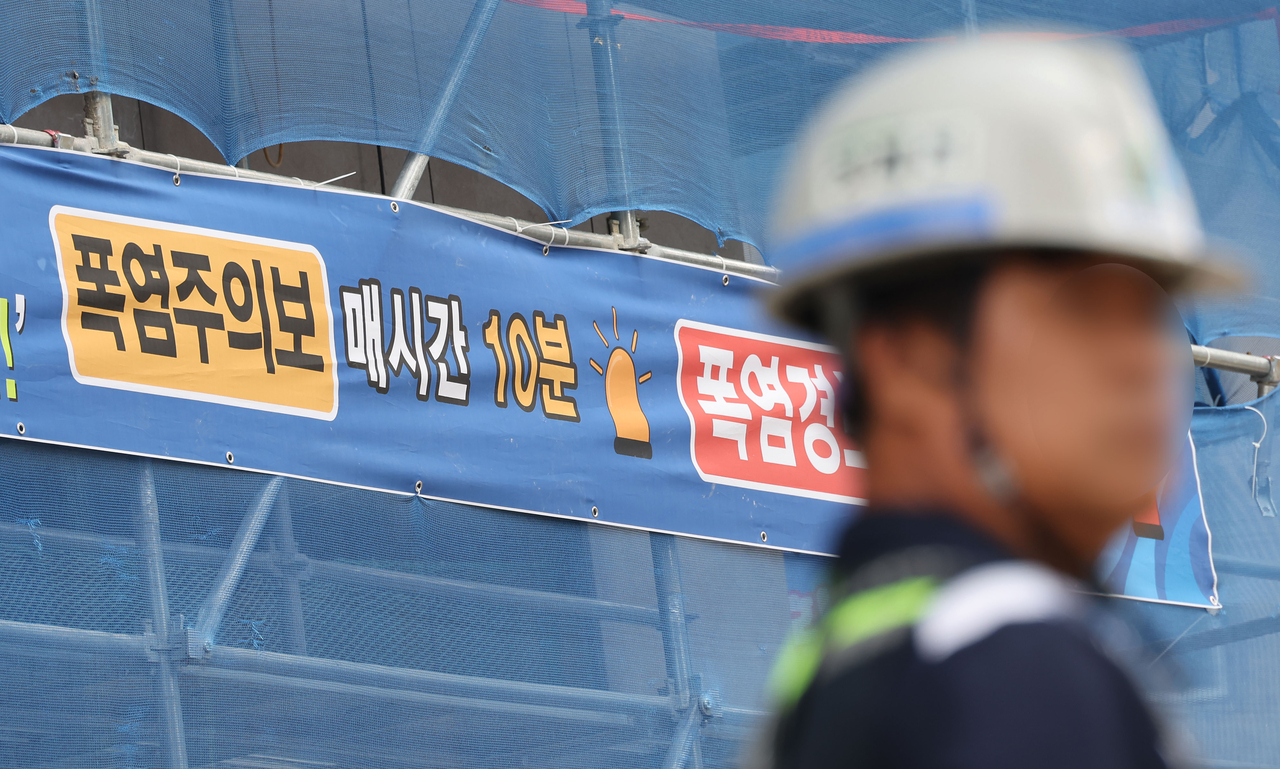
 [Herald Economy = Reporter Kim Yong-hoon] As heat waves become the new normal, a government survey found that essential workers who must keep working during disasters are operating in dangerously inadequate conditions. Field workers—particularly elderly caregivers and road maintenance crews—frequently lack adequate rest facilities and protective equipment and are routinely exposed to extreme heat.
On May 27, South Korea’s Ministry of Employment and Labor convened the Committee on Designation of Essential Tasks and Support for Workers to share findings from its survey of essential workers during heat-wave disasters. The committee was established to identify tasks that must continue during disasters and to develop protections for the workers who perform them.
The survey showed that heat-related incidents accounted for 58% of natural-disaster deaths from 2019 to 2023, underscoring the significant risks posed by extreme heat. It identified six occupations with particularly vulnerable working conditions: tailored elderly care aides, road maintenance workers, water and sewage infrastructure construction crews, railroad transport workers, rail vehicle maintenance technicians, and power-plant operation and maintenance staff.
Elderly care aides spend long hours traveling between clients and are frequently exposed to prolonged periods of extreme heat, yet they lack sufficient rest areas, cooling options, and protective gear. Road repair and infrastructure construction crews also spend most of their shifts working outdoors in high temperatures, increasing their risk of heat-related illness.
The committee warned that outdoor labor and work in confined or cramped spaces greatly increase physical strain during heat waves. It called for on-site, task-specific rest policies, broader distribution of cooling equipment, and stronger safety-management systems tailored to field conditions.
For this year’s focus, the committee selected a crude oil supply crisis as the disaster scenario to study. With rising volatility in global energy supply chains amid tensions in the Middle East, the committee intends to assess whether working conditions for essential workers in the energy and logistics sectors could deteriorate.
The committee plans to concentrate future research and discussions on defining the scope of essential work and on protection measures for workers in the event of a crude oil supply disruption.
Labor Minister Kim Young-hoon said, “All relevant ministries, local governments, and employers must take active steps to implement concrete protections so that essential workers who keep society running can remain healthy and safe while working through disasters.”











Most Commented