
Translation result.
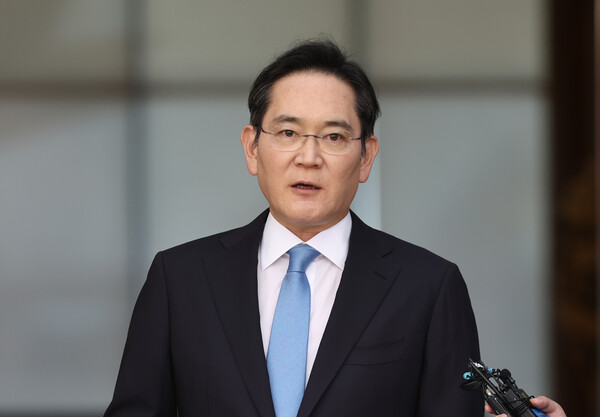
[The Public — Reporter Oh Doo-hwan] As Samsung Electronics faces the largest strike in its history, the company’s labor and management are returning to the negotiating table. Chairman Lee Jae-yong cut short an overseas trip to return to Seoul and publicly bowed — his first apology to the nation since becoming chairman.
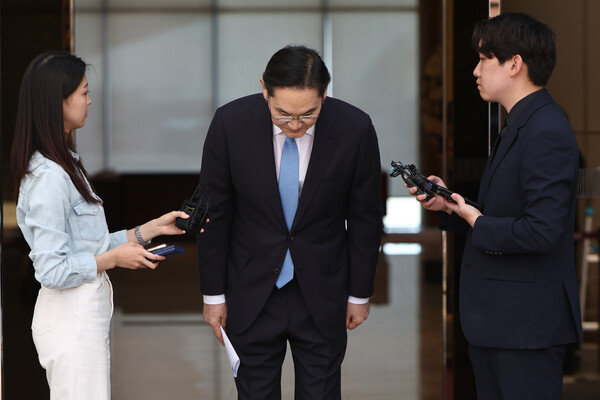
On the afternoon of the 16th, Lee arrived at the Seoul Gimpo Business Aviation Center in Gangseo District and read a prepared statement. \”To union members and the Samsung family, we are one body, one family,\” he said. \”Now is the time to pool our wisdom and move in the same direction.\”
He also appealed directly to union members: \”I will take the brunt of the storm and accept all blame,\” he said. \”Let us do our best so we can once again be proud to be Samsung people.\”
Lee apologized to customers and the public as well. \”I sincerely apologize to customers around the world for the anxiety and concern caused by our company’s internal issues,\” he said. \”To the public who have supported, loved and at times pushed us, I offer my deepest apologies.\” He bowed three times during his remarks.
This was his third public apology — after the 2015 MERS outbreak and the 2020 apology over succession and labor-union issues — and his first since assuming the chairmanship in October 2022. Observers inside and outside Samsung said the apology went beyond a simple expression of regret and appeared to be a last-ditch effort to avert a company-wide strike.
Labor and management plan to hold a second post-mediation session at 10 a.m. on the 18th at the Central Labor Relations Commission in Sejong, three days before the planned strike on the 21st. Commission chair Park Soo-geun is expected to attend in person.
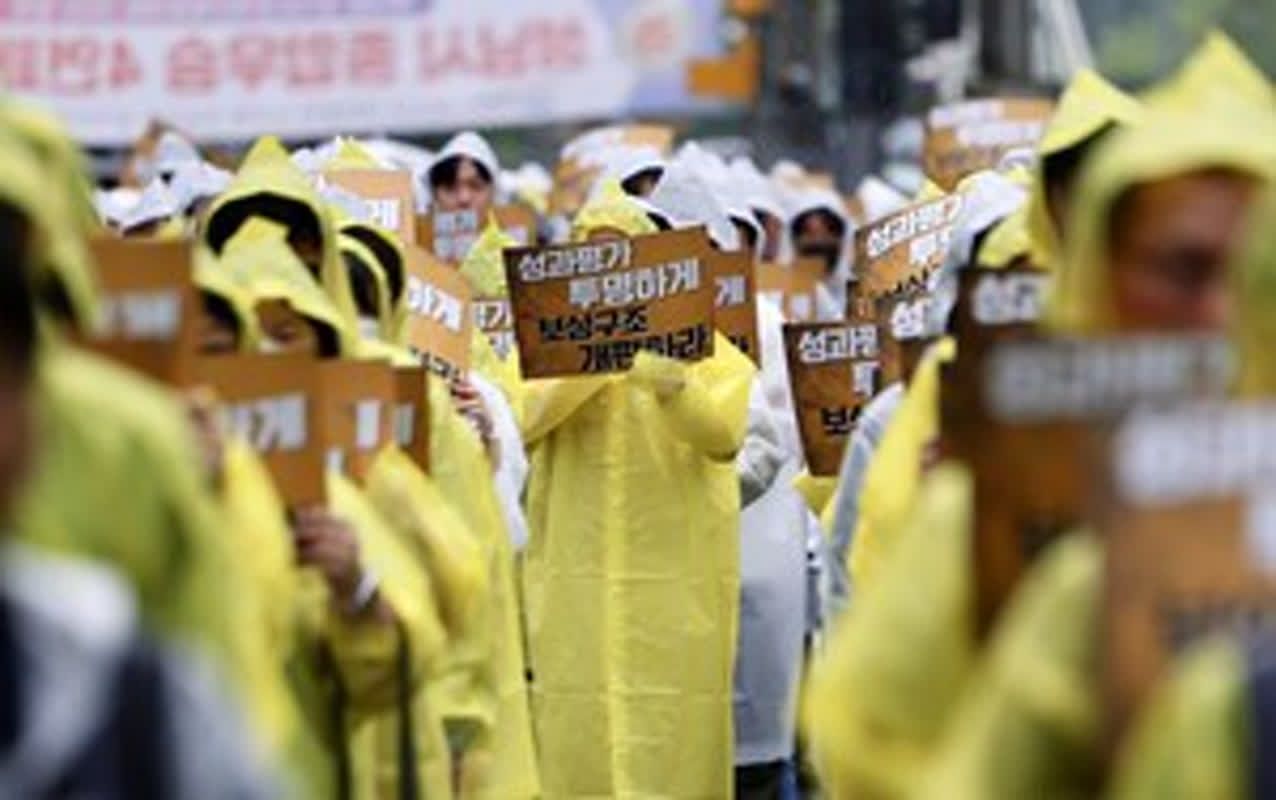
Earlier, from the 11th into the early hours of the 13th, the two sides held marathon talks under the commission’s mediation but failed to reach an agreement. The dispute centers on the performance-bonus system. The union is demanding transparency in payment criteria, removal of caps and formalization of the system. Management has taken a cautious stance, citing the company’s business conditions and the practical constraints of operating such a program.
On the 14th, the Central Labor Relations Commission asked both sides to resume talks. After an earlier breakdown, both parties agreed to reconvene, securing another round of adjustments five days later. This meeting is likely to be the last opportunity for dialogue before the strike.
The government has also stepped in. On the 15th, Labor Minister Kim Young-hoon met with Choi Seung-ho, chair of the Samsung Group cross-company union branch that holds majority representation at Samsung Electronics. On the 16th, the minister met with Samsung Electronics executives and urged management to engage actively in dialogue.
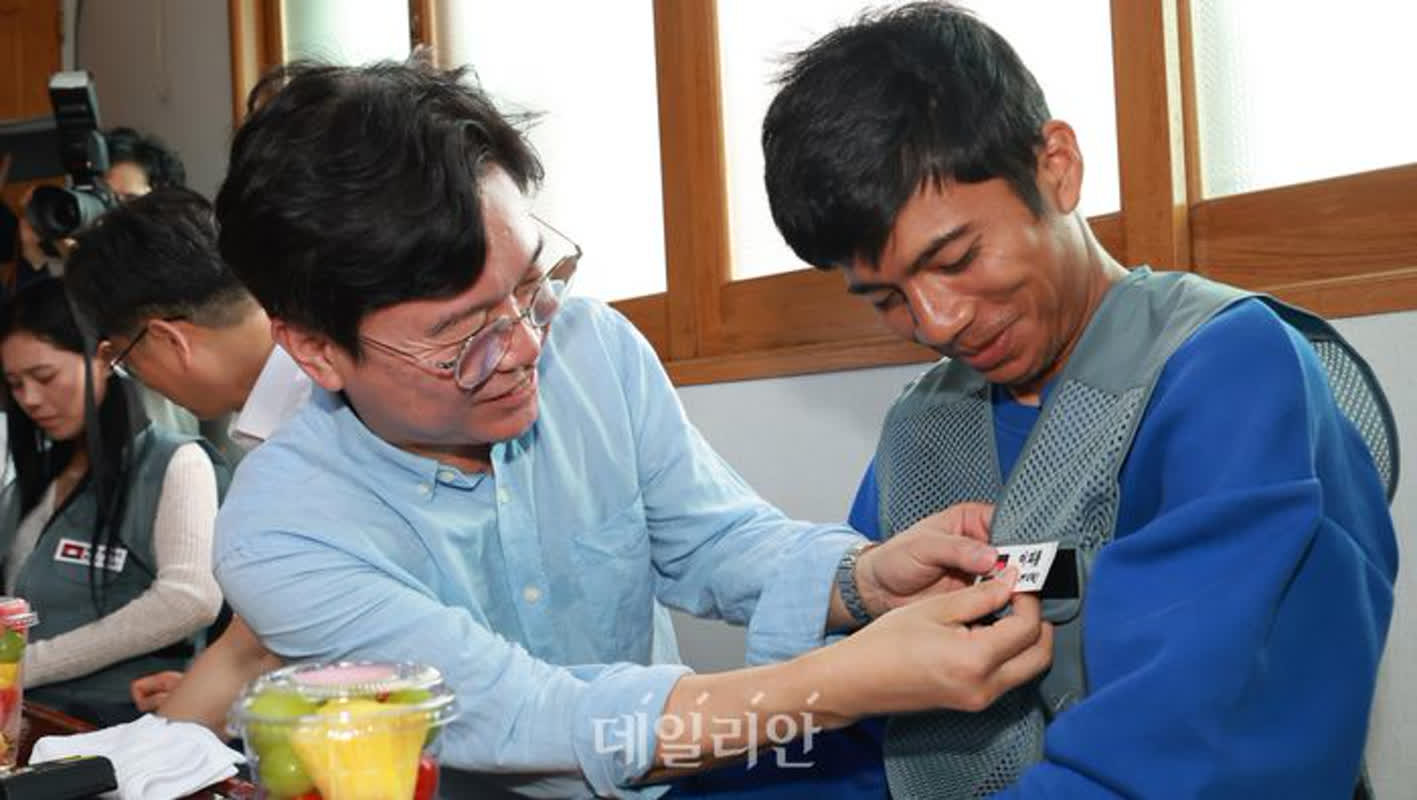
The two sides also held a pre-meeting that afternoon at the union office on Samsung’s Pyeongtaek campus in Gyeonggi Province. Union chair Choi Seung-ho attended for the union, and Vice President Yeo Myung-gu, head of the DS People team, attended for management as the new chief negotiator.
Vice President Kim Hyung-ro, who had served as management’s lead negotiator, was replaced at the union’s request. With the union’s consent, he will be present at the next post-mediation meeting without speaking so he can explain the negotiation process.
Sources said both sides agreed during the pre-meeting to pursue sincere, good-faith negotiations. Choi said Yeo apologized for the breakdown in trust between labor and management and pledged to engage earnestly in the talks.
The Samsung Electronics Union Joint Struggle Headquarters has announced an 18-day strike from the 21st through the 7th of next month. More than 46,000 members have indicated they plan to participate, and the union says turnout could reach up to 50,000.
Experts warn that a strike could disrupt semiconductor production and service for global customers. With the semiconductor market recovering and competition over AI chips intensifying, a prolonged labor conflict could damage Samsung’s competitiveness.
Ultimately, the negotiations on the 18th will be decisive. The chairman’s public apology, government mediation and the replacement of the lead negotiator have reopened a path to negotiation. But with the parties still far apart on the performance-bonus system, a dramatic settlement before the strike remains uncertain.










Most Commented