Translation result.Two female classmates from the 46th civil service exam have been appointed to the Budget Office’s two most powerful posts overseeing a budget exceeding 700 trillion KRW (approximately USD 525 billion) — a first for the agency.The Office for Planning and Budget appointed classmates from the 46th cohort to serve as Budget General Division chief and Budget Policy Division chief, marking the first time since the government’s founding in 1948 that women hold both roles simultaneously. These positions demand long hours, frequent late nights and tough interagency negotiations, so they have long been seen as a male-dominated domain. Observers say this dual appointment signals that women who entered the civil service during the early-2000s surge are moving beyond mere numerical growth to become central players within the traditionally conservative Budget Office.Following the ministry’s March reorganization, Park Jeong-min — previously Budget Policy Division chief — was promoted to Budget General Division chief, and Kim Jeong-ae — formerly head of the Industry, SMEs and Venture Budget Division — became Budget Policy Division chief. The office framed the shakeup around advancing young talent, merit-based selections over background, expanding female leadership and promoting interdepartmental exchange, shifting the leadership cohort from mainly the 45th to the 46th class.Notably, the office placed women side-by-side at the heart of budget operations. Although Jang Yoon-jung (43rd class) became the first female Budget General Division chief in 2023, this is the first time both the general and policy division chiefs are women.Within economic ministries, the Budget Office is known for a strict hierarchical culture. Externally, it trims ministries’ budget proposals; internally, it coordinates the nation’s multi-hundred-trillion KRW budget with near-zero margin for error. When the budget review season begins in early June, the office must review large-scale projects under intense pressure. Long hours, high workloads and an entrenched apprenticeship-style culture have historically kept the top budget roles largely male.Park Jeong-min, the second woman to be named Budget General Division chief, is regarded internally as a “well-prepared” leader. She has rotated through core budget posts: administrative budget division chief (2022), Agriculture, Fisheries and Maritime Budget Division chief (2023), Industry, SMEs and Venture Budget Division chief (2024) and Budget Policy Division chief (2025). As Budget Policy Division chief last year, she rapidly advanced the new administration’s first supplementary budget. That package — 31.8 trillion KRW (approximately USD 23.85 billion), which included household relief consumption coupons — passed the National Assembly just 30 days after the government took office. Park won the top prize at the Budget Office’s inaugural special performance awards for her role. Officials praised her design of income-targeted support, incentives for depopulation-prone regions and use of consumption coupons instead of direct cash, measures credited with stimulating private spending and aiding economic recovery. The economy’s first post-inauguration scoreboard — third-quarter growth — exceeded forecasts at 1.3%.Park is now leading the preparation of the 2027 budget, which is expected to usher the office into an unprecedented 800 trillion KRW (approximately USD 600 billion) era. “Even within a conservative culture, she engages openly with senior and junior colleagues and makes her positions clear,” an official said. “Her ability to see the big picture and drive it forward has earned deep trust among junior staff.”Kim Jeong-ae, the new Budget Policy Division chief, is known inside and outside the office for meticulous work and strong report-writing. She topped the general administrative track in the 46th civil service exam, and notably chose to join the Budget Office despite its reputation among women trainees as a grueling, late-night workplace. Of the 11 trainees at that time, nine were male finance-track officers; only Kim and Park were women. Before joining government, Kim taught an intensive monthlong public administration course in Seoul’s exam-prep district and later operated a YouTube channel called “Online Spokesperson” while at the finance ministry.Kim’s career has included leadership of the Information and Communication Budget Division (2022), Agriculture, Fisheries and Maritime Budget Division, Education Budget Division, Employment Budget Division and Industry, SMEs and Venture Budget Division. Since March she has overseen budget policy matters including supplementary budgets and spending-structure reforms. Most recently, she led the drafting of emergency support spending in response to the Middle East war’s effect on oil prices — a supplementary budget the government finalized 19 days after announcing the plan and that the National Assembly approved 10 days after submission. By comparison, over the past 20 years the average time to draft a supplementary budget was 39 days and the average time from submission to passage was 31 days, making this process unusually fast.“Kim has a down-to-earth manner and steers conversations so people feel comfortable speaking up,” an official said. “She also brings the kind of meticulous care often associated with female leaders, looking after team members.”Inside the Budget Office, many see the personnel moves as a generational shift. The early-2000s surge of female entrants into the civil service steadily increased women’s share in public administration. After the March appointments, the proportion of women at director-general and bureau chief levels in the office rose from 21% to 33%. The fact that women now occupy both top Budget Office slots — positions that traditionally lead to posts such as Budget General Bureau chief and Budget Office head — carries particular significance. Observers say the cohort that began entering in the early 2000s has moved from being larger in number to becoming the organization’s mainstream.Through the 1990s, the share of female administrative-track passers of the civil service exam remained in the single digits or around 10%. In 2000 it topped 20% for the first time at 22.5%, rose to 48.2% by 2015, and has remained in the low-40% range since. A senior government official acknowledged that, despite greater female participation, talk of a “glass ceiling” persists for senior posts. “At least inside the Budget Office, the atmosphere has changed,” the official said. “This is the first time classmates have simultaneously taken two core budget roles, and that change speaks for itself.”


 Melania Trump Breaks Silence on Epstein Allegations and Maxwell Emails
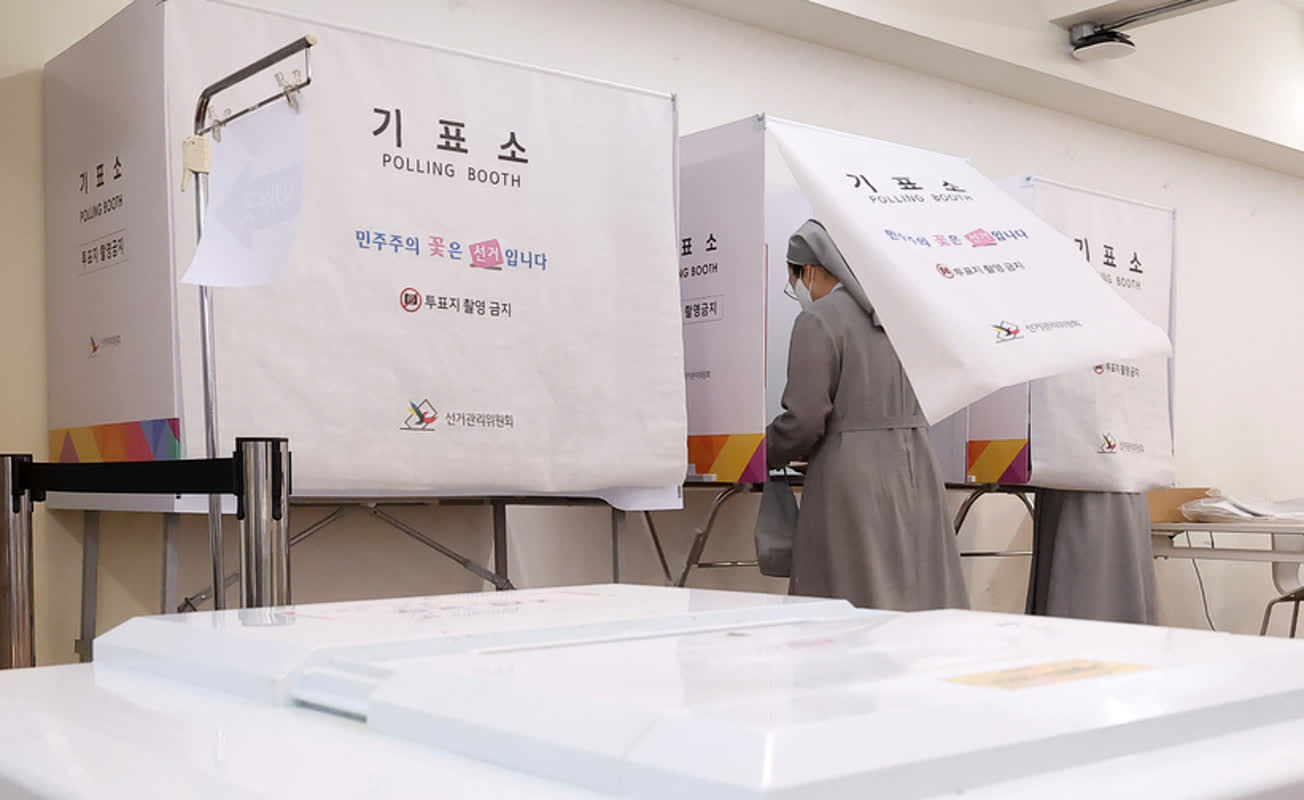 South Korea's Political Crisis: Will the Ruling Party Win the 2026 Elections?
 EU’s New Era of Expulsions: Inside the Toughest Immigration Law Yet
 Trump Slashes AI Review Window to 30 Days Amid National Security Debate
 Ukraine’s EU Bid Surges as Hungary Drops Opposition Amid Russian Attacks
 Trump Backs Colombia's 'El Tigre' — What It Means for U.S. Relations








Most Commented