
Translation result
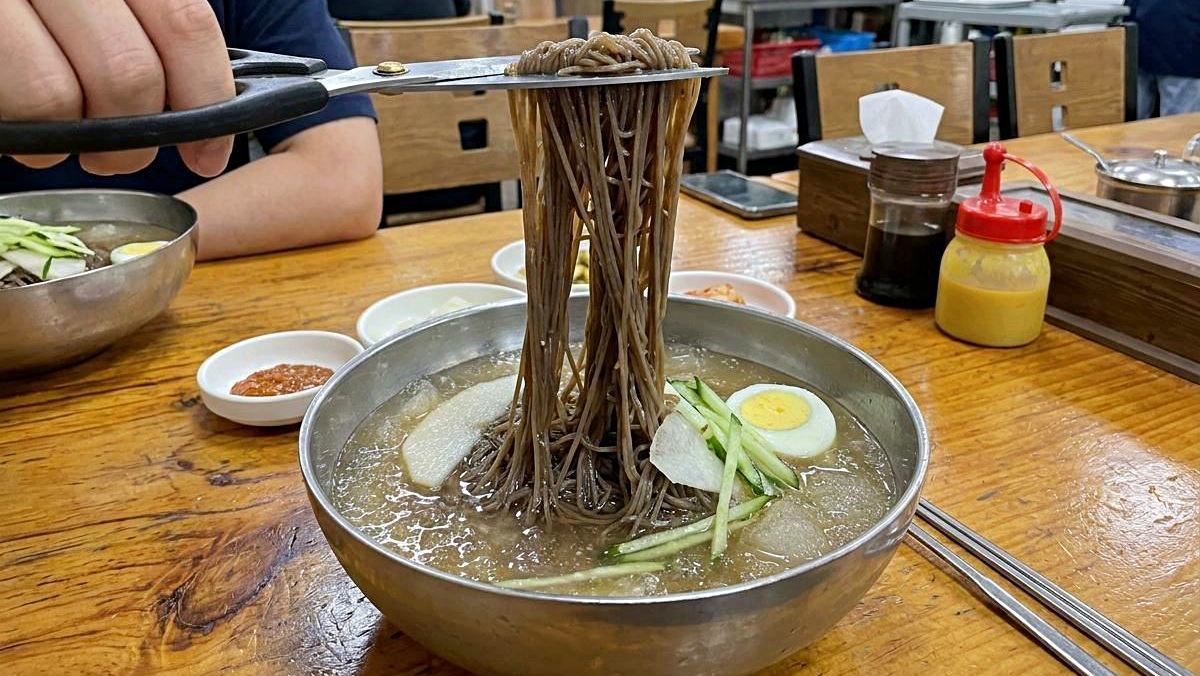
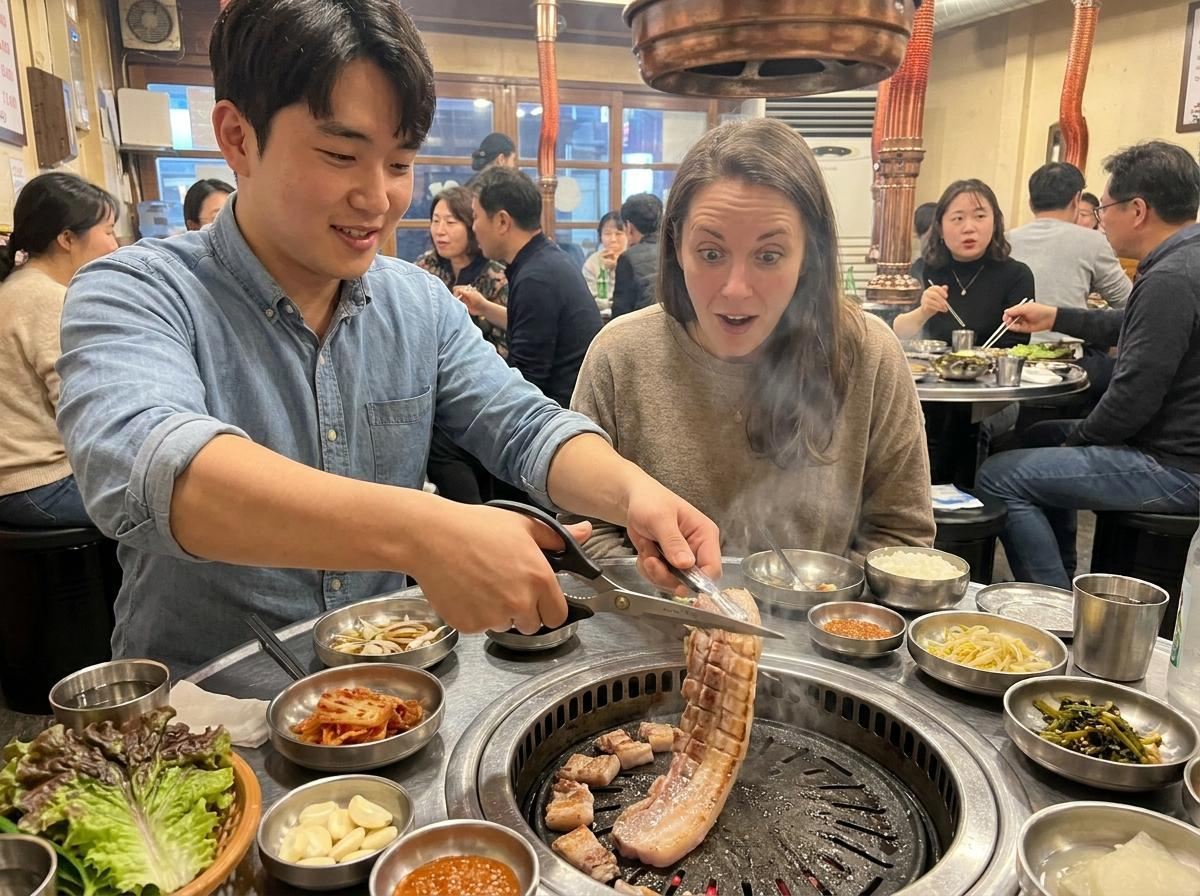
You lay the meat on the sizzling grill and, once it’s cooked, reach for a pair of scissors and snip it into bite-size pieces. For Koreans, this is totally normal. For many foreigners, it can be oddly surprising—or even a little startling. One of the first things newcomers spot at Korean barbecue spots is the kitchen shears right on the table. Around the world, scissors usually stay out of sight or are used only during prep. So how did they become table stars in Korea? Look at dining habits and attitudes toward scissors around the globe, and the answer starts to appear.
Scissors on the table: to Westerners, they’re just a ‘tool’
In the West—especially across Europe and the U.S.—scissors are mainly seen as tools or office supplies. Sure, kitchens sometimes have shears, but they’re used for opening packages or trimming poultry during prep. Cutting finished food at the table with scissors clashes with Western dining etiquette.
When you’re taught to use a knife for steak, watching someone clip food with scissors can feel like someone brought an office supply to the dinner table. In formal Western dining, knives and forks aren’t just utensils; they represent manners and ritual. Adding scissors to the mix feels culturally off.
Some restaurants have experimented with scissors instead of pizza cutters, but it’s still niche. Many Western diners view table-side scissors as either unhygienic or impolite.
In Japan, the land of knives, scissors are…
Although Japan’s food culture can look similar to Korea’s, Japan remains conservative about scissors. The Japanese take great pride in a blade’s precision. Ingredients typically arrive at the table already cut to bite-sized pieces, or prepared so you can easily tear them with chopsticks. Sushi chefs spend decades honing their knife skills because, in Japan, the angle and thickness of a cut can change the taste of a piece.
Scissors in Japan are mostly for cutting nori or opening packages. Outside of Korean barbecue restaurants, you rarely see table-side scissors used to cut meat. The K-BBQ trend has introduced Korean-style grills and kitchen shears to some Japanese eateries, but the sight is still unfamiliar to many diners.
China goes a different route. Chinese cooks rely on the thick, rectangular cleaver—the Chinese cleaver—to handle almost everything. They even chop bone-in meat with it, so there’s little need for scissors at the table. Because stir-frying at high heat requires thorough prep in the kitchen, dishes arrive ready to eat. In Chinese cuisine, the cleaver is both a tool and a symbol, effectively taking the place scissors might occupy elsewhere.
Not even in Southeast Asia—cutting noodles with scissors is uniquely Korean
Southeast Asia also favors knives, spoons, or hands over scissors. In Thailand, Vietnam, Indonesia and Malaysia, food usually arrives bite-sized, or people eat with their hands or a spoon. Even in noodle-heavy cultures like Vietnam’s pho scene, diners lift noodles with chopsticks and slurp them—scissors aren’t part of the routine.
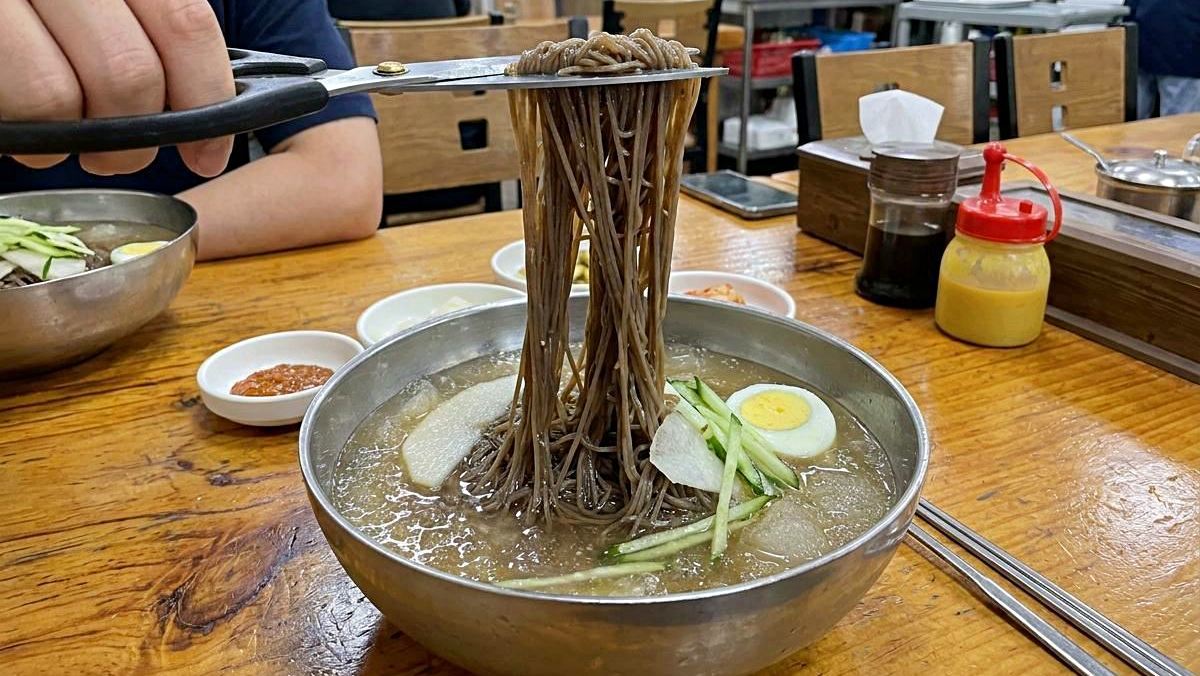
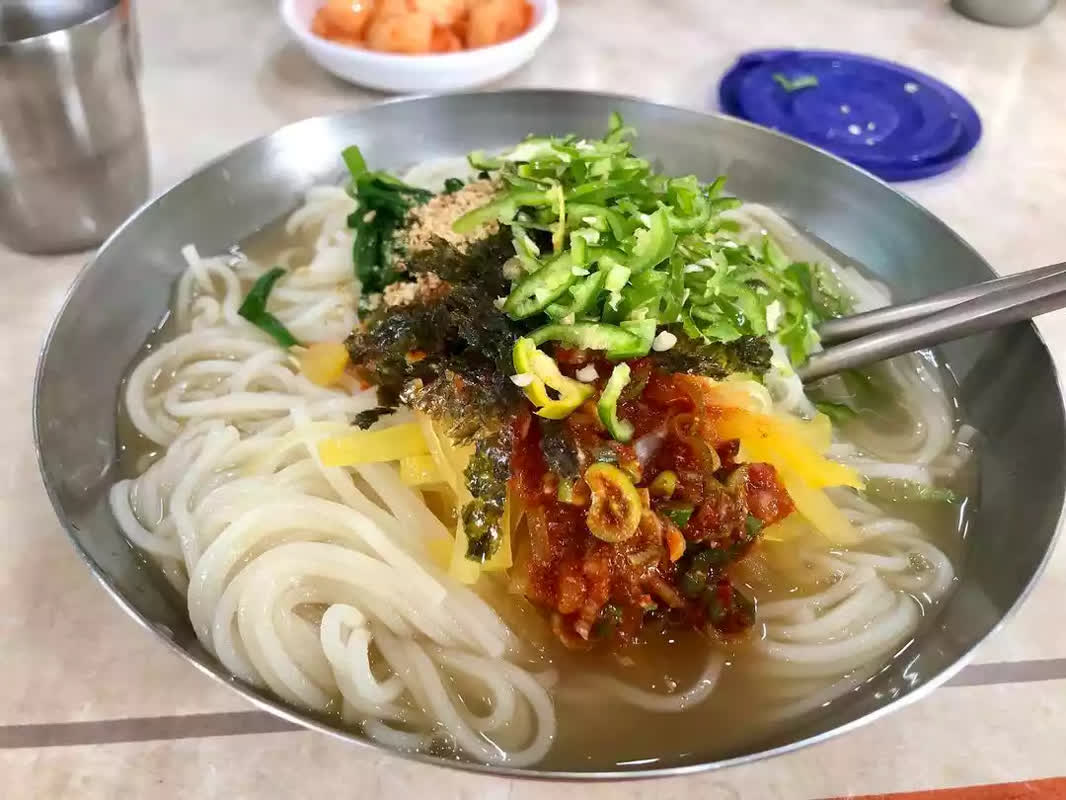
Using scissors to cut noodles is practically a Korean specialty. In Korea, a server might snip a bowl of naengmyeon two or three times for you, and it’s common to trim long strands mid-meal in dishes like janchi-guksu or kalguksu. These moments are distinctly Korean.
‘Ppalli-ppalli’ and direct-fire grilling gave us K-scissors
Why did scissors become the multipurpose tool on Korean tables? The clearest answer links Korea’s “ppalli-ppalli” (hurry-hurry) culture with its love of direct-fire grilling.
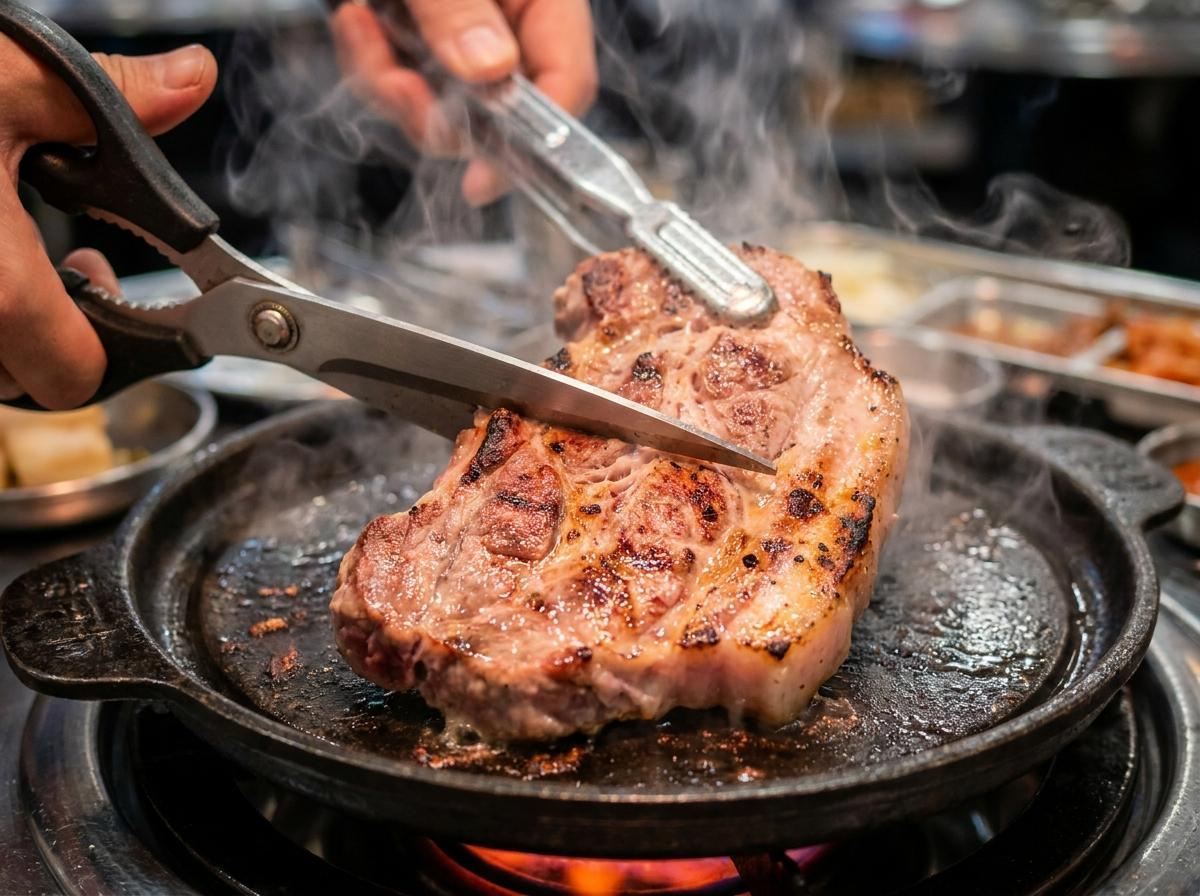
No tool is faster or safer for cutting meat on a blazing hot grill. Knives can’t rest on a hot plate, and chopsticks can’t rip through thick cuts. Scissors solve both problems: hold the meat with one hand and snip it into bite-sized pieces in seconds. In a culture that prizes efficiency, scissors naturally became essential.
As direct-fire dishes like samgyeopsal, moksal and galbi dominated Korean dining, scissors moved from a helper gadget to a core table tool. They’re used for more than meat—trimming naengmyeon, slicing kimchi, cutting pajeon, snipping perilla leaves, even tearing open instant ramen packets. Korean kitchen shears are built tough: thick blades, big handles and durable design—made to handle everything on the table.
Hygiene concerns: is it really a problem?
Foreign visitors often worry about hygiene—using the same scissors across different foods. In Korea, restaurants provide shears that staff clean and sanitize in the kitchen and reserve for food use only. While they might look like office or industrial scissors, their purpose is clear, and that separation reduces hygiene concerns. Still, food can get stuck between blades, so proper cleaning is important.
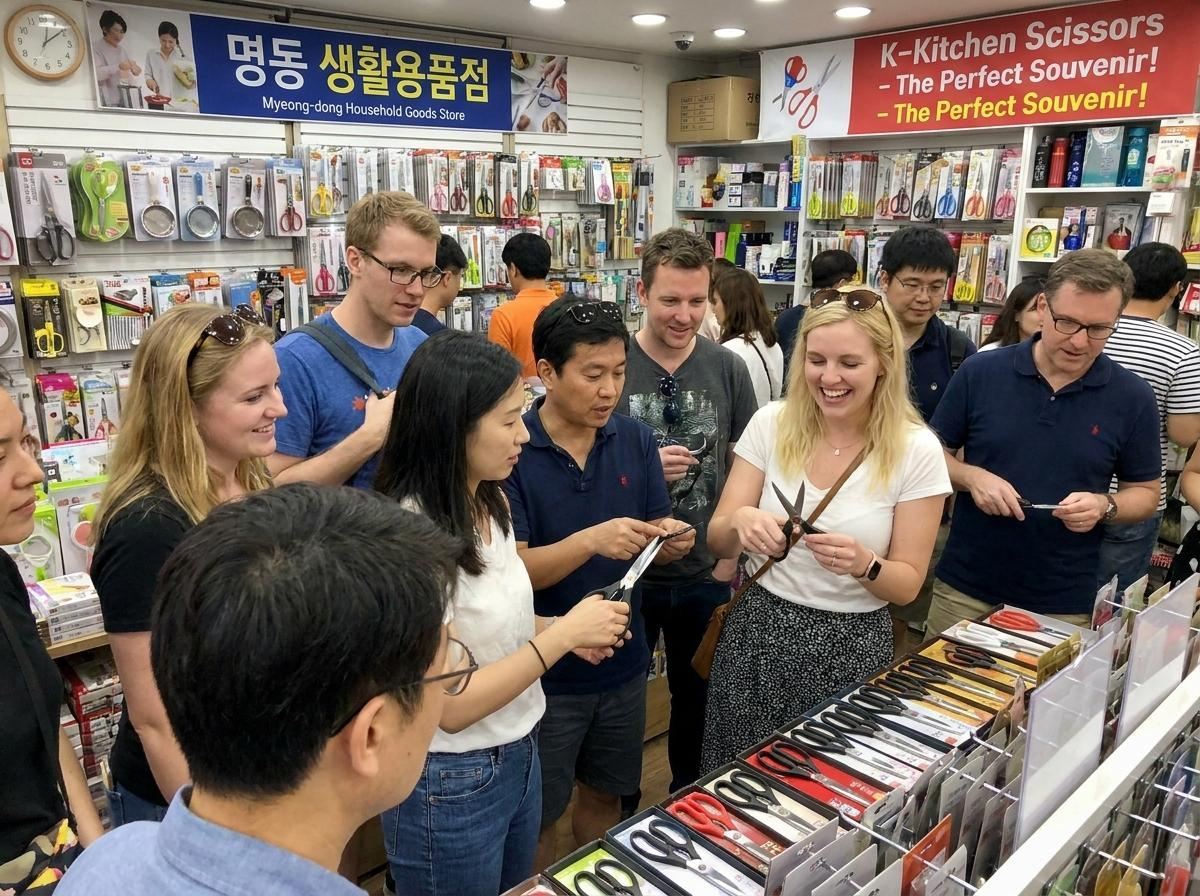
Foreigners fell for K-scissors—and now buy them as souvenirs
What’s interesting is how many visitors who first find table-side scissors odd change their tune after trying them. Tourists increasingly buy Korean kitchen shears as souvenirs after eating at K-BBQ spots. Shops at Incheon International Airport and stores in Seoul’s Myeong-dong and Itaewon often list them among popular purchases.
Korea’s kitchen-shear culture has become a unique slice of food content abroad. Videos of foreigners reacting to meat being snipped with scissors at Korean restaurants pull big views on YouTube and TikTok, offering a glimpse of how outsiders discover the trend.
Korea’s practical approach to the table does clash with Western etiquette that values formality. But that clash is part of cultural diversity, and K-scissors have emerged as one of the clearest symbols of Korean dining. Grilling the meat, snipping it with scissors, and wrapping it in a leaf is more than a meal—it’s a ritual for many Koreans.










Most Commented