
Translation result.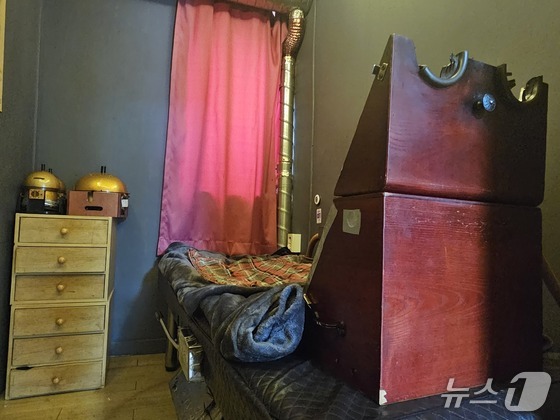
We used to see mostly patients who were already sick, but lately many people come after seeing it on YouTube and Instagram. It must be a trend.
Reporting by News1 on the 19th found that recovery-focused services—mugwort moxibustion, saunas and enzyme steaming—are gaining traction among young adults. Analysts say people in their 20s and 30s, squeezed by rising prices and a sluggish economy, are turning to healing experiences to relieve stress and emotional strain.
Facilities once associated with middle-aged and older clients—moxibustion rooms, jjimjilbangs (Korean bathhouses) and saunas—have become buzzy among younger crowds, buoyed by social media and YouTube content.
Choi, a woman in her 20s, said she has poor circulation in her hands and feet, but after moxibustion her body felt warmer and her menstrual cramps eased. “It seems to be trending on YouTube lately,” she said.
A woman in her 30s who tried enzyme steaming said it kept appearing in her Instagram algorithm, so she gave it a try. “I sweat a lot and felt refreshed,” she said with a laugh. “I feel healthier.”
After idol group members and influencers posted content about trying moxibustion and enzyme steaming last year, the trend appears to have spread across social platforms.
On Instagram, posts tagged ‘#쑥뜸’ and ‘#효소찜질’ have each surpassed 5,000. An account dedicated to sauna reviews has emerged, and users have built a nationwide sauna map and online communities to share sauna-related products and tips.
Search interest has risen particularly among people in their 20s and 30s. According to Naver Data Lab, searches in March by that age group increased 3.75 times for ‘쑥뜸,’ 1.31 times for ‘sauna,’ and 3.15 times for ‘효소찜질’ compared with March last year. Among those 50 and older, searches for ‘쑥뜸’ rose only 1.16 times and ‘효소찜질’ doubled, while searches for ‘sauna’ fell to 0.73 times of last year’s figure.
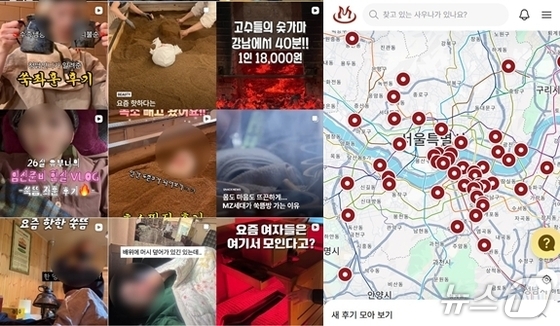
Owner A, who has run moxibustion rooms in Yongsan and Mapo for more than a decade, said younger customers now outnumber seniors. “Customers in their 20s and 30s make up 90%,” A said. “The MZ generation spends more on their bodies than older people do.”
Yoon, who runs an enzyme steaming room in Gwanak District, said celebrity exposure has driven curiosity: demand among young people has risen two to threefold over the past month or two. He added that many clients come with circulation problems from cold drinks such as iced Americanos and ice cream.
Experts trace the craze to a desire to escape psychological anxiety and to relieve accumulated fatigue.
Lee Eun-hee, a professor of consumer studies at Inha University, said young people are seeking many ways to protect their health as they cope with both physical fatigue and mental anxiety.
Choi Cheol, a professor of consumer economics at Sookmyung Women’s University, noted that with inflation and a weak economy, everyday life is full of stress. “People are tired and worn down, and they’re more interested in finding spaces where they can openly talk about that fatigue and find some relief or comfort,” he said.
The trend also ties to younger generations’ emphasis on experiential spending. Professor Lee said people in their 20s and 30s value diverse experiences and actively use related products and services. Whereas older generations might have skipped enzyme treatments or moxibustion because they felt healthy, younger consumers tend to try anything that seems beneficial.
Professor Choi added that young people are showing renewed interest in analog, traditional practices. “Because they prioritize experiences, they want to try these things firsthand,” he said.











Most Commented