
Translation result
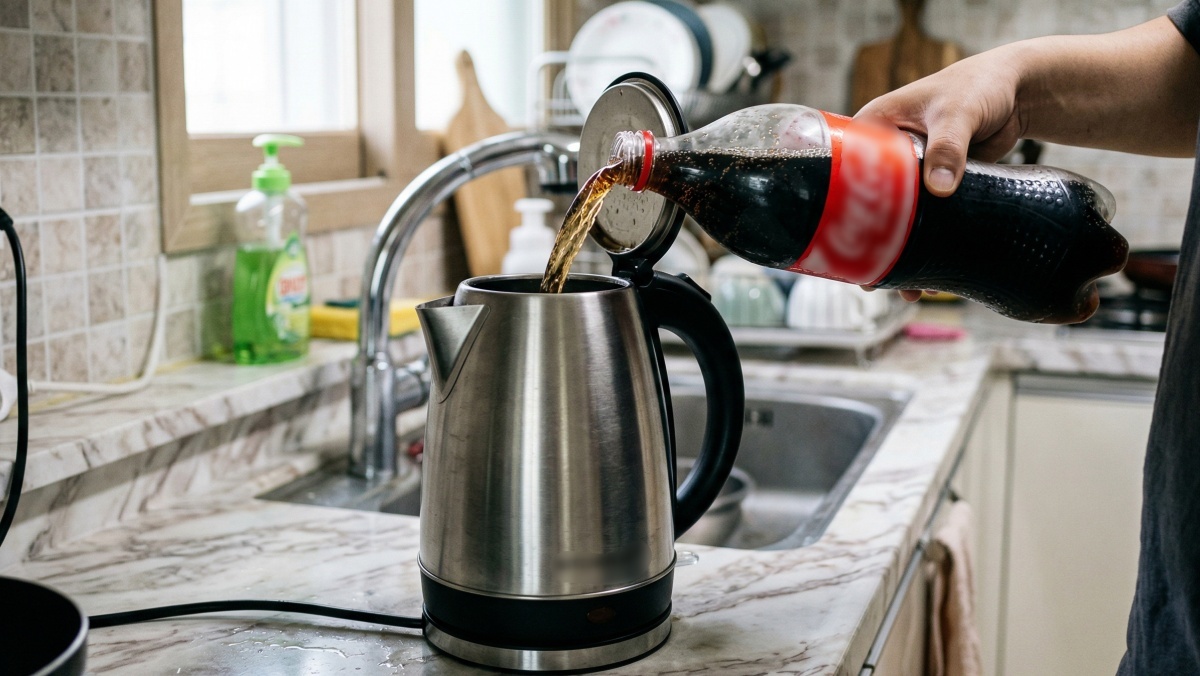
Look inside an electric kettle that’s been sitting in the kitchen for a while and you’ll often find limescale coating the bottom and sides. People use kettles every day but frequently neglect them because they’re not sure how to clean them. An unexpected, low-cost remedy has drawn attention: a bottle of flat cola can help lift stubborn buildup from inside a kettle.
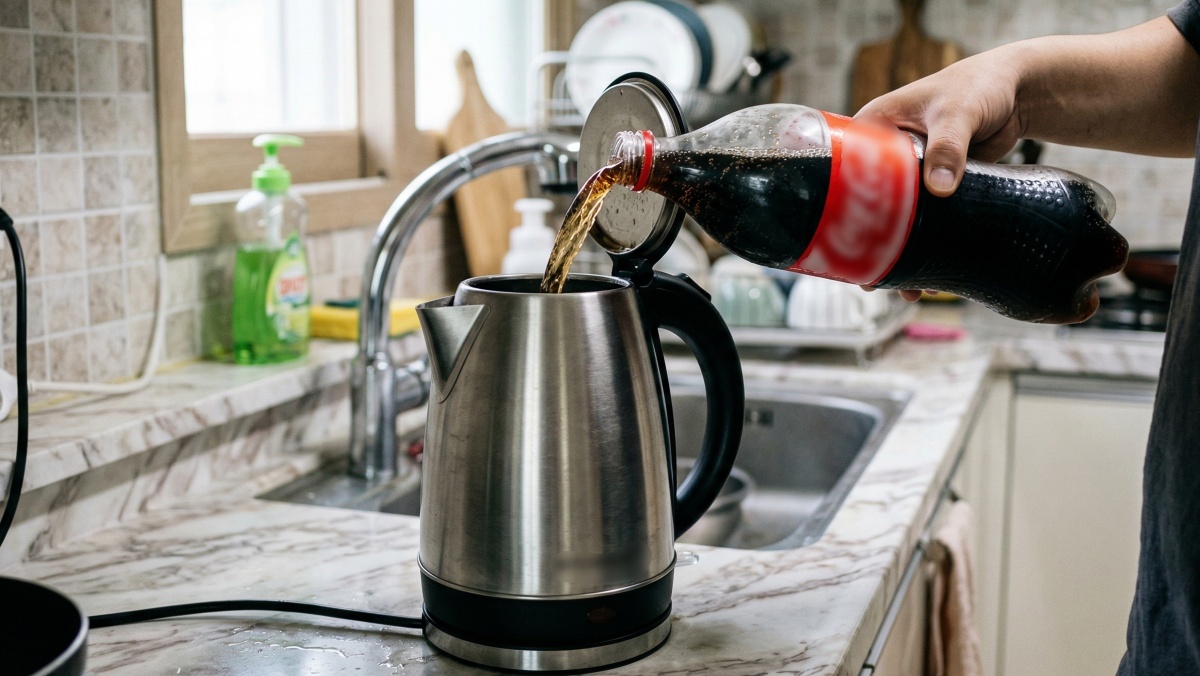
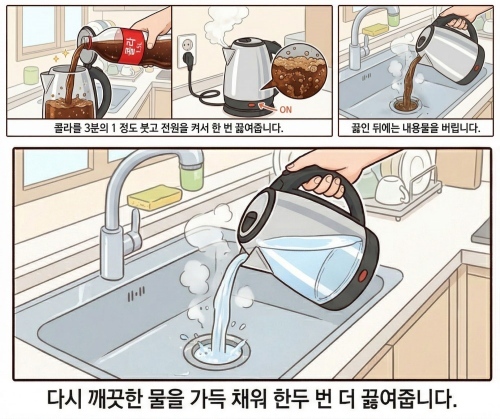
The method is straightforward. Pour cola to fill roughly one-third of the kettle, switch it on, and let the cola come to a boil once. Dump out the liquid, then fill the kettle with fresh water and boil it one or two more times to rinse. That sequence should remove residual stickiness and loosened deposits. Repeat the process if necessary.
The reason it works is chemical: cola contains acids such as phosphoric acid that can dissolve limescale and light rust. Limescale is primarily hardened calcium carbonate left behind by the minerals in tap water, and acids break down those mineral deposits.
Because cola contains sugar, it’s important to rinse the kettle thoroughly with clean water several times after treatment to prevent any sticky residue. Don’t overfill the kettle, either—boiling a large amount of cola can cause it to bubble over. And if limescale has built up for a long time, one treatment may not remove it completely.
If you don’t have cola on hand, vinegar is a reliable alternative. Pour roughly two-thirds of a paper cup of vinegar into the kettle, add water, bring it to a boil, then rinse well. Vinegar’s acidity also helps dissolve mineral buildup and is generally considered a safe, effective option.
Routine care matters, too. Regularly cleaning your kettle prevents limescale from accumulating, and avoiding the habit of leaving boiled water sitting in the kettle will help maintain better hygiene.
Cola isn’t just a beverage; people use it for household cleaning in several ways. Pouring cola on limescale around a sink or drain, letting it sit, and then wiping can help remove grime. Wiping metal surfaces with a cloth dampened with cola can reduce light rust or stains. These uses are best seen as complementary—cola won’t fully replace stronger commercial cleaners.
Some also use cola in the bathroom: pouring it into the toilet bowl, letting it sit, and then flushing can help reduce certain stains. Dedicated bathroom cleaners are recommended, but cola can be a stopgap when necessary.
A flat bottle of cola you were going to throw out can serve as a handy cleaning tool with a little imagination. If you’ve been putting off cleaning a neglected kettle, try this practical tip—you might find it clears old buildup more easily than you expect.














Most Commented