
Washing Machine Cleaning Guide: Secrets to Removing Stubborn Mineral Stains from Glass Doors
Daniel Kim Views
Translation result
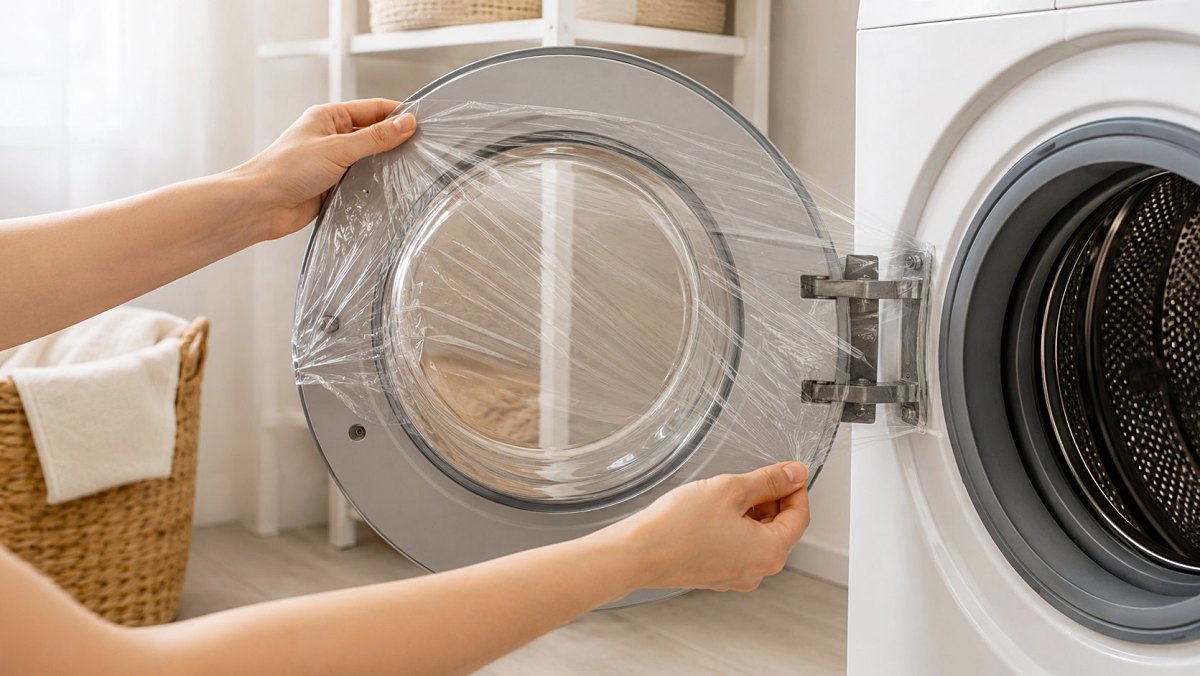
Over time, front-loading washing machines often develop a white, cloudy film on the inside of the door glass. Even if you wipe it immediately after a cycle, the haze frequently reappears once the surface dries. Rather than scrubbing harder, use a cleaner suited to the stain’s chemistry. Treat the glass, the rubber gasket, the drum and the detergent drawer together to reduce odors and stop the grime from returning.
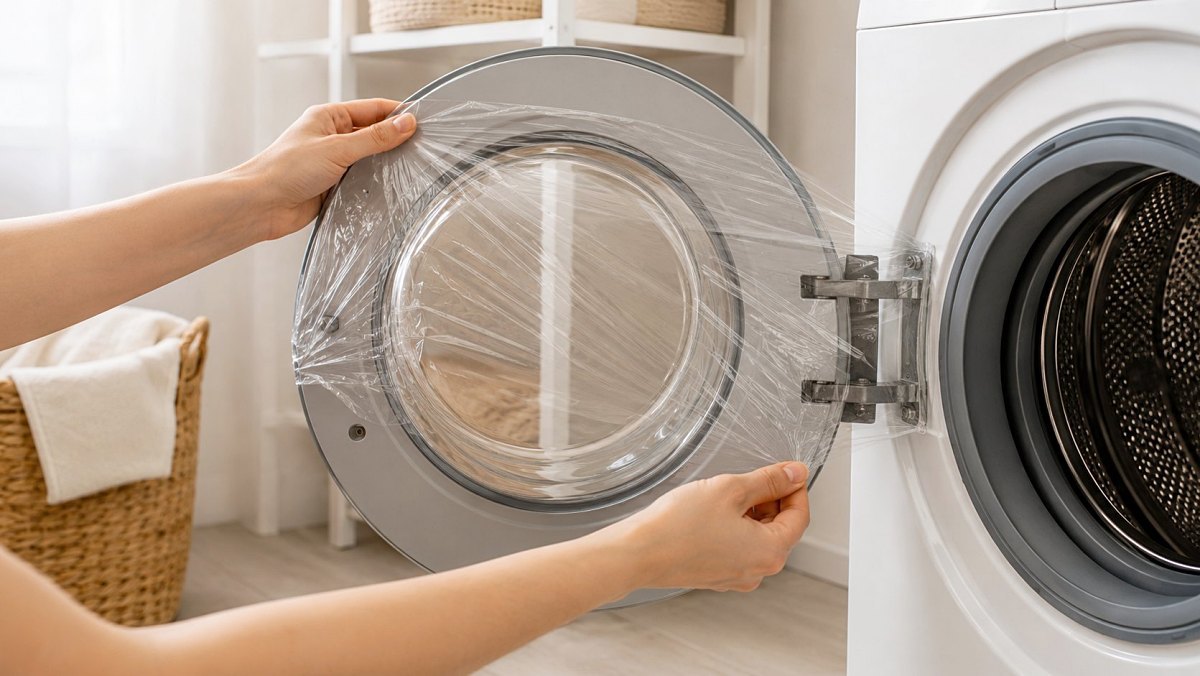
Soil inside a washer rarely comes from one isolated source. Mineral deposits, detergent residue and trapped moisture often interact to create persistent buildup. When you clean the glass, inspect the surrounding gasket; when you run a tub-clean cycle, check the detergent drawer as well. Addressing connected areas cuts down on repetitive cleaning.
Front-load washers use less water and are tightly sealed; if residues don’t flush away properly, they can reduce performance and cause foul odors. That’s why it’s important to match cleaning methods to the type of contamination you find in each area.
Soak glass mineral film with an acidic solution
The white film on a drum washer’s door is usually mineral scale—calcium and magnesium from tap water that hardens through washing and drying. Because these deposits are alkaline, ordinary neutral cleaners or laundry detergent won’t break them down well. Removing mineral marks requires an acidic agent to trigger a neutralization reaction, and enough contact time for the hardened minerals to soften.
At home you can use distilled white vinegar or powdered citric acid. Mix vinegar and water 1:1 in a spray bottle, or dissolve 1 to 2 tablespoons of citric acid powder in a cup of warm water. Keep in mind that a front-load door sits vertically, so sprayed liquid will run down quickly. The solution needs time to penetrate and swell the deposit; if it runs off, its effectiveness drops. On vertical glass, liquids often don’t remain long enough to work.
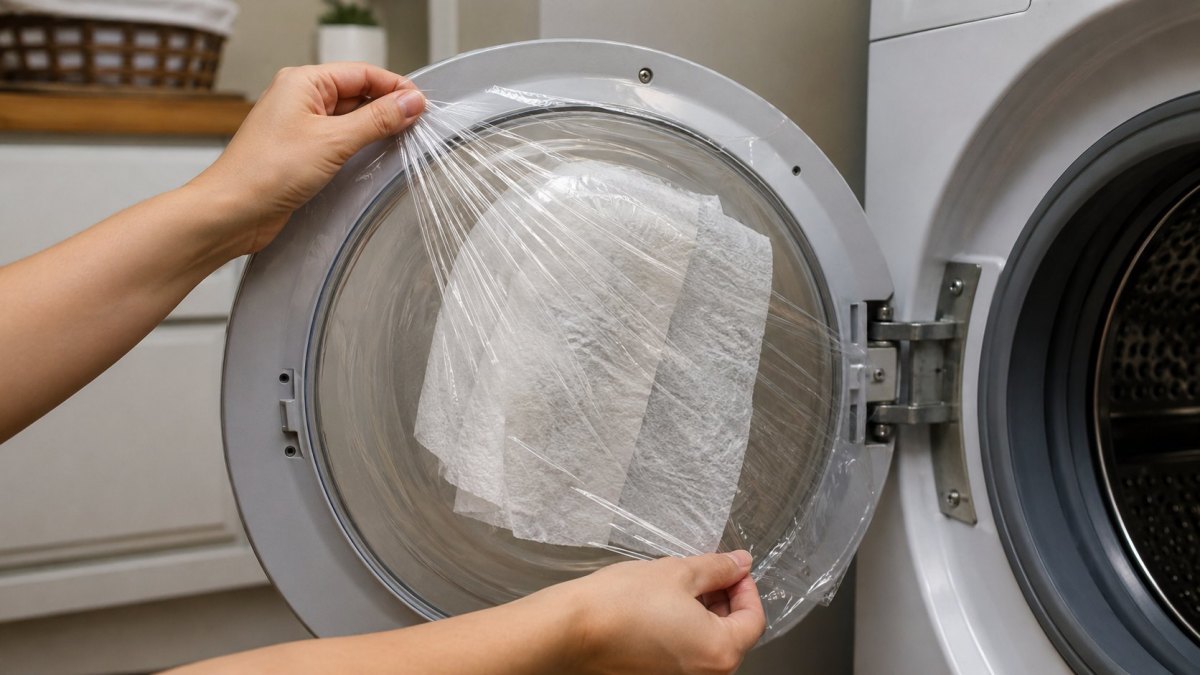
Use kitchen plastic wrap to keep the solution against the glass longer. Spray the acidic solution on the stained area and press a paper towel firmly over it. Spray more solution onto the towel, then cover the area tightly with plastic wrap so air cannot reach it. The wrap reduces evaporation and keeps the acid in contact with the glass; the towel helps hold moisture against the stain.
Leave this in place for 30 to 60 minutes so the mineral deposits react and soften. Then remove the wrap and towel, roll the used plastic into a soft ball, and rub the inside of the glass with it. A soft ball of plastic wrap provides gentle friction to push away loosened deposits without scratching the glass. Avoid abrasive scouring pads—they can create tiny scratches that trap new buildup.
Wipe the glass with a cloth dampened in clean water, then dry with a microfiber towel to reduce haze. Be sure to clean any solution that ran down the door frame. Acid left in hinge screws or in gasket crevices can cause corrosion or damage rubber parts, so finish with a thorough rinse and dry.
Inspect rubber gaskets through the folds
After cleaning the door, inspect the gray rubber gasket that frames the washer opening. Also called a seal or gasket, it cushions vibration during high-speed spins and prevents leaks. Its folded design creates deep grooves where water can pool. When lint, skin flakes and detergent residue mix with that water, the folds become ideal places for black mold to grow. Even after the spin cycle, water can remain in the gasket’s curved lower groove; combined with the washer’s sealed interior humidity, this promotes mold growth.
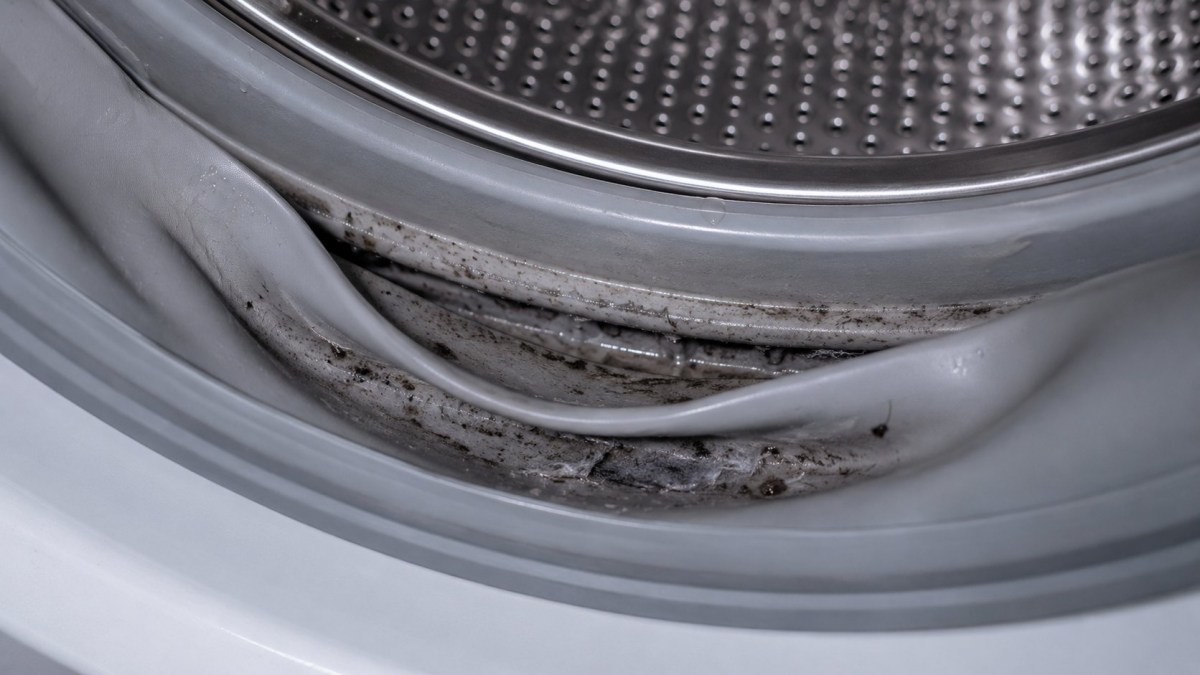
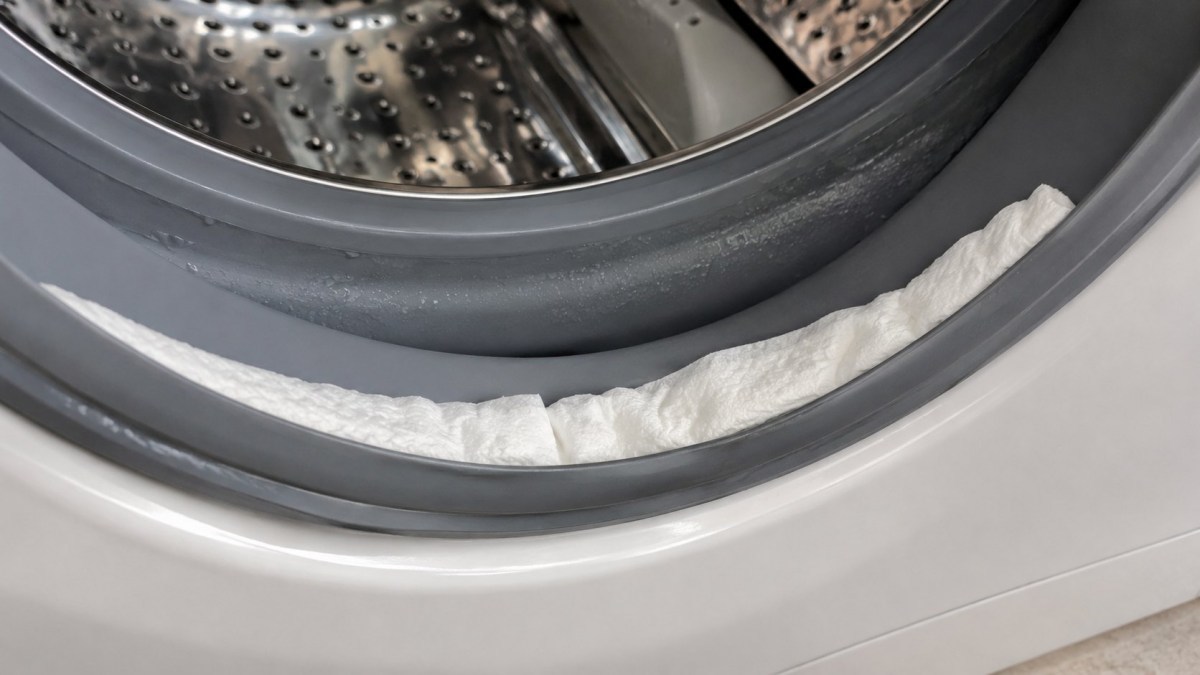
Mold that has worked into the rubber won’t disappear with surface wiping. The gasket’s microscopic pores let mold lodge below the surface. Treat these areas so the cleaner stays wet on the contamination for a sustained period. When using a chlorine bleach solution, fold a paper towel lengthwise, soak it in the diluted bleach, lightly wring it out, and pry the gasket folds open to press the towel inside. Tucking the soaked towel into the groove helps the agent contact inner and side surfaces more evenly than pouring liquid directly in.
Leave the towel in place for about 2 to 3 hours, depending on how heavy the contamination is, then remove it. Rinse thoroughly afterward—chlorine left on rubber too long can harden or deform it. Wipe the grooves and surrounding areas repeatedly with a clean damp cloth, then finish by drying with a dry cloth.
Do not use overly strong solutions or leave them on for half a day or more—extended exposure can reduce the gasket’s elasticity and lead to leaks. Also be cautious about mixing chemicals: if any acidic residue from earlier glass cleaning (vinegar or citric acid) meets chlorine-based bleach, harmful chlorine gas can form. Before starting bleach cleaning, wipe the surrounding area with a damp cloth to remove acidic residues, ventilate the room by opening windows, and dry the area when you finish.
Clean the drum with oxygen bleach and a towel
Cleaning the glass and gasket alone isn’t enough. The outer drum housing and the plastic tub can accumulate detergent film, fabric softener oils and fine dust. Even when the stainless drum looks clean, the surrounding plastic tub may retain sticky residue. Fabric softener ingredients cling to tub walls over time, and trapped clothing soils can congeal into a viscous layer. Set-in grime often won’t come off with an automatic tub-clean cycle alone—you need soaking plus mechanical action.
For drum cleaning, use powdered oxygen bleach (sodium percarbonate) and an old towel. Don’t pour dry granules directly into the drum or the detergent drawer—front-load washers use relatively little water, and undissolved powder can remain as particles. The drum’s design leaves little water at the bottom, so solid granules mixed with cold water may not dissolve completely and can lodge in pump passages or seams. Undissolved granules can cause secondary contamination, so dissolve the powder in warm water first.
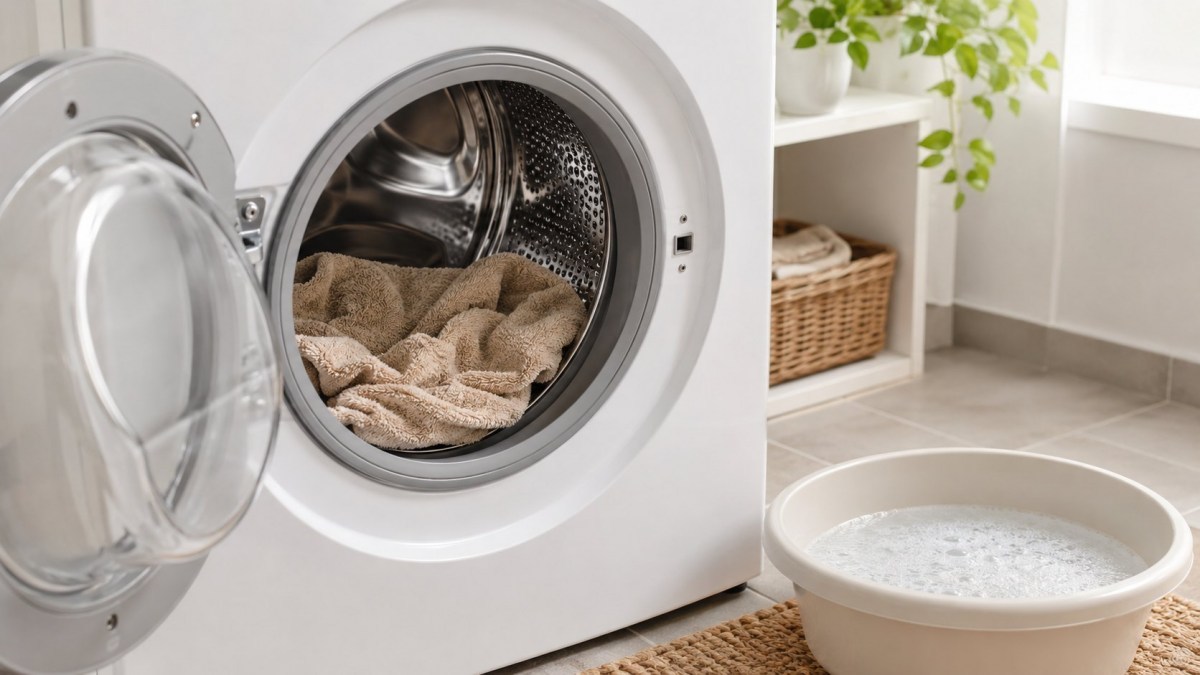
Fill a basin with warm water between 40°C and 50°C and dissolve the oxygen-bleach powder until no granules remain. Soak an old towel in this solution until it’s fully saturated, place the towel in the drum, and close the door. Run a hot-water standard cycle or a tub-clean cycle. As the drum turns, the towel repeatedly rubs the interior surfaces while the solution softens detergent films and residues.
The detergent film that water alone couldn’t remove will lift through friction with the towel fibers. Chunks of loosened residue will cling to the towel and exit with it. The towel’s fibers also trap suspended particles. After the cycle, inspect the towel—you’ll often find visible debris. This method also helps prevent loosened grime from rushing to the drain all at once and clogging the lower drain filter. After the tub-clean cycle, open the door to air-dry the interior and wipe any remaining moisture or residue inside the drum with a dry cloth.
Remove and clean the detergent drawer
The detergent and fabric-softener drawer is an easy place to overlook. Thick concentrated softeners and undissolved detergent residue can form a film on the drawer surfaces. The drawer’s narrow channels and measuring-cup compartments slow water flow, so viscous residues tend to collect there. If moisture keeps contacting those residues, the inside of the drawer housing and the cabinet ceiling can stay damp. Where organic residue meets moisture, mold can grow—even in hidden spaces.
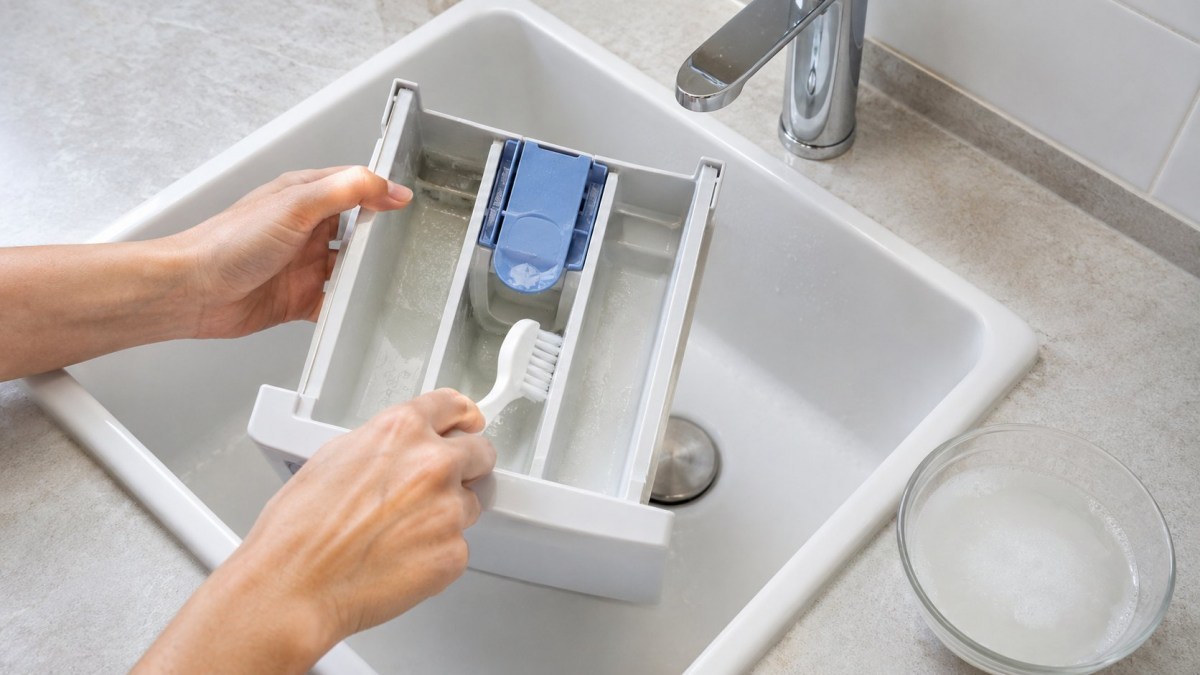
Remove the drawer from the machine before cleaning. Pull the drawer forward, press the release tab or lever in the center, and then pull it out; the release prevents the drawer from coming out completely unless you press the button, so press it to avoid damaging parts. Soak the drawer in warm water mixed with baking soda to loosen stubborn residue, and use an old toothbrush to scrub narrow channels and partition walls to remove the film.
Cleaning only the drawer can leave contamination inside the cabinet. With the drawer removed, inspect the housing around the water inlet and the ceiling area—residue and mold can cling there. The washer sprays water through small nozzles at the top during operation, and detergent foam can back up and stick to the ceiling wall, where it may then decompose.
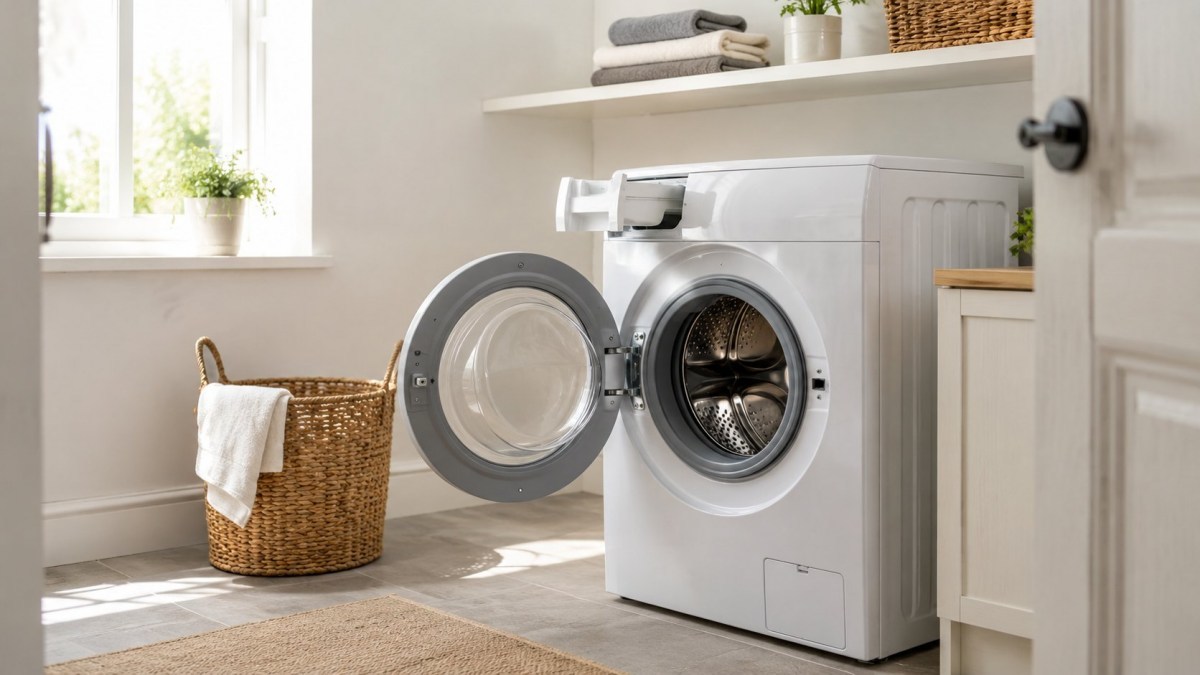
Because that space is hard to reach, use a long brush dipped in a citric-acid solution to scrub the ceiling and side walls. When brushing is complete, wipe away residue and moisture with a clean cloth. If you neglect the interior cabinet, that residue can wash back into the drum during future cycles. After cleaning, shake off the drawer’s water, let it dry completely, and then reinstall it.















Most Commented