
Samsung Electronics Faces Historic Strike: What It Means for the Semiconductor Industry in 2026
Daniel Kim Views
Translation result.

Samsung Electronics’ labor and management, which had been negotiating over performance bonuses, declared the post-adjustment talks a failure and announced they would begin the company’s first-ever companywide strike on the 21st. The announcement has raised tensions across key areas of Gyeonggi Province that host Samsung production facilities.
After the third round of labor-management talks collapsed on the 20th, several local governments in the province launched emergency monitoring and began drafting contingency plans. Officials cited concerns about reduced commercial activity and declines in tax revenue, including corporate taxes.
City officials in Suwon and Yongin and in Pyeongtaek and Hwaseong — where Samsung’s core operations and production hubs are concentrated — are closely watching the potential economic fallout from the strike.
In Pyeongtaek, which hosts semiconductor production lines, the vice mayor convened an emergency meeting that afternoon to assess how a general strike would affect local small businesses and the broader economy. City officials began reviewing emergency response measures.
Suwon, home to Samsung’s corporate headquarters and its DX division, expects that a realized strike would depress corporate tax receipts and reduce local tax revenue. City officials have begun discussions on how to adjust revenue estimates and the scope of spending cuts.
Yongin, another semiconductor hub, is also worried the strike could further weaken the regional economy amid international headwinds such as instability in the Middle East. “Because subcontractors will also feel the ripple effects of a Samsung strike, we are closely monitoring the situation to minimize damage,” a Yongin city official said.
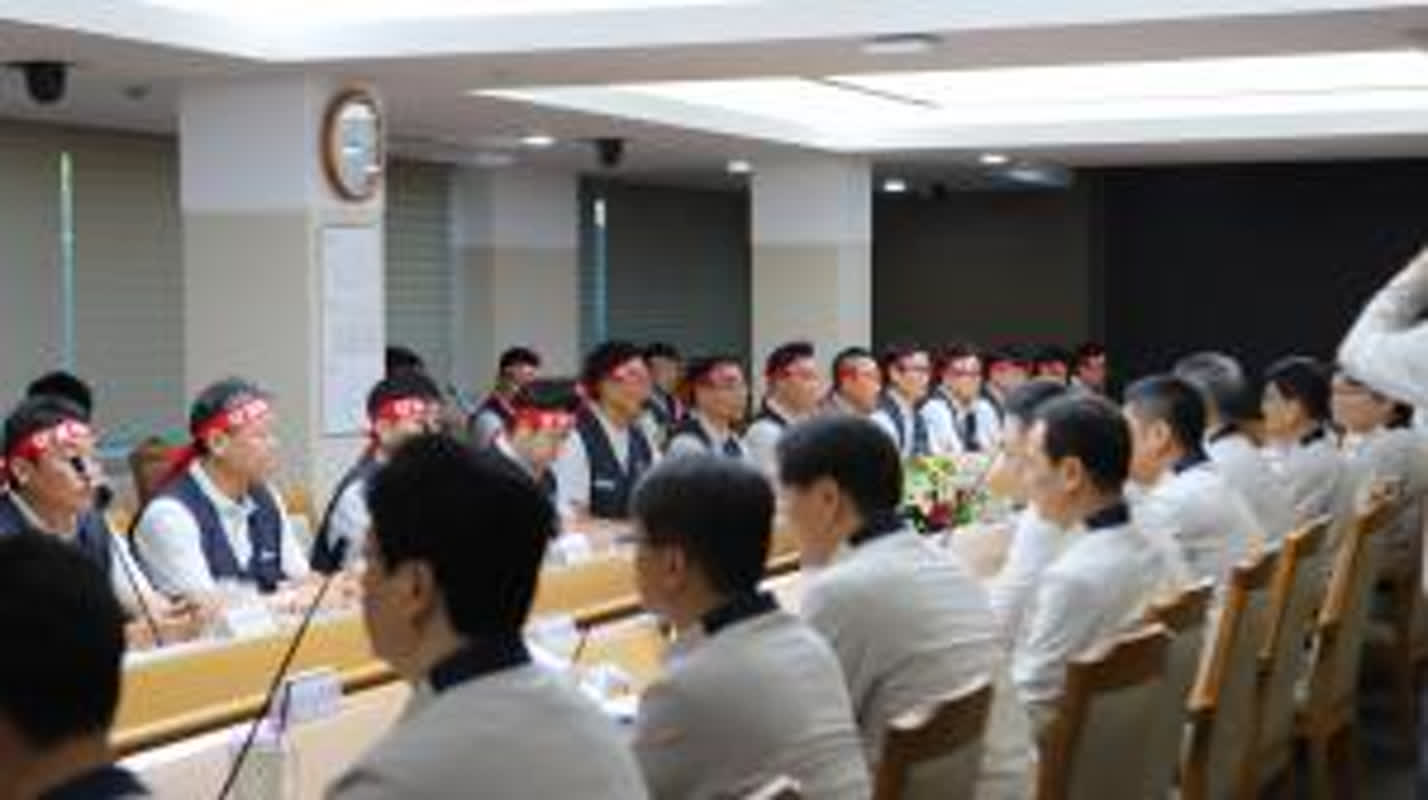
Earlier that morning, around 10 a.m., Samsung Electronics’ labor and management held a third post-adjustment meeting at the Central Labor Commission in the Government Complex Sejong but failed to reach an agreement. The Samsung Electronics union’s Joint Struggle Headquarters said it was “deeply regretful” that the post-adjustment process ended due to management’s delayed decision-making and announced it would “lawfully begin a general strike as scheduled starting on the 21st.”
Samsung said in a statement that it “will not give up on dialogue to prevent the worst outcome,” but added that management had to defend basic managerial principles because the union demanded compensation at levels “socially difficult to accept,” even for loss-making divisions.
As concerns about the potential national economic damage from the strike grew, some officials raised the possibility of invoking emergency arbitration powers to halt the action.
If emergency arbitration is invoked, strikes and other industrial actions would be suspended for 30 days while the Central Labor Commission conducts mediation. That power has been used only four times in modern history, from the 1969 Korea Shipbuilding Corporation strike to the 2005 Korean Air pilots’ strike.
Local roundup













Most Commented