
Translation result
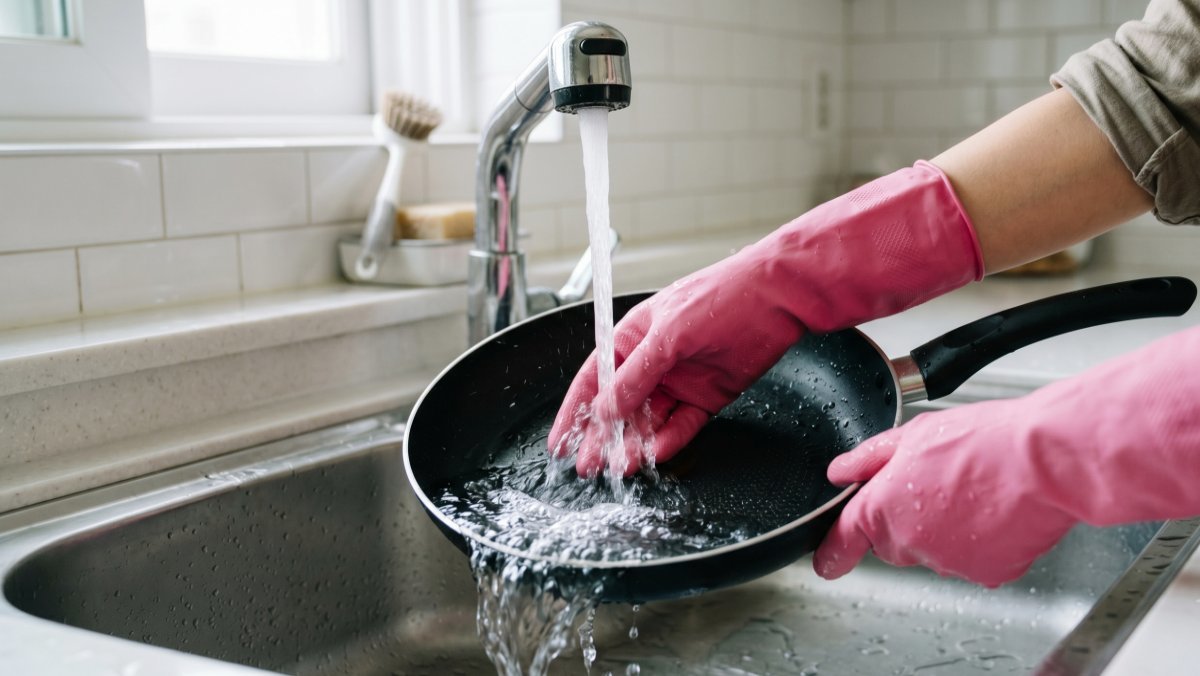
Frying pans are among the most frequently used tools in American kitchens. They handle everything from fried eggs to stir-fries and searing, but poor care can quickly shorten the life of their nonstick coating. At first, you may notice only a little sticking. Over time, repeated improper cleaning and storage will weaken the coating and reduce cooking performance.
Keeping a pan working well for years is less about tricks and more about basic habits. The more you use a pan, the more important those basics become. Don’t rush to cool a hot pan with cold water, avoid abrasive tools, and don’t let food or moisture sit on the surface — these simple steps slow the pace of damage.
Don’t pour cold water on a hot pan
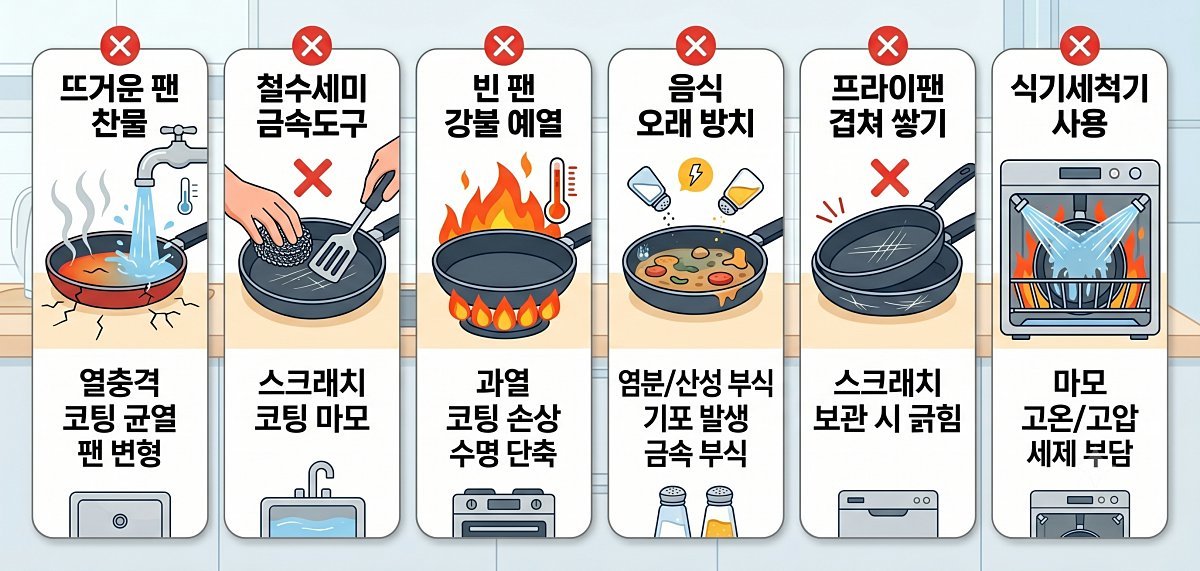
Never pour cold water into a piping-hot pan. The metal body — usually aluminum or stainless steel — expands when heated. The thin nonstick coating (often a fluororesin) expands at a different rate. If cold water suddenly cools the surface, the metal contracts faster than the coating, which can cause tiny cracks. Repeated thermal shocks like that make the coating more likely to lift or peel.
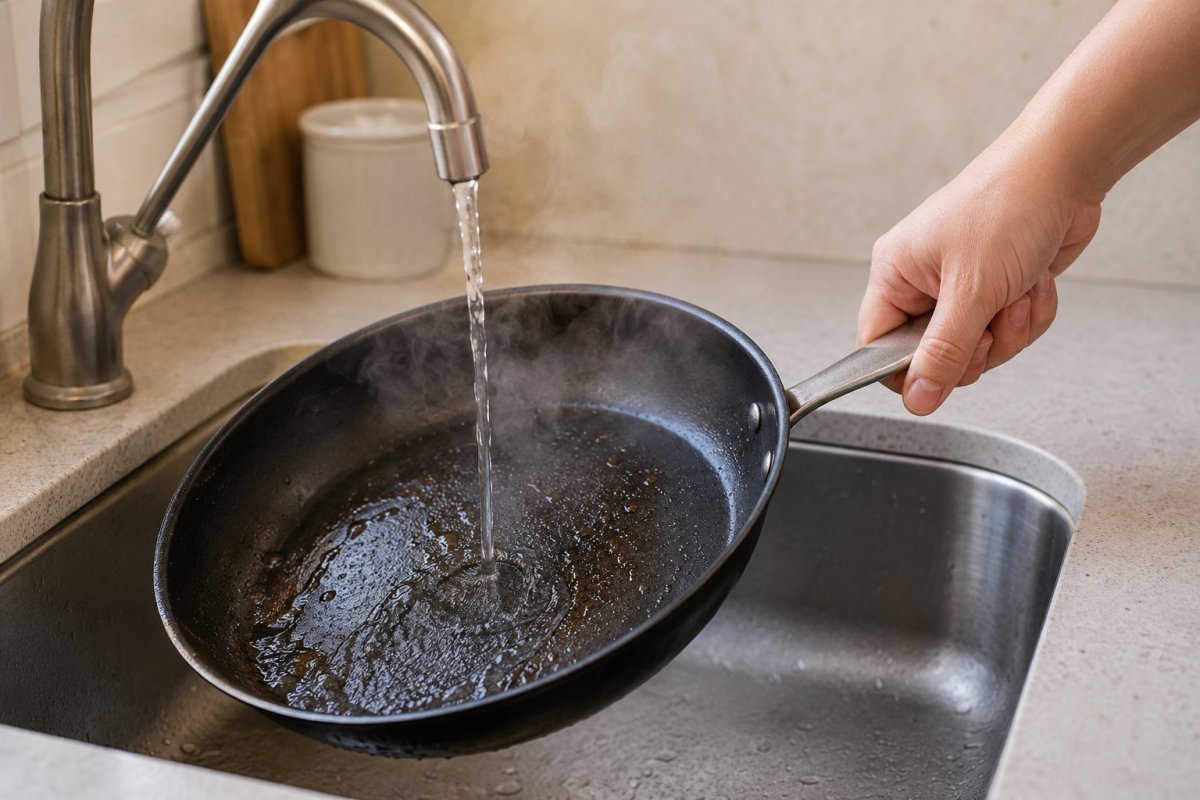
Heat can also warp the pan’s center, causing it to lose its flatness on a gas or induction cooktop. A warped bottom delivers heat unevenly and reduces cooking efficiency. Let the pan cool off the burner before washing. If you must clean it immediately, use warm water rather than cold. Soaking briefly in warm water softens hardened grease and residue so you can remove it without heavy scrubbing.
Avoid abrasive scrubbers and metal utensils
Physical abrasion is another major cause of wear. Scrubbing burned-on seasoning or grease with a steel pad or rough green scrubber will erode the coating. Small scratches accumulate, causing uneven heat distribution and creating nooks where food can catch and stick. Metal utensils do the same damage: scraping the surface with a stainless spatula, spoon, or metal chopsticks, or cutting food in the pan, will nick the coating directly.
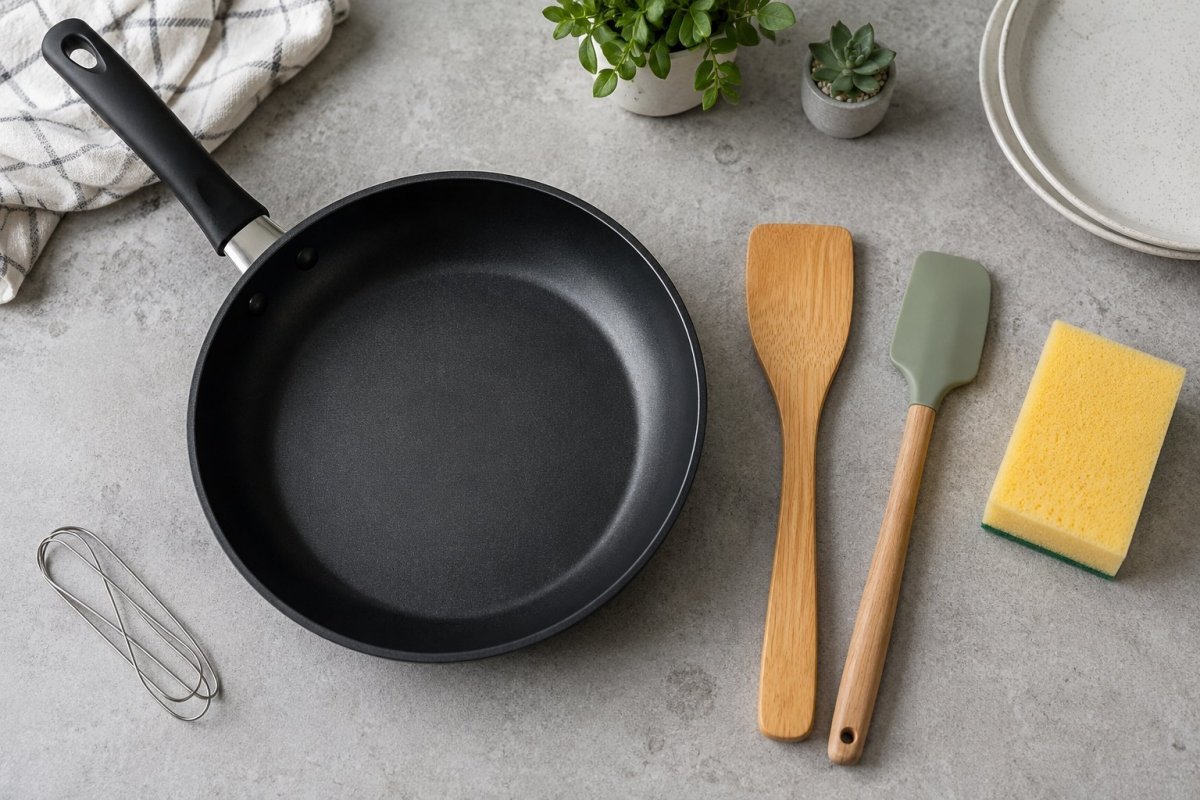
Use wooden, silicone, or heatproof plastic tools with coated pans. For washing, a soft sponge and mild detergent are best. If something is stuck, soak it first to minimize scouring. Small scratches may not be obvious at first, but oil can lodge in them and repeated heating will roughen the surface. When food begins to cling, resisting the urge to scrub harder prevents a damaging cycle.
Don’t heat an empty pan for long
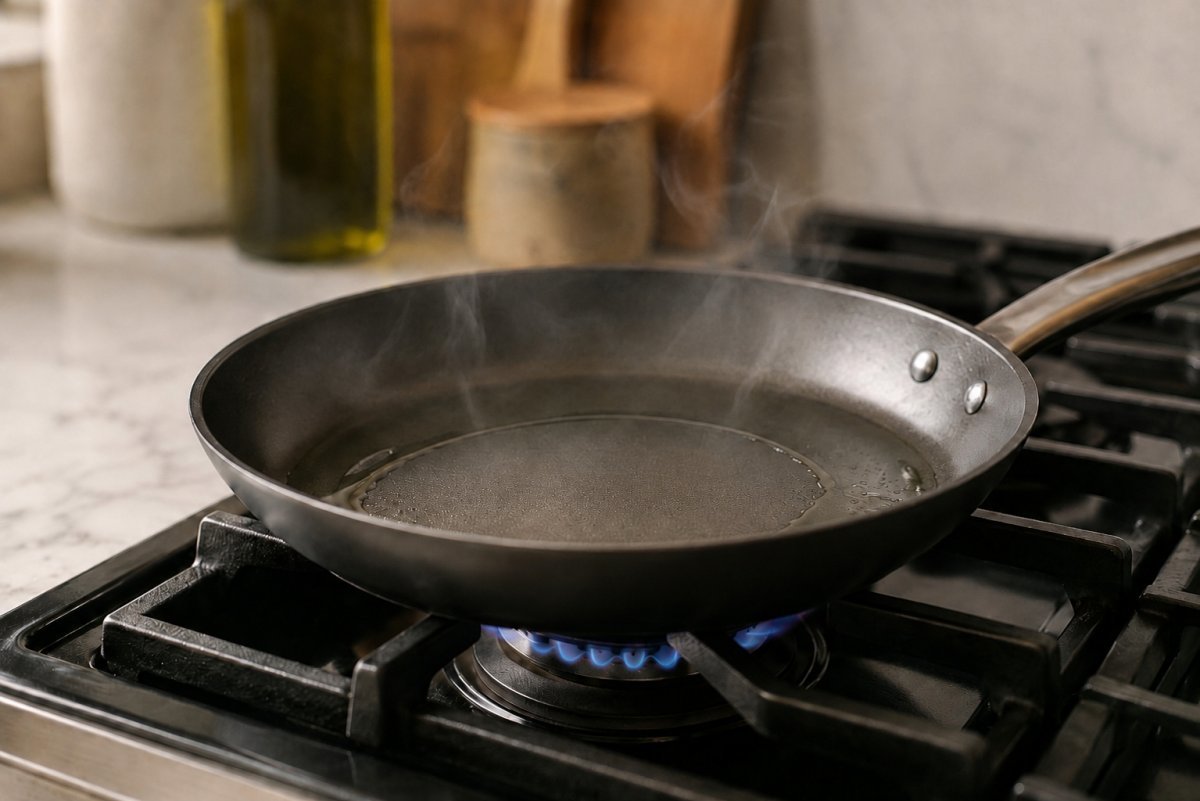
Break the habit of preheating a pan empty over high heat. Without oil or food to absorb heat, a pan’s surface temperature can spike quickly — in some cases exceeding 300°C within minutes. Prolonged exposure to very high heat weakens the coating’s chemical bonds and robs the surface of its smoothness.
When you need to preheat, add a small amount of cooking oil and raise the temperature gradually over low to medium heat. Most modern coated pans are made for efficient heat transfer and don’t need sustained high flame. Medium heat is usually enough to distribute heat across the pan and cook ingredients evenly. Unnecessary high heat shortens coating life.
Move cooked food out of the pan right away
Don’t serve or store finished food in the pan. Many seasonings — salt, soy sauce, chili pastes — contain salts, and ingredients like vinegar or tomato sauce are acidic. Left too long, salts and acids can seep into tiny coating gaps and react with the metal underneath, causing corrosion. Corrosion can make the coating bubble and lift, and once that starts, even light abrasion can flake it away. Transfer food to glass or stainless containers; treat the pan as a cooking tool, not long-term storage.
Store pans without stacking them directly
Stacking pans to save space often leads to scratches. The rough exterior bottom that contacts flames or induction cooktops can abrade the softer coated cooking surface beneath. Even cabinet vibrations and the friction of sliding pans in and out can leave tiny marks.
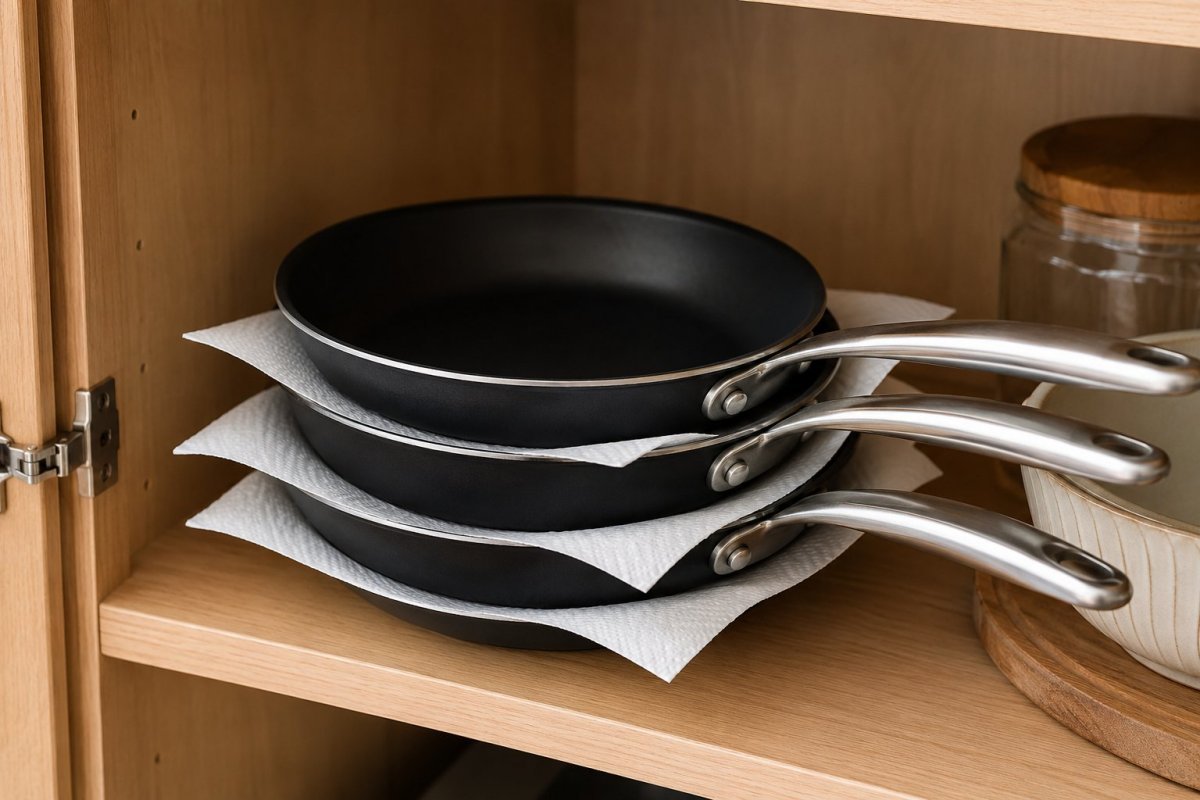
If stacking is unavoidable, place several layers of paper towels between pans or use dedicated pads. Better yet, store pans upright in a vertical rack so each stands alone. Ensure pans are completely dry before storing; trapped moisture between stacked pans encourages lingering dampness, and small scratches can trap dirt. After washing, dry with a dish towel or paper towel, then stand the pan briefly to let residual moisture evaporate before putting it away.
Be cautious with dishwashers. Even when a manual states a pan is dishwasher-safe, high temperatures, strong jets, and dishwasher detergents can stress the coating. Alkaline and abrasive detergent ingredients can weaken the coating’s bond. Handwashing with warm water, a soft sponge, and mild detergent is generally kinder to the coating.
Soak burned-on residue before scrubbing
Aggressive scrubbing of burnt residue does more harm than good. Let the pan cool, then add warm water and soak. For stubborn burned bits, baking soda helps: cover the affected area with water, sprinkle about 1–2 tablespoons of baking soda, bring to a boil, simmer for about five minutes, then turn off the heat.
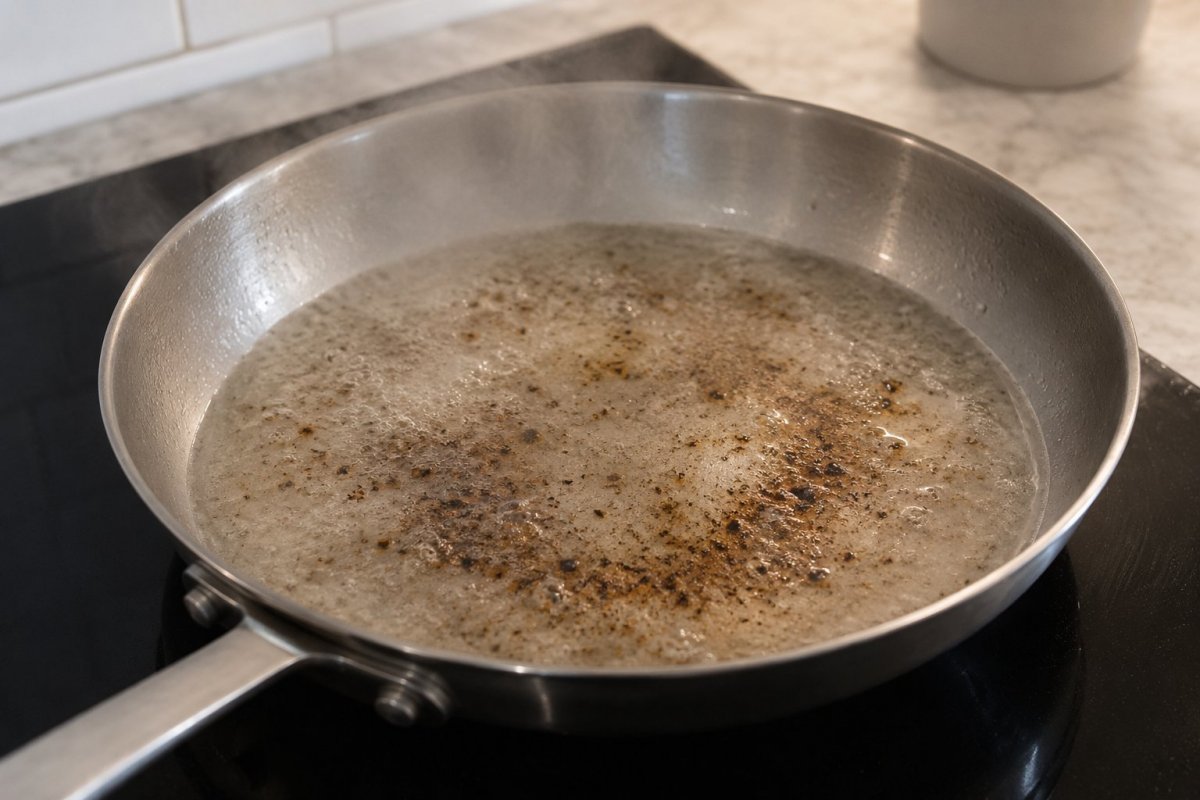
Let the pan cool until it is lukewarm, pour out the water, and wipe with a soft sponge. The mildly alkaline baking soda loosens burned oil and food particles, reducing the need for heavy scrubbing. Don’t dump boiling water immediately; wait a moment so the temperature drops and you avoid a sudden thermal change. When removing residue, wipe gently in one direction; if pieces won’t come off, soak again.
After cooking with only a little oil, you can sometimes clean with minimal water and detergent. While the pan still holds residual heat, lightly spray a neutral spirit such as soju or wipe with a paper towel dampened with it, then wipe the surface. Alcohol helps dissolve leftover oil and evaporates quickly, reducing odors. For heavy food residue or sauces, wash with warm water and mild detergent.
Clean a new pan with vinegar, then season it
When you first use a new pan, wash it once and then “season” it. Manufacturing can leave tiny impurities or residues. Fill the pan about two-thirds full with water, add 1–2 tablespoons of vinegar, and bring it to a boil. Discard the water, then rinse the interior with lukewarm water and a soft sponge. Dry the pan over low heat until all moisture is gone. Keep it on low heat and add about one tablespoon of cooking oil.
Fold several layers of paper towel and spread the oil from the center to the slope and rim in a thin, even layer. Too much oil leaves a sticky film; a thin coating is enough. Heat on low for 1–2 minutes, then turn off the heat and let it cool. Repeat 2–3 times to build a light protective film. If the coating feels diminished later, you can repeat this process. Seasoning is not a single-step fix but establishes a routine for regular care. If the surface feels tacky after cooking or water doesn’t bead evenly, wash and dry the pan, then reapply a thin layer of oil to restore the surface.
Use the fried-egg test to know when to replace
No matter how well you care for it, a coated frying pan won’t last forever. A worn pan makes food stick and can expose the underlying metal, which raises hygiene concerns. The simple fried-egg test helps you check the coating at home. Preheat the pan over medium or lower heat, add only a tiny amount of oil, and crack an egg in. As the white sets, pick up the handle and gently rock the pan side to side. If the egg slides freely, the coating is still effective. If you must pry it loose or white fragments remain, the coating has weakened.
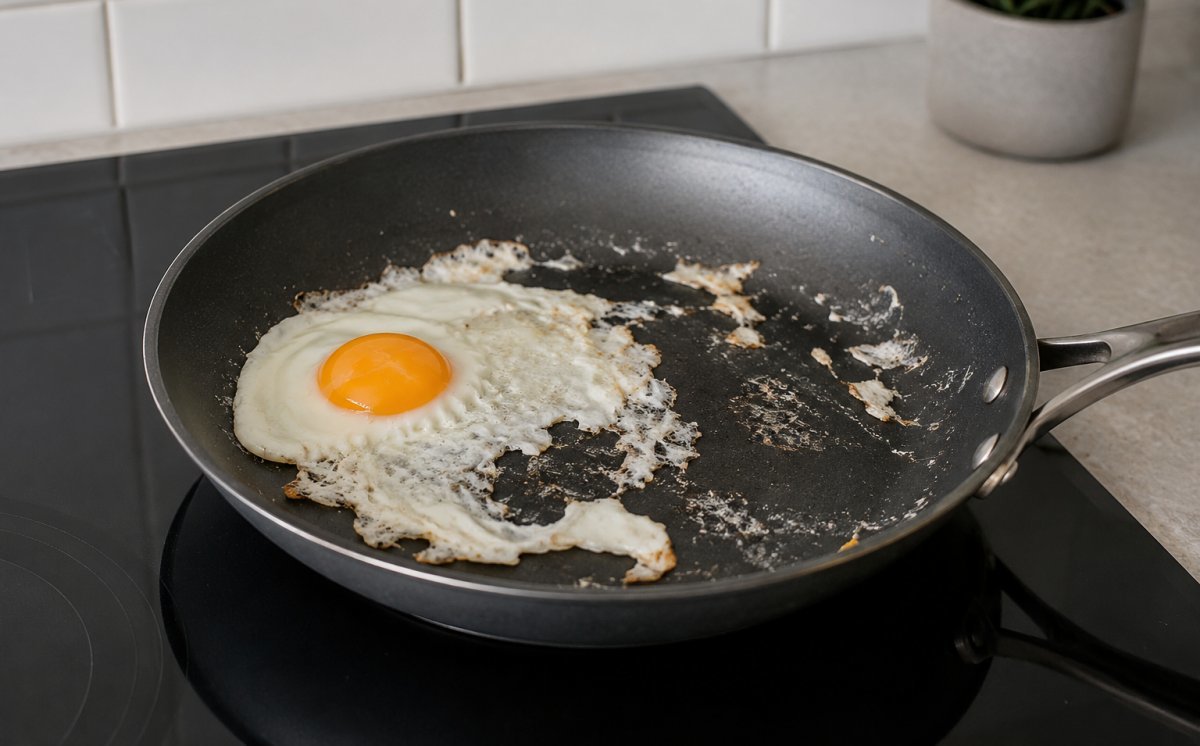
Inspect the pan’s appearance, too. If the center darkens noticeably compared with the edges, or if spiderweb-like scratches and concentric wear rings appear under light, consider replacing it. For households that cook daily, a typical replacement cycle for a coated frying pan is about a year to a year and a half. The best way to extend that period is the same: avoid overheating, don’t scratch the surface, and keep salts and moisture from sitting on it. Longevity isn’t the only measure of savings — letting the pan cool, cleaning it gently, and storing it properly protects both the pan and your kitchen’s hygiene.














Most Commented