
Six events including endurance sprints — voice-decibel checks included
Hiring adapts to real-life demands: “Helps trainees adjust”
Situational-response interviews test quick thinking and judgment
 [Herald Economy — Reporter Kwon Je-in] Eastar Jet is currently the only Korean airline requiring a physical fitness test as part of its flight attendant hiring process. As cabin crew are increasingly seen as onboard safety officers rather than just service staff, the airline has updated its recruitment to match that shift.
On the 7th, I joined Eastar Jet’s fitness test at a gym in Gangseo District, Seoul. The exam covers six events—arm reach, balance, grip strength, decibel check, back strength, and endurance running—and failing any one of them means elimination. Trying it myself made it obvious just how seriously the airline takes safety.
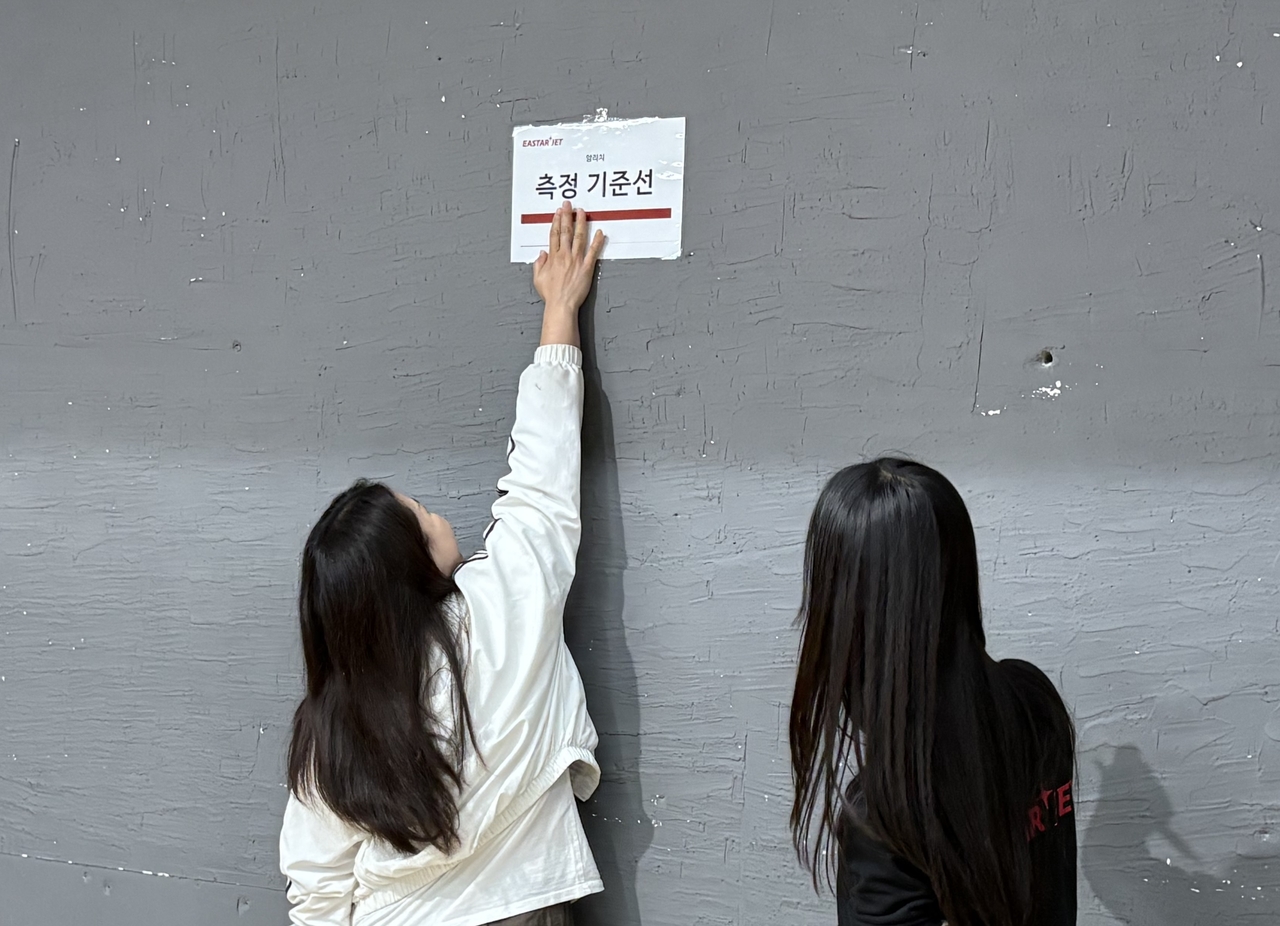
For the arm-reach test, I stretched to see if I could reach an aircraft overhead bin. Eastar Jet doesn’t ask for applicants’ heights on the paperwork, but the arm reach shows whether someone can grab emergency gear or a fire extinguisher from the bin. At 158 cm (about 5 ft 2 in), I had to stand on tiptoe in my shoes to barely touch the measurement line.
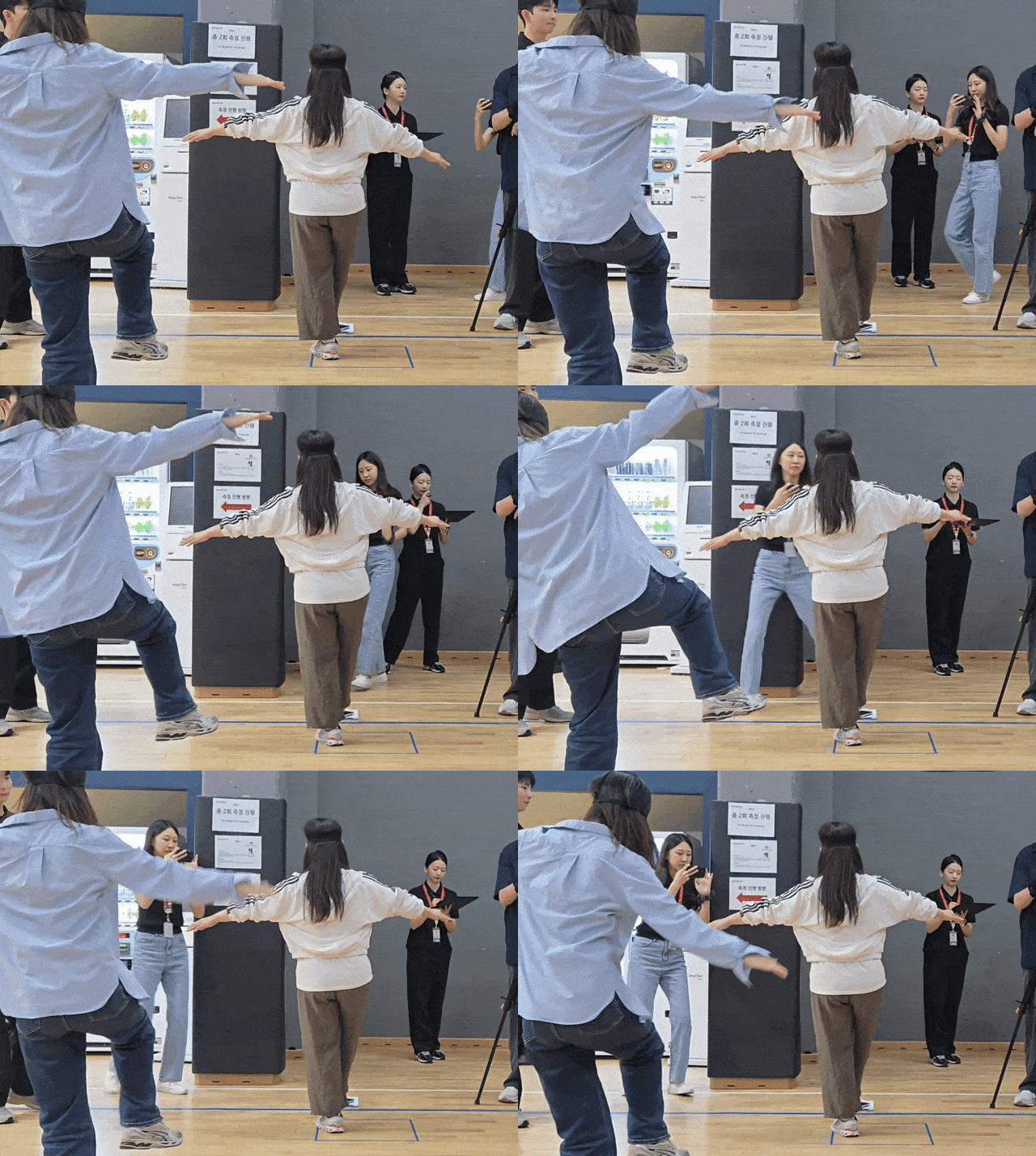
 The balance test had us blindfolded and standing on one leg to see how long we could hold it—an easy-looking challenge meant to simulate turbulence. It was trickier than it sounded: my left leg held for only 9 seconds, and I just passed 20 seconds on my dominant right leg.
Grip and back strength were measured with standard devices. These checks make sure candidates can open heavy panels and assist elderly passengers, children, or injured people, and that they can brace their bodies against impact.
In the decibel test, we shouted commands—“Grab the ankle, duck your head, lower your stance”—while staff measured volume. The goal is to ensure crew can project clear, loud directions to calm and evacuate panicked passengers. It looked like the easiest event, but projecting your voice so multiple people can hear is harder than you think—I recorded 89.9 decibels, below the passing mark.
 The endurance running was the toughest. Candidates sprint 20 meters (about 66 ft) repeatedly—women run 25 times, men 45—and the allowed time shrinks as rounds continue. I run regularly and felt confident, but the increasing pace left me breathless. After 25 runs, other participants dropped to the floor, gasping.
Eastar Jet also tweaks the lineup of events to reflect real needs. When the fitness test launched in March last year, it included sit-ups and a high jump, but those were removed this year. An Eastar Jet official overseeing the test said the training team piloted different events before finalizing the current set.
Kim Jae-won, head of Eastar Jet’s cabin training team, said, “Selected cabin crew undergo three months of mandatory safety training, which is both physically and mentally demanding. Adding the fitness test helps new hires adapt to training.”
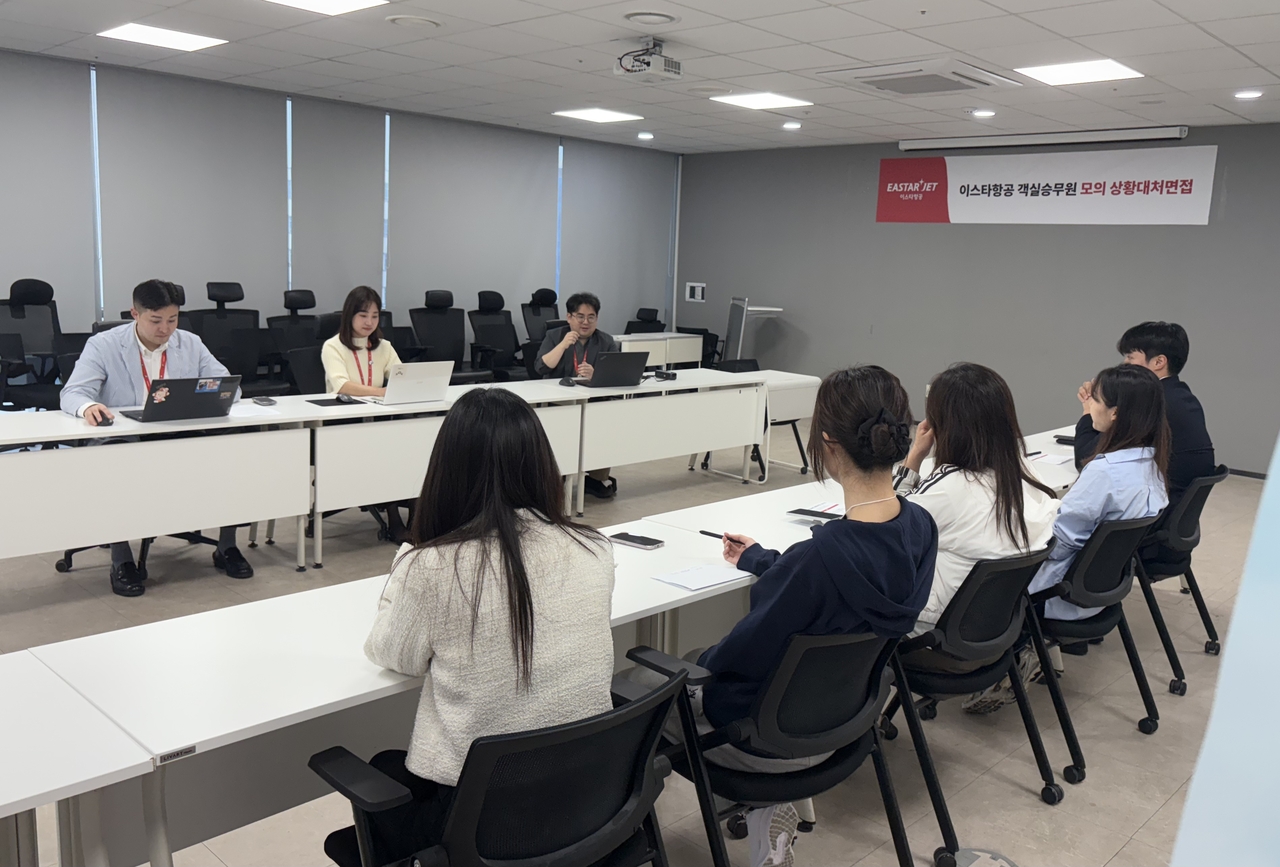 After the fitness test, we headed to Eastar Jet’s headquarters for a situational-response interview. This round assesses how quickly candidates prioritize and react to unexpected in-flight situations.
Rather than sticking to only in-flight scenarios, the airline prompts candidates with everyday situations so answers can’t be rehearsed. Eastar Jet says this method helps determine whether applicants have the judgment and temperament they look for.
In our group, examiners asked six people to propose ways to resolve intergenerational conflict at work. Individually, they asked how we would correct a colleague’s mistake during an emergency.
Kang Tae-young, head of Eastar Jet’s HR team, said, “Watching strangers collaborate to reach an answer reveals teamwork skills and personal traits. The individual questions test how candidates handle unexpected moments and whether their values match what they wrote in their applications.”
Meanwhile, Eastar Jet is actively hiring to support route expansion and deliver top service. In the first half of this year, the airline opened public recruitment for about 50 new flight attendants. Applicants go through document screening, situational-response interviews, the fitness test, executive interviews, and medical checks. Successful candidates will join as intern attendants after June.















Most Commented