
Discover the Angel Bridge: How This 2019 Marvel Transformed Access to 1004 Islands in Shinan
Daniel Kim Views
Translation result
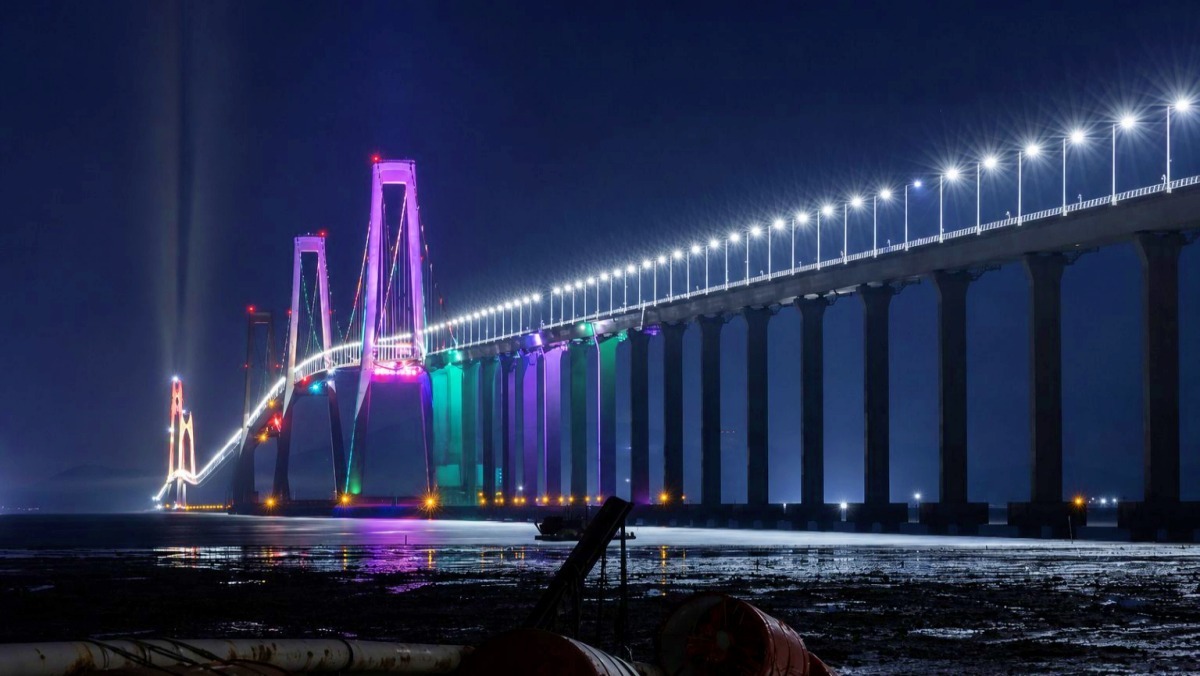
The road that runs across the sea into the islands has rewritten the opening scene of a Sinan trip. Where travelers once planned around ferry timetables, they now simply drive. Cross Cheonsa Bridge and a single route unfurls through western Sinan, linking Amtae, Jaeun, Palgeum and Anjwa islands into one easy loop.
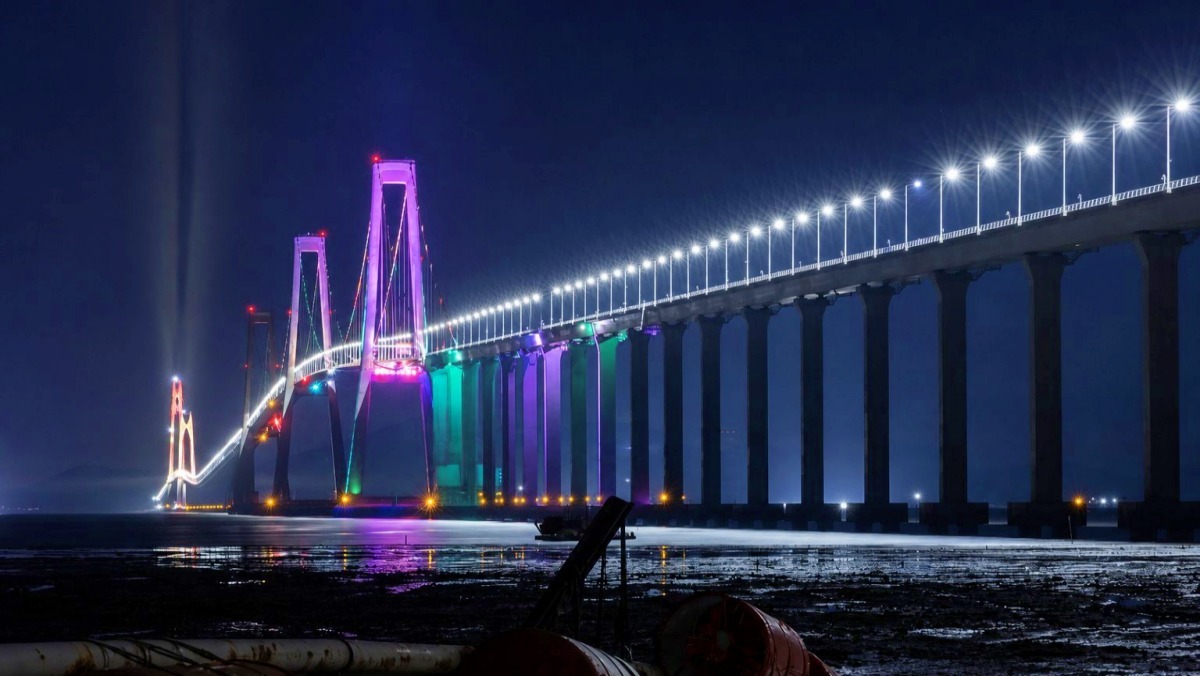
How Cheonsa Bridge changed travel in Sinan
Cheonsa Bridge spans the sea between Songgong-ri in Aphae-eup, Sinan County, Jeollanam-do, and Amtae-myeon. At the time it opened, it ranked as South Korea’s fourth-longest sea bridge after Yeongjong, Incheon and Seohae bridges. Since opening to traffic in April 2019, it has shifted how people move around western Sinan. Instead of waiting at ferry terminals and reshuffling plans when the weather turns, locals and visitors can rely on a continuous road network that greatly expands where cars can go.
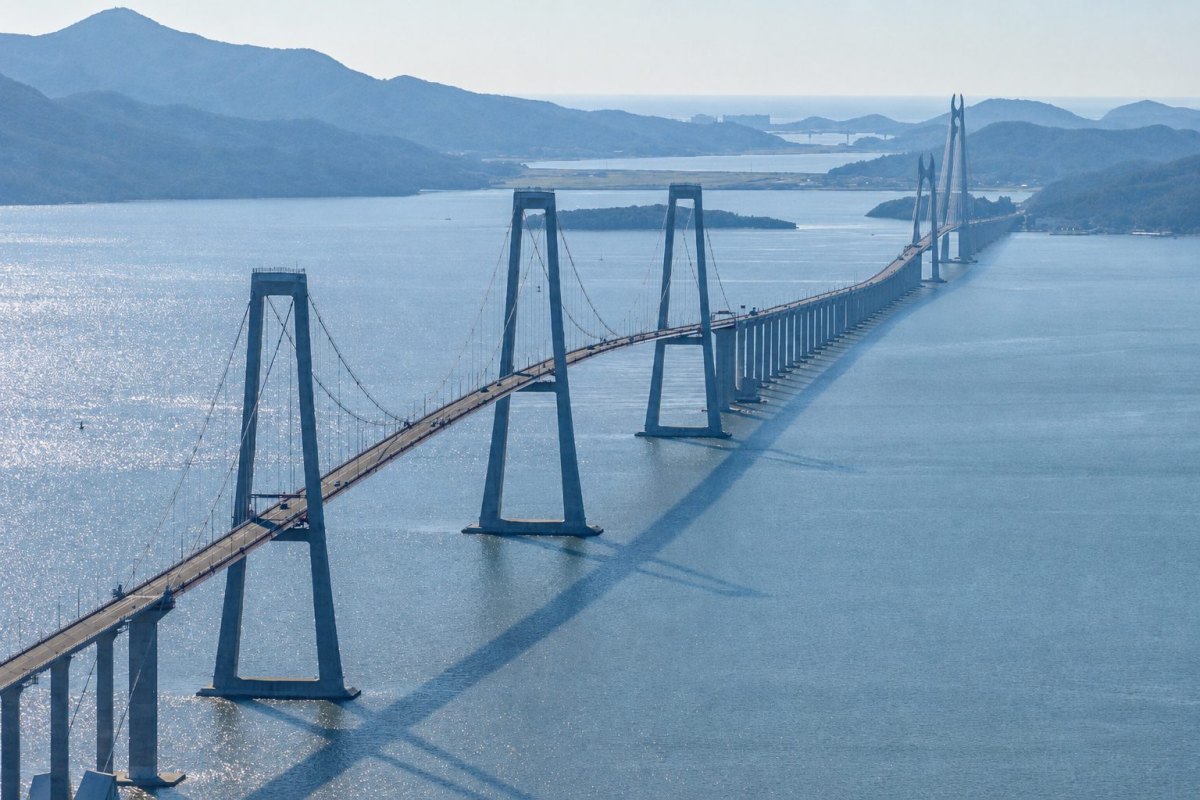
Songgong-ri, at the bridge’s mainland end, connects into the existing road system. Once vehicles could cross Cheonsa Bridge into Amtae-myeon, Amtae and the neighboring isles became far more accessible by car. Even on foggy nights or days when boats can’t operate, people can still travel by road. That reliability has steadied everyday life for island residents and opened up new, flexible itineraries for visitors. What used to be an itinerary built around a single ferry departure can now be a driving route that links multiple islands in one go.
Cheonsa Bridge cuts across open sea and tidal flats. Cars leave Songgong-ri and follow a road that feels like it’s floating over the water toward Amtae. Compared with the old boat-centered rhythm, it’s now easier to pick departure times and plan routes. Logistics have also smoothed out with a dependable land connection, improving access to these islands. More than just infrastructure, the bridge has become a travel landmark: islands once separated by water now feel joined, and island-hopping by car along causeways and smaller bridges has become the new normal.
A name that holds 1,004 islands
The bridge’s name reflects Sinan County’s identity as the home of “1,004 islands.” The Korean pronunciation of 1,004 — similar to “cheon-sa” — echoes the word for “angel,” so the name Cheonsa Bridge cleverly ties local branding to the structure. It’s a symbolic link: even a brief crossing reinforces the idea of Sinan as the place of a thousand islands.
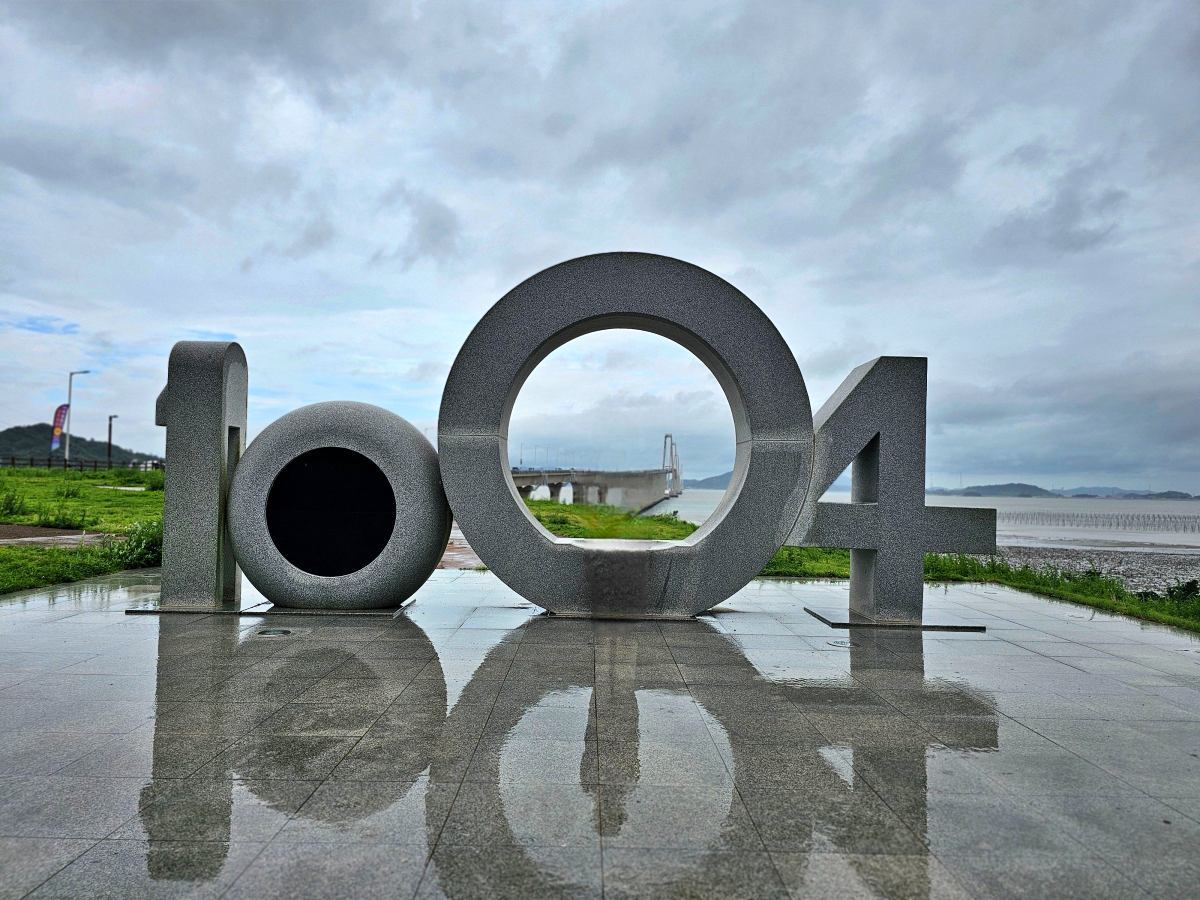
The name does more than mark a single connection between Aphae-do and Amtae-do. Cheonsa Bridge acts like a gateway, folding multiple islands into one cohesive road network. Its towers and cables and the road stretching over the sea are a visual promise: island and mainland, island and island, now visibly connected. For first-time visitors, the bridge instantly communicates that this region is shaped by its islands. Unlike a bland place name, the bridge’s title brings together number, image and local identity in one neat idea.
The gateway to the Sinan Diamond islands
Cheonsa Bridge also completes part of what locals call the “Sinan Diamond” — a cluster of nine island townships (Bigeum, Dochodo, Ha-ui, Sinui, Jangsan, Anjwa, Palgeum, Amtae and Jaeun) that map out a diamond shape. The bridge fills the shortest land link through that zone, turning a scattered archipelago into a practical driving network.
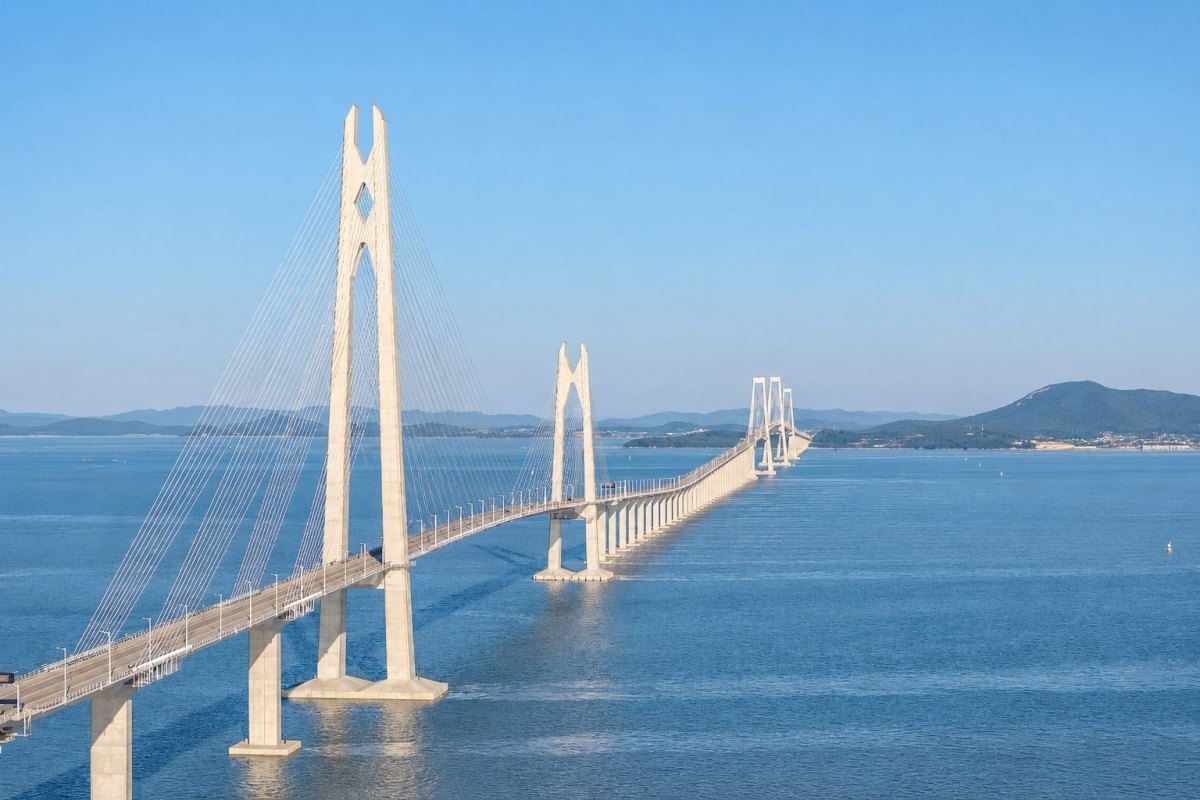
Before the bridge, each island relied on its own ferry routes and travelers had to juggle transfers. The direct road from Songgong-ri into Amtae-myeon linked the Diamond’s eastern gateway to the mainland. Islands like Jaeun, Amtae, Palgeum and Anjwa were already connected by smaller causeways, and Cheonsa Bridge completed a seamless route that made multi-island trips practical.
Opening Cheonsa didn’t just join Aphae and Amtae; it improved mainland access for Jaeun, Palgeum and Anjwa too. Now you don’t have to pick just one island to visit — you can string several into a single itinerary. Think white-sand beaches on Jaeun, scenic coastal drives on Palgeum and cultural stops on Anjwa, all flowing together through Cheonsa Bridge.
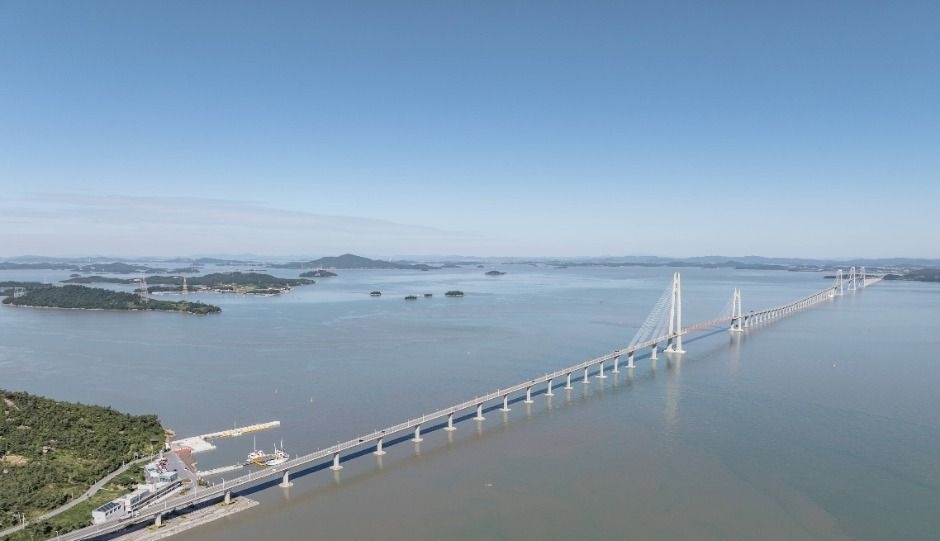
Today drivers cross Cheonsa into Amtae and can head north to Jaeun or south to Palgeum and Anjwa. Even islands that still need boats — like Bigeum, Dochodo, Ha-ui and Sinui — benefit: nearby ferry terminals on Amtae or Anjwa make mixed car-and-boat travel easy. Cheonsa Bridge acts as the axis that ties the Diamond islands together. This combination of drives and short ferry hops turns Sinan’s wide, spread-out geography into a realistic, tempting route for travelers.
Routes that link Amtae and Jaeun
After crossing into Amtae-myeon, island highlights naturally fall into your route. A charming mural of an elderly couple near the Gidongsam intersection cleverly uses the rounded silhouette of a camellia tree to form their heads — a sweet roadside photo stop you’ll likely pass on your way inland from the bridge.
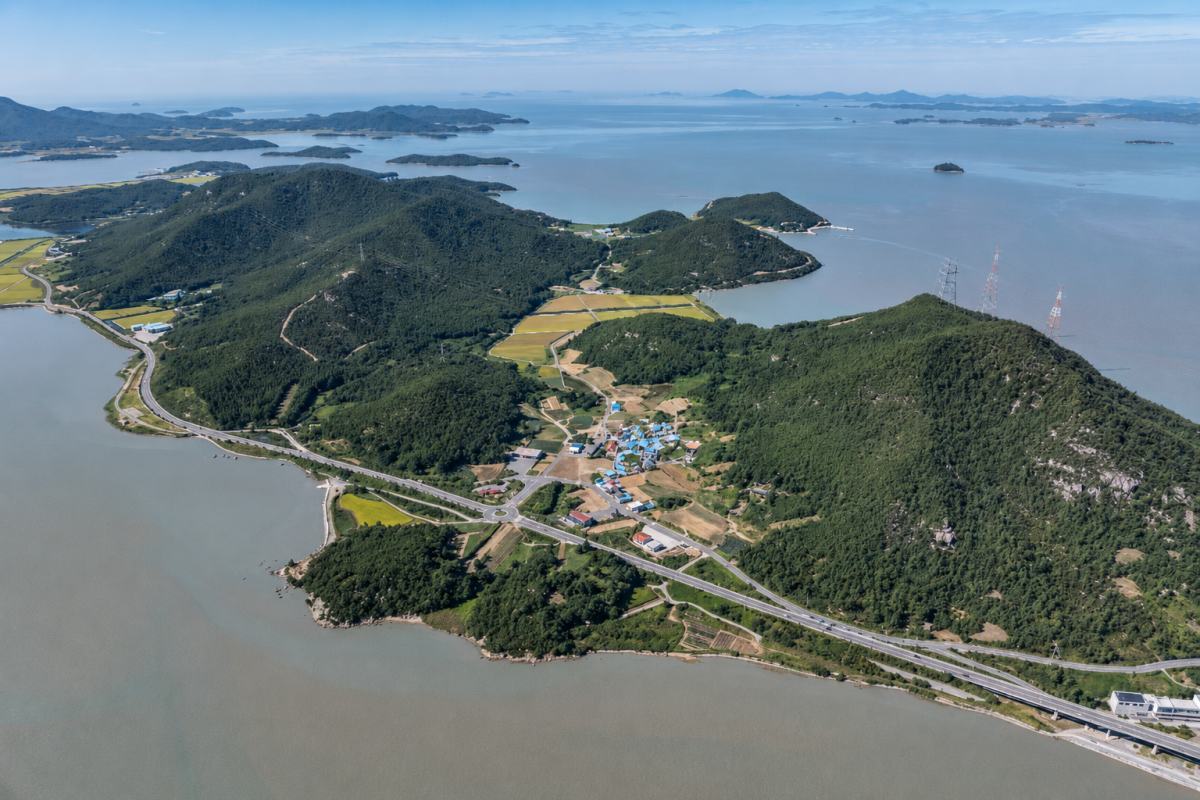
To Amtae’s west, Chupo Beach ties to Chupodo, once reachable by a natural causeway. Since road access improved, it’s easier to visit this stretch of wide tidal flats and sandy shoreline — the kind of West Sea beach where mudflats meet sand. Thanks to the bridge, you can design a route that hits beaches, villages and mudflats in one relaxed loop rather than be stuck on a single spot.
Drive north from Amtae along connected causeways to Jaeun Island. Jaeun is known for white-sand beaches backed by pine forests. At Bungye Beach a windbreak forest lines the shore, and inside the woods stands the so-called “Woman Pine,” a tree with a human-like shape. Baekgil Beach is gentle and sandy — perfect for easy beach walks.
Southwest of Jaeun, the 1,004 Museum Park blends tidal-flat ecology, marine life and contemporary art, letting visitors explore the coast’s nature and culture in one stop. A Jaeun visit pairs beach strolls with marine-ecosystem sights. Cross Cheonsa into Amtae, swing toward Jaeun, and you’ll take in the northern Sinan coastline as a sequence of distinct, memorable scenes.
Island roads that reach Palgeum and Anjwa
Point the car south from Amtae and you’ll reach Palgeum and then Anjwa. In spring, Palgeum’s fields of rapeseed flowers are a cheerful draw. Coastal roads change with the seasons, so each drive offers something new. After Palgeum, cross Sinan No. 1 Bridge to arrive on Anjwa.
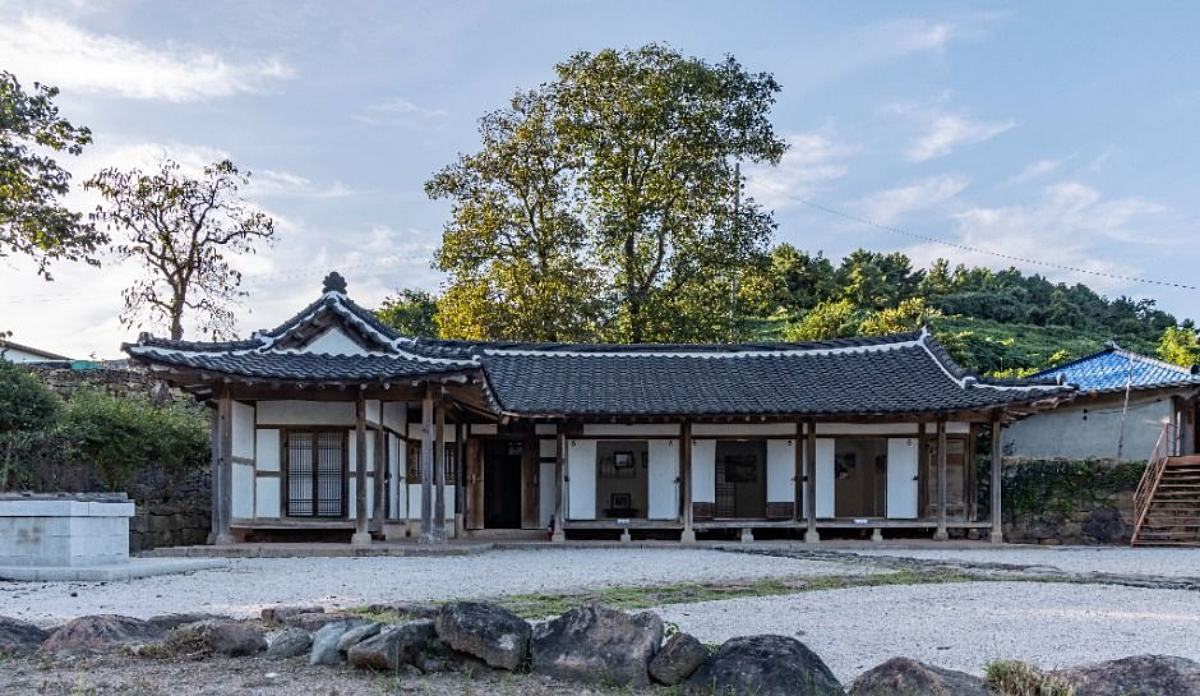
In Eumdong-ri on Anjwa, the childhood home of painter Kim Whanki has been preserved. The traditional wooden-tiled house preserves local history and art, expanding island itineraries beyond beaches to include cultural and human stories.
At Anjwa’s southern tip sit tiny Banwol and Bakji islets, linked to the main island by a pedestrian bridge locals call the “Purple Bridge.” Villagers have painted roofs, roads and the bridge purple, creating a vivid, Instagram-ready walk. From the pedestrian bridge you’re close to the mudflats and the sea. The fact that you can walk from Anjwa to these islets without a boat shows how travel here has shifted: drive across Cheonsa, take causeways into Anjwa, then continue on foot over a small pedestrian bridge — the flow is seamless.
Sinan’s flavors from mudflats and the sea
Cheonsa Bridge supports tourism — and the movement of Sinan’s farm and sea produce. The Diamond area’s tidal flats and seas yield a range of ingredients, and mudflat octopus (nakji) often tops local menus. Locals enjoy it in a clear octopus soup (yeonpotang) or in a spicy-sour marinated salad (nakji choumuchim). When you stop at island eateries, look for dishes that showcase Sinan’s marine bounty.
Another local specialty simmers gobies with dried radish greens and seasoning (jjangttungeo-tang). Summer croaker, caught off the West Sea, also features on island menus — sometimes raw, sometimes in a clear soup. With easier car access after the bridge opened, getting these ingredients from shore to inland markets became simpler. If the bridge opened a door into the islands, it also widened the path for island flavors to reach the mainland. In Sinan, food isn’t an afterthought — it’s everyday life shaped by mudflats and sea.
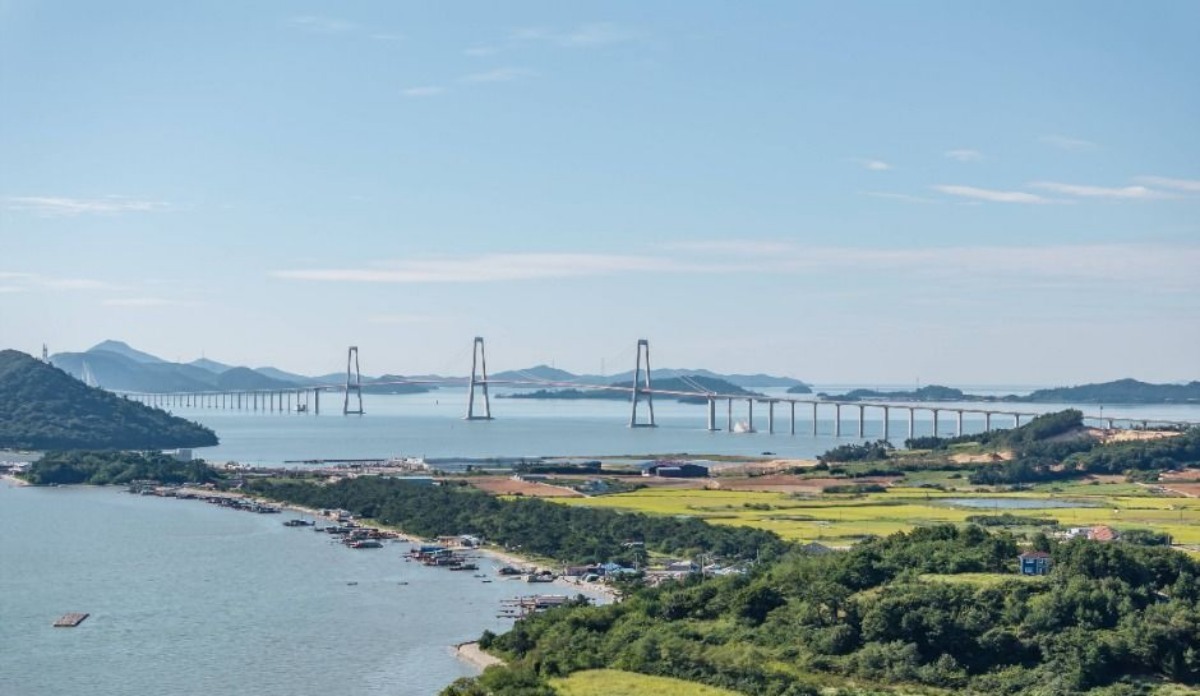
A trip centered on Cheonsa Bridge doesn’t stop at the span itself. Start at Songgong-ri in Aphae-eup, cross the sea bridge into Amtae-myeon and keep going through Amtae, Jaeun, Palgeum and Anjwa to really get the lay of western Sinan’s islands and their daily rhythms. Sea roads, causeways, beaches, mudflats and island village culture come together into one clear travel line. The sequence of bridges and pedestrian walkways is now a defining feature of travel here — one entry point connects multiple island landscapes, villages and coastal views, making Cheonsa Bridge the natural starting line for West Sea island adventures in Sinan.










Most Commented