
Exploring the Surge in Anime Pilgrimages: 195% Increase in Travel Searches Across Asia
Daniel Kim Views
Everyone’s vying for the attention of people in their 20s and 30s, but one thing still steals their hearts: the Japanese anime they fell in love with as kids.
The kids who grew up with those cartoons are now the driving force in consumer culture, and they’re spending on experiences tied to their favorite franchises. From pop-up stores and exhibitions to travel packages, Japanese anime has, quite literally, captured the hearts of today’s 20‑ and 30‑somethings.
Anime pop-ups have taken over Seoul… “At least five open each month”
Anime pop-ups have taken over Seoul… “At least five open each month”

Visitors at the Jump Shop pop-up in Yongsan I’Park Mall / Photo: Ji‑eun Kim, Travel+ reporter
With kidult culture gaining momentum, anime pop-ups and exhibitions are everywhere across Seoul. Shops selling anime goods and figure stores now take up whole floors in spots like Yongsan I’Park Mall and AK Plaza.
This year alone, pop-ups and exhibits for One Piece, Pokémon, Yumeiro Pâtissière, Jujutsu Kaisen and more have run back to back. These days, Seoul hosts at least five anime collaboration events a month, and hangouts with friends are increasingly centered around anime.
After anime retailer Animate opened a branch and AK Plaza Hongdae promoted itself as an “anime pilgrimage” destination, the mall’s sales climbed from 27.7 billion KRW (approximately 20.8 million USD) in 2021 to 98.2 billion KRW (approximately 73.7 million USD) last year.
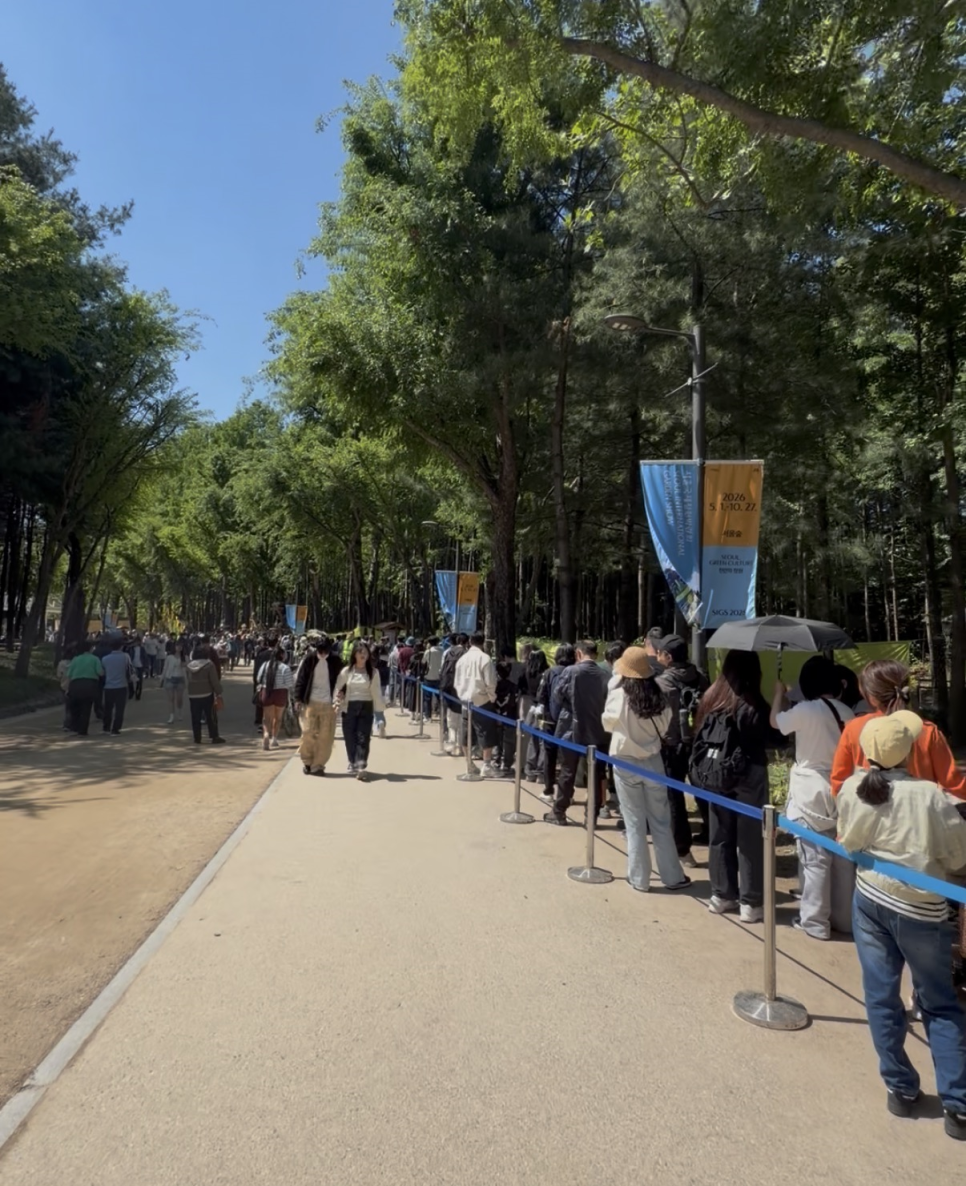
Line for the Pokémon Garden at Seoul Forest
The buzz has been off the charts. The recent Pokémon Mega Festa in Seongsu‑dong and Seoul Forest drew bigger crowds than a BTS comeback stage — roughly 120,000 people gathered inside Seoul Forest alone. That even eclipsed the turnout at BTS’s comeback event in Gwanghwamun Plaza in March, which authorities estimated at about 40,000 and HYBE at about 100,000.

At 7 a.m. on Children’s Day, 5,000 people gathered at the Han River for “Pokémon Run 2026 in Seoul,” celebrating Pokémon’s 30th anniversary. Leaning into Magikarp’s underdog story — “slow and awkward at first, but become strong like Gyarados if you keep going” — participants all wore Magikarp hats, and some even arrived in full character cosplay to show their love.
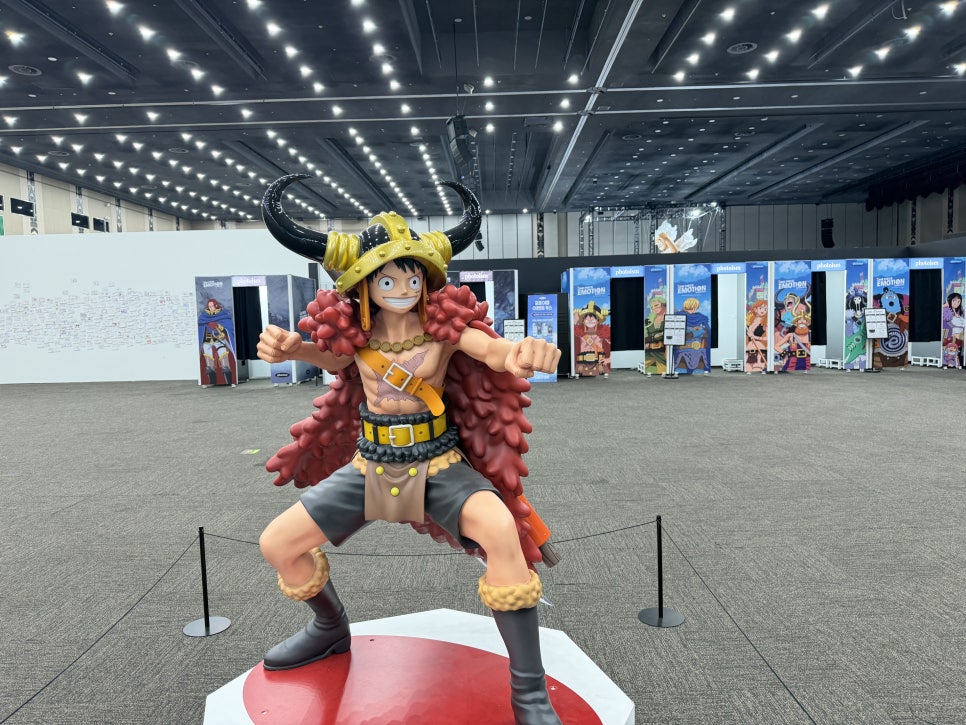
The ongoing “One Piece 25th Anniversary” exhibition is being held in Goyang on the outskirts of Seoul, but visitors keep coming. Office worker Choi Yoo‑yeon, 26, who visited after work, said, “I grew up watching One Piece on Tooniverse. I feel like I’ve grown up with the characters, so even though it’s far and the ticket’s pricey, I had to come.” For many fans, seeing life‑size versions of characters they’ve followed for two decades is the whole point.
Anime pilgrimage travel surges… searches up 195%
Anime pilgrimage travel surges… searches up 195%

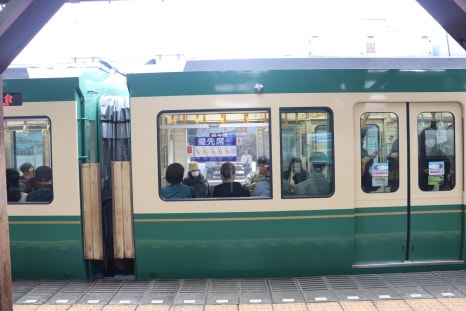
Kamakura
The anime craze doesn’t stop at Korea’s pop-ups — it’s spilling over into travel.
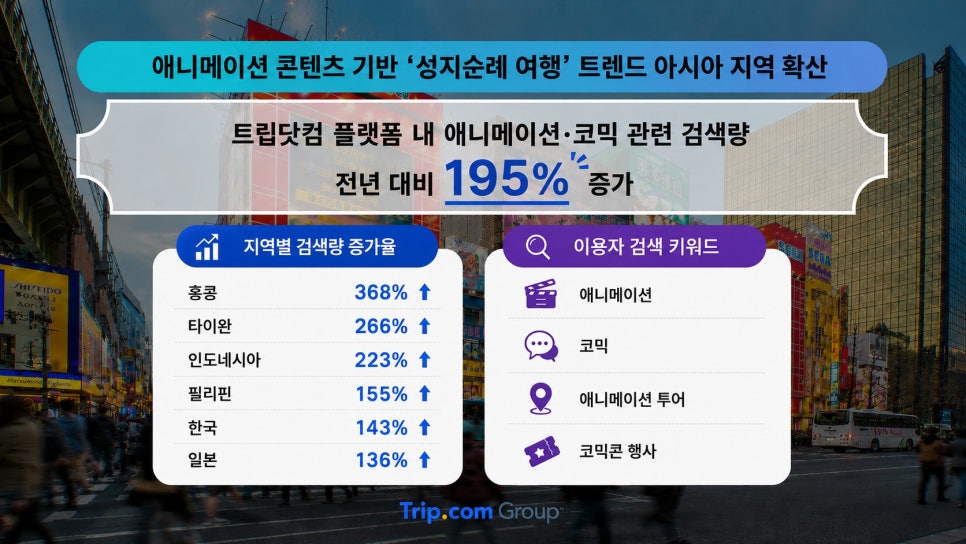
Trip.com Group says anime‑based “pilgrimage travel” is spreading fast across Asia. Data from Trip.com show searches for animation and comics on the platform jumped 195% year over year, with strong interest in terms like “animation,” “comics,” “animation tour,” and “comic‑con events.” Searches for related travel keywords among Korean users rose 143% year over year.
Tickets for Anime Japan 2026, for which Trip.com acted as a sales partner, saw overseas sales jump 697% year over year. Tickets were sold across 82 countries and regions, with particularly strong demand from mainland China, Hong Kong, and Singapore.
Hong Jong‑min, head of Trip.com Korea, said, “Interest in immersive travel experiences tied to Japanese anime is expanding rapidly among Korean travelers.”
Anime is also playing a notable role in addressing the perennial challenge of steering tourists toward Japan’s smaller towns.

Pixabay
A prime example is Hita City in Oita Prefecture. Known as the hometown of the creator of Attack on Titan and linked to the series’ setting, Hita has seen steady pilgrimage visits and a notable boost in local tourism. The “Attack on Titan pilgrimage tour” in Hita exceeded 1,000 visitors within two months of launch.
Kamakura shows the same trend among domestic travelers. Once mainly a seaside getaway for locals, Kamakura surged in popularity after Slam Dunk put it on the map. The railroad crossing outside Kamakuragakko‑mae Station, featured in the anime’s opening, became an iconic pilgrimage spot. The film The First Slam Dunk pushed visits even higher. Kamakura, which drew about 20 million visitors annually before COVID‑19, fell to roughly 6.56 million in 2021 and recovered to about 11.96 million last year.
Moon Seo‑yeon, Travel+ reporter















Most Commented