
Translation result.
“2026 Seoul Spring Chamber Music Festival Preserved the Dignity of Chamber Music Performance”
Mozart’s complete string quintets revealed his most intimate inner life
Saint-Saëns’ dazzling virtuosity and Franck’s deeply felt chamber-music world
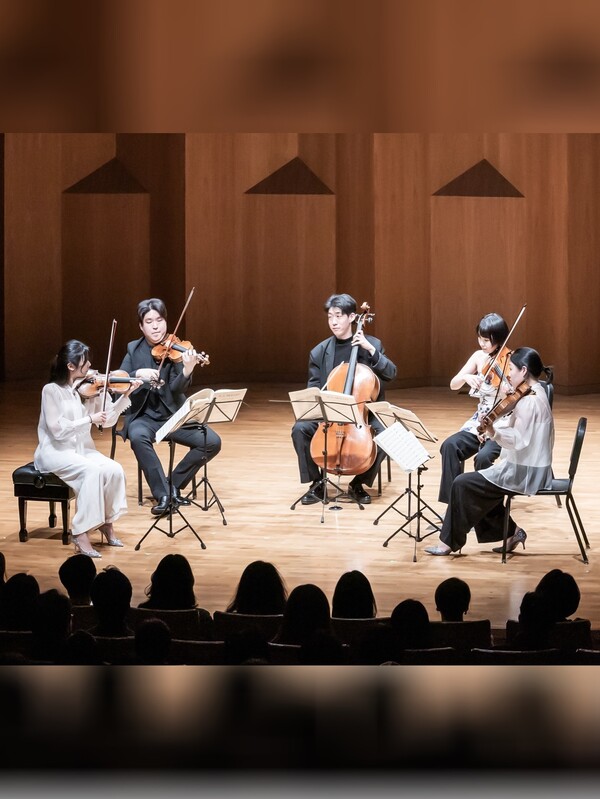
In late April and early May, South Korea’s classical-music calendar was electric: the 38th Symphony Festival at the Seoul Arts Center, the Munich Philharmonic’s Korea visit led by Lahav Shani, and a high-profile collaboration with pianist Seong-Jin Cho all drew intense attention. Amid those large-scale events, the 2026 Seoul Spring Chamber Music Festival quietly upheld the refinement at the heart of chamber music.
I attended the opening concert on April 21 and the follow-up performance on April 22. The back-to-back programs offered a reminder of artistic director Kang Dong-seok’s long commitment to promoting chamber music and provided a clear view of the festival’s international roster. Even in a season dominated by orchestral spectacles, the festival’s steady advocacy for the chamber repertoire remains welcome.
The annual Symphony Festival at the Seoul Arts Center tends to concentrate mainstream attention in April, leaving chamber venues with a loyal but smaller audience of devoted listeners. This year’s opening night was not a complete sell-out, but the quieter house fostered a concentrated listening experience that allowed the music itself to take center stage.
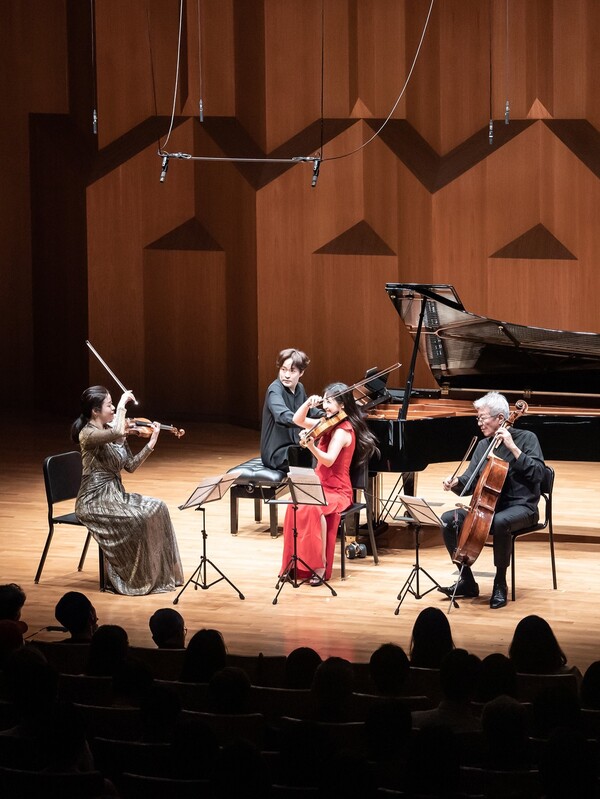
The most notable thread in this year’s programming was the sheer number of quintets. The opening night paired Mozart’s String Quintet No. 5 with Franck’s Piano Quintet; the following day featured Mozart’s String Quintet No. 1 and Dohnányi’s Piano Quintet No. 1. The festival’s decision to present Mozart’s complete set of string quintets was particularly meaningful, offering audiences a rare, cohesive survey of these works.
In an interview with Gaekseok magazine, artistic director Kang Dong-seok noted, “Mozart was the composer who truly developed the string-quintet form with two violas. It’s not common to hear the complete cycle at a single festival.” Indeed, Mozart’s six string quintets are more than an expanded ensemble; they stand as some of his most inward-looking and profound chamber compositions.
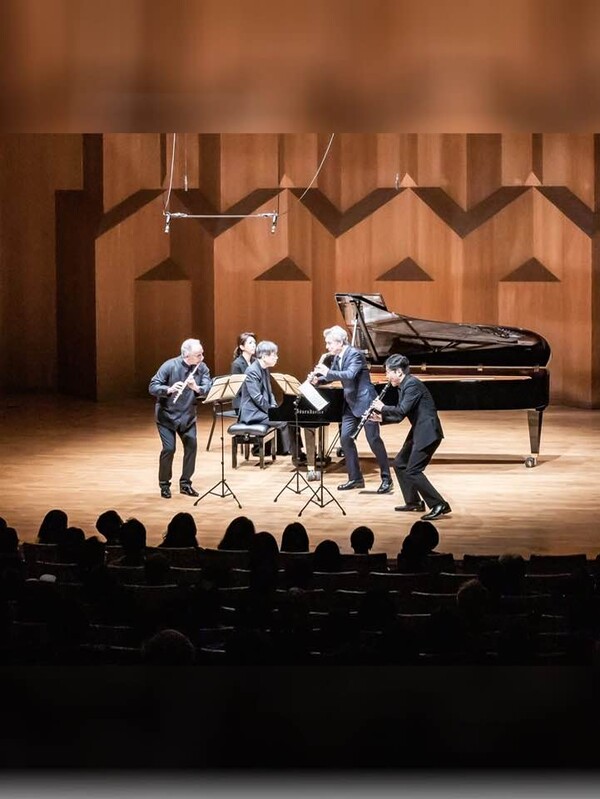
On April 25 the festival’s arc was completed with Mozart’s String Quintet No. 6, Mozart’s piano-and-winds quintet, and Brahms’ Piano Quintet — a richer quintet offering than in many previous seasons.
Mozart’s String Quintet No. 5, performed at the opening, dates from 1790 and shows contrapuntal techniques he absorbed from studying Bach. The work combines intellectual rigor with expressive depth. From the first night, the ensemble’s dense and attentive playing underscored the festival’s status as Korea’s premier spring chamber-music event.
The next day’s performance of Mozart’s String Quintet No. 1—an early work composed when Mozart was 17—radiated the bright, lively character of the divertimento style then in vogue. The two-viola scoring enriched the inner textures and lent an operatic sweep to the melodies. Violinist Han Su-jin anchored the ensemble and animated the piece with vivid energy.
The opening program traced a lineage from Mozart’s Classical legacy through French chamber music represented by Saint-Saëns and Franck. In Franck’s Piano Quintet, Kang Dong-seok and pianist Moon Ji-young created a strikingly taut, cohesive reading that left a strong impression.
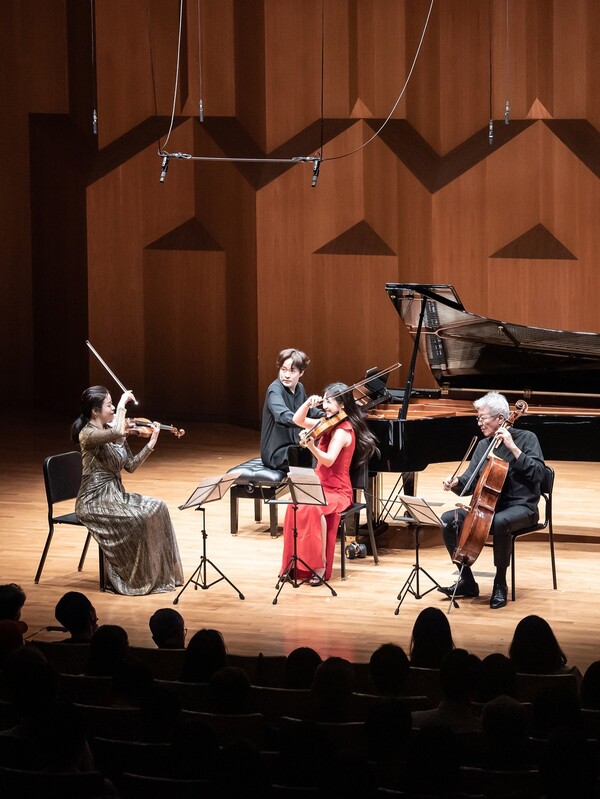
The April 22 program, organized under the theme “No. 1,” highlighted the starting points of great composers. It moved from Mozart’s early piano works and his first string quintet to the first published pieces of Beethoven and Schubert, and closed with Dohnányi’s first piano quintet. The sequence offered a glimpse into the moment when genius first declares itself, rendered in the most intimate of classical forms.
The festival’s distinctive customs are still in evidence. The ritual of having performers give short onstage introductions before each piece helps listeners connect with the music. International artists — such as Taiwan-born violist Shin-Yen Huang and violinist Chloé Kiefer — delivered their remarks in English, reinforcing the festival’s cosmopolitan vibe. And because the festival spans 13 days, organizers prioritize the integrity of each program over encores, a practice that has become part of the event’s identity.
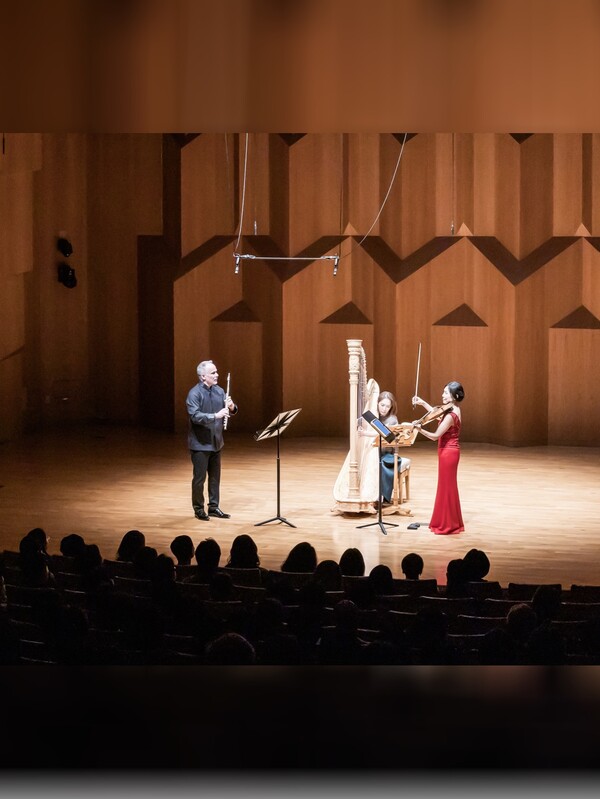
Watching this year’s festival naturally recalled the 18th Seoul Spring Chamber Music Festival in 2023. Then, under the theme “The More, The Merrier!,” the program expanded chamber forces to include sextets, septets and octets. The 2023 closing concert, featuring string octets by Raff, Hoffmann and Mendelssohn, delivered a scale and density that felt nearly symphonic.
Mendelssohn’s String Octet, in particular, exemplified the composer’s intention that the work be played “as a symphony.” Against that memory, this year’s “rediscovery of the quintet” affirmed the festival’s identity and depth from a different angle.
In an arts scene dominated by large orchestras, the Seoul Spring Chamber Music Festival has consistently preserved chamber music’s essence and subtlety. This year once again demonstrated the festival’s raison d’être.
By: music columnist Yeo Hong-il
Edited by: Joo Jin-no










Most Commented